2026-10-17
ACU Computer Science: Workshop Themes and 2027 Unit Examples
Compare ACU’s Computer Science workshop themes with named 2027 bachelor-component units, including programming, networks, security and emerging technology.
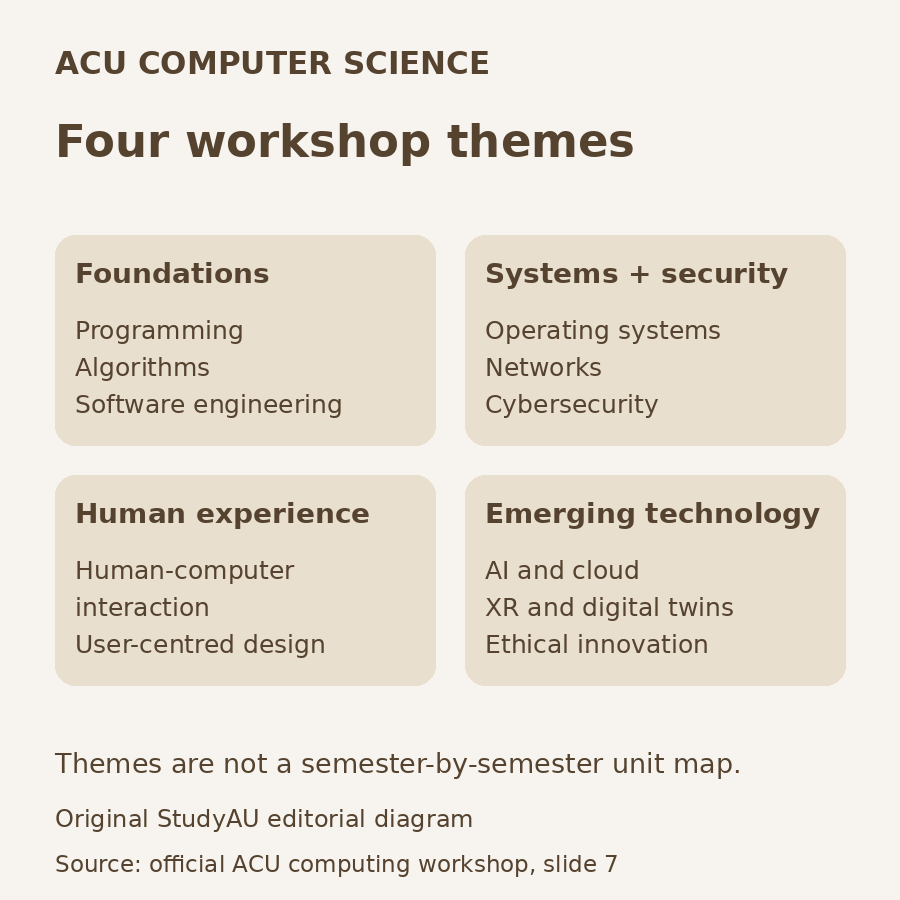
ACU’s 2026 computing workshop introduces Computer Science through four connected themes: core foundations, systems and security, human experience, and emerging technology. The presentation covers the Bachelor of Computer Science and Master of Data Science, but its Computer Science slide is a thematic overview rather than a complete unit catalogue.
For applicants, the useful detail is the breadth of that overview. Programming appears alongside networks, security and design for users. Newer technologies are included alongside the foundations. The unit examples below come from the bachelor’s component of the 2027 combined degree; they do not establish the plan or offer conditions for every separately titled computing course.
Building software starts with the foundations
Under core foundations, slide 7 lists programming, algorithms and software engineering. These identify software development and its underlying methods as central parts of the Computer Science content.
The 2027 combined-degree handbook makes some of this more concrete. Its specified bachelor’s units include ITEC102 Python Fundamentals for Data Science and COMP120 Data Structures and Algorithms, together with ITEC312 and ITEC322, the two Information Technology Project units covering project management and software engineering. These names identify curriculum examples; they do not promise a particular software version, assessment platform or employer project.
Systems and security are a separate part of the picture
The systems and security theme lists operating systems, networks and cybersecurity. This broadens the outline beyond writing individual programs to the systems in which computing operates.
In the named 2027 bachelor’s component, specified units include COMP210 Operating Systems, COMP220 Computer Networks, ITEC204 Introduction to Cyber Security and ITEC311 Network Security and Applications. Their inclusion makes security and infrastructure visible within this computing pathway; it does not confer a separately named cybersecurity qualification or commercial certification.
Human experience belongs in the technical curriculum
The human experience theme contains human-computer interaction and user-centred design. Their inclusion is important for applicants whose interests extend to how people use technology, rather than only how a system is implemented.
This is a curriculum theme, not a promise of a particular design project, user-testing exercise or job title. A useful follow-up question is how the applicable units connect design decisions with technical work. That question should be answered through course details, not inferred from the heading alone.
Emerging technology is framed by ethical innovation
The fourth theme names AI, cloud, XR and digital twins, with ethical innovation as the framing principle. The workshop therefore presents emerging technology alongside questions about how it is developed and used.
The 2027 handbook lists COMP310 Cloud Computing among the specified bachelor’s units. It lists ITEC327 Essentials of Artificial Intelligence and Machine Learning in the bachelor’s elective pool. That distinction matters: an option in a pool is not an instruction that every student must take it. The workshop’s XR and digital-twin themes likewise should not be converted into invented unit names or guaranteed specialist awards.
Use the themes to ask more precise questions
The four groups offer a practical starting point for comparing interests: software foundations, infrastructure and security, interaction design, or emerging technology. The next step is to identify the units and course version that apply to the intended entry pathway.
Use the applicable Course Enrolment Guide and adviser’s directions to check sequencing and unit choices. The workshop themes are not a year-by-year timetable, and the named examples are not the complete award checklist. For the separate credit-point, progression and exit questions, see the combined-degree structure guide.
Sources: ACU’s official computing workshop, slides 1 and 7; named units in the 2027 combined-degree handbook, checked on 17 October 2026. ACU’s Computer Science overview provides the broader combined-degree context. No workforce forecast or individual employment outcome is inferred from its marketing description.