2026-10-17
ACU Computer Science/Data Science: 2027 Progression and Exit Rules
How ACU’s four-year Computer Science and Data Science pathway fits together, including the 2027 master’s progression hurdle and conditional bachelor’s exit.
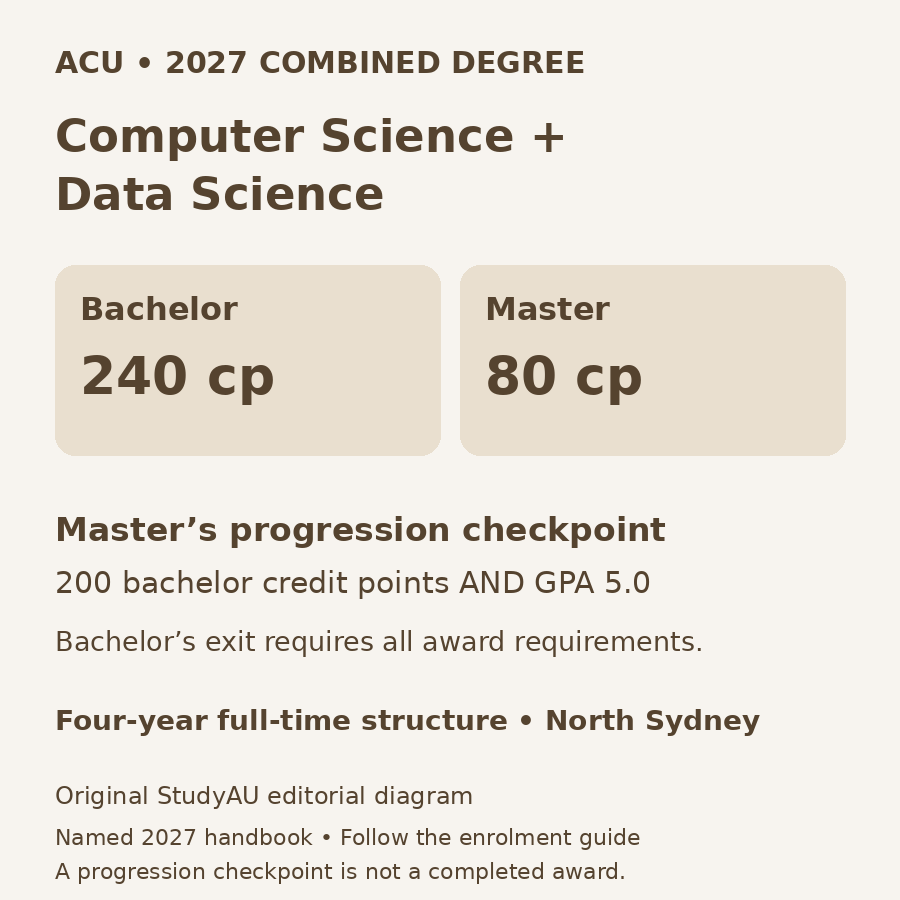
ACU presents its Bachelor of Computer Science and Master of Data Science as a four-year combined pathway. The important planning question is how students move between the two levels of study. The workshop’s four-year headline needs to be read alongside the requirements for starting the master’s component.
For the 2027 course version, ACU’s handbook describes four years of full-time study at North Sydney, totalling 320 credit points. The structure comprises 240 credit points of bachelor’s content and 80 credit points of master’s content.
The bachelor’s 240 points comprise 170 of specified Computer Science units, 10 of community engagement, 20 of Core Curriculum and 40 of electives. The master’s component requires 80 points of specified Data Science units. Follow the applicable Course Enrolment Guide or an adviser-approved alternative when sequencing them.
Understand the progression checkpoint
The 2027 handbook specifies completion of 200 credit points of the bachelor’s degree and a minimum GPA of 5.0 before commencing master’s study. Both parts matter: completing the relevant amount of study without reaching the GPA threshold does not meet the stated hurdle.
The 200-credit-point checkpoint should not be mistaken for completion of the bachelor’s award. The bachelor’s content totals 240 credit points. The progression rule concerns when master’s study can begin within the combined pathway; the award has its own completion requirements.
Students who do not meet the hurdle must finish the bachelor’s degree before commencing the master’s. This does not justify promising automatic admission or an unchanged completion date. An applicant should check how the applicable progression rules affect their own study plan with ACU.
Four years is the full-time course structure
The workshop describes earning the two degrees in four years. That is useful when comparing study options, but it is not a promise that every student will finish on that date regardless of progression, interrupted study or outstanding requirements.
Use the published duration as the starting point for a full-time plan. Then check the course version for the intended intake, the sequence of required study and the point at which progression is assessed. The workshop does not supply a semester-by-semester timetable, so its slides should not be converted into one.
The bachelor’s exit is a separate decision
The workshop also identifies an option to exit after three years with a bachelor’s degree. The handbook qualification is essential: students must complete the specified requirements for that award. Time spent enrolled alone is insufficient.
This gives applicants two distinct questions to discuss with ACU: what is needed to continue into master’s study, and what is needed to receive the bachelor’s award if they leave the combined pathway? A progression checkpoint and an exit award should not be treated as interchangeable.
Keep the course version visible
The structural and progression details above relate to 2027. The workshop also discusses a scholarship for 2026 commencements, but that funding information does not establish support for a 2027 entrant. Course duration, academic progression and scholarship eligibility each need to match the student’s actual intake.
Sources: ACU’s official computing workshop, slides 2 and 5; 2027 combined-degree handbook, with the named structure, progression and exit rules checked on 17 October 2026. This course-structure guide does not establish individual admission, funding or student-visa eligibility.