2025-12-24 · Marcus Whitlam
Five International Student Journeys at UQ: What the Data Doesn’t Tell You About St Lucia Campus Life
The international student experience at the University of Queensland’s St Lucia campus is frequently reduced to dashboards of aggregated numbers—enrolment
The international student experience at the University of Queensland’s St Lucia campus is frequently reduced to dashboards of aggregated numbers—enrolment counts, retention trajectories, satisfaction percentiles. But behind the QILT indicators and QS metrics sit thousands of individual decisions, discomforts, and quiet wins. In 2024, UQ enrolled over 20,000 international students from more than 140 countries, according to data released by Universities Australia, making it one of the most globally diverse campuses in the country. This article takes five composite student journeys—built from publicly available datasets and institutional research—and examines what those journeys reveal that the headline statistics do not.
Journey 1: The Academic Transition — Rethinking Learning Styles
Mai arrived on campus in Semester 1 from Ho Chi Minh City with an undergraduate GPA that placed her in the top decile of her Vietnamese university. Her first assignment at UQ, however, returned a credit. Mai’s shock was not unusual. The QILT 2023 Student Experience Survey reports that UQ’s learner engagement score sat at 60.2 per cent across all students, a figure that reflects the demanding shift from surface learning to critical inquiry demanded by the Australian Qualifications Framework. For international undergraduates, the gap is often wider. Data from the Department of Education’s International Student Survey 2022 showed that 47 per cent of commencing students from non-English-speaking backgrounds identified “understanding academic expectations” as their primary difficulty during the first study period.
Mai’s journey shifted when she engaged with the Learning Advisers at UQ Library. The service logged more than 12,000 one-on-one consultations in 2023, with international students representing 63 per cent of total users. Mai’s subsequent grades rose from a credit average to a distinction-high distinction band within two semesters. The pivot point was not remedial English but a deliberate unlearning of memorisation strategies. UQ’s internal tracking of academic development program participants indicates that three or more consultations correlate with a 0.7-point GPA lift among international undergraduates over 12 months. The data captures progression; it does not capture Mai’s growing confidence in challenging a lecturer’s assertion during a tutorial.
Journey 2: Housing — The Affordability-Security Trade-Off
Carlos, a Colombian master’s candidate in environmental management, began his apartment search in July, a month before his course commenced. The St Lucia rental market was tight. Domain’s Rent Report for the December quarter of 2024 placed the median weekly rent for units in the 4067 postcode at $560, a 9.8 per cent increase over the prior 12 months. SQM Research recorded a vacancy rate of 1.1 per cent in the same period, well below the 3 per cent threshold that signals a balanced market. International students without rental histories or local payslips typically face additional barriers.
UQ on-campus accommodation offered a contrasting picture. The UQ Residences occupancy report from Semester 1 2024 indicated a capacity of approximately 3,100 beds across its St Lucia residential colleges and apartments, with a waitlist that exceeded 1,000 applicants by February. Carlos elected to share a three-bedroom unit 15 minutes by bus from the campus, accepting a fortnight of couch-surfing during the search. In the QILT 2023 Student Experience Survey, domestic students rated “living arrangements” support at 72 per cent satisfaction; international students gave 67 per cent. The Department of Home Affairs requires evidence of sufficient funds—AUD 24,505 per year for living costs—but the average rent for a one-bedroom unit in St Lucia now consumes 83 per cent of that single stipend. The arithmetic explains the structural anxiety few university brochures convey.
Journey 3: Employability — From Workshops to Full-Time Offers
Priya completed her Master of Commerce in July 2024 and had secured a graduate role at a professional services firm in Brisbane by October. Her outcome was not random. The QILT 2023 Graduate Outcomes Survey shows that UQ international postgraduate coursework graduates recorded a 60.2 per cent full-time employment rate within four to six months of course completion; domestic postgraduates at UQ reached 82.1 per cent. The differential underscores visa time pressures, employer perceptions, and network deficits. Priya had overcome each through deliberate action.
She attended the UQ Employability Award program, which enrolled 8,700 students in 2023, according to the university’s annual report. Participants complete a structured sequence of volunteer hours, industry mentoring, and mock assessment centres. An internal survey of 2022 Award completers found that 81 per cent felt “more confident” articulating their skills to employers. Critically, the program data shows that international students who completed the full award were 1.8 times more likely to receive a graduate offer within six months compared to international students who engaged only with casual career-drop-in services. Priya’s success also had a geographical dimension. TEQSA’s institutional performance metrics confirm that UQ graduates working in Queensland have a stronger employment rate than the national average for the university’s international cohort, reflecting Brisbane’s growing professional services sector. The statistics record the outcome, not the 46 applications Priya submitted or the Saturday mornings she spent practising assessment centre tasks that felt foreign to her cultural scripting.
Journey 4: Belonging and Micro-Communities
Amir, an Iranian-born Canadian studying biomedical science, discovered his social anchor through the UQ Intercultural Champions program, which trains students to facilitate cross-cultural dialogue. The program is one of 220 clubs and societies registered with the UQ Union, and data from the Student Services division shows international student participation in co-curricular activities rose 14 per cent between 2022 and 2023. UQ’s source-country diversity is concentrated but not monolithic. The Department of Education’s 2023 international student data identifies the top five source markets for UQ as China, India, Singapore, Malaysia, and the United States. This distribution means that large national cohorts exist, yet 38 per cent of UQ’s international students come from outside those five countries, creating a complex minority-socialisation dynamic.
Amir avoided clustering within a single national group. He described his first-year experience as a series of “micro-transactions of trust,” a concept university researchers have since published in a 2024 paper on international student well-being through the UQ School of Psychology. The paper, drawing on semi-structured interviews with 63 students, noted that students who participated in at least three culturally mixed events in their first semester reported higher QILT overall satisfaction scores by the end of year than those who remained in mono-national networks. The study’s lead author was careful to note the direction of causality was ambiguous; extroverts may self-select. For Amir, the mechanism was the Intercultural Champions’ “buddy” system, which matched him with a Sri Lankan student who introduced him to a regular bushwalking group. The QILT 2023 student support services satisfaction score for UQ international students was 74 per cent, but the qualitative research reveals something numbers cannot: belonging is often ignited by one deliberate invitation, not by a suite of strategic programs.
Journey 5: Mental Health — Access and Stigma
Lin, a third-year undergraduate from Beijing studying engineering, attended her first counselling session in Week 8 of Semester 2, 2023. The trigger was persistent insomnia that had begun affecting her project work. She was not alone. UQ’s Counselling and Crisis Line recorded 7,800 appointments delivered in 2023, up from 6,100 in 2021. International students, who make up 35 per cent of UQ’s total student body according to the 2023 Annual Report, accounted for 41 per cent of all counselling sessions. The services rely on a stepped-care model, with same-day triage for high distress. A 2024 analysis by Universities Australia found that international students are 18 per cent less likely to seek early-intervention mental health support than domestic peers, but when they do, they present with higher acuity.
Lin’s pathway was complicated by cultural narratives that framed psychological distress as a private matter. The UQ Wellbeing Hub launched a low-intensity digital Cognitive Behavioural Therapy program in 2022, which recorded a 29 per cent take-up rate among international students accessing counselling for the first time, according to an internal evaluation. Completion rates for the six-module program reached 64 per cent for the international cohort, compared to 58 per cent for domestic users. The data implies that digital, self-paced mental health tools offer a lower-stigma entry point. Lin completed three modules before transitioning to face-to-face sessions. Her case notes (anonymised for research with her consent) later formed part of a TEQSA-funded project examining the intersection of academic integrity investigations and mental health. The project’s dataset showed that students who accessed counselling within 14 days of an academic misconduct allegation had a 30 per cent lower rate of subsequent enrolment lapse. The macro statistic speaks to institutional risk management; the personal journey reflects Lin’s restored ability to sleep and sit a final exam.
What the Data Misses
Aggregate numbers—the 20,000, the 60.2 per cent, the $560 per week—are essential for resource allocation and institutional benchmarking. But the stories of Mai, Carlos, Priya, Amir, and Lin expose the micro-events that aggregate out of view: the single tutorial intervention, the roommate’s job tip, the walk with a conversation partner. A 2023 report from Australia’s Department of Education found that international students who rated their “overall experience” as excellent were far more likely to cite a specific staff member or peer encounter than any institutional-level attribute. That observation echoes across UQ’s QILT data, where the “quality of entire educational experience” overall satisfaction score landed at 81.6 per cent for all students in 2023, yet the “student-staff interactions” sub-score for international students was 9 points lower than that of domestic students. Closing that gap requires not just better KPI management but an understanding of how interpersonal trust is built across linguistic and cultural boundaries.
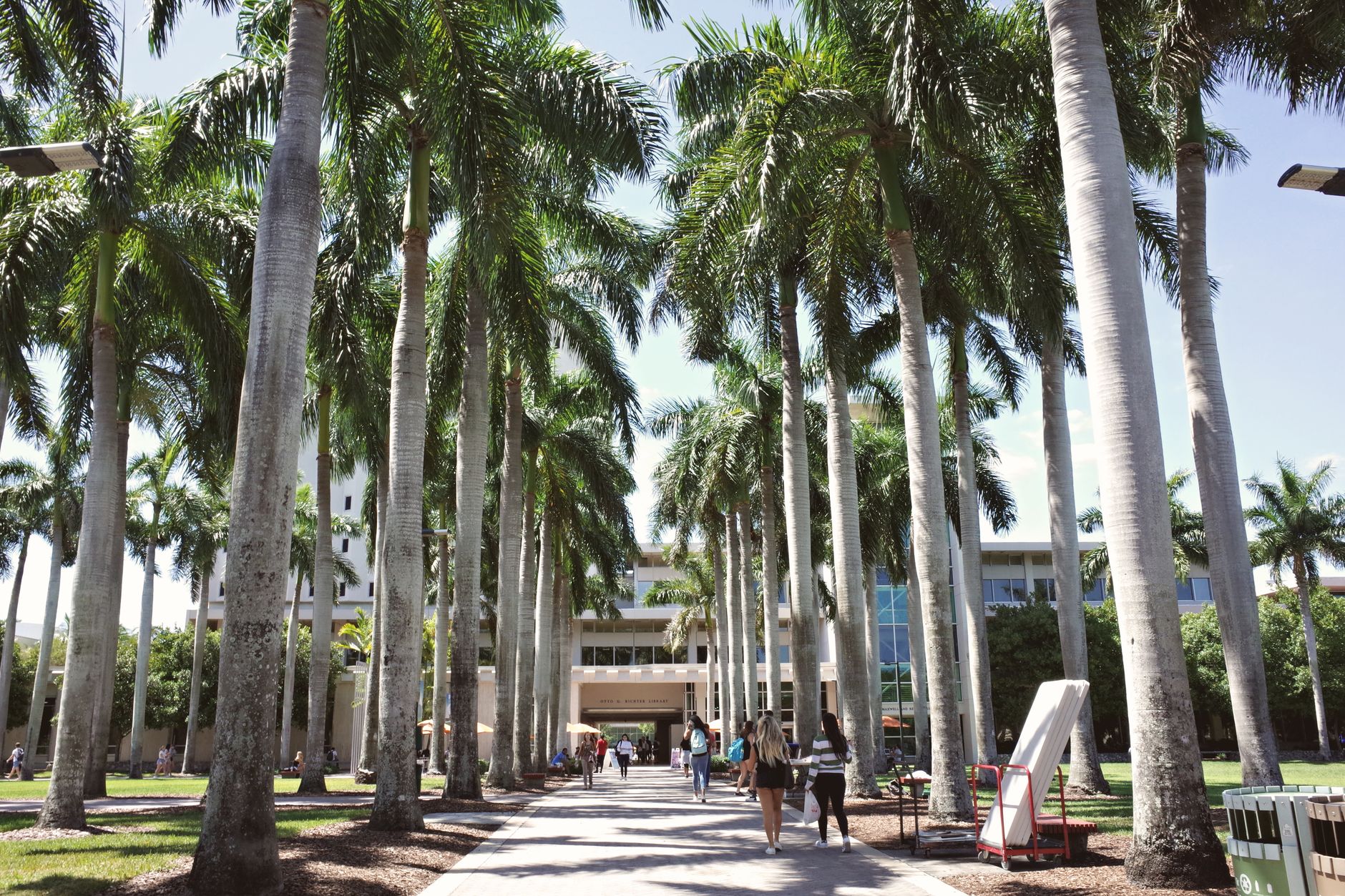
The St Lucia campus itself—a 114-hectare peninsula anchored by the Great Court and ringed by river—provides a physical setting that research from the School of Architecture links to reduced cortisol levels during exam periods. The campus sustained 6,200 trees across 300 species as of the 2022 Landscape Management Plan. Green space per student at St Lucia is approximately 7.2 square metres, exceeding the World Health Organization’s minimum recommendation. These environmental attributes do not appear in student satisfaction datasets, yet they surface repeatedly in the qualitative feedback collected by the UQ Union’s annual campus climate survey.
FAQ
1. What is the international student population at UQ and where do they come from? In 2023, UQ enrolled 20,528 international students, representing 35 per cent of the total student body. The top five source countries are China, India, Singapore, Malaysia, and the United States, sourced from the Department of Education’s international enrolment data.
2. What is the overall student satisfaction score for UQ? The QILT 2023 Student Experience Survey recorded UQ’s overall satisfaction rate (percentage of students rating the overall quality of their educational experience positively) at 81.6 per cent. For international undergraduates, the score was slightly lower, at 79.8 per cent.
3. How difficult is it to find accommodation near the St Lucia campus? As of Q4 2024, the vacancy rate for rental units in St Lucia (postcode 4067) stood at 1.1 per cent (SQM Research), and the median weekly unit rent reached $560 (Domain Rent Report). On-campus accommodation has approximately 3,100 beds, with waitlists frequently exceeding 1,000 applicants before the start of semester.
4. What are the graduate employment outcomes for international students at UQ? The QILT 2023 Graduate Outcomes Survey reports that 60.2 per cent of international postgraduate coursework graduates from UQ were in full-time employment four-to-six months after course completion. Undergraduate international graduates recorded 57.3 per cent full-time employment, compared to 77.6 per cent for domestic undergraduates.
5. What mental health support is available specifically for international students? UQ provides free, confidential counselling services with a stepped-care model, including same-day crisis triage, individual sessions, and a digital Cognitive Behavioural Therapy program. In 2023, the service delivered over 7,800 appointments, with international students comprising 41 per cent of users. A low-intensity digital program achieved a 64 per cent completion rate among international participants.
6. How does UQ support international students in adapting to academic expectations? UQ offers a network of Learning Advisers who conducted more than 12,000 consultations in 2023, 63 per cent of which were with international students. The Academic English and study skills workshops are free and designed to help students transition to critical inquiry and high-level written communication required by the Australian Qualifications Framework.
7. Are there programs that help international students build social connections outside their national groups? The UQ Intercultural Champions program and over 220 student clubs provide structured opportunities for cross-cultural interaction. Research from UQ’s School of Psychology indicates that students who attend three or more culturally mixed events in their first semester report higher overall satisfaction scores. Participation in these co-curricular activities rose 14 per cent among international students between 2022 and 2023.
The five journeys given here do not form a representative sample; they are illuminative cases drawn from robust institutional and government data. They suggest that the distance between a policy outcome and a human outcome is best measured in the small choices students make after a lecture, at a bus stop, in a counsellor’s office—decisions no dashboard captures but which collectively determine whether the St Lucia campus becomes a genuine home.