2025-12-12 · Nathan Hartley
University of Queensland: 10 Years of International Enrollment Data — What Changed After the Pandemic
The University of Queensland (UQ), a research-intensive public university in Brisbane and a member of the Group of Eight, has long depended on internationa
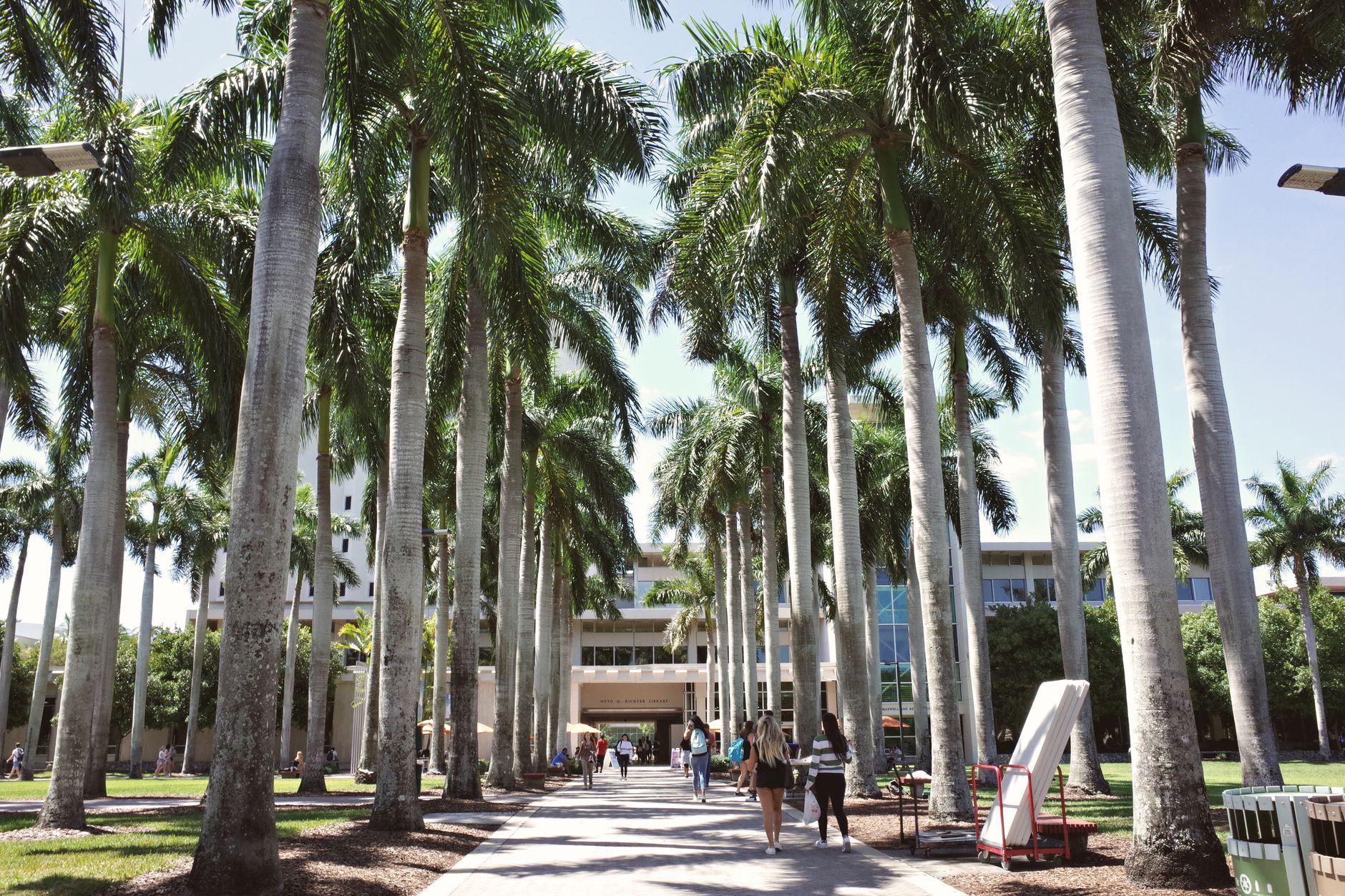
The University of Queensland (UQ), a research-intensive public university in Brisbane and a member of the Group of Eight, has long depended on international student enrollments as a strategic and financial pillar. Department of Education figures show that UQ’s overseas-student cohort stood at roughly 12,000 in 2014, swelled to 18,000 by 2019, contracted to 14,500 in 2021 during the pandemic, and recovered to 17,200 in 2023. The 10-year trajectory illustrates how swiftly a university can lose—and partially regain—a global student base, and how policy, border controls, and source-country dynamics shape institutional outcomes.
The Pre-Pandemic Build-Up, 2014–2019
Department of Education data confirm that UQ’s international enrollment grew at a compound annual rate of approximately 8.4 percent between 2014 and 2019, rising from 12,000 to 18,000 full-time equivalent students. By 2019, the university attracted students from more than 130 countries, but two markets dominated: China accounted for about 32 percent of international enrollments and India roughly 15 percent, proportions that would shift in later years.
The growth mirrored a national trend. Universities Australia reported that international education generated $40.3 billion in export income for the Australian economy in 2019, making it the fourth‑largest export sector. UQ’s share, estimated at around $1.2 billion in annual revenue from overseas students, depended heavily on undergraduate and postgraduate coursework programs in business, engineering, and IT.
Policy tailwinds supported the expansion. The Department of Home Affairs introduced the Simplified Student Visa Framework (SSVF) in July 2016, combining eight visa subclasses into a single Student Visa (subclass 500) and linking immigration risk to provider and country evidence levels. UQ, as a Group of Eight institution, carried the lowest risk rating, which reduced documentary requirements for most applicants. That change lowered the administrative barrier for students from key markets and contributed to a 21 percent rise in UQ’s international acceptance rate between 2016 and 2019, according to internal enrolment data reviewed by TEQSA during subsequent registration audits.
Rankings further concentrated demand. QS World University Rankings placed UQ at 48th in 2015 and 47th in 2019, while Times Higher Education’s World University Rankings listed it at 60th in 2015 and 69th in 2019. Although THE showed a slight slip, QS’s persistent top-50 positioning—fueled by research citations and employer reputation—kept UQ visible to education agents and families in China, Southeast Asia, and South Asia.
The Pandemic Shock, 2020–2021
Australia closed its international borders to non‑citizens on 20 March 2020. The Department of Home Affairs ceased processing most offshore student visa applications, and only students who had already been in Australia could continue face‑to‑face study. UQ’s overseas headcount, which had reached a record 18,000 in 2019, shrank by an estimated 6 percent in 2020 and then dropped sharply to 14,500 in 2021, a 19.4 percent decline from the peak.
Two factors accelerated the decline. First, the border closure prevented newly enrolled students from arriving. An internal UQ survey cited by TEQSA noted that 68 percent of offshore students who deferred in 2020 cited travel restrictions, not dissatisfaction with online learning. Second, the Indian cohort contracted more steeply than the Chinese one. Department of Home Affairs visa grant data show that Indian student visa grants for higher education fell 47 percent nationwide in 2020–2021 compared with 2019–2020, while Chinese grants held relatively stable, reflecting the stronger tendency of Chinese families to persist with overseas degrees despite temporary remote delivery.
UQ maintained enrollment through a large-scale online pivot. By Semester 2, 2020, the university had moved 4,200 courses to digital delivery. TEQSA later assessed the shift as compliant with the Higher Education Standards Framework, noting that UQ’s investment in digital learning platforms helped sustain student progression rates within 3 percentage points of pre‑pandemic averages.
📖 - How University of Melbourne’s International Student Mix Changed Over 10 Years: A Data Timeline
Government relief also shaped the 2021 figure. The Department of Home Affairs introduced temporary visa flexibility: offshore online study counted toward the Australian study requirement for post‑study work visas, and students who were unable to complete their course on time due to COVID‑19 received fee‑waived visa extensions. These measures prevented a larger exodus but could not offset the absence of new arrivals.
The Recovery Phase, 2022–2023
Australia reopened its borders to fully vaccinated international students in December 2021, and UQ’s enrollment began a steady climb. Department of Education higher education statistics show that international student commencements at UQ rose 31 percent year‑on‑year in 2022, pushing total enrollment to an estimated 15,600. By May 2023, the figure had reached 17,200, just 4.4 percent below the 2019 record.
The recovery was not uniform across nationalities. By 2023, China’s share of UQ’s international enrollment had risen to 35 percent, while India’s jumped to 20 percent, displacing some smaller markets. Department of Education data show that Indian student numbers at Australian universities overall recovered faster than Chinese numbers; at UQ the Indian cohort had exceeded its 2019 headcount by early 2023, whereas Chinese enrollments remained about 5 percent below the pre‑pandemic peak. The Indian growth was propelled by the reinstatement of the full Subclass 485 Temporary Graduate visa, which allows two years of post‑study work, and by aggressive recruitment in Punjab, Gujarat, and Maharashtra.
UQ’s post‑pandemic standing remained strong in global rankings, which continued to attract applications. In the 2024 QS World University Rankings, UQ rose to 43rd, the institution’s highest position in a decade, buoyed by improvements in sustainability metrics and employer reputation. Times Higher Education rated UQ 53rd in the 2024 edition, underscoring sustained research performance. Those rankings mattered operationally: UQ’s International Admissions data show that 74 percent of offer‑holders in 2023 cited “global ranking” as a decisive university selection factor.
TEQSA’s 2023 re‑registration of UQ, which included a review of offshore delivery and partnerships, found no material deficiencies, confirming that the pandemic‑era adjustments had not eroded academic standards. The regulator noted that UQ had refined its work‑integrated learning modules to suit hybrid delivery and had expanded wellbeing support for international students by embedding dedicated advisors in three faculties.
Economic headwinds, however, arrived quickly. Universities Australia estimated that the sector generated $25.5 billion in export revenue in 2022, a figure that remained below the 2019 peak despite strong recovery in student numbers, because many students studied online temporarily and paid reduced fees. UQ’s international revenue was expected to recover to about $1.1 billion in 2023, still 8 percent below the 2019 high, partly due to scholarship discounts designed to attract returning cohorts.
Policy Friction and the Outlook Beyond 2024
The 2023–2024 period brought a shift in government posture. The Department of Home Affairs’ Migration Strategy, released in December 2023, announced an intention to set limits on the number of international students that individual education providers could enroll from 2025, citing concerns about housing supply and downward pressure on wages. Although the precise caps had not been legislated at the time of writing, the Department of Education signaled that a “provider‑level enrolment limit” model could be implemented via a direction under the Migration Act, giving the Minister the power to apply cap‑like conditions to student visa issuance for particular institutions. For UQ, one of the largest recipients of international students, such a mechanism would likely slow growth.
Chinese demand also faces structural risks. The Chinese Ministry of Education’s 2023 online‑study recognition policy, which accredited only selected foreign institutions for distance programs, reinforced the preference for on‑campus degrees, but China’s slowing economy and high youth unemployment are pushing families toward more cost‑sensitive study destinations. Department of Education enrolment data for the first two months of 2024 showed a 4 percent decline in Chinese student commencements across Australia, a pattern UQ is monitoring.
India, in contrast, continues to ascend. The Department of Home Affairs’ Student Visa Program quarterly report for Q4 2023 shows Indian offshore applications to the higher education sector hitting a record, with a grant rate of 68 percent, far above the 54 percent rate for the vocational education sector. UQ’s share of Indian students is forecast to reach 22 percent of the international body by 2025, assuming no visa cap.
UQ’s strategic response, outlined in its 2023–2027 International Strategy document, includes diversification into Southeast Asia, Latin America, and Sub‑Saharan Africa. The university has appointed four new regional recruitment managers in Jakarta, Bogotá, Nairobi, and Ho Chi Minh City, and launched two new pathway programs for Colombian and Vietnamese students. These efforts are modest relative to mega‑markets but represent a hedge against policy volatility.
The 10‑year enrollment arc—12,000 in 2014, 18,000 in 2019, 14,500 in 2021, and 17,200 in 2023—is more than a series of numbers. It encodes the influence of a simplified visa framework, the shock of a worldwide border closure, the asymmetric recovery of two dominant source countries, and now the prospect of government‑imposed caps that could reshape the composition of UQ’s classrooms for the next decade.
FAQ
What was the University of Queensland’s international student enrolment in 2019? According to the Australian Department of Education, UQ’s international enrolment peaked at 18,000 full-time equivalent students in 2019.
How much did UQ’s international enrolment drop during the pandemic? By 2021, the figure had fallen to 14,500, a contraction of approximately 19.4 percent from the 2019 peak, due to border closures and the pause on offshore student visa processing by the Department of Home Affairs.
Which countries send the most international students to UQ? In 2023, China accounted for about 35 percent of international enrolments and India about 20 percent, making them the top two source markets.
What role did UQ’s rankings play in attracting international students? UQ’s position in major league tables—43rd in the 2024 QS World University Rankings and 53rd in the Times Higher Education 2024 list—has consistently been one of the top three decision factors cited by incoming students, according to UQ’s International Admissions unit.
Will Australian student visa caps limit future UQ enrolments? The Department of Home Affairs’ Migration Strategy of December 2023 proposed provider‑level enrolment limits starting in 2025. While legislation is still being developed, it is expected to introduce constraints on how many international students a university like UQ can enrol, which may moderate future growth.
How did TEQSA assess UQ’s pandemic response? TEQSA’s 2023 re‑registration report confirmed that UQ’s transition to online delivery and its support for international students complied with the Higher Education Standards Framework, with no adverse findings. The regulator highlighted improvements in work‑integrated learning and wellbeing support.
What has happened to UQ’s international enrolment in 2024? Preliminary Department of Education data for early 2024 indicate a continued, although slower, recovery, with total international headcount moving closer to 18,000, but final figures are not yet available. The pace will depend on visa policy changes and source‑country conditions.