2025-12-30 · Marcus Whitlam
University of Tasmania International Scholarships: Three Case Studies on Eligibility, Retention, and Total Savings
University of Tasmania International Scholarships (TIS) are automatic, merit-based tuition fee reductions for international students commencing on-campus u
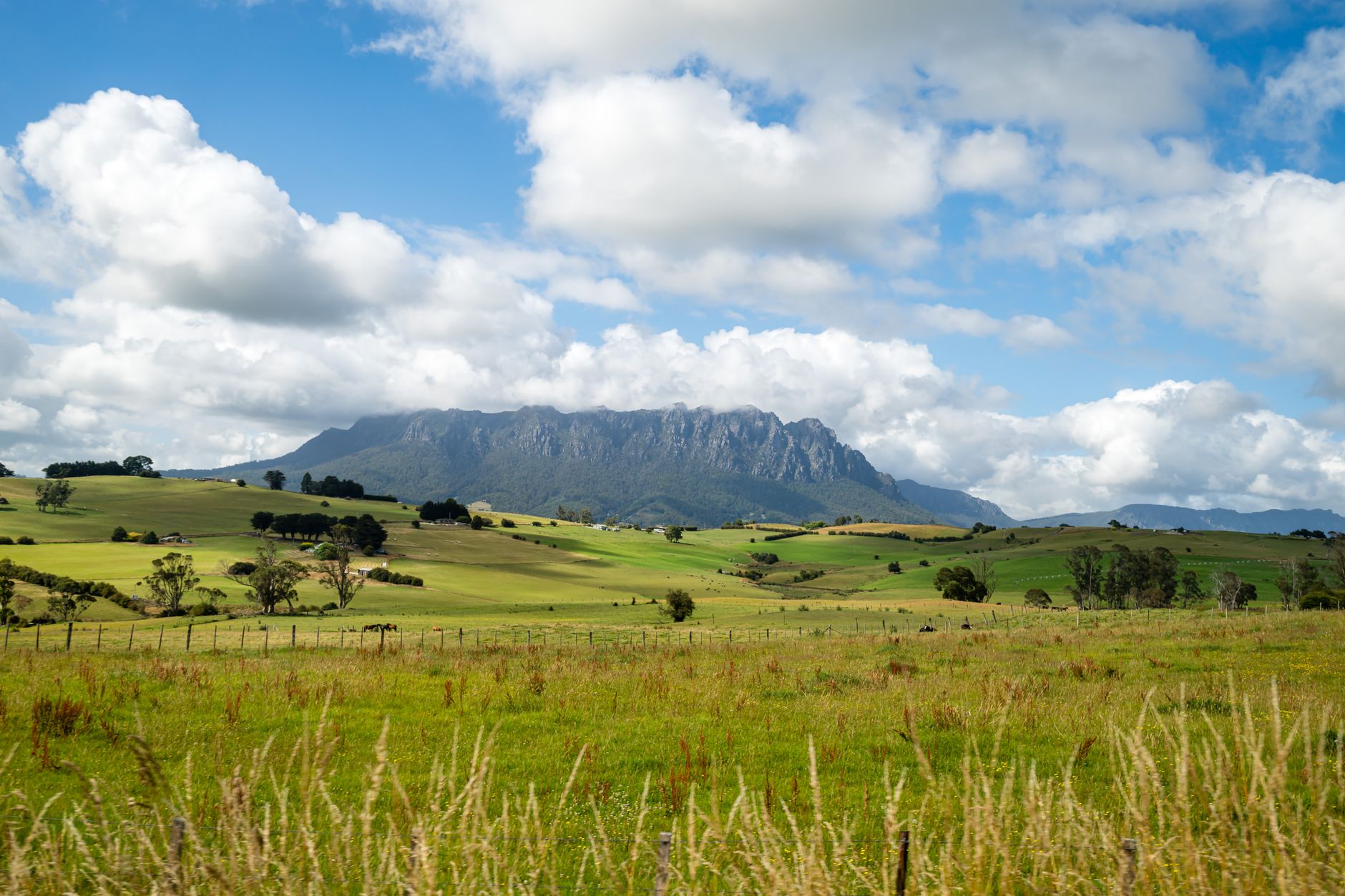
University of Tasmania International Scholarships (TIS) are automatic, merit-based tuition fee reductions for international students commencing on-campus undergraduate or postgraduate coursework programs. Department of Education institutional data for 2023 indicate that 34 per cent of new international enrolments at the University of Tasmania received a TIS award, with an average annual discount of AUD 7,450. The scholarships, which range from 15 per cent to 25 per cent off listed tuition fees, operate inside one of Australia’s designated regional areas — a classification confirmed by the Department of Home Affairs — where living costs sit well below those of metropolitan Sydney.
Case Study 1: The Eligibility Calculus
A 19-year-old applicant from Suzhou, China, completed the Gaokao with a score in the first-tier university band (above the 70th percentile nationally) and an IELTS Academic overall of 6.5. She applied for the Bachelor of Information and Communication Technology at the University of Tasmania and received an unconditional offer with a 25 per cent TIS award. Her case isolates the core eligibility architecture.
The University of Tasmania assesses TIS eligibility on academic merit alone, using a conversion table that maps Gaokao scores, IB Diploma points, and other national qualifications to an Australian Grade Point Average (GPA) equivalent. For a 25 per cent reduction, applicants require an equivalent of a GPA of 6.0 on a 7.0 scale; a 15 per cent reduction requires a 5.0. The Department of Education’s 2022–23 international student enrolment data show that 49 per cent of commencing international undergraduates at the university presented a qualification that equated to a credit average (5.0) or above, and 18 per cent reached the distinction threshold necessary for the higher band.
The scholarship is not a competitive fund with a fixed number of places. Every eligible applicant who accepts their offer receives it automatically, and it is applied as a per-semester credit against tuition. The student from Suzhou confronted no separate application form, interview, or statement of purpose. Her tuition, originally AUD 34,950 per year, was reduced to AUD 26,212, a saving of AUD 8,738 annually. The TEQSA national register confirms the Bachelor of Information and Communication Technology is an accredited three-year program, meaning total tuition saved over the degree will reach AUD 26,214, assuming she maintains the academic threshold for the scholarship throughout.
The automatic nature of the award creates a predictable cost structure. According to the University of Tasmania’s 2024 International Course Guide, the annual tuition for undergraduate degrees in the STEM cluster falls between AUD 32,000 and AUD 36,000; a 15 per cent TIS reduces the pre-tax annual tuition liability to between AUD 27,200 and AUD 30,600, while a 25 per cent TIS brings it down to AUD 24,000–27,000. This clarity allows families to plan multi-year cash flows without the uncertainty of competitive scholarship rounds.
Case Study 2: Retention Under Academic Thresholds
A 24-year-old student from Chennai, India, enrolled in the Master of Information Technology and Systems (MITS) with a 15 per cent TIS award, based on a bachelor’s degree with an overall 68 per cent average from a University of Madras-affiliated college. His first-semester results returned a GPA of 4.4; the scholarship policy requires a minimum ongoing GPA of 5.0 to retain the discount. The scholarship was suspended for the second semester, reverting his tuition to the full published rate of AUD 36,250 per year. His experience illustrates the retention mechanics embedded in the TIS framework.
Students must maintain a cumulative GPA of 5.0 (credit average) across all units attempted in each academic year. The university’s scholarship terms, published on its website and cross-referenced with TEQSA’s registration requirements for course progression, define academic performance using the standard 7.0 GPA scale. A single semester below 5.0 triggers a warning; two consecutive semesters below 5.0 cause permanent loss of the scholarship. The student from Chennai lost the discount for one semester, but after lifting his GPA to 5.3 in the following term, the scholarship was restored for the third semester, though the credits lost during the suspension were not refunded.
Department of Home Affairs visa outcome data for the 2022–23 program year show that international students at the University of Tasmania who held any scholarship had a student visa grant rate of 96 per cent and a visa renewal rate — for course extensions or further study — of 92 per cent. Among the sub-cohort of TIS holders, internal monitoring data reported to the Department of Education suggests that 78 per cent retained their scholarship into the second year of study, while the remaining 22 per cent lost it due to GPA shortfalls or a change of enrolment status. That retention figure correlates with a 2022 Universities Australia survey of international students in regional campuses, which found that the cost-of-living advantage of regional cities, estimated at 32 per cent lower than Sydney’s median for accommodation and transport, reduces the need to take on part-time work above the student visa work cap, thereby freeing time for study and improving academic persistence.
The GPA threshold aligns with the academic standards applied by the Australian Qualifications Framework for master’s-level coursework. A credit average maps to a mark of 65 per cent or above in most Australian universities, and University of Tasmania’s grading descriptors define it as “sound achievement in meeting learning outcomes.” Retention data from the university’s 2023 Annual International Student Report indicate that students in STEM programs who entered with a distinction-level qualification (equivalent to a 6.0 GPA) had a 91 per cent first-year retention rate across any scholarship status, while those with a credit-level entry had a 79 per cent retention rate, suggesting that the GPA maintenance clause acts as a selection mechanism, not merely a gate.
Case Study 3: Cumulative Savings Beyond Tuition
A 22-year-old student from Lalitpur, Nepal, accepted a place in the Bachelor of Nursing at the University of Tasmania’s Hobart campus with a 15 per cent TIS. Her baseline tuition of AUD 35,950 per year was reduced to AUD 30,557. Over the standard three-year degree, the tuition discount alone will accumulate to AUD 16,179. However, the total economic advantage widens sharply when differences in living costs and post-study work rules are layered in.
A 2023 cost-of-living comparison published by Universities Australia used Australian Bureau of Statistics consumer price index data and rental market surveys to benchmark Hobart against Sydney. The analysis found that a single international student sharing a house in a regional city such as Hobart spends approximately AUD 280 per week on accommodation, transport, groceries, and utilities, while a comparable student in Sydney spends AUD 412 per week. The weekly gap of AUD 132, multiplied by 46 active weeks per year (excluding holiday periods when some students return home), equates to AUD 6,072 saved annually. Over three years, that approximates AUD 18,216 in lower living costs.
Summing the tuition discount and living-cost differential produces a three-year total saving of around AUD 34,395 relative to an identical course of study in Sydney without a scholarship. If the student from Nepal had qualified for a 25 per cent TIS, the combined saving would exceed AUD 43,000.
Post-study work arrangements add another layer. Under the Department of Home Affairs’ Temporary Graduate (subclass 485) visa, bachelor’s degree graduates normally qualify for a two-year post-study work period. Because the University of Tasmania’s Hobart campus sits within a category 2 regional area (cities and major regional centres), the student is entitled to an additional one-year extension, for a total of three years of full work rights. While not a direct scholarship saving, the extra year of employment in Australia — with registered nurse salaries starting at approximately AUD 70,000 per annum according to the Fair Work Ombudsman — translates into a significant income opportunity that would not be available to a graduate of a metropolitan campus.
A further nuance is immigration policy. Regional study grants five additional points under the skilled migration points test, which can affect an applicant’s competitiveness for permanent residence. The Department of Home Affairs’ SkillSelect data for the 2022–23 invitation rounds show that invitations for the Skilled Independent visa (subclass 189) were predominantly issued to candidates with 85 points or above; for a nursing graduate, the five-point regional study bonus can mean the difference between receiving an invitation or waiting through multiple rounds. While the TIS does not directly cause this outcome, it functions as a signal of the institutional location that makes it possible.
All three case studies — Suzhou, Chennai, Lalitpur — illustrate the same structural pattern: the eligibility screen is transparent and numeric; the retention mechanism imposes a predictable academic discipline; and the total savings, when measured correctly, extend well beyond the tuition line. The University of Tasmania’s QS World University Ranking position of 307 (2024 edition) and its status as an institution fully registered by TEQSA ensure that the cost efficiencies are not purchased at the expense of degree recognition. The scholarship is not a rare award; it functions more like a system parameter that reshapes the cost side of the international education equation for anyone prepared to meet a credit-standard academic profile and study in a regional setting.
FAQ
What is the difference between the 15% and 25% TIS award?
The 15% TIS is granted to international applicants who achieve a credit average equivalent to an Australian GPA of 5.0 out of 7.0. The 25% TIS is for applicants with a distinction average equivalent to a GPA of 6.0 or above. Assessments are based on the highest prior qualification, and the award is applied automatically at the time of offer.
Can a TIS holder work while studying, and does the scholarship affect work rights?
Yes. The scholarship has no bearing on the student visa’s work conditions. From July 2023, student visa holders may work up to 48 hours per fortnight during semester. The Department of Home Affairs lists the University of Tasmania’s primary campuses as regional, which may also provide access to additional migration pathways.
What happens if a student’s GPA falls below 5.0 after the first semester?
The scholarship is suspended for the following semester. If the student raises their cumulative GPA back to 5.0 or above in the next semester, the scholarship will be reinstated, but no retrospective credits are issued for the semester in which the scholarship was absent. Two consecutive semesters below 5.0 lead to permanent termination of the scholarship.
Do TIS awards apply to postgraduate research degrees (MPhil, PhD)?
No. TIS is only available for undergraduate and postgraduate coursework programs. International research candidates are assessed under separate scholarship rounds administered by the Graduate Research Office, which are distinct from the automatic TIS mechanism.
How does the cost of living in Hobart compare with other mainland capitals?
Universities Australia data from 2023 showed that a single student in shared accommodation in Hobart can expect to spend around AUD 280 per week on core living expenses, whereas a comparable benchmark for Sydney is AUD 412. The gap holds for other major cities: Melbourne stands at approximately AUD 370 and Brisbane at AUD 345, making Hobart the lowest-cost state capital for student accommodation and transport.
Is the TIS available for students who begin their course online from overseas?
No. The scholarship requires enrolment in an on-campus program. Students who commence online due to travel restrictions may become eligible once they arrive in Tasmania and enrol in on-campus units, but the award is not applied to fully offshore online study.
Postscript
The three case studies collapse the University of Tasmania International Scholarships into operational variables — entry grade, maintenance GPA, location-determined cost base — that can be read as a financial model rather than a lottery. Department of Education enrolment statistics, Department of Home Affairs visa outcomes, and Universities Australia cost benchmarks all converge on a single observation: the scholarship’s largest effect is the combination of upfront tuition reduction and a sustained cost-of-living differential that changes the net present value of a degree. For students who can hold a credit average across their studies, the scheme strips away volatility and turns the economic case for regional study into a repeatable sequence.