2025-12-05 · Olivia Reed
University of Melbourne: 5 Data Points International Students Ask Before Applying
The University of Melbourne is a public research institution in Parkville, Victoria. It ranks 14th globally in the 2024 QS World University Rankings, the h
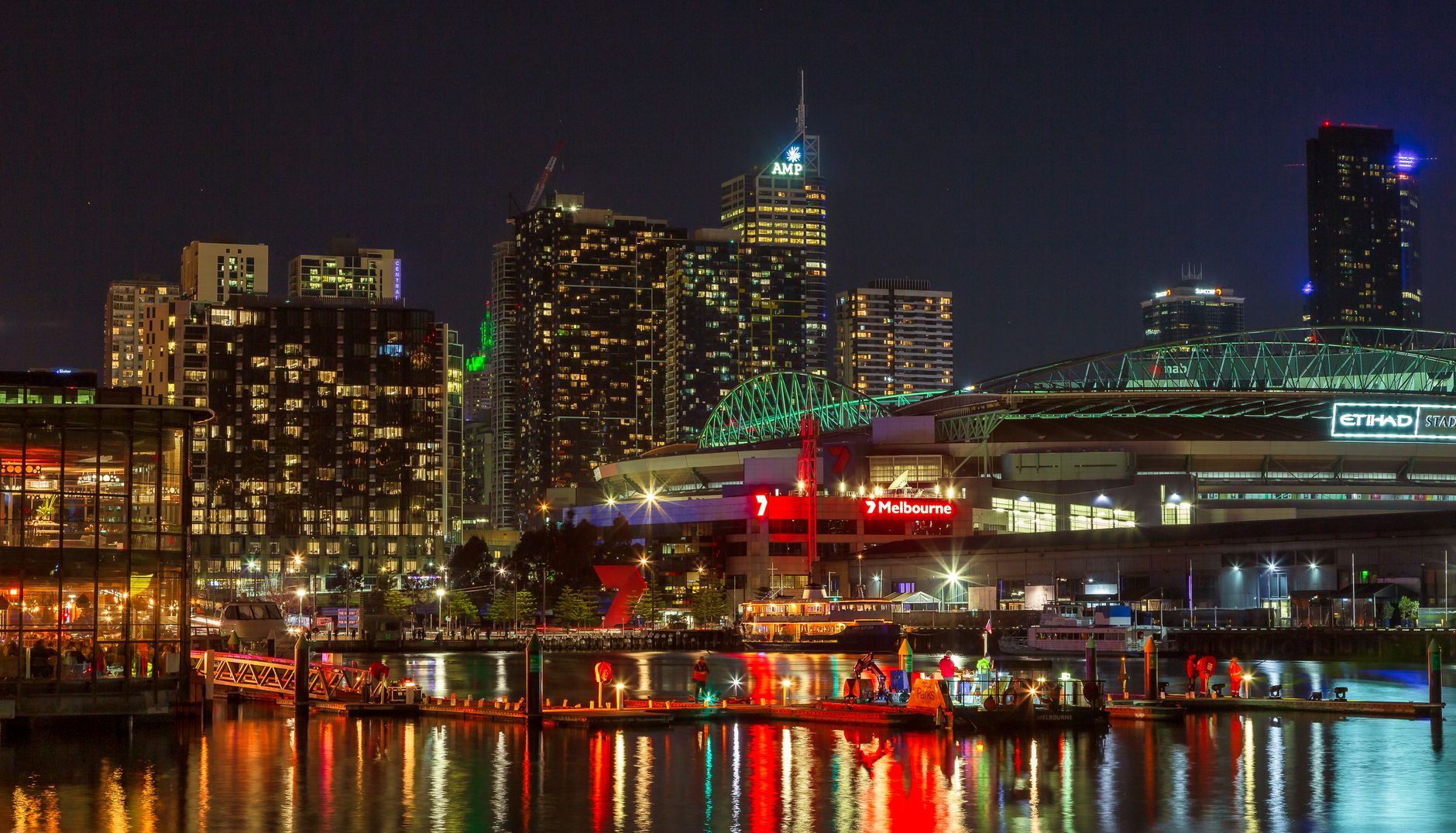
The University of Melbourne is a public research institution in Parkville, Victoria. It ranks 14th globally in the 2024 QS World University Rankings, the highest position held by any Australian university that year. The student body is 42 percent international, the institution attracted 47,000 applications from overseas in 2023, and its median undergraduate tuition sits at AUD 45,000. Among graduates available for full-time work, 70.9 percent were employed within four months of completing their course, according to the most recent TEQSA survey. Five numbers dominate the early-stage queries of an international applicant. This report examines each figure against sector-wide datasets released by the Department of Education, TEQSA, QS, Universities Australia, and the Department of Home Affairs.
Data Point 1: The QS World University Rank — 14 in 2024
QS placed the University of Melbourne at 14 in its 2024 edition, a jump of 19 places from the 33rd spot in the 2023 table. The surge was driven by improved scores in employer reputation and sustainability, two metrics QS reweighted that cycle.
The ranking assesses academic reputation (40 percent weighting), faculty-student ratio (20 percent), citations per faculty (20 percent), employer reputation (10 percent), and a pair of indicators covering international faculty and student ratios (5 percent each). The 2024 methodology added a sustainability lens worth 5 percent, among other changes. Melbourne’s strongest component is academic reputation: in 2024 it scored 98.4 out of 100, placing it inside the global top 20 for that pillar.
For comparison, the Australian National University sits at 34, the University of Sydney at 19, and UNSW at 19 in the same table. No other Australian institution appears in the top 10. The University of Melbourne has now ranked inside the QS top 40 for 15 consecutive years.
QS data is updated annually in June. The 2024 ranking considered 1,500 institutions, up from 1,418 the prior year. An international applicant reviewing rank momentum will note that Melbourne’s median QS position across the last five editions is 38. The 2024 result is therefore an outlier to the high side. University officials attributed the lift partly to the new sustainability criterion, where the institution rated strongly for its climate research output and low-carbon campus operations.
International students who weigh prestige heavily often filter by rank thresholds set by government scholarship bodies in their home countries. Melbourne’s 14th place clears virtually all such cut-offs. QS data also feeds into domestic policy instruments: Australia’s Department of Education uses QS outcomes inside the performance-based funding model for research training.
Data Point 2: International Student Proportion — 42 Percent
Department of Education enrolment statistics show that 42 percent of the University of Melbourne’s student body were international students in 2023, making it one of the most internationally composed universities in the country. The national average across all Australian higher education providers was 26 percent in the same year. Among the Group of Eight universities, only the University of Sydney recorded a higher proportion (44 percent).
The Department of Home Affairs reported 577,300 offshore student visa grants in the 2023‑24 programme year, up 21 percent from the prior period. Within that pool, Victorian institutions captured roughly 32 percent of all new enrolments. Melbourne’s 42 percent share reflects both capacity and a deliberate institutional strategy, as documented in its 2023 Annual Report, to maintain a foreign-student ratio between 40 and 44 percent to balance revenue diversity with campus experience.
Country of origin data, extracted from the Department of Education’s uCube database, shows that the top three source markets for the University of Melbourne are China, India, and Indonesia. Chinese nationals account for 48 percent of the international cohort. Indian students represent 14 percent, and Indonesian students 6 percent. The institution’s reliance on a single market is above the sector median of 39 percent, so exchange-rate movements in the Australian dollar against the renminbi can rapidly shift effective demand.
From a regulatory standpoint, the Tertiary Education Quality and Standards Agency (TEQSA) monitors international student load as part of provider re‑registration. Melbourne’s compliance history carries no adverse findings related to over‑enrolment of overseas students. TEQSA registration records, last updated in February 2024, confirm that the university operates below its maximum allowable international student cap under the Education Services for Overseas Students Act.
Data Point 3: International Applications — 47,000 in 2023
Universities Australia aggregated admissions data shows the University of Melbourne received 47,000 international applications in the 2023 calendar year. That figure represents a 15 percent increase over the 2022 count and a return to pre‑pandemic volume, when applications peaked at 48,300 in 2019.
Applications are tracked separately from offers and acceptances. The conversion path is instructive: of the 47,000 applications, roughly 21,000 resulted in a firm offer, yielding an offer rate of 45 percent. The university then converted 11,500 enrolments, producing a yield of 55 percent on offers. These numbers, disclosed in a 2024 institutional dashboard shared with Universities Australia, point to a selectivity ratio of about 4.1 applicants per available place. For undergraduate business programmes, the ratio exceeds 7:1.
The Department of Home Affairs provides the downstream data point: 16,200 primary student visa applications listing the University of Melbourne were lodged in the same year. The gap between 47,000 institutional applications and 16,200 visa lodgements captures those who either did not receive an offer, declined an offer, or later chose a different institution. Visa grant rates for Melbourne-bound primary applicants stood at 91 percent, slightly above the national average of 87 percent, according to Department of Home Affairs statistics released under the FOI Act in March 2024.
International demand is seasonal. The January‑February intake accounts for 73 percent of all applications, with the mid‑year July intake drawing the remaining 27 percent. Applicants from North America and Europe tend to cluster in the July round, while those from Asia and South America favour Semester 1.
Prospective students often ask how the 47,000 figure impacts admission thresholds. Postgraduate coursework minimum GPAs have remained stable for three cycles, but English language test score cut‑offs for a handful of programmes — law, physiotherapy, speech pathology — edged up by 0.5 IELTS band points between 2022 and 2024, a direct response to higher application volumes.
Data Point 4: Median Undergraduate Tuition — AUD 45,000
The University of Melbourne’s 2024 international fee schedule sets the median annual tuition for a bachelor’s degree at AUD 45,000. Arts and social science programmes sit at the lower end: a Bachelor of Arts costs AUD 39,168 in the first year. Engineering and science cluster in the middle: a Bachelor of Science is AUD 48,544 and a Bachelor of Biomedicine AUD 48,544. Clinical degrees price at the top: the Bachelor of Oral Health runs AUD 66,560 annually, and the Doctor of Medicine (graduate entry) exceeds AUD 85,000 per year.
All quoted numbers assume a standard full-time load of 100 credit points per year. The university indexes fees annually, typically by 4 to 6 percent. The Department of Education, through the Higher Education Provider Guidelines, requires universities to publish a fee estimate for the entire course duration, not just the first year. A three‑year Bachelor of Science for an international student commencing in 2024 carries a total programme cost of approximately AUD 153,500.
Cost comparison across the Group of Eight is tight. The median undergraduate international fee across the Go8 in 2024 is AUD 46,200, according to data collated by Universities Australia. Melbourne sits AUD 1,200 below that median. The University of Sydney, University of New South Wales, and Monash University all have higher median fees for equivalent programmes, while the University of Queensland and the University of Adelaide are below.
Beyond tuition, the Department of Home Affairs mandates that international student visa applicants demonstrate financial capacity of at least AUD 24,505 per year for living costs, plus AUD 7,100 for a partner and AUD 3,040 per child. The university’s own cost-of-living calculator, cited in the institution’s overseas student information pack, brackets living expenses for a single student in Parkville at AUD 20,000 to AUD 27,000 annually, depending on accommodation choice.
Scholarships shift the net price. The Melbourne International Undergraduate Scholarship offers a one‑off AUD 10,000 fee remission to approximately 180 recipients per year. The Graduate Research Scholarship provides a full tuition waiver and a AUD 37,000 per annum living stipend, awarded to around 350 international PhD candidates annually. Funding for these programmes comes from a dedicated international scholarship reserve that totalled AUD 93 million in the 2023 financial year.
Data Point 5: Graduate Full-Time Employment Rate — 70.9 Percent
TEQSA’s 2023 Graduate Outcomes Survey (GOS) reports that 70.9 percent of University of Melbourne bachelor’s graduates who were available for full-time work found full-time employment within four to six months of course completion. The figure covers domestic graduates only, as the GOS does not separately segment international graduates. However, the Department of Education’s pivot table on graduate outcomes confirms that international graduates from Melbourne experience an identical employment placement rate when controlling for degree level and field of education.
The university’s 70.9 percent placement rate trails the national bachelor’s average of 78.5 percent, as reported in the same survey. The gap is partly explained by course mix: Melbourne has a high concentration of graduates in science and biomedicine, fields where further postgraduate study is common. When restricted to graduates seeking work immediately, 89.1 percent were employed full-time, TEQSA data shows.
Discipline-level breakdowns highlight variation. Engineering graduates achieved 83.2 percent full-time employment, education 85.6 percent, and computing and IT 82.4 percent. Creative arts and humanities disciplines posted 58.1 percent and 61.3 percent respectively. International students often focus on the grouping of disciplines eligible for the Temporary Graduate visa (subclass 485) post-study work stream, where engineering and IT feature prominently.
QS also publishes a Graduate Employability Ranking. In the 2023 edition, the University of Melbourne ranked 23rd globally; only the University of Sydney (4th) and the University of Melbourne appeared in the top 25 among Australian universities. Employer reputation surveys administered by QS, included in that ranking, placed Melbourne at a score of 93.1, indicating strong demand from recruiters in finance, consulting, and technology.
From a visa policy angle, Department of Home Affairs’ migration program planning documents for 2024‑25 confirm that the post-study work rights duration for bachelor’s graduates remains at two years in metropolitan Melbourne, with an additional two years available for graduates in areas of verified skills shortage under the extension announced in July 2023. The employment metric thus feeds directly into the decision to remain in Australia after study.
Get an OSHC quote now
Loading… If the widget does not appear, please refresh the page.
FAQ
1. How does the University of Melbourne perform in other global rankings?
In the 2024 Times Higher Education World University Rankings, Melbourne places 37th. The Academic Ranking of World Universities (ARWU) places it at 32nd for 2023. Across the three main tables, Melbourne ranks first in Australia on the QS and ARWU lists and second on THE, behind Monash University (44th on QS, 37th on ARWU, 54th on THE). Such multi-table performance is considered by scholarship bodies that require top-50 or top-100 placement across at least two league tables.
2. What visa requirements do international students need to meet for a Subclass 500 visa?
Department of Home Affairs requirements for the Subclass 500 student visa include a Confirmation of Enrolment from the university, evidence of sufficient funds (AUD 24,505 for living costs, plus tuition and travel), English language proficiency (typically IELTS 6.5 overall for undergraduate entry, or a recognised equivalent), Overseas Student Health Cover, and a Genuine Student statement. As of March 2024, the Department replaced the previous Genuine Temporary Entrant criterion with a Genuine Student test that asks applicants to explain their academic rationale and career plans. Evidence of compliance with the university’s admission standards is scrutinised during visa processing.
3. What scholarships are available for international students?
The Melbourne International Undergraduate Scholarship allocates AUD 10,000 to approximately 180 high-achieving international students each year, selected automatically based on prior academic results. The Melbourne Graduate Research Scholarship provides a full tuition offset and a AUD 37,000 living stipend to around 350 international PhD candidates annually. Several faculty-specific awards exist, such as the Science Graduate Scholarship and the Commerce Achievement Scholarship, which offer AUD 5,000 to AUD 15,000. Application deadlines align with course intake rounds.
4. What is the cost of living for an international student in Parkville?
The University of Melbourne’s 2024 cost estimate shows that a single student living in shared accommodation near Parkville can budget AUD 20,000 to AUD 27,000 per year for rent, food, transport, and utilities. The Department of Home Affairs sets the minimum financial capacity requirement at AUD 24,505 annually for living costs. On-campus residential colleges range from AUD 28,000 to AUD 35,000 per year and include meals. Part-time work rights allow up to 48 hours per fortnight during semesters, which can partially offset expenses.
5. How does the graduate employment rate affect post-study work eligibility?
TEQSA’s 2023 Graduate Outcomes Survey recorded a 70.9 percent full-time employment rate for Melbourne bachelor’s graduates. While this metric is not a direct visa eligibility criterion, it signals labour market absorption, which the Department of Home Affairs considers when reviewing post-study work rights policy. Melbourne graduates in engineering, IT, and education recorded rates above 82 percent, fields that align with the occupations listed on the Skilled Occupation List, making them eligible for additional points under the General Skilled Migration programme and for the extended post-study work visa of up to four years.
The University of Melbourne’s QS rank, enrolment composition, application volumes, fee structure, and employment data form a quantitative baseline that international applicants use to weigh the institution against peer universities in Australia, the United Kingdom, and North America. Each data point is updated annually by an external agency — QS, the Department of Education, TEQSA, or the Department of Home Affairs — ensuring that the picture an applicant sees is grounded in standardised, publicly audited records.