2026-05-20
TAFE Queensland(昆士兰TAFE)Australia Study Guide: Programs, Entry Requirements, Costs and Student Life
A practical study guide to TAFE Queensland(昆士兰TAFE), Australia's public vocational education provider: programs by study area, entry requirements for international students, 2026 tuition figures, application steps and student support. Based on the official website, August 2026.
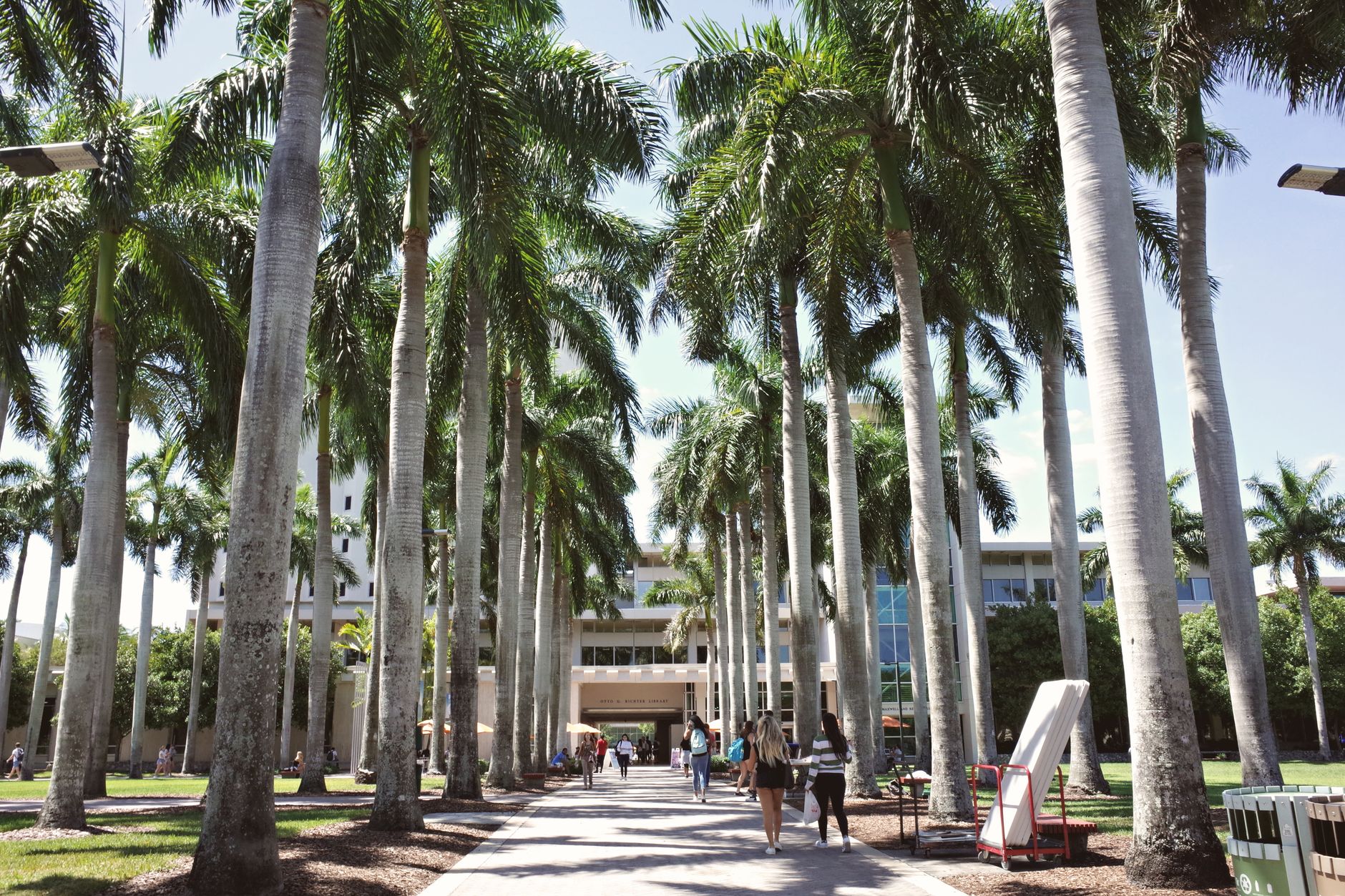
This guide brings together what international students need to know about studying with TAFE Queensland(昆士兰TAFE), the public vocational education provider that operates training facilities right across the Australian state of Queensland. Everything here is drawn from the TAFE Queensland official website as of early August 2026; course details and fees change, so always check the latest official pages before applying.
What TAFE Queensland is and where it operates
TAFE Queensland is Queensland’s public vocational education and training (VET) institution. Its registrations give the clearest picture of what it is: CRICOS provider code 03020E, Registered Training Organisation number 0275, and registration as a higher education provider under PRV13003. In practice that means TAFE Queensland can issue nationally recognised vocational qualifications and also offer associate degrees, bachelor degrees and postgraduate programs in selected fields. Campuses sit in seven regions — Greater Brisbane, the Gold Coast, the Sunshine Coast, Wide Bay Burnett, Central Queensland, North Queensland and the Darling Downs/South West — with major sites at South Bank, Mount Gravatt, Bracken Ridge and Acacia Ridge in Brisbane, Southport and Coomera on the Gold Coast, Mooloolaba and Nambour on the Sunshine Coast, plus Cairns, Townsville, Toowoomba and Ipswich. Online study is available for some courses. For students who want hands-on, employment-focused training in Australia, the geographic spread alone makes TAFE Queensland worth considering.
Programs: study areas, levels and campuses
TAFE Queensland organises its international courses into eight study areas: business and IT, creative industries, education and community, environment and animal services, health and science, infrastructure and transport, service industries, and trades. English language courses sit alongside these. Qualification levels run from Certificate III and Certificate IV through diplomas and advanced diplomas up to associate degrees, bachelor degrees and postgraduate programs, with durations from six months to three years. Popular examples show the range: the Diploma of Nursing takes about 18 months, the Certificate III in Carpentry two years, and the Diploma of Business one year. Several programs are flagged as quota programs with limited places, including the Certificate IV in Cyber Security, the Diploma of Nursing and the Certificate III in Carpentry. Individual courses are tied to specific campuses — cabinet making runs from Brisbane and the Gold Coast, nursing is offered across multiple sites — so the campus filter on the TAFE Queensland international course search matters as much as the course itself. English programs such as General English and IELTS Preparation start any Monday and can be packaged with vocational study.
Entry requirements: academic and English
TAFE Queensland sets two tiers of academic entry requirements for international students. Certificate III programs require an Australian Year 10 equivalent qualification; Certificate IV, diploma and advanced diploma programs require a Year 12 equivalent. For Chinese applicants the official equivalency table is specific: completion of Senior Grade 1 with passes above 60 per cent in core subjects such as maths, English and science counts as Year 10 equivalent, while three years of senior middle school (academic, technical or vocational) with the same pass standard counts as Year 12 equivalent. English language requirements are tiered by qualification level: Certificate III/IV, diploma and advanced diploma programs ask for IELTS Academic 6.0 overall with no band below 5.5; associate degrees require 6.0 overall with 6.0 in writing; bachelor and postgraduate programs require 6.5 overall with no band below 6.0. Some courses set higher bars. Applicants without a formal English test can take a supervised placement test and enter an English language course first — but that test only determines how many weeks of English study are needed; it is not accepted as direct entry to a vocational program. Course pages remain the final authority on any extra requirements.
Costs: tuition, fees and budget planning
TAFE Queensland publishes a single international price list (last updated 5 August 2026) with total tuition per course. Short six-month programs mostly sit under $10,000: the Certificate III in Information Technology is $8,250 and the Certificate III in Health Services Assistance $7,600. One-year programs cluster between about $10,000 and $23,000, for example the Certificate III in Early Childhood Education and Care at $9,600, the Diploma of Community Services at $16,600, and the Diploma of Information Technology at $23,000. Two-year trade programs run from roughly $25,000 to $30,000: the Certificate III in Carpentry is $28,800, the Certificate III in Heavy Commercial Vehicle Mechanical Technology $25,200, and the Certificate III in Marine Craft Construction $30,000. High-cost health programs go further — the Diploma of Nursing is $32,400 to $33,600 depending on intake, and the Diploma of Dental Technology $45,600. Bachelor programs are priced as a total for the program, with the Bachelor of Nursing listed at $32,000 for the three-year degree. English courses are charged per week: $360 for up to 12 weeks and $330 for 13 or more weeks in 2026, rising to $371 and $340 in 2027, with material fees and a one-off application fee applying to English courses. A realistic budget adds three layers on top of tuition: overseas student health cover for the full visa period, accommodation and living costs which vary by city, and course-related extras such as materials or equipment. The price list carries an explicit warning that prices are subject to change without notice, so treat these figures as planning ranges and confirm against the current official price list and your letter of offer.
Student life and support
TAFE Queensland provides a dedicated support structure for international students. International student support advisers based across the regions help with accommodation, opening a bank account, using public transport, homesickness and culture shock, and can explain how overseas student health cover and local health services work and what the conditions of a student visa mean in practice, including attendance, academic progress and work limits. An International Student Orientation Handbook helps new students settle in, and the final step of the official application process is attending orientation after arriving in Queensland. Queensland’s subtropical climate brings more than 300 days of sunshine a year, which shapes both the lifestyle and the study rhythm; the official accommodation guidance covers homestay, hostels, hotels and apartments, and advises checking how close a property is to public transport. On the visa side, student visa (subclass 500) holders may work up to 48 hours per fortnight during course semesters and must maintain overseas student health cover for the entire visa period. Students under 18 need welfare and accommodation arrangements that meet federal immigration requirements, so this should be confirmed early rather than left to the last minute.
Application timeline and key dates
The official application process runs in six steps: check the evidence list for a student visa application (the provider CRICOS code is 03020E), confirm entry requirements and key dates, prepare certified copies of your passport, transcripts, qualifications and English test results, submit through the TAFE Queensland international application portal, accept your Letter of Offer by paying fees and arranging overseas student health cover, then use your enrolment confirmation to apply for a student visa (subclass 500) through the federal immigration department’s online system before travelling for orientation. Intake start dates follow the published course schedule — the price list shows most programs starting in late January and mid-July 2027, with some intakes in between — and application deadlines are set per intake on the official pages, so the exact closing dates for your chosen start should be confirmed there. The practical takeaway is to reverse-engineer the timeline: pick an intake, then work backwards from the application close date to your visa application and travel plans. Every figure in this guide reflects the TAFE Queensland website as accessed on 6 August 2026 — verify against the current official pages, and if you are weighing up a specific course, our advisers can help you map your background and budget against the latest official information.