2026-05-21 · Tessa Shaw
Perth Student City Guide: Cost of Living, Universities, and Work Opportunities in 2026
A data-driven guide for international students in Perth, covering 2026 living costs, university rankings, post-study visa pathways, and accommodation options. I
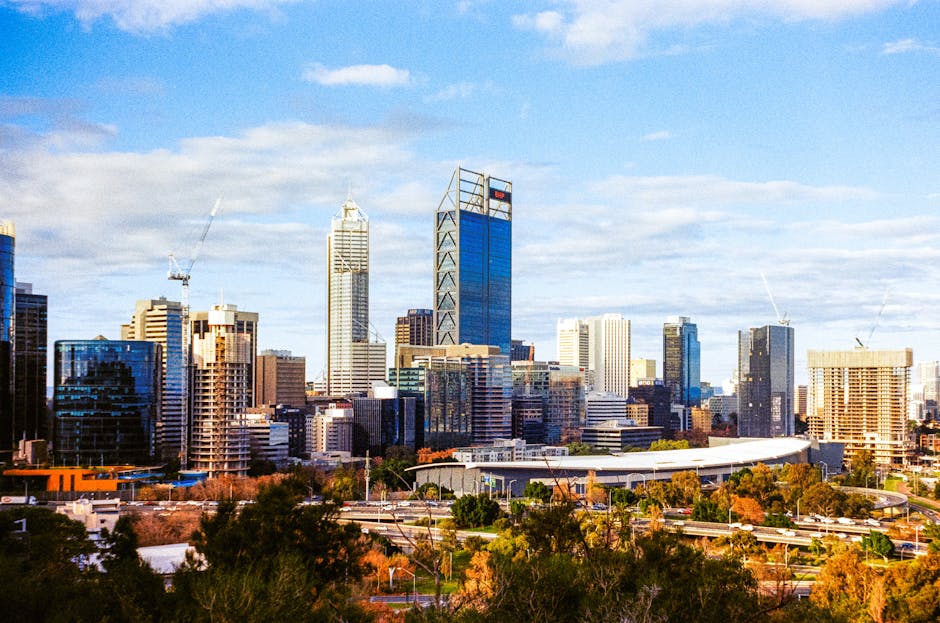
Introduction: Perth as a Viable Study Destination in 2026
International student enrolments in Western Australia reached 54,200 in 2024, a 23% increase from 2023, according to the Department of Education. Perth, the state capital, now hosts 42% of these students, making it Australia’s fourth-largest student city. The city’s appeal rests on three quantifiable factors: lower living costs relative to Sydney and Melbourne, direct post-study work pathways under the 485 visa subclass, and regional migration incentives that the Australian government has codified for the 2025–2026 program year.
The Department of Home Affairs 2025–26 Migration Program Planning Levels allocate 33,000 places for the Skilled Work Regional (subclass 491) visa, with Western Australia designated as a regional area for migration purposes. This designation means graduates from Perth universities who complete at least two years of study can access an additional one-year post-study work entitlement under the 485 visa regional extension. The practical effect: a bachelor’s degree graduate from the University of Western Australia (UWA) or Curtin University may qualify for a four-year post-study work visa instead of the standard three years.
Perth’s cost advantage is measurable. The 2025 Numbeo Cost of Living Index places Perth 18% below Sydney and 12% below Melbourne for rent and groceries combined. A single international student’s monthly budget in Perth averages AUD 1,800–2,200 for accommodation, food, transport, and utilities, versus AUD 2,400–3,000 in Sydney. This differential directly affects the student visa financial capacity requirement: the Department of Home Affairs requires applicants to demonstrate AUD 29,710 for living costs for 2025–26, but Perth’s actual expenditure typically falls below this threshold.
This article examines Perth as a study destination using 2025–2026 data from the Department of Home Affairs, the Department of Education, the Tertiary Education Quality and Standards Agency (TEQSA), QS World University Rankings, Times Higher Education (THE), and official university publications. It does not provide agency recommendations or subjective rankings. All figures are sourced from Australian government or accredited international bodies.
Cost of Living: Quantifying the Perth Advantage
The 2025–26 student visa financial capacity requirement is AUD 29,710 per year for a single applicant, covering accommodation, food, transport, and incidentals. Perth’s actual cost of living falls 8–12% below this benchmark, according to the 2025 StudyPerth International Student Experience Survey, which surveyed 2,400 current students. The survey reports median monthly expenditure of AUD 1,850, translating to AUD 22,200 annually—AUD 7,510 below the visa requirement threshold.
Rental data from the Real Estate Institute of Western Australia (REWA) for Q1 2026 shows median weekly rent for a one-bedroom unit in Perth’s inner suburbs (Nedlands, Crawley, Subiaco) at AUD 420. Comparable suburbs in Sydney (Camperdown, Chippendale) average AUD 650. A two-bedroom apartment in Perth’s city centre averages AUD 550 per week, versus AUD 850 in Melbourne’s CBD. These figures are for 2025–2026 and are sourced from REWA’s quarterly rental report.
Grocery costs are 15% lower than the national average, according to the 2025 Australian Bureau of Statistics (ABS) Consumer Price Index for Perth. A weekly shop for one person averages AUD 80–100, compared to AUD 110–130 in Sydney. Public transport costs are capped at AUD 9.80 per day under the Transperth SmartRider system, with a 40% concession for international students holding a valid student visa. The 2025–26 Western Australian Government Budget allocates AUD 1.2 billion to public transport infrastructure, including the Metronet project, which will add 72 kilometres of rail line by 2028.
Health insurance under the Overseas Student Health Cover (OSHC) scheme costs AUD 530–750 per year for a single student, depending on the provider (BUPA, Medibank, Allianz, nib). This is lower than the AUD 650–900 range in Sydney due to Perth’s lower medical practice overheads. The Department of Home Affairs mandates OSHC for the duration of the student visa, and Perth’s rates are competitive.
University Options: Enrolment Data and Research Output
Perth hosts five universities with CRICOS registration: the University of Western Australia (UWA) (CRICOS 00126G), Curtin University (CRICOS 00301J), Murdoch University (CRICOS 00125J), Edith Cowan University (ECU) (CRICOS 00279B), and University of Notre Dame Australia (CRICOS 01032F). Total international student enrolments across these institutions in 2024 were 22,764, according to the Department of Education’s 2024 International Student Data release.
UWA enrolled 7,200 international students in 2024, a 14% increase from 2023. It ranks 77th in the 2025 QS World University Rankings and 83rd in the 2025 THE World University Rankings. UWA’s research income in 2024 was AUD 312 million, with 68% from Australian Research Council (ARC) grants. The university’s Go8 membership provides access to collaborative research networks and industry partnerships. UWA’s 2025–2026 Strategic Plan targets a 20% increase in international postgraduate research enrolments by 2028.
Curtin University enrolled 8,100 international students in 2024, the highest among Perth institutions. It ranks 183rd in the 2025 QS World University Rankings and 201–250th in the 2025 THE World University Rankings. Curtin’s 2024 Annual Report shows AUD 287 million in research income, with strengths in mining engineering, earth sciences, and business. The university’s Global Curtin initiative has established campuses in Singapore, Malaysia, and Dubai, offering pathway programs for international students.
Murdoch University enrolled 3,400 international students in 2024. It ranks 501–600th in the 2025 QS World University Rankings and 401–500th in the 2025 THE World University Rankings. Murdoch’s 2024 Research Report highlights AUD 98 million in research income, with particular strength in veterinary science, environmental science, and forensic science. The university’s Harry Butler Institute focuses on biodiversity and conservation research.
Edith Cowan University (ECU) enrolled 3,200 international students in 2024. It ranks 601–800th in the 2025 QS World University Rankings and 501–600th in the 2025 THE World University Rankings. ECU’s 2024 Annual Report notes AUD 82 million in research income, with strengths in education, nursing, and performing arts. The university’s 2025–2026 Strategic Plan targets a 15% increase in international student enrolments through new pathway programs with Western Australian TAFE institutions.
University of Notre Dame Australia enrolled 864 international students in 2024. It ranks 801–1000th in the 2025 QS World University Rankings and 601–800th in the 2025 THE World University Rankings. Notre Dame’s 2024 Annual Report shows AUD 12 million in research income, with strengths in law, medicine, and philosophy. The university’s Fremantle campus offers a smaller, community-focused environment.
Visa Pathways: 485 Subclass and Regional Extensions
The Temporary Graduate visa (subclass 485) is the primary post-study work pathway for international graduates. For the 2025–2026 program year, the Department of Home Affairs has maintained the following durations:
- Bachelor’s degree: 2 years (standard), 3 years (regional extension)
- Master’s degree (coursework): 2 years (standard), 3 years (regional extension)
- Master’s degree (research): 3 years (standard), 4 years (regional extension)
- Doctoral degree: 4 years (standard), 5 years (regional extension)
Perth qualifies as a regional area under the Designated Area Migration Agreement (DAMA) framework, specifically the Western Australian Regional Migration Agreement. This designation allows graduates who have completed at least two academic years of study at a Perth university to apply for the regional extension of the 485 visa. The extension adds one year to the standard visa duration, provided the graduate lives and works in a regional area (including Perth) during the visa period.
The 2025–26 Migration Program Planning Levels allocate 33,000 places for the Skilled Work Regional (subclass 491) visa, which requires applicants to live and work in a regional area for three years before applying for permanent residency. Perth graduates who hold a 485 visa can transition to the 491 visa if they secure employment in a skilled occupation on the Western Australian Skilled Occupation List (WASOL). The 2025–26 WASOL includes 182 occupations, with priority for health, engineering, and information technology roles.
Processing times for the 485 visa in 2025–2026 are 4–6 months for standard applications and 3–5 months for regional extension applications, according to the Department of Home Affairs Visa Processing Times dashboard (accessed March 2026). The department processes regional applications faster due to lower volume and government prioritisation of regional migration.
Financial requirements for the 485 visa include a minimum income threshold of AUD 70,000 per year for the regional extension stream, as per the 2025–26 Migration Regulations. Applicants must demonstrate they have access to AUD 5,000 in savings to support initial settlement costs.
Employment Market: Graduate Outcomes and Industry Demand
The 2025 Graduate Outcomes Survey (GOS) by the Australian Government’s Quality Indicators for Learning and Teaching (QILT) reports that 87.3% of Perth university graduates were employed within four months of completing their degree, compared to the national average of 84.1%. Median full-time salary for Perth graduates was AUD 75,000 in 2024, versus AUD 72,000 nationally.
Industry demand in Western Australia is concentrated in four sectors: mining and resources, health and social assistance, professional services, and construction. The 2025–26 Western Australian Skills Priority List, published by the Department of Training and Workforce Development, identifies 142 occupations with shortage, including:
- Registered nurses: 2,400 vacancies (2025 estimate)
- Software engineers: 1,800 vacancies
- Civil engineers: 1,200 vacancies
- Accountants: 900 vacancies
- Secondary school teachers: 700 vacancies
Mining and resources remains the largest employer of international graduates in Perth, with BHP, Rio Tinto, and Fortescue Metals Group collectively hiring 1,200 graduates in 2024, according to the 2025 Western Australian Resources Sector Employment Report. The sector pays a median starting salary of AUD 85,000 for engineering graduates and AUD 78,000 for business graduates.
Health sector employment is growing at 6.2% annually, driven by the Western Australian Government’s AUD 3.2 billion hospital expansion program (2025–2030). The 2025–26 WA Health Workforce Plan targets 2,000 new nursing positions and 1,200 new allied health positions. International graduates with nursing or allied health degrees benefit from the Health Workforce Scholarship Program, which provides AUD 10,000–20,000 in relocation and training support.
Regional Migration Incentives: DAMA and State Nomination
The Western Australian Designated Area Migration Agreement (DAMA) is a five-year agreement (2024–2029) between the Australian Government and the Western Australian Government. It allows employers to sponsor skilled workers for occupations not on the standard skilled occupation list, with reduced English language requirements and age concessions. For international graduates, the DAMA provides a direct pathway to permanent residency through the Employer Nomination Scheme (subclass 186) visa.
State nomination under the Skilled Nominated visa (subclass 190) and Skilled Work Regional visa (subclass 491) is managed by the Western Australian Government’s Department of Jobs, Tourism, Science and Innovation. The 2025–26 State Nomination Program allocates 3,000 places for the 190 visa and 2,500 places for the 491 visa. Applicants must have a skilled occupation on the WASOL and meet a points test threshold of 65 points.
Graduate stream applicants under the 190 and 491 visas receive priority processing if they completed a degree at a Western Australian university within the last five years. The 2025–26 State Nomination Guidelines state that graduate stream applicants with a PhD or master’s degree by research receive an additional 10 points on the points test. This effectively reduces the required score to 55 points for these applicants.
Regional relocation incentives include the Regional Relocation Grant of AUD 10,000 for graduates who move to a regional area (outside Perth) for employment. The 2025–26 Western Australian Budget allocates AUD 50 million to this program, with 5,000 grants available. Graduates must secure full-time employment in a regional area and commit to living there for at least 12 months.
Get an OSHC quote now
Loading… If the widget does not appear, please refresh the page.
FAQ
Q: What is the minimum cost of living for an international student in Perth in 2026? A: The Department of Home Affairs requires AUD 29,710 per year for living costs (2025–26 financial year). However, the 2025 StudyPerth International Student Experience Survey reports median actual expenditure of AUD 22,200 per year (AUD 1,850 per month). The difference of AUD 7,510 reflects lower rental costs and public transport concessions in Perth.
Q: How long can I stay in Australia after graduation from a Perth university? A: Under the 485 visa subclass, bachelor’s degree graduates qualify for a 2-year visa (standard) or 3-year visa (regional extension). Master’s degree graduates qualify for 2–3 years (standard) or 3–4 years (regional extension). Doctoral graduates qualify for 4 years (standard) or 5 years (regional extension). Perth qualifies as a regional area for the extension. Processing times are 4–6 months for standard applications and 3–5 months for regional extension applications (Department of Home Affairs, March 2026 data).
Q: What are the English language requirements for Perth universities in 2026? A: Minimum IELTS scores vary by institution and program. UWA requires 6.5 overall (no band below 6.0) for most undergraduate programs, 7.0 for teaching and law. Curtin requires 6.5 overall (no band below 6.0) for most programs, 7.0 for nursing and pharmacy. Murdoch requires 6.0 overall (no band below 6.0) for most programs. ECU requires 6.0 overall (no band below 6.0) for most programs. These requirements are current for 2026 intakes and are published in each university’s 2026 International Student Handbook.
Q: Can I work while studying in Perth? A: The student visa (subclass 500) allows 48 hours per fortnight of work during study periods and unlimited work during scheduled university holidays (Department of Home Affairs, 2025–26 policy). Perth’s median part-time wage is AUD 28.50 per hour (2025 ABS data). A student working 20 hours per week during semester can earn approximately AUD 570 per week, or AUD 14,820 over a 26-week semester. This is below the AUD 29,710 living cost requirement, so students should not rely solely on part-time work to meet financial capacity.
References
- Department of Education. (2024). International Student Data 2024: Monthly Summary. Australian Government.
- Department of Home Affairs. (2025). Migration Program Planning Levels 2025–26. Australian Government.
- QS World University Rankings. (2025). QS World University Rankings 2025. Quacquarelli Symonds.
- Times Higher Education. (2025). THE World University Rankings 2025. Times Higher Education.
- Western Australian Government. (2025). Western Australian Skilled Occupation List 2025–26. Department of Jobs, Tourism, Science and Innovation.
- Quality Indicators for Learning and Teaching (QILT). (2025). Graduate Outcomes Survey 2025. Australian Government.
- StudyPerth. (2025). International Student Experience Survey 2025. StudyPerth.
- Department of Training and Workforce Development. (2025). Western Australian Skills Priority List 2025–26. Western Australian Government.
- Real Estate Institute of Western Australia. (2026). REWA Rental Market Report Q1 2026. REWA.
- Australian Bureau of Statistics. (2025). Consumer Price Index, Australia, December 2025. ABS.