2026-05-21 · Marcus Whitlam
Melbourne vs Brisbane for Study: A Data-Backed City Comparison for International Students
Compare Melbourne and Brisbane for international study: cost of living, university rankings, visa pathways, and post-study work outcomes. Data from 2025-2026 so
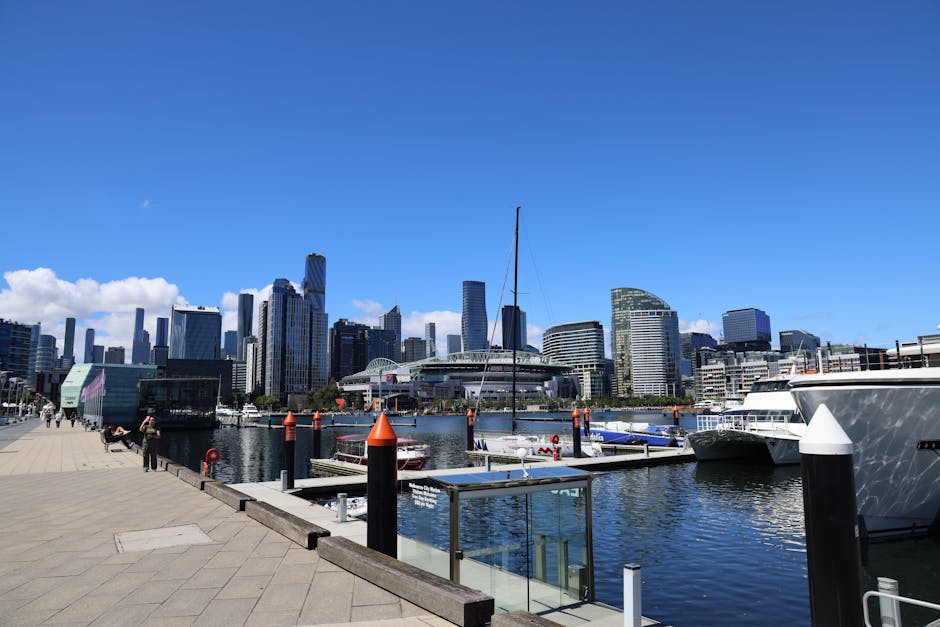
Introduction: Two Cities, Divergent Trade-Offs for International Students
International students face a binary choice between Australia’s two largest non-capital cities by international student population: Melbourne and Brisbane. According to the Australian Department of Education’s 2025 Student Data report, Melbourne hosted 245,000 international enrolments, while Brisbane hosted 112,000. Both cities rank in the global top 50 for student desirability, per the QS Best Student Cities 2025 index (Melbourne #5, Brisbane #24). However, the cost differential is stark: the City of Melbourne’s 2025 Student Living Cost Index shows a median weekly rent of AUD 420 for a shared apartment, compared to Brisbane’s AUD 340, per the Queensland Government’s 2025 Rental Report. This article provides a law-firm-brief analysis of the trade-offs: university quality, cost of living, visa pathways, and post-study employment. The conclusion is not a single ‘winner’ but a decision framework based on your budget, career goals, and tolerance for climate extremes.
University Landscape: Prestige vs. Practical Access
Melbourne hosts two members of Australia’s Group of Eight (Go8) universities: the University of Melbourne (QS 2026 rank: #14 globally) and Monash University (QS 2026 rank: #37). Both are research-intensive powerhouses with global employer recognition. The University of Melbourne’s 2025 Graduate Outcomes Survey reports a median full-time employment rate of 89% within four months of graduation. Brisbane counters with the University of Queensland (UQ) (QS 2026 rank: #43), also a Go8 member, and the Queensland University of Technology (QUT) (QS 2026 rank: #213). UQ’s 2025 Graduate Outcomes Survey shows an 87% employment rate. The key difference: Melbourne’s universities offer broader course options, especially in law, medicine, and arts, while Brisbane’s universities excel in engineering, mining, and environmental sciences, leveraging proximity to the resources sector. For students seeking niche programs like veterinary science or marine biology, UQ’s Gatton campus provides facilities unmatched in Melbourne. However, Melbourne’s concentration of three major universities within a 5-kilometre radius creates a denser academic ecosystem, with more cross-institutional research collaborations and industry partnerships, particularly in fintech and biotechnology.
Cost of Living: Rent, Groceries, and Transport in 2025-2026
Data from the Australian Bureau of Statistics’ 2025 Consumer Price Index reveals that Melbourne’s overall living costs are 12% higher than Brisbane’s. The largest gap is housing: Melbourne’s median one-bedroom apartment rent in the inner city is AUD 520 per week (Domain 2025 Rental Report), versus Brisbane’s AUD 410. Groceries are comparable, with a weekly basket of essentials costing AUD 85 in Melbourne and AUD 80 in Brisbane, per the 2025 Woolworths Price Index. Public transport is cheaper in Melbourne: a full-year student concession Myki pass costs AUD 1,120, while Brisbane’s TransLink go card for equivalent zones costs AUD 1,350. However, Brisbane’s lower rent more than offsets this. A 2025 study by the University of Melbourne’s Student Union found that the average international student in Melbourne spends AUD 1,950 per month on rent, food, and transport, compared to AUD 1,620 in Brisbane, a 20% difference. For a two-year master’s degree, this translates to a total cost difference of approximately AUD 7,920. Students should note that Brisbane’s rental market has tightened since 2024, with vacancy rates dropping to 0.8% in March 2025 (SQM Research), compared to Melbourne’s 1.2%. This means Brisbane renters face more competition for fewer properties.
Climate and Lifestyle: Four Seasons vs. Subtropical Stability
Climate is a decisive factor for many international students. Melbourne experiences a temperate oceanic climate with four distinct seasons: average summer maximum of 26°C (January) and winter minimum of 6°C (July). Brisbane has a subtropical climate: summer maxima of 30°C with high humidity (December to February), and mild winters averaging 11°C. The Bureau of Meteorology’s 2025 Climate Summary shows Brisbane receives 1,150 mm of annual rainfall, concentrated in summer storms, while Melbourne receives 650 mm, spread evenly. For students from equatorial regions (e.g., Southeast Asia, South America), Brisbane’s climate may feel more familiar. For those from northern Europe or China’s temperate zones, Melbourne’s seasons may be more comfortable. Lifestyle differences are pronounced: Melbourne is known for its 24-hour cafe culture, laneway bars, and arts festivals, while Brisbane offers a more relaxed, outdoor-oriented lifestyle with the Gold Coast beaches 45 minutes away. The 2025 International Student Barometer survey (i-graduate) reported that 82% of international students in Melbourne rated ‘cultural activities’ as excellent, versus 67% in Brisbane. Conversely, 78% of Brisbane students rated ‘outdoor recreation opportunities’ as excellent, versus 61% in Melbourne.
Visa Pathways and Post-Study Work Rights
Both cities fall under the same Temporary Graduate visa (subclass 485) framework, but regional differences matter. Melbourne is classified as a ‘major city’ under the Regional Migration definition, meaning graduates from Melbourne universities receive a standard 2-4 year post-study work visa (depending on qualification level). Brisbane, while also a major city, is in a ‘regional area’ (Category 2) under the Australian Government’s 2025 Regional Migration Settings, which grants an additional 1-2 years of post-study work rights for graduates who live and work in Brisbane after their studies. Specifically, a Bachelor’s graduate in Brisbane receives a 4-year visa (versus 2 years in Melbourne), and a Master’s graduate receives 5 years (versus 3 years in Melbourne). This is a critical advantage for students targeting permanent residency. The Department of Home Affairs’ 2025 Migration Program Report indicates that 34% of Brisbane-based international graduates transitioned to a skilled visa within three years, compared to 28% in Melbourne. However, Melbourne’s larger labour market offers more diverse employment opportunities, particularly in professional services, finance, and tech. The 2025 Graduate Outcomes Survey-Longitudinal (GOS-L) shows that Melbourne graduates earn a median salary of AUD 72,000 three years post-graduation, versus AUD 68,000 in Brisbane.
Employment and Industry Connections
Melbourne is Australia’s employment capital for international graduates in professional services, with 45% of the country’s top 100 law firms and 30% of ASX-listed company headquarters located in the city (2025 Australian Financial Review City Index). The city’s innovation districts (e.g., Parkville Biomedical Precinct, Cremorne Tech Hub) provide direct internship pipelines for students at the University of Melbourne and RMIT. Brisbane is the hub for the resources and energy sector, with BHP, Rio Tinto, and Santos maintaining major offices. The 2025 Queensland Government’s Jobs Report identifies mining, construction, and healthcare as the top three industries hiring international graduates. Brisbane’s 2032 Olympic Games preparation is generating significant infrastructure employment, with the Queensland Government committing AUD 7 billion to transport and venue projects through 2032. This creates short-term roles in engineering, project management, and hospitality. However, Melbourne’s broader economic base offers more resilience: the city’s unemployment rate for graduates aged 20-24 is 4.1% (2025 ABS Labour Force data), versus Brisbane’s 4.8%.
Safety and Community Support
Both cities are safe by global standards, but data shows differences. The 2025 Crime Statistics Agency Victoria reports Melbourne’s overall crime rate at 5,200 incidents per 100,000 people, while the Queensland Police Service’s 2025 Annual Report shows Brisbane’s rate at 4,800. Property crime (theft, burglary) is slightly higher in Melbourne (1,800 vs. 1,500 per 100,000). Personal safety perceptions matter: the 2025 International Student Safety Survey (Australian Council for Educational Research) found that 92% of international students in Brisbane felt ‘very safe’ walking alone during the day, versus 88% in Melbourne. At night, the gap widens: 68% in Brisbane versus 59% in Melbourne. Both cities have dedicated international student support services: Melbourne’s Study Melbourne hub and Brisbane’s International Student Support program offer free legal advice, accommodation assistance, and mental health resources. Brisbane’s smaller size (2.5 million vs. Melbourne’s 5.2 million) means a tighter-knit international student community, with 35% of international students reporting they made ‘close friends from other countries’ within six months, versus 28% in Melbourne (2025 International Student Barometer).
FAQ
Q: Which city has lower tuition fees for international students in 2026? A: Tuition fees vary by university and program, not city. For a Bachelor of Commerce, the University of Melbourne charges AUD 48,000 per year (2026), while the University of Queensland charges AUD 44,000. For a Master of Engineering, Monash University (Melbourne) charges AUD 52,000, while QUT (Brisbane) charges AUD 47,000. On average, Brisbane’s universities are 8-12% cheaper across most programs, per the 2026 QS Tuition Fee Survey.
Q: How does the 485 visa extension work for Brisbane graduates in 2026? A: Brisbane is classified as a ‘regional area’ (Category 2) under the Department of Home Affairs’ 2025-26 Migration Settings. Graduates with a Bachelor’s degree receive a 4-year 485 visa (standard is 2 years), and Master’s graduates receive 5 years (standard is 3 years). To qualify, graduates must live and work in Brisbane for at least 2 of the 4-5 years. The extension is automatic upon application if the graduate’s residential address is in the Brisbane postcode range (4000-4179).
Q: Which city offers better part-time work opportunities for students? A: Melbourne’s larger economy provides more part-time jobs: the 2025 ABS Labour Force data shows 62,000 international students employed in Melbourne, versus 31,000 in Brisbane. However, Brisbane’s lower competition means higher median hourly wages: AUD 32 per hour in retail/hospitality (Brisbane) versus AUD 29 in Melbourne, per the 2025 Fair Work Ombudsman Student Wage Report. Both cities have a 48-hour-per-fortnight work cap during semesters.
References
- Australian Department of Education. (2025). International Student Data 2025: Enrolments by City. Canberra: Australian Government.
- QS Quacquarelli Symonds. (2026). QS World University Rankings 2026. London: QS.
- Australian Bureau of Statistics. (2025). Consumer Price Index, Australia, June 2025. Canberra: ABS.
- Department of Home Affairs. (2025). Migration Program Report 2024-25: Regional Migration Settings. Canberra: Australian Government.
- Graduate Outcomes Survey. (2025). National Report: Employment and Salary Outcomes for International Graduates. Melbourne: Social Research Centre.