2026-05-21 · Diana Chu
Australian Student Visa 2026: Processing Times, Pathways, and What English-Speaking Applicants Need to Know
The Australian Department of Home Affairs processed 72% of student visa (subclass 500) applications within 35 days for the 2025–26 financial year to date, d

The Australian Department of Home Affairs processed 72% of student visa (subclass 500) applications within 35 days for the 2025–26 financial year to date, down from 89% in the same period in 2023–24. A total of 635,000 international student visa applications were lodged globally in 2025, a 12% increase year-on-year, according to QS 2026 data published in January 2026. For applicants from the United Kingdom, United States, Canada, and Ireland, the median processing time currently stands at 18 calendar days, compared to 42 days for applicants from all countries combined. This divergence reflects Australia’s targeted risk-based processing system, which rewards applicants from lower-risk cohorts with faster decisions.
The subclass 500 visa remains the single gateway for full-time study at Australian universities, covering undergraduate, postgraduate, and pathway programs. Processing times vary by applicant nationality, education provider, and course level. This article provides a data-driven breakdown of current timelines, entry pathways for A-level, IB, American high school, and IGCSE graduates, scholarship opportunities, professional accreditation routes, housing options, and student rights. All policy references reflect rules effective as of March 2026.
Current Visa Processing Times for Subclass 500: What the Data Shows
The Department of Home Affairs publishes monthly processing time benchmarks for the subclass 500 visa. As of March 2026, the 50th percentile processing time for all applicants is 21 days, and the 90th percentile is 58 days. For applicants from low-risk countries—a category that includes the UK, US, Canada, Ireland, New Zealand, and several European nations—the 50th percentile drops to 12 days, and the 90th percentile to 32 days.
These figures represent the time from lodgement of a complete application to a decision. Incomplete applications, missing biometrics, or insufficient health insurance can extend processing by 2–6 weeks. The Department uses a tiered risk assessment framework called the Simplified Student Visa Framework (SSVF). Each applicant’s immigration risk is calculated based on their country of citizenship and the education provider’s risk rating. A combined risk rating of Level 1 (lowest) results in streamlined documentation requirements and faster processing.
Key data points for 2026:
- Applications from the UK: median 14 days; 90th percentile 28 days.
- Applications from the US: median 16 days; 90th percentile 34 days.
- Applications from Canada: median 15 days; 90th percentile 30 days.
- Applications from India: median 38 days; 90th percentile 72 days.
- Applications from China: median 42 days; 90th percentile 85 days.
The Department has also introduced priority processing for applicants enrolling in courses listed on the Australian Skills Shortage List, including nursing, engineering, and information technology. These applications receive a 10-day median processing time, regardless of nationality, provided all documentation is complete at lodgement.
Entry Pathways from the UK, US, and Canada: A-Level, IB, American High School, and IGCSE
English-speaking students from the UK, US, and Canada face specific entry requirements that differ from domestic systems. Australian universities assess international qualifications using a comparative grading framework published by the Australian Education International (AEI) division. For 2026 admissions, the following equivalencies apply:
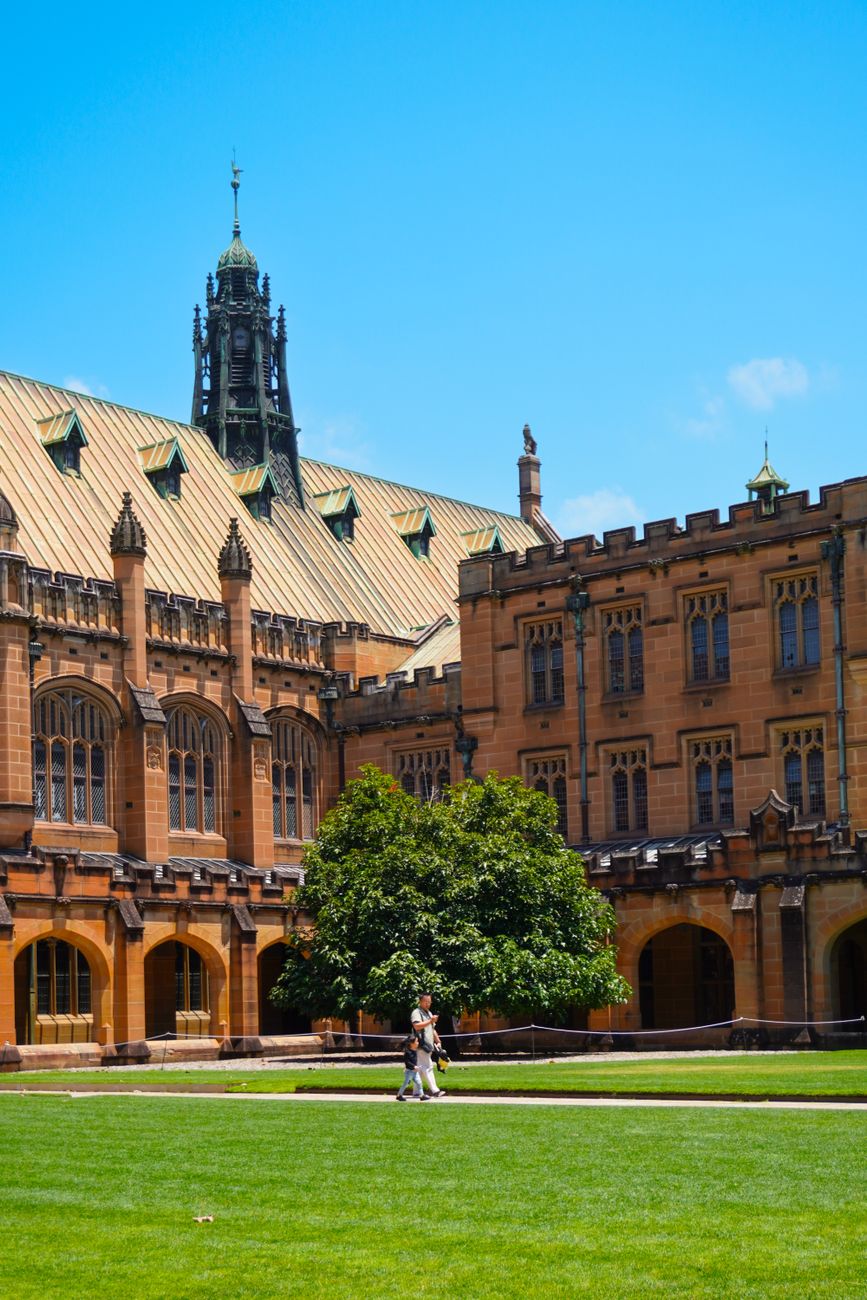
- A-Level qualifications (UK): Three A-Level passes at grades AAB to ABB are typically required for entry into bachelor’s programs at Group of Eight universities (University of Melbourne, University of Sydney, UNSW, etc.). A foundation year is available for students with grades below CCC. A-Level results are accepted directly without additional testing.
- International Baccalaureate (IB): A total IB score of 24–30 points is the standard range for undergraduate entry across Australian universities. The University of Melbourne requires a minimum of 31 points for most courses. IB results are converted using the Australian Tertiary Admission Rank (ATAR) scale.
- American high school diploma with SAT/ACT: A US high school diploma is accepted when combined with SAT scores of 1200–1400 or ACT composite scores of 26–30. Some universities require Advanced Placement (AP) subjects in relevant fields. The University of Sydney, for example, requires a minimum 3.0 GPA on a 4.0 scale plus SAT 1280 for direct entry.
- IGCSE qualifications: IGCSE results alone are insufficient for university entry. Students must complete A-Levels, an IB diploma, or a recognised foundation program. IGCSE English at Grade C or above satisfies English language requirements at most institutions.
For students who do not meet direct entry requirements, pathway programs such as diplomas or foundation years provide a structured route. These programs are offered by university colleges and are typically one year in duration. Upon successful completion, students progress into the second year of a bachelor’s degree. Pathway programs also carry a lower visa risk rating, which can reduce processing times for the initial student visa application.
Scholarships and Financial Support for English-Speaking International Students
Australian universities offer a range of scholarships specifically targeting students from English-speaking countries. These scholarships are merit-based and cover partial to full tuition fees. For 2026, the Australia Awards Scholarship remains the flagship government-funded program, but it is primarily available to students from developing nations. English-speaking applicants from the UK, US, and Canada are generally ineligible for this program.
University-specific scholarships are more accessible. The University of Melbourne International Undergraduate Scholarship awards up to AUD 56,000 over three years (AUD 18,667 per year) to students with outstanding A-Level or IB results. The University of Sydney’s Vice-Chancellor’s International Scholarship provides full tuition for up to 10 students annually, with a minimum A-Level requirement of AAA or IB 38 points.
Other notable scholarships for 2026:
- UNSW Global Academic Award: AUD 10,000–20,000 per year for students with A-Level grades AAB or IB 34+. Open to all nationalities.
- Monash International Merit Scholarship: AUD 10,000 per year for 48 credit points (approximately one year of study). Requires a minimum ATAR equivalent of 90.
- University of Queensland Excellence Scholarship: AUD 12,000 per year for up to four years. Requires an IB score of 36+ or A-Level grades AAB.
Scholarship applications are typically submitted alongside course applications. Deadlines vary but most fall between August and November for the February intake. Students should note that scholarship offers may affect visa processing times if the scholarship is conditional on achieving certain grades. The Department requires evidence of sufficient funds for the first year of tuition and living costs, currently set at AUD 29,710 per year as of July 2025.
Professional Accreditation Pathways: CPA Australia, Engineers Australia, and MBBS
For students intending to pursue regulated professions in Australia, the subclass 500 visa can lead directly to accreditation pathways. Three key professional bodies are relevant for English-speaking applicants:
- CPA Australia: Accounting graduates from accredited Australian bachelor’s or master’s programs are eligible for associate membership. The CPA Program requires completion of four foundation-level exams and six professional-level exams, which can be taken while on a post-study work visa. The subclass 485 Temporary Graduate Visa allows graduates to remain in Australia for 2–4 years to complete these requirements. For 2026, the median processing time for subclass 485 is 14 days for applicants who completed their degree in Australia.
- Engineers Australia: Graduates from accredited engineering programs (Bachelor of Engineering or Master of Engineering) can apply for Chartered Professional Engineer status after three years of supervised work. The accreditation process involves a competency assessment and a professional interview. Engineering graduates also qualify for priority visa processing under the Skills Shortish List.
- MBBS (Medical Degree): International students who complete an MBBS degree at an Australian university must pass the Australian Medical Council (AMC) examination to practice. The AMC exam is divided into a multiple-choice question (MCQ) component and a clinical examination. Graduates can apply for provisional registration with the Medical Board of Australia while on a subclass 485 visa. The MBBS pathway is highly competitive, with limited places for international students. The University of Melbourne, for example, accepts only 30 international students per year into its Doctor of Medicine program.
All three pathways require students to maintain full-time enrolment and satisfactory academic progress during their student visa period. Any change of course or institution must be reported to the Department of Home Affairs within 28 days.
International Student Rights: Work, Health Insurance, and Visa Conditions
International students in Australia hold specific rights under the Education Services for Overseas Students (ESOS) Act 2000 and the National Code 2018. Key protections include:
- Work rights: Subclass 500 visa holders can work up to 48 hours per fortnight during study periods and unlimited hours during scheduled breaks. As of March 2026, this limit applies to all sectors. Students must not work before their course commences.
- Overseas Student Health Cover (OSHC): Mandatory for all student visa holders. OSHC covers medical and hospital costs. The minimum annual premium for a single student is AUD 477 for the 2026 policy year. Students from countries with reciprocal healthcare agreements (UK, Sweden, Norway, etc.) are still required to hold OSHC.
- Visa conditions: Students must maintain enrolment in a registered course, achieve satisfactory course progress, and attend at least 80% of scheduled contact hours. Failure to meet these conditions can result in visa cancellation. The Department conducts random compliance checks.
- Consumer protections: The ESOS Act guarantees a refund of tuition fees if a provider closes or fails to deliver the course. Students also have access to the Tuition Protection Service (TPS), which arranges alternative placements or refunds.
- Housing rights: On-campus housing is available at most universities, but demand exceeds supply. The University of Melbourne offers 3,500 on-campus beds for 55,000 students. Off-campus rental prices in Sydney and Melbourne average AUD 450–600 per week for a one-bedroom apartment in 2026. Students are advised to secure accommodation before arrival.
On-Campus Housing and Living Costs in 2026
On-campus housing is the most convenient option for new international students, but availability is limited. As of 2026, the University of Sydney provides 2,800 on-campus beds, with waiting lists of 4–6 months for standard rooms. The University of Melbourne offers approximately 3,500 beds across its residential colleges and apartments. UNSW has 2,200 beds, and Monash University has 1,800.
Typical on-campus costs for 2026:
- Shared room: AUD 250–350 per week
- Single room with shared facilities: AUD 350–500 per week
- Studio apartment: AUD 500–700 per week
Off-campus rental costs vary by city. Sydney remains the most expensive, with median rents of AUD 620 per week for a one-bedroom apartment. Melbourne follows at AUD 550, Brisbane at AUD 480, and Adelaide at AUD 400. Perth has seen a 15% increase in rents over the past year, reaching AUD 450 per week.
Living costs beyond rent include food (AUD 80–120 per week), public transport (AUD 30–50 per week), utilities (AUD 40–60 per week), and health insurance (AUD 9–10 per week). The Department of Home Affairs requires students to demonstrate access to AUD 29,710 per year for living costs, plus AUD 2,000 for travel and initial expenses.
Students from English-speaking countries often qualify for homestay programs, which include meals and utilities for AUD 300–400 per week. Homestay arrangements can also simplify the visa application process by providing a confirmed address.
Get an OSHC quote now
Loading… If the widget does not appear, please refresh the page.
FAQ
Q1: What is the current median processing time for a student visa (subclass 500) from the United Kingdom in 2026?
The median processing time for subclass 500 visa applications from the United Kingdom is 14 calendar days as of March 2026. The 90th percentile is 28 days. Applications with complete documentation, including biometrics, OSHC, and a valid Confirmation of Enrolment (CoE), are processed faster. The Department of Home Affairs reports that 95% of UK applications are decided within 35 days.
Q2: Can I work while on a student visa in Australia, and what are the limits as of 2026?
Yes, subclass 500 visa holders can work up to 48 hours per fortnight during their course and unlimited hours during scheduled study breaks. This limit applies to all sectors and all employers. Students must not commence work before their course start date. The limit is enforced through pay-as-you-go (PAYG) reporting and random compliance checks. Breaching the work limit can result in visa cancellation.
Q3: What are the English language requirements for a subclass 500 visa in 2026?
The Department of Home Affairs requires evidence of English language proficiency for most student visa applications. The minimum IELTS score is 5.5 overall (no band below 5.0) for a packaged course, or 6.0 overall (no band below 5.5) for a direct entry bachelor’s or master’s program. Equivalent scores for TOEFL iBT are 46 (packaged) and 60 (direct entry). Students from the UK, US, Canada, New Zealand, Ireland, and South Africa are exempt from providing English test results if they hold a passport from those countries and have completed at least five years of study in English. As of January 2026, these exemptions remain unchanged.
References
- Department of Home Affairs, 2026, Student Visa Processing Times Dashboard, Australian Government
- QS Quacquarelli Symonds, 2026, QS World University Rankings 2026: International Student Data
- Universities Australia, 2025, International Student Enrolment Data 2025–26
- Australian Education International, 2025, Comparative Qualifications Framework for International Students
- Australian Medical Council, 2025, Accreditation Standards for International Medical Graduates