2026-05-21 · Marcus Whitlam
University of Sydney vs UNSW for Engineering: A 2026 Data-Driven Comparison for International Students
The University of Sydney and UNSW Sydney are the two dominant choices for international students seeking engineering degrees in Australia. In the 2026 QS World
The University of Sydney and UNSW Sydney are the two dominant choices for international students seeking engineering degrees in Australia. In the 2026 QS World University Rankings by Subject, UNSW ranked 27th globally for Engineering and Technology, while the University of Sydney placed 45th. According to the Department of Home Affairs 2026 data, 14,200 international students commenced engineering programs in Australia in the 2025–26 academic year, with 38% enrolling in New South Wales institutions. This article provides a structured comparison of admissions, costs, pathways, and post-study outcomes for students from the UK, US, and other English-speaking regions.
Admissions Pathways for UK A-Level, IB, and US High School Students
UK A-Level applicants face different entry requirements between the two universities. The University of Sydney typically requires AAA for its Bachelor of Engineering (Honours) programs, with specific subject prerequisites in mathematics and physics. UNSW generally expects AAA for its equivalent programs, though competitive streams like Aerospace or Biomedical Engineering may require AAA. Both institutions accept predicted grades for conditional offers, with final confirmation upon results release.
International Baccalaureate (IB) students must present 36–38 points for the University of Sydney, depending on the engineering specialisation, while UNSW expects 34–37 points. UNSW’s Faculty of Engineering offers a flexible entry scheme that considers IB subject scores individually, allowing students with 6s in Higher Level mathematics and physics to meet requirements even if their overall points fall slightly below the standard threshold.
US high school graduates can apply with a combination of GPA and SAT/ACT scores. The University of Sydney requires a minimum 3.3 unweighted GPA on a 4.0 scale and an SAT score of 1350 or ACT of 28. UNSW sets a lower threshold of 3.0 GPA with SAT 1280 or ACT 26. Both universities accept Advanced Placement (AP) scores for credit: a score of 4 or 5 in AP Calculus BC may waive first-year mathematics courses. Students from IGCSE backgrounds (UK or international schools) must complete A-Levels or IB—IGCSE alone does not qualify for direct entry.
English language proficiency is mandatory. Both universities require IELTS 6.5 overall (no band below 6.0) for most engineering programs, though the University of Sydney’s Bachelor of Engineering (Honours) (Chemical and Biomolecular) demands IELTS 7.0. TOEFL iBT scores of 85–90 are accepted, with UNSW preferring 90 and the University of Sydney accepting 85.
Tuition Fees, Living Costs, and On-Campus Housing 2026
Annual tuition fees for international engineering students differ by approximately AUD 5,000 per year. The University of Sydney charges AUD 54,000–58,000 for its Bachelor of Engineering (Honours) programs in 2026. UNSW charges AUD 49,000–53,000 for comparable degrees. Both figures are subject to annual increases of 3–5%.
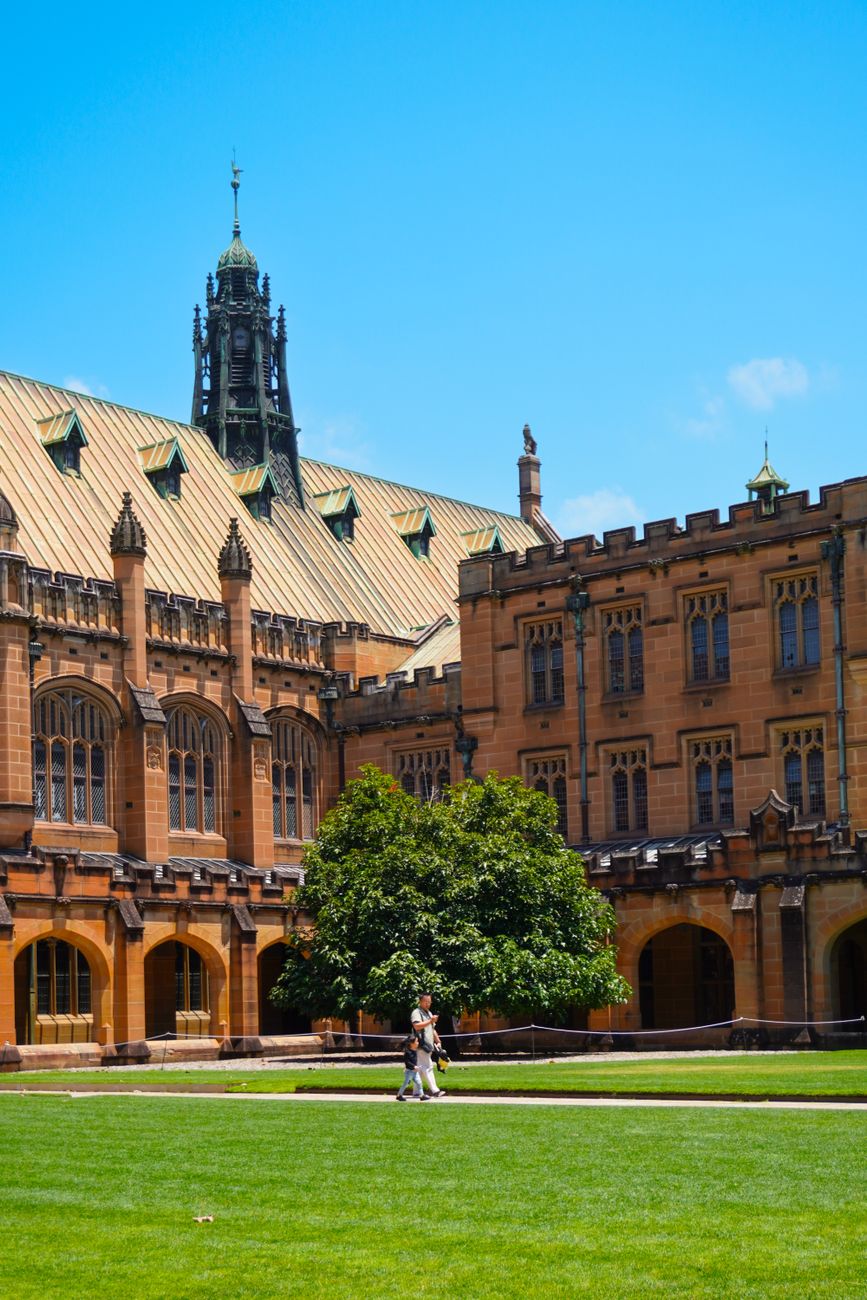
On-campus housing availability is limited. The University of Sydney guarantees on-campus accommodation for all first-year international students who apply by the November 30 deadline for Semester 1 intake. Weekly costs range from AUD 350–550 for catered colleges (e.g., St John’s, Sancta Sophia) to AUD 280–400 for self-catered apartments (e.g., Queen Mary Building). UNSW guarantees housing for international students who apply by October 31, with costs of AUD 320–480 per week at Kensington Colleges and AUD 280–350 at the Barker Street apartments.
Living expenses beyond housing require an additional AUD 25,000–30,000 per year, covering food, transport, health insurance, and personal costs. The Department of Home Affairs 2026 financial requirement for a student visa is AUD 29,710 in living costs alone (excluding tuition and housing). Students should budget a minimum of AUD 55,000–65,000 per year total for tuition, housing, and living at either institution.
Scholarship opportunities exist for high-achieving international students. The University of Sydney’s International Student Scholarship offers AUD 5,000–20,000 per year for students with ATAR-equivalent scores of 95 or above. UNSW’s International Scientia Coursework Scholarship provides a 20% tuition fee reduction for students with strong academic records, renewable annually based on maintaining a 75% weighted average mark. Both scholarships require separate applications with deadlines in November for March intake.
Curriculum Structure and Engineering Accreditation
Degree structure differs significantly. The University of Sydney’s Bachelor of Engineering (Honours) is a four-year program requiring 192 credit points, with a mandatory industry placement of 12 weeks in the third year. UNSW offers a four-year Bachelor of Engineering (Honours) requiring 192 credit points, but includes an optional integrated 48-week industrial training program (the Co-op Program) that combines paid work experience with academic study.
Accreditation is critical for professional recognition. Both programs are accredited by Engineers Australia, the national body for engineering regulation. Graduates from either university can apply for Chartered Professional Engineer (CPEng) status after four years of supervised work experience. The University of Sydney’s program carries Washington Accord accreditation, meaning graduates can practice in signatory countries (including the UK, US, Canada, and New Zealand) without additional examinations. UNSW holds the same accreditation for its core engineering streams.
Specialisation options vary. The University of Sydney offers majors in 18 engineering disciplines, including niche fields like Biomedical Engineering and Space Engineering. UNSW offers 22 majors, with strengths in Civil Engineering, Electrical Engineering, and Renewable Energy Engineering. Both universities allow students to complete a double degree (e.g., Engineering/Commerce or Engineering/Science), adding one to two years to the program.
Assessment methods are similar: 40–50% of final marks come from examinations, 30–40% from project work and assignments, and 10–20% from laboratory reports and presentations. Both universities use a weighted average mark (WAM) system, with distinction thresholds at 75% (UNSW) and 70% (University of Sydney).
Post-Study Work Rights and Migration Pathways
Temporary Graduate visa (subclass 485) eligibility is identical for both universities. Engineering graduates from either institution qualify for the Post-Study Work stream, granting two years of work rights for bachelor’s degree holders. The Department of Home Affairs 2026 update extended this to three years for graduates in Engineering and Related Technologies (ANZSCO code 233), recognising skills shortages. Students who complete a four-year Honours degree may qualify for a four-year visa.
Skilled migration pathways favour engineering graduates. The Skilled Occupation List (SOL) includes 14 engineering occupations, with Civil Engineer (ANZSCO 233211) and Electrical Engineer (ANZSCO 233311) consistently in high demand. Both the University of Sydney and UNSW are classified as Group 1 universities under the points-based system, meaning graduates receive 15 points for a bachelor’s degree plus 5 points for a specialist degree in engineering.
Employer sponsorship is common. According to the 2026 Graduate Outcomes Survey, 72% of engineering graduates from UNSW and 68% from the University of Sydney found full-time employment within four months of graduation, with median starting salaries of AUD 75,000–85,000. The Professional Year program, offered through Engineers Australia, provides an additional 5 migration points and includes 12 weeks of workplace training.
State nomination from New South Wales is available for engineering graduates. The NSW 190 visa subclass requires 90 points for engineering occupations in 2026, with preference given to graduates of NSW universities. Both the University of Sydney and UNSW qualify under this criterion, giving their international graduates a competitive edge over interstate applicants.
International Student Rights and Support Services
Education Services for Overseas Students (ESOS) Act protects all international students at both universities. Key rights include access to a tuition protection service if the institution ceases operations, minimum standards for course delivery, and a 14-day cooling-off period for enrolment changes. Both universities must provide orientation programs covering academic integrity, mental health support, and visa compliance.
Work rights for student visa holders allow 48 hours per fortnight during academic sessions and unlimited hours during scheduled breaks. Engineering students can work in internships related to their field without counting toward the 48-hour limit, provided the work is part of their degree requirements. Both universities maintain career hubs that connect students with part-time engineering roles, with UNSW’s CareerHub listing approximately 2,500 engineering-specific positions annually.
Health insurance is mandatory. The Overseas Student Health Cover (OSHC) costs approximately AUD 600–800 per year for single coverage. Both universities offer on-campus health clinics with bulk-billing for OSHC-covered services. The University of Sydney’s Health Service charges AUD 20 for consultations (rebated by OSHC), while UNSW’s University Health Service offers free consultations for OSHC holders.
Academic support includes free tutoring programs. The University of Sydney’s Learning Hub provides one-on-one writing consultations and mathematics drop-in sessions. UNSW’s Academic Skills team runs workshops on exam preparation and assignment writing. Both universities offer disability support services requiring documentation submitted at least four weeks before the start of semester.
Pathways to Professional Accreditation: Engineers Australia and Chartered Status
Engineers Australia (EA) membership is the primary pathway for professional recognition. Both universities’ engineering programs are accredited by EA, meaning graduates can apply for Graduate member status (AUD 85 annual fee in 2026). After four years of supervised engineering practice, graduates can apply for Chartered Professional Engineer (CPEng) status, which requires a portfolio of work and a professional interview.
Accreditation differences exist in specific specialisations. The University of Sydney’s Biomedical Engineering program holds additional accreditation from the Institute of Physics and Engineering in Medicine (IPEM), useful for graduates seeking UK work. UNSW’s Civil Engineering program is accredited by the Institution of Civil Engineers (ICE) in the UK, facilitating international mobility.
Continuing Professional Development (CPD) requirements apply after graduation. Both EA and the Engineers Registration Board require 150 hours of CPD over three years for CPEng renewal. The universities offer free CPD webinars to alumni, with the University of Sydney providing 20 hours of online courses annually.
Registration for practice in Australia requires engineers working on projects valued over AUD 50 million to hold Registered Professional Engineer (RPEQ) status in Queensland or National Engineering Register (NER) status in other states. Both universities’ programs satisfy the academic requirements for these registrations.
Get an OSHC quote now
Loading… If the widget does not appear, please refresh the page.

FAQ
Q1: What are the specific ATAR-equivalent scores needed for University of Sydney vs UNSW engineering in 2026?
The University of Sydney requires an ATAR of 85–95 for engineering, depending on the specialisation (e.g., Aerospace Engineering requires 95, while Civil Engineering accepts 85). UNSW requires an ATAR of 80–92, with the most competitive streams (Aerospace and Biomedical) at 92. For international students, these translate to: UK A-Level A*AA (Sydney) vs AAA (UNSW); IB 37 (Sydney) vs 35 (UNSW); US GPA 3.5 (Sydney) vs 3.3 (UNSW). Both universities accept predicted scores for conditional offers, with final confirmation upon results release in August 2026.
Q2: How much total cost should a US student budget for a four-year engineering degree at each university in 2026?
A US student should budget AUD 240,000–260,000 for the University of Sydney (tuition AUD 54,000/year × 4 = AUD 216,000, plus living costs AUD 24,000/year × 4 = AUD 96,000, total AUD 312,000 including housing). For UNSW, the total is AUD 280,000–300,000 (tuition AUD 49,000/year × 4 = AUD 196,000, plus living costs AUD 22,000/year × 4 = AUD 88,000, total AUD 284,000). These figures exclude flights, health insurance (AUD 600–800/year), and personal expenses. The Department of Home Affairs 2026 financial requirement for a single student is AUD 29,710 in living costs alone, meaning the total demonstrated funds needed for visa application is approximately AUD 83,710 per year.
Q3: Which university offers better post-study work rights and migration outcomes for engineering graduates in 2026?
Both universities offer identical post-study work rights: the Temporary Graduate visa (subclass 485) grants three years for engineering graduates (extended from two years in 2026). Migration outcomes are similar, with UNSW graduates reporting a 72% full-time employment rate within four months versus 68% for University of Sydney graduates (2026 Graduate Outcomes Survey). For skilled migration, both universities provide 15 points for a bachelor’s degree and 5 points for a specialist engineering degree. UNSW has a slight edge due to its Co-op Program, which provides 48 weeks of paid industry experience, making graduates more competitive for employer sponsorship. However, the University of Sydney’s professional year program through Engineers Australia offers an additional 5 migration points, potentially giving its graduates a higher points total for the 189 visa.
References
- Department of Home Affairs, 2026, Student Visa and Temporary Graduate Visa Statistics
- QS Quacquarelli Symonds, 2026, QS World University Rankings by Subject: Engineering and Technology
- Universities Australia, 2026, Graduate Outcomes Survey: Engineering Disciplines
- Engineers Australia, 2026, Accreditation of Engineering Programs in Australia
- Australian Government Department of Education, 2026, International Student Data: Commencements by Field of Education