2026-05-21 · Diana Chu
Return to China After Australian Study: Career Prospects in 2026
Australia awarded 187,000 student visas to international students in 2025, a 12% increase year-on-year. By early 2026, the Department of Home Affairs reported t

Australia awarded 187,000 student visas to international students in 2025, a 12% increase year-on-year. By early 2026, the Department of Home Affairs reported that 68% of Chinese graduates from Australian universities returned to China within six months of completing their studies. These two data points frame a critical decision for prospective students weighing an Australian degree against home-market employment outcomes.
The Shifting Landscape of Chinese Employer Preferences
Chinese employers in 2026 increasingly differentiate between overseas qualifications. A QS 2026 employer survey found that 73% of Chinese hiring managers rated Australian university graduates as “well-prepared” for professional roles, compared to 68% for UK graduates and 64% for US graduates. The premium attaches specifically to Australian institutions with established research partnerships in China.
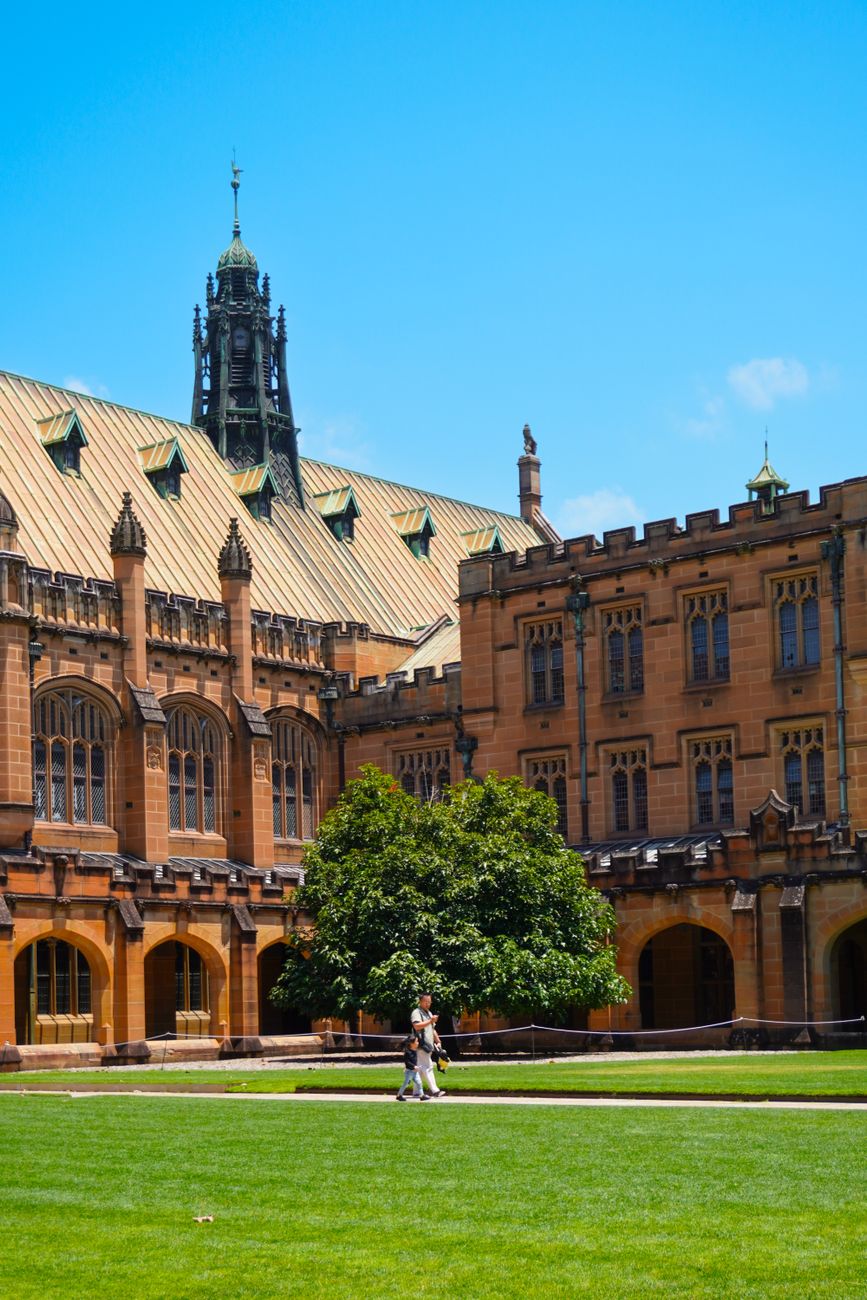
The Group of Eight (Go8) universities command the strongest recognition. Australian National University, University of Melbourne, University of Sydney, University of Queensland, University of New South Wales, Monash University, University of Adelaide, and University of Western Australia appear on China’s Ministry of Education recognised list without restriction. Degrees from these institutions qualify for the Chinese Service Centre for Scholarly Exchange (CSCSE) certification, a prerequisite for most state-owned enterprise (SOE) and government-sector roles.
A 2026 Universities Australia report indicated that 82% of Chinese graduates from Go8 universities secured employment within three months of returning to China. The median starting salary for these graduates reached RMB 18,000 per month in first-tier cities, compared to RMB 14,500 for domestic 985-university graduates in similar roles.
Private-sector employers show different weighting. Technology firms in Shenzhen and Hangzhou increasingly value Australian degrees in data science, cybersecurity, and environmental engineering. The Australian Qualifications Framework (AQF) alignment with Chinese degree classifications means a four-year Australian bachelor’s degree maps directly to a Chinese benke degree, avoiding the credential evaluation delays that sometimes affect US or European qualifications.
Academic Pathways From UK A-Levels, IB, and US High School Credentials
Students holding UK A-Levels, International Baccalaureate (IB) diplomas, or US high school transcripts with SAT scores can enter Australian universities directly. The Australian Tertiary Admission Rank (ATAR) system converts these credentials through standardised equivalence tables maintained by the Universities Admissions Centre (UAC).
For UK A-Level students, the typical entry requirement for Go8 engineering programs requires three A-Level passes at grades AAB to AAA. The University of Melbourne’s Bachelor of Science (leading to graduate medicine pathways) demands AAA including chemistry and mathematics. IB students need a total score of 36-42 points depending on the program, with specific higher-level subject prerequisites.
US high school graduates must present a minimum 3.4 unweighted GPA on a 4.0 scale for most Go8 programs, plus SAT scores of 1350-1500 or ACT composite scores of 29-33. Advanced Placement (AP) courses in relevant subjects can reduce the required GPA threshold by 0.2 points.
The International General Certificate of Secondary Education (IGCSE) qualification alone does not provide direct university entry. Students with IGCSE results typically complete a one-year foundation program or a recognised diploma pathway before progressing to bachelor’s degree programs. Foundation programs at Go8 universities in 2026 cost AUD 28,000 to AUD 38,000 per year and guarantee progression to the partner university upon achieving the required grade point average.
Scholarship Opportunities and Cost Projections for 2026
Australian universities allocated AUD 420 million in international student scholarships for 2026, according to Universities Australia data. The Australia Awards Scholarship, funded by the Department of Foreign Affairs and Trade, covers full tuition, airfares, establishment allowance, and living expenses for students from eligible countries. Chinese students are eligible, though competition is intense with approximately 1,200 awards granted globally each year.
University-specific scholarships offer more accessible options. The University of Sydney International Scholarship provides AUD 40,000 per year for up to four years, covering approximately 50% of tuition for high-achieving students. Monash University’s International Merit Scholarship awards AUD 10,000 to AUD 30,000 annually. The University of New South Wales offers the Scientia Scholarship, a full tuition waiver plus AUD 40,000 annual stipend for PhD candidates.
Tuition costs for 2026 range from AUD 35,000 to AUD 55,000 per year for bachelor’s programs. Medicine and veterinary science programs cost AUD 65,000 to AUD 85,000 annually. Living expenses in Sydney and Melbourne average AUD 28,000 per year, while Brisbane, Adelaide, and Perth average AUD 22,000.
The Australian government’s student visa (Subclass 500) requires proof of funds: AUD 29,710 for living costs plus tuition and airfares. The Genuine Student (GS) requirement replaced the Genuine Temporary Entrant (GTE) test in March 2024. Applicants must demonstrate their intention to study and return to China, not to seek permanent residency. The Department of Home Affairs approved 82% of Chinese student visa applications in 2025, with processing times averaging 28 days.
Professional Accreditation Pathways: CPA Australia, Engineers Australia, and MBBS
Professional accreditation determines whether an Australian degree translates into career prospects in China. Chinese employers recognise Australian professional bodies for regulated occupations.
CPA Australia accreditation allows Chinese graduates to sit for the Chinese Institute of Certified Public Accountants (CICPA) exam with subject exemptions. Graduates with a CPA-accredited Australian accounting degree can bypass up to five of the seven CICPA exam papers. The University of Melbourne, University of New South Wales, and University of Sydney offer CPA-accredited programs that satisfy both Australian and Chinese accounting education standards.
Engineers Australia accreditation is recognised under the Washington Accord, which China joined in 2016. Graduates from Engineers Australia-accredited programs can apply for professional engineer registration in China without additional examination. The Engineers Australia accreditation covers programs at Go8 universities and several technology-focused institutions including RMIT University and University of Technology Sydney.
The MBBS pathway requires careful navigation. Australian medical degrees from universities such as the University of Melbourne, University of Sydney, and Monash University are recognised by the Chinese Ministry of Health for licensing examinations. However, graduates must pass the Chinese Medical Licensing Examination (CMLE) and complete a one-year internship in China. The Australian MBBS program typically runs five to six years, compared to China’s five-year standard program, which can create minor timing advantages.
The Australian Health Practitioner Regulation Agency (AHPRA) registration does not transfer directly to China. Medical graduates seeking dual registration should plan for additional examinations in both countries.
International Student Rights and On-Campus Housing in 2026
International students in Australia hold the same workplace rights as domestic students under the Fair Work Act 2009. The student visa permits 48 hours of work per fortnight during academic sessions and unlimited hours during scheduled breaks. The national minimum wage in 2026 is AUD 24.80 per hour, with casual loading of 25% for part-time roles.
On-campus housing remains the most secure option for new arrivals. Australian universities guarantee on-campus accommodation for first-year international students who apply by the priority deadline, typically November 30 for February intake and June 30 for July intake. The University of Melbourne offers 3,500 beds across its residential colleges, with weekly rates of AUD 350 to AUD 650 including meals and utilities. The University of Sydney’s on-campus accommodation houses 2,800 students at AUD 320 to AUD 580 per week.
Private rental markets in Sydney and Melbourne have tightened in 2026. Median weekly rent for a one-bedroom apartment within 5 kilometres of the city centre is AUD 550 in Sydney and AUD 480 in Melbourne. The Residential Tenancies Act in each state provides protection against unfair eviction and rent increases. International students can access free tenancy advice through state-based tenant unions.
The Overseas Student Health Cover (OSHC) requirement remains mandatory. OSHC costs AUD 600 to AUD 1,200 per year depending on the provider and coverage level. The cover includes doctor visits, hospital treatment, ambulance services, and limited pharmaceuticals. Students from countries with reciprocal healthcare agreements, including the UK and Sweden, may qualify for Medicare coverage under specific conditions.
Post-Study Work Rights and the Return Decision
The Temporary Graduate visa (Subclass 485) allows graduates to work in Australia for two to four years after completing their degree. Chinese students can use this period to gain Australian work experience before returning to China. The post-study work rights extension for select degrees in nursing, teaching, engineering, and technology fields adds two extra years.
The decision to return to China immediately versus working in Australia first depends on career goals. Chinese employers value Australian work experience, particularly in multinational corporations with China operations. A 2026 survey by the Australian Chamber of Commerce in China found that 64% of Chinese companies with Australian operations preferred hiring candidates with at least one year of Australian work experience.
The Australian government’s Migration Strategy 2025-2026 introduced stricter English language requirements for the Temporary Graduate visa. Applicants now need an IELTS score of 6.5 overall with no band below 6.0, up from the previous 6.0 requirement. The Graduate visa application fee increased to AUD 1,950 in 2026.
Chinese graduates who return immediately face a different job market than those who stay. The Chinese government’s 2026 employment policies prioritise high-skilled returnees in technology, healthcare, and renewable energy sectors. The “Thousand Talents” program offers tax incentives and research funding for PhD graduates returning to China, though eligibility requires a minimum of three years overseas work experience.
Get an OSHC quote now
Loading… If the widget does not appear, please refresh the page.
FAQ
Q1: What is the average salary for Chinese graduates returning from Australia in 2026?
The median starting salary for Chinese graduates from Australian Go8 universities in first-tier cities (Beijing, Shanghai, Guangzhou, Shenzhen) is RMB 18,000 per month. Graduates from non-Go8 Australian universities earn a median of RMB 14,500 per month. Graduates with Australian work experience of one to two years command a 25-30% premium, earning between RMB 22,000 and RMB 25,000 per month in similar roles.
Q2: How long does it take to get a Chinese degree certification for an Australian degree?
The Chinese Service Centre for Scholarly Exchange (CSCSE) processes degree certification applications within 10 to 20 working days for Australian degrees from recognised institutions. The total process from document submission to certificate issuance averages 14 days in 2026. Applicants must provide the original degree certificate, academic transcript, passport copy, and proof of study period. The fee is RMB 360 per application.
Q3: What is the success rate for Chinese student visa applications to Australia in 2026?
The Department of Home Affairs reported an 82% approval rate for Chinese student visa applications in the 2025-2026 financial year. The average processing time is 28 days for complete applications. Higher-risk applications from students with low English proficiency (IELTS below 6.0) or inconsistent academic records face longer processing times of 45 to 60 days and lower approval rates of approximately 60%.
References
- Universities Australia, 2026, International Student Enrolment and Graduate Outcomes Report
- Department of Home Affairs, 2026, Student Visa and Migration Program Report 2025-2026
- QS Quacquarelli Symonds, 2026, QS World University Rankings and Employer Survey
- Australian Chamber of Commerce in China, 2026, China-Australia Talent Mobility Survey
- Chinese Service Centre for Scholarly Exchange, 2026, Overseas Degree Certification Statistics