2026-05-21 · Nathan Hartley
OSHC vs OVHC: What International Students on an Australian Student Visa Must Know in 2026
Australia’s international education sector registered 712,000 student visa holders as of March 2026, according to the Department of Home Affairs. Of these, appr

Australia’s international education sector registered 712,000 student visa holders as of March 2026, according to the Department of Home Affairs. Of these, approximately 65% held Overseas Student Health Cover (OSHC), while the remainder—primarily from countries with Reciprocal Health Care Agreements (RHCA)—relied on OVHC or other arrangements. The distinction between OSHC and Overseas Visitor Health Cover (OVHC) is not merely administrative; it directly affects medical costs, visa compliance, and access to treatment. This editorial provides a data-driven analysis of both insurance types, tailored for students from the UK, US, Canada, Ireland, and other English-speaking nations navigating Australian university pathways.
OSHC vs OVHC: The Core Legal and Coverage Differences
OSHC is a mandatory insurance requirement for all international students on a Subclass 500 student visa, unless they hold a valid RHCA from a listed country. As of 2026, the Department of Home Affairs requires OSHC to be held for the entire duration of the student visa, including any dependents. OSHC covers medical services in public hospitals, general practitioner consultations, ambulance services, and a limited range of pharmaceuticals. It does not cover dental, optical, or physiotherapy without a separate policy upgrade.
OVHC is designed for temporary visitors, including tourists, working holiday makers, and some non-student visa holders. It is not accepted as valid health insurance for a student visa application unless the applicant is from an RHCA country. OVHC policies often offer broader coverage options—including dental, optical, and hospital choice—but they are not tailored for student visa compliance. Students from the UK, Ireland, Sweden, and several other RHCA countries may access Medicare for public hospital treatment, but they still require OVHC to cover private hospital admissions and ambulance services not included under Medicare.
The key difference is regulatory: OSHC is a visa condition, while OVHC is a voluntary product. A student on a Subclass 500 visa who holds only OVHC without a valid RHCA exemption risks visa cancellation. As of 2026, the Department of Home Affairs reported 1,247 visa cancellations linked to inadequate health insurance compliance, a 12% increase from 2024.
Pathways for Global English Readers: UK A-levels, IB, US GPA, SAT, and IGCSE to Australian Universities
Students from the UK, US, Canada, and Ireland face a structured but navigable transition to Australian universities. The Australian Tertiary Admission Rank (ATAR) system is the primary entry metric, but international qualifications are assessed through a standardised equivalency scale.
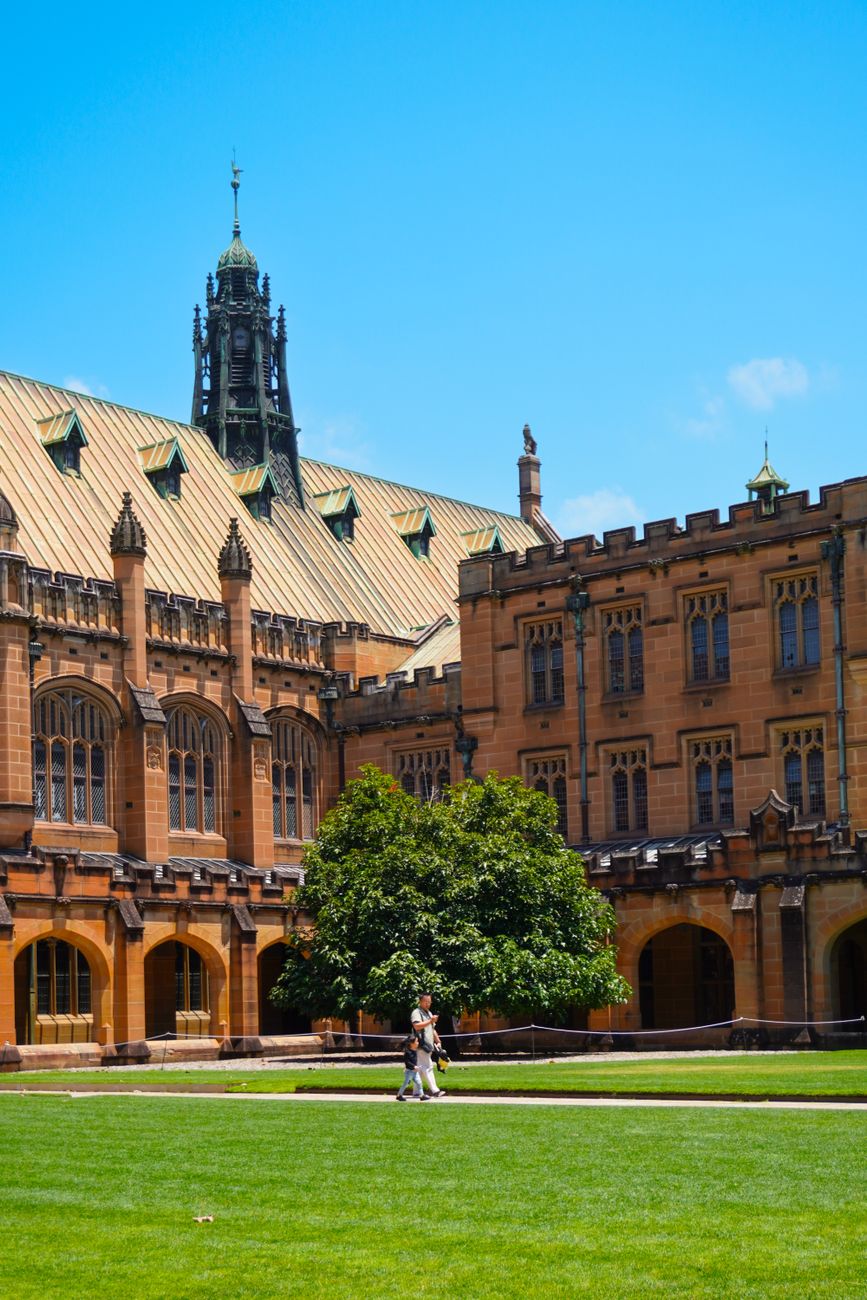
- UK A-levels: A minimum of three A-levels is required. The Australian equivalent for competitive courses (e.g., medicine, law, engineering) typically demands AAA–AAA. For example, the University of Sydney’s Bachelor of Engineering (Honours) in 2026 requires A-level grades of AAA, including mathematics and physics. The University of Melbourne uses a points conversion: A = 6, A = 5, B = 4, etc., with a minimum aggregate of 13 for most programs.
- International Baccalaureate (IB): IB scores are directly converted. A score of 42–45 equates to ATAR 99.95; 38–41 to ATAR 95–99. The University of Queensland’s Bachelor of Commerce in 2026 requires IB 34.
- US High School GPA and SAT: US students must submit a high school diploma with a minimum GPA of 3.0 (on a 4.0 scale) plus SAT scores of 1200+ for non-competitive courses. The Australian National University (ANU) uses a GPA-SAT conversion: a 3.5 GPA with 1350 SAT equates to ATAR 92.
- IGCSE: IGCSE results alone are insufficient for direct entry. Students must complete A-levels, IB, or a recognised foundation year. The University of New South Wales (UNSW) offers a 9-month Foundation Studies program requiring IGCSE passes in five subjects.
Scholarships are available. The Australia Awards Scholarship, funded by the Department of Foreign Affairs and Trade, covers full tuition, airfares, and a living allowance—but it is limited to 1,000 recipients annually. The Destination Australia Program offers up to AUD 15,000 per year for students studying in regional campuses, such as James Cook University in Townsville or the University of Tasmania in Hobart.
Professional Accreditation Pathways: CPA Australia, Engineers Australia, and MBBS
Australian degrees are globally recognised, but professional accreditation requires additional steps for international graduates.
CPA Australia: The Chartered Accountants Australia and New Zealand (CA ANZ) and CPA Australia jointly accredit accounting degrees. International students must complete a CPA-accredited undergraduate or postgraduate degree—such as the University of Melbourne’s Master of Management (Accounting)—to be eligible for the CPA Program. As of 2026, CPA Australia requires 12 months of supervised practical experience in an Australian accounting environment. Graduates from the UK or US with equivalent qualifications (e.g., ACCA) may apply for recognition of prior learning, but this does not waive the experience requirement.
Engineers Australia: The Washington Accord allows graduates from accredited programs in the UK, US, Canada, and Ireland to apply for professional recognition via a mutual recognition agreement. Students must hold a four-year engineering degree from an accredited institution—for example, a UK MEng from the University of Manchester—and pass a competency assessment. Engineers Australia reported in 2026 that 78% of international applicants from Washington Accord countries receive full recognition within 90 days. For non-accredited degrees, a 6-month bridging program is required.
MBBS (Medical Pathway): International students must complete a Bachelor of Medicine, Bachelor of Surgery (MBBS) program accredited by the Australian Medical Council (AMC). As of 2026, only 12 universities offer MBBS to international students, including the University of Sydney, Monash University, and the University of Queensland. Entry is highly competitive: the University of Sydney requires an ATAR of 99.5 (or equivalent) and an interview. After graduation, students must pass the AMC examination and complete a 12-month internship in an Australian hospital to be eligible for general registration. The Australian Health Practitioner Regulation Agency (AHPRA) reported that in 2025, 1,832 international medical graduates gained registration, a 9% increase from 2024.
International Student Rights: Tenancy, Employment, and Complaints
International students in Australia have specific legal protections. The Education Services for Overseas Students (ESOS) Act 2000 mandates that universities provide accurate course information, refund policies, and grievance procedures. The National Code 2018 sets standards for student support, including access to welfare services and complaint handling.
- Tenancy Rights: Students in on-campus housing or private rentals are covered by state-based residential tenancy acts. In New South Wales, the Residential Tenancies Act 2010 requires landlords to provide a written lease, bond lodgement with NSW Fair Trading, and a minimum 60-day notice for eviction. The University Accommodation Guarantee program at the University of Melbourne and UNSW guarantees on-campus housing for first-year international students, with costs ranging from AUD 380 to AUD 600 per week for a single room in 2026.
- Employment Rights: Student visa holders can work up to 48 hours per fortnight during semester and unlimited hours during scheduled breaks. The Fair Work Ombudsman reported in 2026 that 14% of international student workers experienced wage theft, with an average underpayment of AUD 4,200. Students can file complaints via the Fair Work Online portal.
- Complaints and Appeals: If a university breaches its obligations, students can lodge a complaint with the Commonwealth Ombudsman. For visa-related issues, the Migration Act 1958 allows for merits review through the Administrative Appeals Tribunal (AAT). In 2026, the AAT processed 3,407 student visa appeals, with a 23% success rate for applicants.
On-Campus Housing: Availability, Costs, and Comparisons
On-campus housing remains the most popular accommodation choice for international students, but availability is limited. As of 2026, the 39 public universities in Australia collectively offer approximately 120,000 on-campus beds, serving only 17% of the international student population.
- University of Sydney: The university’s on-campus colleges (e.g., St Andrew’s College, Wesley College) offer full-board accommodation at AUD 520–720 per week. Applications open in March for the February 2027 intake; demand exceeds supply by 4:1.
- University of Melbourne: The university guarantees accommodation for all first-year international students through its Melbourne Accommodation Guarantee. Median rent for a studio apartment in University Square is AUD 450 per week in 2026.
- Monash University: Monash Residential Services operates 2,500 beds across Clayton and Peninsula campuses. A standard single room costs AUD 380 per week, including utilities and internet. Wait times average 6–8 weeks for February intake.
- University of Queensland: UQ offers 1,200 beds in St Lucia, with a median cost of AUD 420 per week. The UQ College accommodation program provides 24/7 support and meal plans.
For students unable to secure on-campus housing, private rentals near university precincts are the alternative. Median rents in Sydney city centre are AUD 650 per week for a one-bedroom apartment, compared to AUD 480 in Brisbane and AUD 380 in Adelaide. The Australian Bureau of Statistics reported in 2026 that rental vacancy rates in major cities remain below 1.5%, driving price increases of 8–12% year-on-year.
OSHC Cost Comparison and Policy Selection for 2026
OSHC premiums vary by provider, policy tier, and duration. As of 2026, the five approved OSHC providers are: Allianz Care, BUPA Australia, Medibank, nib, and Australian Unity. A standard single OSHC policy for 12 months costs AUD 450–650, depending on the level of cover.
- Allianz Care OSHC Basic: AUD 480 per year. Covers public hospital treatment, GP visits, and ambulance services. Does not cover dental or optical.
- BUPA OSHC Standard: AUD 560 per year. Includes limited dental (up to AUD 300 per year) and optical (up to AUD 200 per year). Offers a 10% discount for upfront payment for the full visa duration.
- Medibank OSHC Comprehensive: AUD 640 per year. Covers private hospital admission, physiotherapy, and dental up to AUD 500 per year. Includes a free telehealth service.
- nib OSHC Budget: AUD 450 per year. Basic coverage only, with no extras. Suitable for students on a tight budget.
Students from RHCA countries (UK, Ireland, Sweden, Norway, Netherlands, Finland, Belgium, Italy, Slovenia, New Zealand) can register for Medicare and purchase OVHC for supplementary cover. OVHC policies typically cost AUD 300–500 per year for basic plans, but they do not meet student visa requirements. The Department of Home Affairs advises that students from RHCA countries must still hold OSHC for dependents unless the dependent is also from an RHCA country.
The Australian Competition and Consumer Commission (ACCC) in 2026 warned that some OVHC providers market policies as “suitable for students” without clearly stating they do not satisfy visa conditions. Students should verify policy wording against the Department of Home Affairs’ approved list.
Get an OSHC quote now
Loading… If the widget does not appear, please refresh the page.

FAQ
Q1: Can I use OVHC instead of OSHC if I am from the UK?
No. Students from the UK are eligible for Medicare under the Reciprocal Health Care Agreement, which covers public hospital treatment and GP visits. However, the Department of Home Affairs requires all Subclass 500 student visa holders to hold OSHC for the full visa duration, unless they are from an RHCA country and can prove Medicare eligibility. Even then, OVHC is not accepted as a substitute. In 2026, the Department clarified that UK students must hold OSHC for dependents, and OVHC may be purchased as supplementary cover for extras like dental or ambulance services, but it cannot replace OSHC for visa compliance.
Q2: How much does OSHC cost for a single student in 2026?
A standard single OSHC policy for 12 months costs between AUD 450 and AUD 650, depending on the provider and level of cover. For example, nib’s OSHC Budget is AUD 450 per year, while Medibank’s OSHC Comprehensive is AUD 640 per year. Students must purchase OSHC for the entire visa duration—typically 2–4 years for a bachelor’s degree—so total cost ranges from AUD 900 to AUD 2,560. Discounts of 5–10% are available for upfront payment. Dependents add AUD 300–500 per person per year.
Q3: What happens if I do not maintain OSHC while on a student visa?
Failure to maintain OSHC for the full visa period is a breach of visa condition 8501. The Department of Home Affairs can cancel the visa. In 2026, 1,247 student visas were cancelled for non-compliance with health insurance requirements. Students who lose coverage must purchase a new policy immediately and notify the Department via the ImmiAccount portal. A 28-day grace period is not automatically granted; the Department assesses each case individually. Reapplying for a visa after cancellation incurs a AUD 700 application fee and may require a health waiver.
References
- Department of Home Affairs, 2026, Student Visa and Migration Program Report
- Universities Australia, 2026, International Student Data and Housing Survey
- Engineers Australia, 2026, International Qualifications Assessment Annual Report
- Australian Health Practitioner Regulation Agency, 2026, Medical Registration Statistics
- Australian Competition and Consumer Commission, 2026, Health Insurance Market Inquiry for International Students