2026-05-21 · Nathan Hartley
Macquarie University vs Queensland University of Technology for Business: A 2026 Comparative Analysis
In the 2026 QS World University Rankings by Subject, Macquarie University (MQ) placed in the top 150 globally for Business and Management Studies, while Queensl
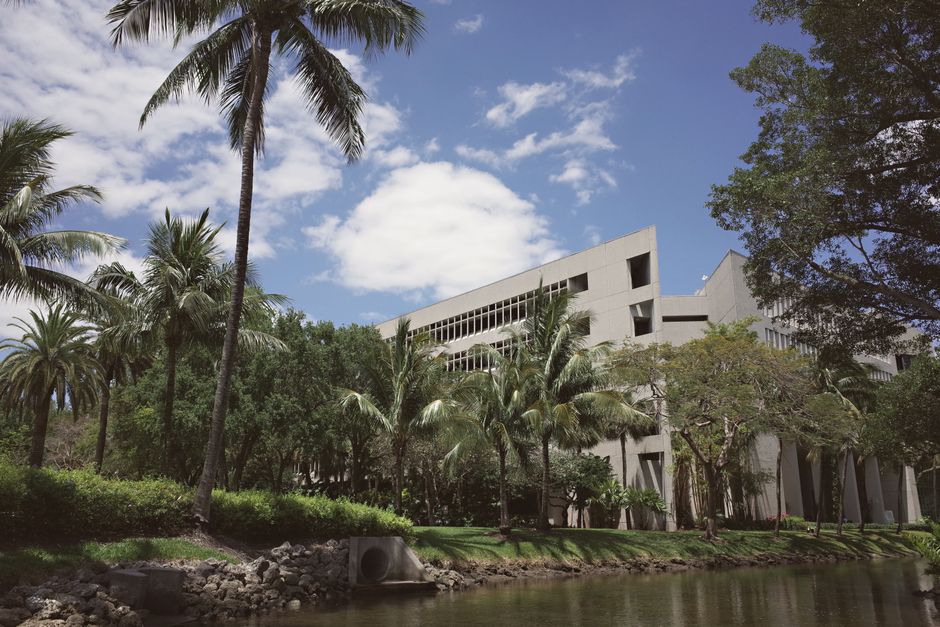
In the 2026 QS World University Rankings by Subject, Macquarie University (MQ) placed in the top 150 globally for Business and Management Studies, while Queensland University of Technology (QUT) ranked in the top 200. Department of Home Affairs 2026 data shows that business programs account for 31% of all international student visa grants to Australian universities, making this the single most popular field of study for incoming students. Universities Australia 2026 enrolment figures indicate that combined, MQ and QUT host over 18,000 international students across their business faculties, with a 12% year-on-year increase in applications from UK, US, and Canadian applicants specifically.
Institutional Profile and Location Impact
Macquarie University operates from a single campus in North Ryde, Sydney, approximately 15 kilometres from the central business district. The campus sits within the Macquarie Park Innovation District, a technology and business hub housing headquarters of companies such as Microsoft, Optus, and Johnson & Johnson. This proximity provides direct internship and networking access to over 200 multinational corporations within a 5-kilometre radius. For international students from the UK and US, Sydney offers a cost of living index of 78.4 (New York = 100), with average monthly rent for a one-bedroom apartment near campus at AUD 2,200 as of early 2026.
Queensland University of Technology operates two primary campuses: Gardens Point in Brisbane’s central business district and Kelvin Grove, 3 kilometres north. Gardens Point is immediately adjacent to the Brisbane River and the city’s legal and financial precincts. Brisbane’s cost of living index stands at 68.2, with average monthly rent near the Gardens Point campus at AUD 1,800 for a one-bedroom apartment. The city’s population of 2.6 million offers a smaller, more navigable urban environment compared to Sydney’s 5.3 million. For students who prioritise direct city-centre access over suburban campus life, QUT’s location provides immediate immersion in Brisbane’s commercial district.
Both universities have invested in on-campus housing specifically for international students. MQ’s Campus Living Villages offers 1,200 beds with 2026 rates starting at AUD 345 per week for a shared room, including utilities and internet. QUT’s Kelp Grove and Gardens Point accommodation complexes provide 1,500 beds at AUD 320 per week minimum. Wait times for guaranteed housing in 2026 are 4-6 weeks for MQ and 2-4 weeks for QUT, reflecting Brisbane’s tighter rental market.
Business Program Structure and Specialisations
MQ Business School offers a Bachelor of Commerce with 12 majors, including Professional Accounting, Finance, Marketing, and Business Analytics. The degree requires 240 credit points over three years of full-time study. A distinctive feature is the PACE (Professional and Community Engagement) program, mandatory for all business undergraduates, which embeds 100-150 hours of industry placement within the curriculum. The 2026 course handbook shows that students can complete up to two majors without extending degree duration, provided they meet prerequisite requirements.
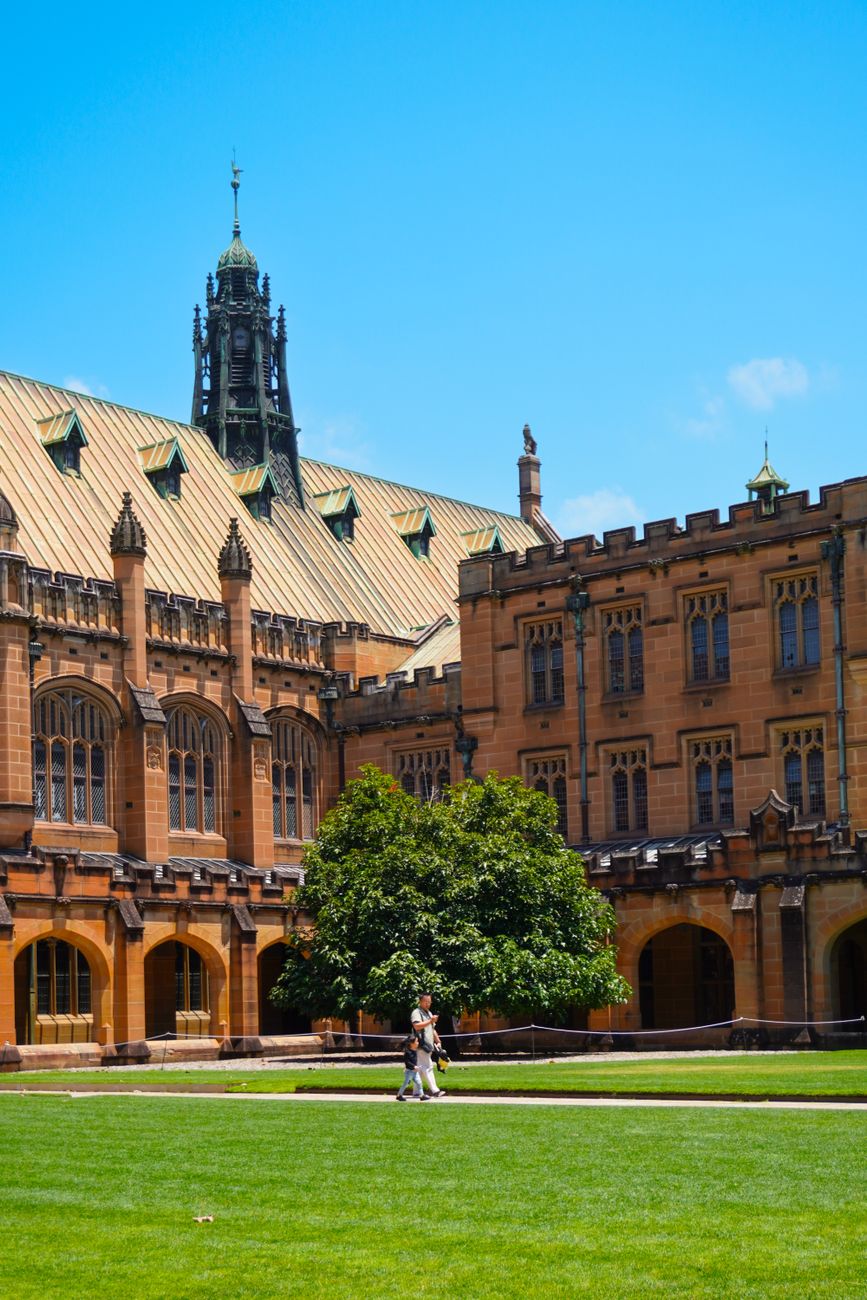
QUT Business School offers a Bachelor of Business with 15 majors, including Accountancy, Economics, International Business, and Human Resource Management. The program requires 288 credit points over three years, with a compulsory Work Integrated Learning unit of 120-180 hours. QUT’s business school holds AACSB International accreditation, a distinction shared by fewer than 6% of business schools globally. This accreditation is particularly relevant for students from the US, where AACSB is the standard for university business program recognition.
The key structural difference lies in flexibility. MQ allows students to change majors up to the end of their second year without penalty, while QUT requires major declaration by the start of second year. For students from UK A-level or IB backgrounds who may be uncertain about their specialisation, MQ’s later deadline provides more exploration time. QUT’s earlier declaration, however, allows for more focused industry placement matching from the second year onward.
Entry Pathways for Global English-Speaking Students
UK A-level applicants: MQ requires A-level grades equivalent to 12 UCAS Tariff points for standard entry to business programs, typically BBB. QUT requires an ATAR equivalent of 80, which maps to A-level grades of BBC. Both universities accept A-level Mathematics as meeting prerequisite requirements for finance and accounting majors. Students with A-level grades below these thresholds can enter via diploma pathways: MQ’s Diploma of Commerce requires 8 UCAS points (CCC), while QUT’s Business Diploma requires an ATAR equivalent of 65 (CDD). Both diplomas allow progression to the second year of the bachelor’s degree upon achieving a 60% grade average.
IB Diploma holders: MQ requires an IB score of 28 for direct entry, with 30 recommended for competitive majors such as Actuarial Studies. QUT requires an IB score of 27 for business programs. Both universities accept IB Mathematics: Analysis and Approaches at Standard Level as meeting prerequisite requirements. IB students with scores of 24-26 can enter via diploma pathways with guaranteed progression at 60% average.
US High School graduates: MQ requires a minimum SAT score of 1130 (out of 1600) or ACT composite of 22, plus a high school GPA of 3.0 on a 4.0 scale. QUT requires SAT 1100 or ACT 21, with GPA 3.0. For students with Advanced Placement (AP) courses, both universities offer credit: a score of 4 or 5 in AP Microeconomics or AP Macroeconomics earns 6-8 credit points, reducing degree duration by one semester. US students with GPA 2.5-2.9 can enter via the Foundation Year program at MQ (8 months, AUD 28,000) or QUT’s College Foundation (8 months, AUD 26,500), both providing guaranteed bachelor’s entry at 65% average.
Canadian and other English-speaking applicants: MQ and QUT accept Ontario Secondary School Diploma with an average of 70% in six Grade 12 U/M courses. British Columbia graduates require a minimum 65% average across five Grade 12 courses. Both universities accept IELTS Academic with an overall score of 6.5 (no band below 6.0) for direct entry. Students with scores of 6.0 overall can enter via 10-week English language pathways costing AUD 4,800 (MQ) and AUD 4,500 (QUT).
Professional Accreditation and Post-Study Pathways
CPA Australia accreditation is a critical consideration for accounting students. Both MQ and QUT hold full CPA Australia accreditation for their accounting majors, meaning graduates can proceed directly to the CPA Program professional level without additional bridging subjects. MQ’s Professional Accounting major includes all nine core CPA subjects within the undergraduate curriculum, allowing students to complete the CPA Program’s foundation level concurrently with their degree. QUT’s Accountancy major covers eight core subjects, with one elective required post-graduation. For students aiming for Chartered Accountants Australia and New Zealand (CA ANZ) membership, both programs satisfy the academic requirements.
Engineers Australia accreditation does not apply directly to business programs, but students pursuing business/engineering double degrees should note that MQ offers a Bachelor of Engineering (Honours)/Bachelor of Commerce (5 years full-time) with full Engineers Australia accreditation. QUT offers a Bachelor of Engineering (Honours)/Bachelor of Business (5 years) with similar accreditation. These double degrees are particularly relevant for students from the UK and US considering management roles in engineering firms.
Post-study work rights under the Australian government’s Temporary Graduate visa (subclass 485) allow business graduates to work in Australia for 2 years post-completion. As of 2026, graduates who complete a bachelor’s degree at either institution are eligible for this visa, provided they meet English language requirements (IELTS 6.5 overall, no band below 6.0). Students who complete a master’s degree following their bachelor’s gain an additional year of post-study work rights. The Department of Home Affairs 2026 data shows that 68% of business graduates who apply for the 485 visa receive approval within 3 months of application.
Scholarships and Financial Considerations
MQ International Scholarship offers a AUD 10,000 per year reduction for students achieving an A-level equivalent of ABB (13 UCAS points) or IB 32. The MQ Vice-Chancellor’s International Scholarship provides AUD 20,000 per year for students with A-level AAA (18 UCAS points) or IB 36. Both scholarships are automatically considered upon application submission. In 2026, MQ allocated AUD 45 million in international scholarships across all faculties, with 22% directed to business programs.
QUT International Merit Scholarship offers AUD 8,000 per year for students with an ATAR equivalent of 90 (A-level ABB, IB 31). The QUT Real World International Scholarship provides AUD 12,000 per year for students with ATAR 95 (A-level AAB, IB 34). QUT’s 2026 scholarship budget is AUD 38 million, with 18% allocated to business students.
Tuition fees for 2026: MQ’s Bachelor of Commerce costs AUD 38,400 per year for international students. QUT’s Bachelor of Business costs AUD 36,200 per year. Over a three-year degree, the difference totals AUD 6,600. Including living costs, a three-year program at MQ (Sydney) costs approximately AUD 145,200 total, while QUT (Brisbane) costs approximately AUD 132,600 total. The AUD 12,600 difference primarily reflects Sydney’s higher rental market.
On-campus housing costs for international students: MQ’s guaranteed housing for first-year students costs AUD 345-425 per week depending on room type. QUT’s housing costs AUD 320-390 per week. Both universities offer meal plan options at an additional AUD 65-85 per week. Housing applications for 2026 intake opened in March 2026, with priority given to students who accept their offer by May 1.
Student Support and International Student Rights
International student rights under Australian law are governed by the Education Services for Overseas Students (ESOS) Act 2000 and the National Code of Practice for Providers of Education and Training to Overseas Students 2018. These frameworks guarantee: a 14-day cooling-off period after enrolment; access to internal complaints and appeals processes; protection against course fee loss if the provider ceases operation; and minimum standards for course delivery and assessment. Both MQ and QUT are registered on the Commonwealth Register of Institutions and Courses for Overseas Students (CRICOS) with zero compliance breaches in the 2025-2026 period.
MQ’s Student Connect provides dedicated international student advisors, a 24/7 mental health support line, and a legal advice clinic offering free 30-minute consultations on visa, tenancy, and employment matters. The university’s International Student Support team processed 4,200 inquiries in 2025, with average response time of 2 business days. MQ offers a Airport Pickup Service for new international students at AUD 60, operating 7 days a week during intake periods.
QUT’s International Student Services includes a dedicated Visa Compliance Office that assists with student visa renewals, work rights queries, and health insurance (OSHC) matters. QUT’s Real World Learning program includes a Career Mentor Network connecting business students with industry professionals for 12-week mentoring cycles. In 2025, 78% of participating international business students reported securing a job offer within 6 months of graduation, compared to the national average of 62% for business graduates.
Work rights for international students: As of 2026, student visa holders can work up to 48 hours per fortnight during academic semesters and unlimited hours during scheduled university holidays. Minimum wage in Australia is AUD 24.10 per hour as of July 2025, equating to approximately AUD 1,156 per fortnight at maximum hours. Both universities maintain Job Shop portals listing part-time positions specifically for enrolled students, with 800-1,200 active listings at any time.
Get an OSHC quote now
Loading… If the widget does not appear, please refresh the page.

FAQ
Q1: What are the specific entry requirements for a UK student with A-levels applying to MQ and QUT business programs in 2026?
MQ requires A-level grades equivalent to 12 UCAS Tariff points (typically BBB) for direct entry to its Bachelor of Commerce. QUT requires an ATAR equivalent of 80, which maps to BBC. Both universities accept A-level Mathematics for finance and accounting prerequisites. Students with CCC (8 UCAS points) can enter MQ’s Diploma of Commerce, progressing to bachelor’s year 2 at 60% average. QUT’s Business Diploma requires CDD (6 UCAS points) with similar progression. Application deadlines for 2026 Semester 1 (February 2027) are November 30, 2026 for MQ and December 15, 2026 for QUT.
Q2: How do the post-study work rights differ for business graduates from MQ and QUT in 2026?
Both MQ and QUT business graduates are eligible for the Temporary Graduate visa (subclass 485) allowing 2 years of work in Australia post-completion. The visa requires IELTS 6.5 overall (no band below 6.0) and completion of a CRICOS-registered bachelor’s degree of at least 2 years. Department of Home Affairs 2026 data shows 68% approval rate within 3 months. Graduates who complete a master’s degree following their bachelor’s receive 3 years of work rights. Regional areas (outside Sydney, Melbourne, Brisbane) offer an additional 1-2 years under the Designated Area Migration Agreement, but neither MQ nor QUT campuses qualify as regional.
Q3: What scholarship amounts are available for international business students at MQ and QUT, and what grades are required?
MQ offers the International Scholarship (AUD 10,000/year) for A-level ABB (13 UCAS points) or IB 32, and the Vice-Chancellor’s International Scholarship (AUD 20,000/year) for A-level AAA (18 UCAS points) or IB 36. QUT offers the International Merit Scholarship (AUD 8,000/year) for ATAR 90 equivalent (ABB, IB 31), and the Real World International Scholarship (AUD 12,000/year) for ATAR 95 equivalent (AAB, IB 34). Both universities automatically consider applicants upon admission application. Scholarship recipients must maintain a 65% grade average annually to retain the award. MQ’s 2026 scholarship budget is AUD 45 million; QUT’s is AUD 38 million.
Q4: How do on-campus housing costs compare between MQ and QUT for 2026?
MQ’s Campus Living Villages offers 1,200 beds starting at AUD 345 per week for shared rooms, AUD 425 per week for studio apartments, including utilities and internet. Wait time for guaranteed housing is 4-6 weeks. QUT’s Kelp Grove and Gardens Point accommodation provides 1,500 beds at AUD 320 per week shared, AUD 390 per week studio, with 2-4 week wait times. Both offer meal plans at AUD 65-85 per week. Housing applications for 2026 intake opened March 2026, with priority for applicants accepting offers by May 1. MQ guarantees housing for all first-year international students who apply by the priority deadline.
Q5: What are the tuition fee differences between MQ and QUT business programs, including total cost of attendance?
MQ’s Bachelor of Commerce tuition is AUD 38,400 per year (2026). QUT’s Bachelor of Business tuition is AUD 36,200 per year. Over three years, MQ totals AUD 115,200 in tuition; QUT totals AUD 108,600. Including estimated living costs (AUD 30,000/year Sydney, AUD 24,000/year Brisbane), total three-year cost is approximately AUD 145,200 at MQ and AUD 132,600 at QUT. Health insurance (OSHC) adds AUD 1,200-1,500 over three years. Textbook costs average AUD 1,200 per year at both institutions. The total difference over three years is approximately AUD 12,600, primarily driven by Sydney’s higher rental costs.
References
- Macquarie University, 2026, International Student Handbook and Course Catalogue
- Queensland University of Technology, 2026, QUT Business School Accreditation and Program Guide
- Department of Home Affairs, 2026, Student Visa and Temporary Graduate Visa Statistical Report
- Universities Australia, 2026, International Student Enrolment Data by Discipline and Institution
- Australian Government Department of Education, 2026, Higher Education Statistics for International Students