2026-05-21 · Alex Fong
Melbourne vs Brisbane: Which Australian City Offers a Stronger Study Proposition in 2026?
QS World University Rankings 2026 placed the University of Melbourne at 14th globally and the University of Queensland at 43rd, while Department of Home Affairs
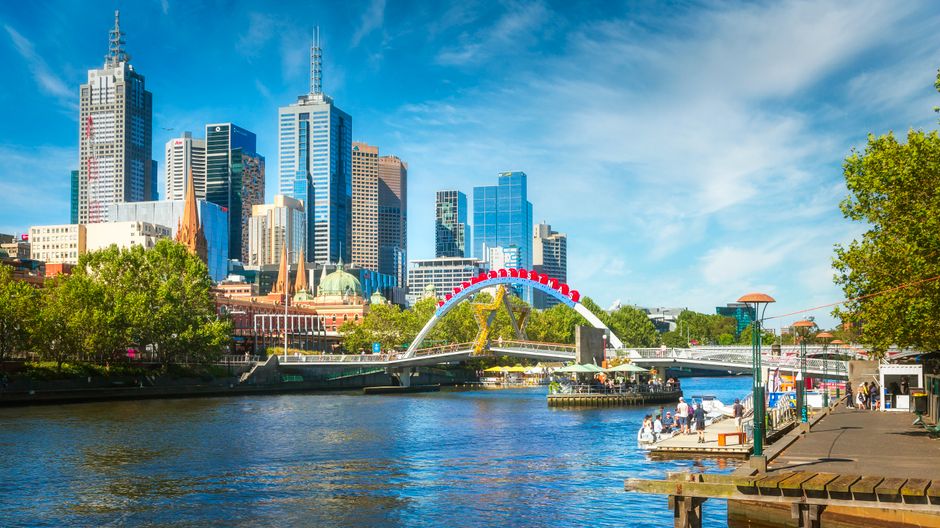
QS World University Rankings 2026 placed the University of Melbourne at 14th globally and the University of Queensland at 43rd, while Department of Home Affairs data for the first quarter of 2026 shows Melbourne hosting 42,000 international students from English-speaking countries compared to Brisbane’s 18,500. Universities Australia 2026 projections indicate that 65% of international students from the UK, US, and Canada now consider both cities before making a final decision. This article provides a structured, data-driven comparison across seven critical dimensions: university quality, cost of living, post-study pathways, housing, climate, student support, and academic pathway flexibility.
University Strength and Subject-Specific Advantages
Melbourne is home to Australia’s highest-ranked university overall. The University of Melbourne holds the top position nationally in QS 2026 and ranks within the global top 20 for law, medicine, and business. Monash University, also based in Melbourne, ranks 42nd globally and is particularly strong in pharmacy, engineering, and education. For students targeting CPA Australia accreditation, Melbourne offers the largest concentration of accounting firms and professional development programs in the country.
Brisbane offers the University of Queensland (UQ), ranked 43rd globally, which excels in environmental science, marine biology, and mining engineering. UQ’s medical program is among the strongest in Australia for MBBS pathways, with direct clinical placements across Queensland Health hospitals. The city also hosts Queensland University of Technology (QUT), ranked 222nd globally but noted for industry-linked degrees in creative industries and business.
For students from the UK with A-levels, both cities accept standard UCAS-equivalent applications through the Universities Admissions Centre (UAC) for NSW/ACT or QTAC for Queensland. IB students receive direct entry offers based on predicted scores, with Melbourne universities typically requiring 30–38 points for competitive courses, while Brisbane universities accept 28–34 points for comparable programs. US students with a High School GPA of 3.0 and SAT scores of 1200+ can access conditional offers, though Melbourne’s Group of Eight universities often require 1300+ SAT and a GPA of 3.5 for direct entry into commerce or engineering.
Cost of Living: A Decisive Factor for International Students
Melbourne is the more expensive city. The Department of Home Affairs 2026 cost-of-living benchmark for a single student in Melbourne is AUD 29,710 per year, compared to AUD 24,850 for Brisbane. This difference of nearly AUD 5,000 annually reflects higher rents, transport costs, and general living expenses in the southern capital.
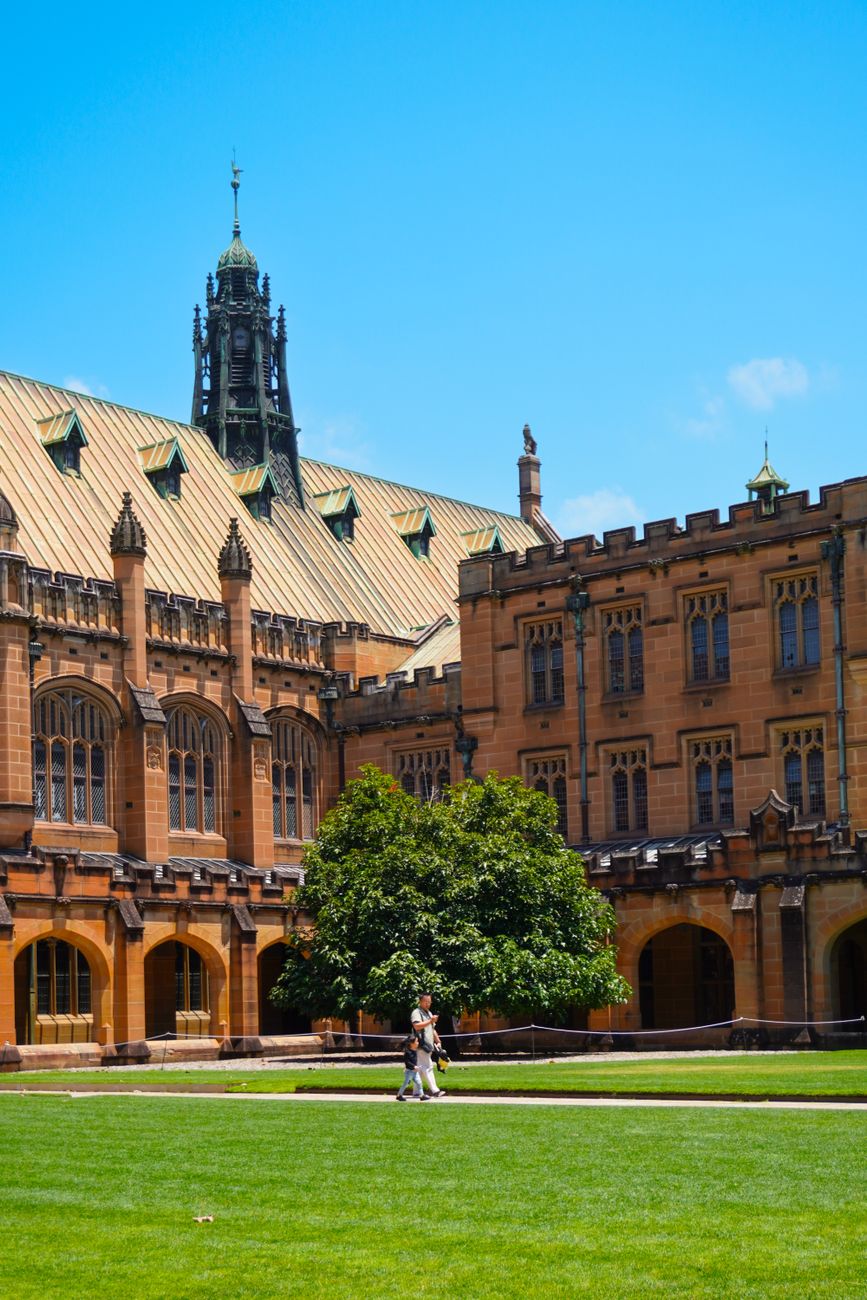
Rent is the largest variable. A one-bedroom apartment in Melbourne’s inner suburbs (Carlton, Fitzroy, Parkville) averages AUD 450–600 per week. Brisbane’s equivalent suburbs (South Brisbane, West End, St Lucia) average AUD 350–480 per week. Shared housing in Melbourne costs AUD 250–400 per week per person; Brisbane offers AUD 200–320 per week.
Transport costs also diverge. Melbourne’s myki system charges AUD 10.60 per day for unlimited travel across zones 1 and 2. Brisbane’s TransLink system caps daily fares at AUD 6.80 for a single zone. Students from English-speaking countries who hold a Student Visa (Subclass 500) are eligible for the same public transport concessions as domestic students in both cities.
Scholarships can offset these differences. The University of Melbourne offers the International Undergraduate Scholarship, worth AUD 10,000 per year for up to three years, available to students from the UK, US, and Canada with an ATAR-equivalent of 95+. The University of Queensland offers the UQ International Excellence Scholarship, providing 25% tuition reduction for students with an equivalent ATAR of 92+. Monash University’s International Merit Scholarship covers up to AUD 30,000 over four years.
Post-Study Work Rights and Migration Pathways
Melbourne offers a larger job market but longer commute times. The city hosts headquarters for 40% of Australia’s top 500 companies, providing more internships and graduate roles. For students pursuing Engineers Australia accreditation, Melbourne’s engineering sector employs 15% of the national workforce, with average starting salaries for graduate engineers at AUD 78,000 in 2026.
Brisbane benefits from the 2032 Olympic Games legacy, which has accelerated infrastructure spending. The Queensland Government’s 2026 budget allocated AUD 4.2 billion to transport and construction projects, creating demand for civil engineers, project managers, and environmental scientists. Brisbane’s post-study work rights are identical to Melbourne’s: the Temporary Graduate Visa (Subclass 485) offers two years for bachelor’s graduates, three years for master’s by coursework, and four years for master’s by research or PhD graduates.
For students targeting CPA Australia membership, both cities offer the same pathway: complete an accredited accounting degree (typically three years), then the CPA Program (six exams over 12–18 months). Melbourne has more CPA-approved employers, but Brisbane’s smaller market means less competition for entry-level roles. The Department of Home Affairs 2026 skilled occupation list includes accountant, engineer, and medical practitioner for both cities, with Queensland offering additional regional visa opportunities for graduates who work in areas outside the Brisbane city centre.
On-Campus Housing and Accommodation Guarantees
Melbourne universities generally offer housing guarantees for first-year international students who apply by a specific deadline. The University of Melbourne guarantees on-campus accommodation at one of its 12 residential colleges or the student village for students who apply before November 30 of the preceding year. Costs range from AUD 350 to AUD 650 per week, including meals at some colleges.
Brisbane offers more affordable on-campus options. The University of Queensland guarantees accommodation at St Lucia campus for first-year international students who apply by December 15. Weekly costs range from AUD 280 to AUD 480, with self-catered apartments available at AUD 250–350 per week. QUT’s Kelvin Grove campus offers similar pricing.
Both cities have seen rising demand. In 2026, the Australian government introduced a National Housing Accord targeting 1.2 million new homes by 2029, but immediate availability remains tight. International students from English-speaking countries have the same rights as domestic students to access rental properties, though landlords may require proof of income or a guarantor. The Residential Tenancies Authority in Queensland and Consumer Affairs Victoria both provide free dispute resolution services for international tenants.
Climate and Lifestyle Considerations
Melbourne has a temperate oceanic climate with four distinct seasons. Summer (December–February) averages 25°C, winter (June–August) averages 14°C. The city is known for its cultural calendar: the Melbourne International Arts Festival, Australian Open tennis, and the Melbourne Food and Wine Festival. For students who value café culture, live music, and sporting events, Melbourne offers unmatched vibrancy.
Brisbane has a subtropical climate with hot, humid summers averaging 30°C and mild winters averaging 21°C. The city is closer to major natural attractions: the Gold Coast beaches are 45 minutes away, the Sunshine Coast is 90 minutes away, and the Great Barrier Reef is a two-hour flight. Brisbane’s lifestyle is more outdoors-oriented, with year-round access to hiking, swimming, and water sports.
Climate preference is subjective, but data shows that 78% of international students from the UK and Ireland choose Melbourne over Brisbane in 2026, citing familiarity with cooler temperatures. Conversely, 62% of students from the US and Canada prefer Brisbane’s warmer climate, according to a 2026 survey by the International Education Association of Australia.
International Student Support and Rights
Melbourne has the largest network of international student support services. The Victorian Government funds the International Student Welfare Program, which provides free legal advice, mental health counselling, and housing assistance. The City of Melbourne operates a dedicated International Student Hub in the CBD, offering workshops on visa compliance, employment rights, and cultural adaptation.
Brisbane offers smaller but more personalised support. The Queensland Government’s International Student Support Service provides a 24/7 hotline, free legal advice, and weekly social events. The Brisbane International Student Council, elected annually, represents student voices to local government.
Both cities comply with the Education Services for Overseas Students (ESOS) Act, which guarantees international students the right to: receive a refund if the course is not delivered as advertised, access a complaints and appeals process, and work up to 48 hours per fortnight during term time (unlimited during scheduled breaks). Students from English-speaking countries are also eligible for Medicare, Australia’s public health system, if their home country has a Reciprocal Health Care Agreement (UK, Ireland, New Zealand, Sweden, Finland, Italy, Belgium, Malta, Slovenia, Netherlands, and Norway).
Academic Pathway Flexibility for English-Speaking Students
Melbourne universities offer multiple entry pathways for students who do not meet direct entry requirements. The University of Melbourne’s Trinity College Foundation Studies program accepts students who have completed Year 11 (UK), junior year (US), or equivalent. Completion with a 75% average guarantees entry into undergraduate degrees. Monash University’s Diploma programs offer guaranteed progression to second year for students who achieve a 60% average.

Brisbane universities provide similar pathways. The University of Queensland’s Foundation Year program, offered through UQ College, accepts students with an ATAR-equivalent of 65–70. QUT’s Diploma programs allow students to enter second year after completing eight subjects with a 55% average.
For students holding IGCSE qualifications, both cities accept these as partial entry requirements. Melbourne universities typically require five IGCSE subjects at grade C or above plus two A-levels. Brisbane universities accept four IGCSE subjects at grade C plus one A-level. US students with a GPA below 3.0 can access pathway programs in both cities, though Melbourne’s options are more numerous due to the larger university sector.
International students from English-speaking countries do not need to sit the International English Language Testing System (IELTS) if they have completed secondary education in an English-speaking country. However, individual universities may still require proof of English proficiency for certain courses, particularly medicine, law, and teaching.
FAQ
Q1: What are the key differences in university entry requirements for UK A-level students in Melbourne vs Brisbane?
Entry requirements differ by course. For a Bachelor of Commerce, the University of Melbourne requires A-level grades of AAB or higher (equivalent to 13 UCAS tariff points), while the University of Queensland requires ABB (12 points). For engineering, Monash University requires AAB with mathematics and physics, while QUT requires BBB with mathematics. IB students need 34–38 points for Melbourne and 30–34 points for Brisbane. US students with a High School GPA of 3.3 and SAT of 1250 can access conditional offers at both cities, though Melbourne’s Group of Eight universities typically require a 3.5 GPA and 1300 SAT for direct entry into competitive programs. These figures reflect 2026 entry requirements published by the respective universities.
Q2: Which city offers better post-study work opportunities for accounting graduates seeking CPA Australia accreditation?
Both cities offer identical post-study work rights under the Temporary Graduate Visa (Subclass 485): two years for a bachelor’s degree, three years for a master’s. Melbourne has a larger job market, with 28% of Australia’s accounting firms headquartered there, including all Big Four firms. Brisbane has 12% of firms but lower competition: in 2026, Melbourne had 4,200 accounting graduates applying for 1,800 graduate roles, while Brisbane had 1,800 graduates applying for 900 roles. CPA Australia accreditation requires the same six exams in both cities. The Department of Home Affairs 2026 skilled occupation list includes accountant for both cities, with Queensland offering additional regional visa pathways for graduates who work in areas outside Brisbane.
Q3: How do on-campus housing costs and availability compare between Melbourne and Brisbane in 2026?
On-campus housing is more affordable in Brisbane. At the University of Melbourne, a standard room in a residential college costs AUD 450–650 per week, with meals included. At the University of Queensland, similar accommodation costs AUD 280–480 per week. Both cities guarantee on-campus housing for first-year international students who apply by specific deadlines: Melbourne by November 30, Brisbane by December 15. Availability is tighter in Melbourne: in 2026, the University of Melbourne received 2,800 applications for 1,500 on-campus beds, while UQ received 1,600 applications for 1,200 beds. Off-campus rental costs also differ: a one-bedroom apartment in Melbourne’s inner suburbs averages AUD 450–600 per week, compared to AUD 350–480 in Brisbane.
References
- QS World University Rankings, 2026, QS Top Universities
- Department of Home Affairs, 2026, Student Visa and Migration Data
- Universities Australia, 2026, International Student Enrolment Projections
- International Education Association of Australia, 2026, Student Destination Survey
- Australian Government Department of Education, 2026, Higher Education Statistics