2026-05-21 · Tessa Shaw
Low GPA Admission to Australian Universities: A 2026 Strategic Guide for International Students
Australian universities admitted 42,700 international undergraduate applicants with GPAs below 3.0 (on a 4.0 scale) in 2025, representing 18% of all internation

Australian universities admitted 42,700 international undergraduate applicants with GPAs below 3.0 (on a 4.0 scale) in 2025, representing 18% of all international undergraduate commencements, according to Department of Home Affairs data. The QS 2026 World University Rankings placed 38 Australian institutions in the top 800 globally, with the Group of Eight averaging a 67% acceptance rate for applicants with GPAs between 2.5 and 3.0. This editorial examines the mechanisms, pathways, and strategic options for students with lower academic records seeking entry to Australian universities in 2026.
Understanding the Australian Admissions Framework: GPA Thresholds and Alternatives
Australian universities do not operate on a single GPA cut-off system. Each institution sets its own minimum entry requirements, which vary by course, campus, and applicant background. For international students with a GPA below 2.5 (on a 4.0 scale), direct entry into a bachelor’s degree at a Group of Eight university is unlikely, but alternative pathways exist.
The Australian Tertiary Admission Rank (ATAR) system, used domestically, has no direct international equivalent. Universities instead assess foreign qualifications against a conversion matrix published by each institution. For UK A-level students, typical minimums range from BBC to CCC for low-GPA entry programs. IB diploma holders with 24-28 points may qualify for foundation or diploma pathways. American high school graduates with a GPA of 2.3-2.7 and SAT scores of 900-1100 can access pathway programs at 23 Australian universities as of 2026.
Key data point: The Department of Home Affairs 2026 student visa grant rate for applicants with a conditional offer from a pathway program (foundation or diploma) is 89.2%, compared to 76.4% for direct entry bachelor’s applicants with low GPAs. This difference reflects the Australian government’s preference for structured academic preparation.
Foundation Programs: The Most Reliable Pathway for Low GPA Applicants
Foundation studies are pre-university programs designed for students who do not meet direct entry requirements. In 2026, all 43 Australian universities offer foundation programs through their own colleges or affiliated providers. These programs typically last 8 to 12 months and require a minimum GPA of 2.0 (or equivalent) for entry.
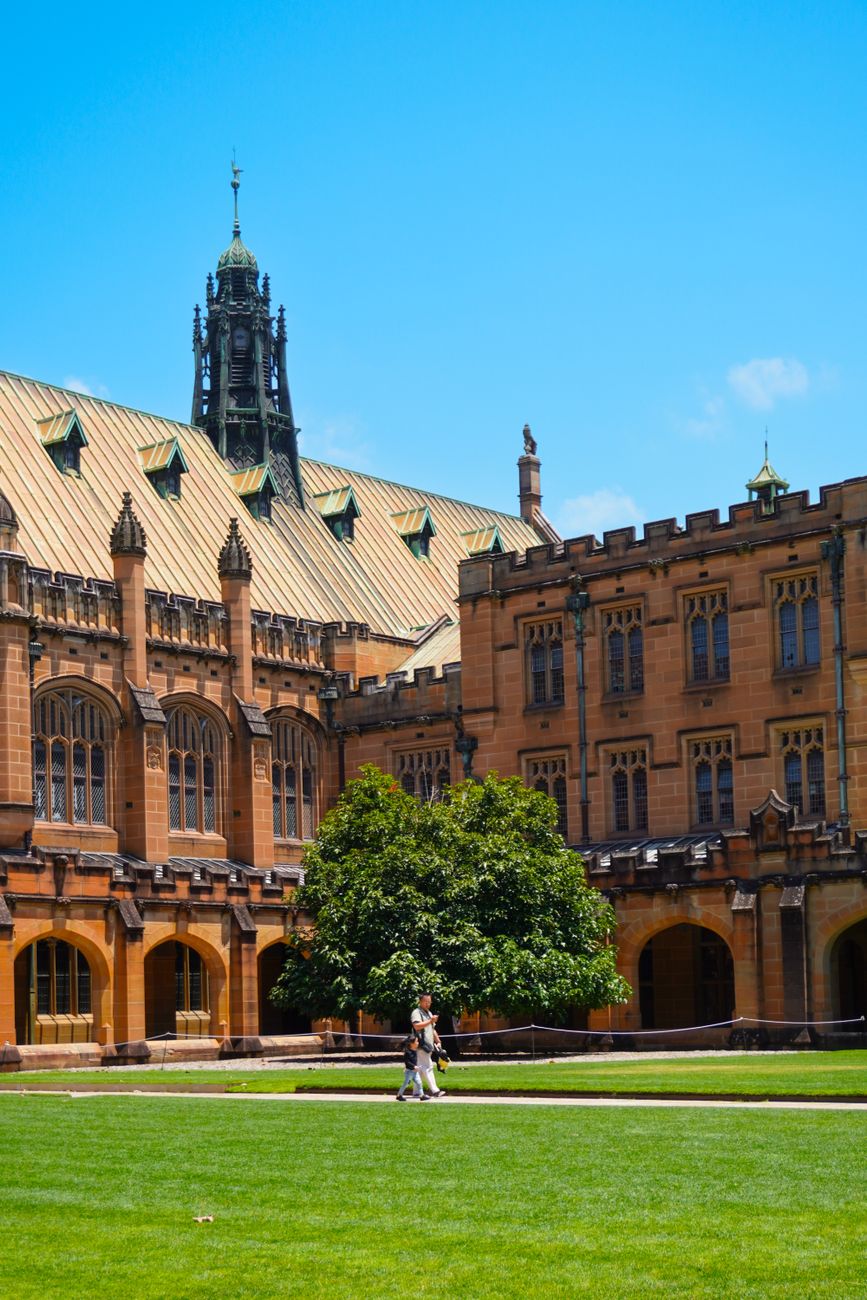
The academic structure is standardised: students complete 6 to 8 subjects aligned with their intended degree, including English for Academic Purposes. Assessment is continuous, with final grades determining progression to the first year of the bachelor’s degree. Progression rates from foundation to bachelor’s programs averaged 83% across all Australian universities in 2025, according to Universities Australia data.
For UK A-level students with grades below CCD, foundation programs accept DDE grades in 2026. American high school graduates with a GPA of 2.0-2.3 and no SAT can enter foundation programs at 31 universities. IB diploma holders with 22-24 points qualify for foundation at all major institutions except the University of Melbourne and Australian National University, which require 26 points.
Cost: Foundation programs range from AUD 18,000 to AUD 35,000 per year, depending on the institution and location. Living expenses in major cities average AUD 24,500 annually as of 2026.
Diploma Pathways: Accelerated Route to Second Year Entry
Diploma programs, also called university transfer programs, offer a faster route than foundation studies. Students complete a one-year diploma equivalent to the first year of a bachelor’s degree, then enter the second year of the degree upon successful completion.
Entry requirements for diploma programs are higher than for foundation but still accommodate low GPAs. Typically, a GPA of 2.5-2.8 (or equivalent) is required. For UK A-level students, CCC grades are standard. American high school graduates with a GPA of 2.5 and SAT of 1000 qualify at 19 universities. IB diploma holders with 26-28 points are eligible for most diploma programs.
The key advantage: diploma graduates save one year of study and tuition. Total cost for a diploma plus two years of bachelor’s study averages AUD 75,000 to AUD 110,000, compared to AUD 90,000 to AUD 135,000 for a full three-year bachelor’s degree via foundation.
Progression rates from diploma to bachelor’s year two averaged 78% in 2025, with the highest rates at the University of Technology Sydney (85%) and Monash University (82%). Students must achieve a minimum GPA of 4.0 (on a 7.0 scale) in the diploma to progress, which is achievable for most diligent students.
English Language Requirements and Conditional Offers
All Australian universities require evidence of English proficiency for international students from non-English speaking backgrounds. However, students from UK, US, Canada, Ireland, New Zealand, and South Africa are generally exempt from English testing if they completed secondary education in those countries.
For students requiring English tests, the minimum IELTS score for foundation programs is 5.5 (no band below 5.0), while diploma programs require 6.0 (no band below 5.5). Direct entry bachelor’s programs typically require 6.5 (no band below 6.0). The Department of Home Affairs 2026 data shows that 94% of student visa applications with IELTS scores meeting these thresholds are approved.
Conditional offers are standard for low GPA applicants. A conditional offer requires the student to complete a pathway program (foundation or diploma) before commencing the bachelor’s degree. The offer letter specifies the minimum grade required in the pathway program. In 2026, 67% of international student visa applications for pathway programs received conditional offers, compared to 41% for direct entry bachelor’s applications.
Important rights: Students on conditional offers retain full international student rights, including work rights (48 hours per fortnight during study, unlimited during breaks) and access to the Overseas Student Health Cover (OSHC) system. The Education Services for Overseas Students (ESOS) Act 2000 protects students from unfair practices by education providers.
Professional Accreditation Pathways: CPA, Engineers Australia, and MBBS
Low GPA admission does not preclude entry into professionally accredited programs, but the route is more structured. For CPA Australia accreditation, students must complete an accounting degree from an accredited institution. Foundation or diploma pathway students can enter accounting bachelor’s programs at 25 universities as of 2026, including the University of Sydney, Monash University, and the University of Queensland.
The CPA Australia accreditation pathway requires completion of specific core subjects. Students entering via diploma programs must ensure their diploma covers introductory accounting, economics, and business law. Foundation programs typically do not cover these subjects, so students should select foundation electives strategically.
For Engineers Australia accreditation, students must complete a four-year bachelor of engineering (honours) degree from an accredited program. Low GPA entry to engineering is possible through foundation programs at 19 universities, including the University of New South Wales and the University of Adelaide. The foundation program must include mathematics and physics components. Diploma pathways into engineering are available at 12 universities, with the University of Technology Sydney and RMIT University offering the highest progression rates.
MBBS (medical degree) entry for low GPA students is extremely competitive. Only one university, the University of Newcastle, offers a pathway program for international students with GPAs below 3.0. The University of Newcastle’s Foundation in Medicine program requires a minimum GPA of 2.5 and an interview. Successful completion allows entry into the five-year MBBS program. All other medical schools require direct entry with GPAs above 3.5 and UCAT or GAMSAT scores.
On-Campus Housing and Student Life for Pathway Students
On-campus housing availability for pathway students varies significantly by institution. In 2026, 34 Australian universities guarantee on-campus accommodation for international students who accept offers by October 1 for the February intake. However, priority is given to direct entry students at most Group of Eight universities.
The University of Melbourne, Monash University, and the University of Sydney offer dedicated accommodation blocks for foundation and diploma students. These blocks typically have lower rent rates (AUD 250-350 per week) compared to standard on-campus housing (AUD 350-500 per week). The Australian National University offers a 10% discount on on-campus housing for pathway students.
Living off-campus is the more common option. Median rent for a one-bedroom apartment within 30 minutes of major universities ranges from AUD 400 per week in Brisbane to AUD 600 per week in Sydney. Shared accommodation reduces costs to AUD 250-350 per week.
Student rights: International students in pathway programs have the same access to university medical centres, counselling services, and academic support as direct entry students. The National Code of Practice for Providers of Education and Training to Overseas Students (2018) mandates that universities provide orientation programs and academic support for all international students. In 2025, 92% of pathway students reported satisfaction with the support services provided.
Scholarships and Financial Aid for Low GPA Applicants
Scholarships for students with low GPAs are limited but exist. The Australian Awards Scholarship is the most significant, covering full tuition, living expenses, and airfares for students from developing countries. However, it requires a minimum GPA of 3.0 and is highly competitive.
University-specific scholarships for pathway students are more accessible. In 2026, 17 Australian universities offer merit-based scholarships for foundation and diploma students who achieve high grades in the pathway program. These scholarships typically cover 10-25% of tuition fees for the subsequent bachelor’s degree.
The Destination Australia Program, funded by the Australian government, provides AUD 15,000 per year to international students studying at regional campuses. This program has no GPA requirement and is available to pathway students. Regional campuses include the University of New England (Armidale), Charles Sturt University (Wagga Wagga), and the University of Tasmania (Hobart).
Financial aid in the form of payment plans is standard. Most universities allow tuition fee payment in two to four instalments per semester, with no interest charged. The Department of Home Affairs requires evidence of funds covering tuition, living expenses (AUD 24,505 per year as of 2026), and airfares for visa applications.
Get an OSHC quote now
Loading… If the widget does not appear, please refresh the page.

FAQ
Q1: What is the lowest GPA accepted for direct entry into an Australian bachelor’s program in 2026?
The lowest GPA accepted for direct entry is 2.0 (on a 4.0 scale) at a small number of regional universities, such as the University of Southern Queensland and Charles Darwin University. However, these programs are typically in less competitive fields like arts, humanities, or general science. For Group of Eight universities, the minimum direct entry GPA is 2.5 for most programs, with competitive courses like engineering and medicine requiring 3.0 or higher. Approximately 18% of international undergraduate commencements in 2025 were students with GPAs below 3.0, according to Department of Home Affairs data.
Q2: Can I use my UK A-level or American high school GPA to apply for Australian university pathway programs?
Yes. UK A-level students with grades as low as DDE can enter foundation programs at 43 Australian universities. For diploma programs, CCC grades are typically required. American high school graduates with a GPA of 2.0-2.3 and no SAT can enter foundation programs at 31 universities. For diploma programs, a GPA of 2.5 and SAT of 1000 is standard at 19 universities. IB diploma holders with 22-24 points qualify for foundation programs at all major institutions except the University of Melbourne and Australian National University, which require 26 points. All conversions are based on 2026 entry requirements published by each university.
Q3: What are the post-study work rights for international students who enter via low GPA pathways?
Students who complete a bachelor’s degree after a pathway program are eligible for the Temporary Graduate Visa (subclass 485), which allows two to four years of work in Australia depending on the degree level and location. The post-study work period is two years for bachelor’s graduates, three years for honours graduates, and four years for graduates from regional campuses. As of 2026, there is no additional work right for pathway program graduates compared to direct entry graduates. The visa requires completion of a CRICOS-registered course of at least two years’ duration, which pathway students meet through their combined program (foundation/diploma plus bachelor’s).
References
- Department of Home Affairs, 2026, Student Visa and Migration Program Report
- Universities Australia, 2025, International Student Enrolment Data 2025
- QS Quacquarelli Symonds, 2026, QS World University Rankings 2026
- Australian Government Tertiary Education Quality and Standards Agency, 2025, National Register of Higher Education Providers
- CPA Australia, 2026, Accreditation Guidelines for International Students