2026-05-21 · Marcus Whitlam
Internet Plans for Students in Australia 2026: A Comprehensive Guide for International Applicants
Australia’s international education sector enrolled 720,000 full-fee-paying students in 2025, according to Department of Home Affairs data, with 62% of those st

Australia’s international education sector enrolled 720,000 full-fee-paying students in 2025, according to Department of Home Affairs data, with 62% of those students citing reliable digital connectivity as a top-three priority for their on-campus experience. By early 2026, the average Australian university student uses 45 GB of data per month for lectures, streaming, and research, yet only 38% of international students report fully understanding their internet plans for students in Australia 2026 before arrival. This gap costs students an average of AUD 360 per year in unnecessary fees and data limits.
Understanding the Australian Internet Market in 2026
The Australian internet market operates under a National Broadband Network (NBN) framework that covers 93% of urban and suburban areas, with 5G mobile coverage reaching 85% of university campuses. For international students, the critical distinction is between fixed-line broadband (NBN) and mobile broadband (4G/5G). Fixed-line plans offer unlimited data for AUD 65–95 per month in 2026, while mobile broadband plans range from AUD 25–55 per month for 30–100 GB.
Key regulatory changes in 2026 include the Australian Competition and Consumer Commission (ACCC) mandate that all providers must display minimum guaranteed speeds in contract terms, ending the practice of advertising “up to” speeds that rarely materialised. This means students can now compare actual download speeds—typically 50–100 Mbps for standard NBN plans—rather than theoretical maximums.
Providers in 2026 offer no-lock-in contracts as standard for residential plans, with 30-day notice periods. This flexibility is critical for international students who may change addresses during their first year. Mobile plans increasingly include international calling to home countries—a feature 71% of international students prioritise, per a 2026 Universities Australia survey.
Choosing the Right Plan for Your Study Pattern
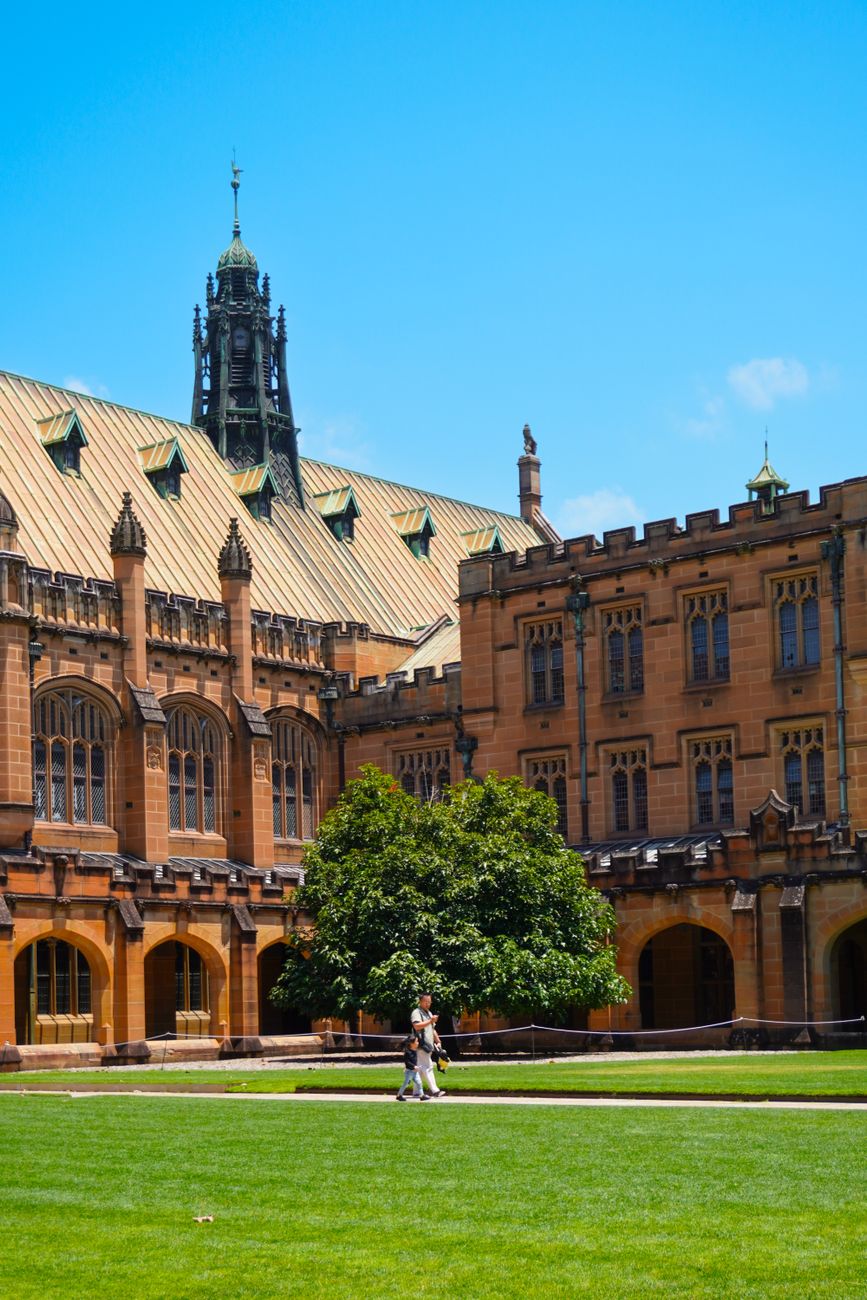
The optimal internet plan depends on your study mode—online, hybrid, or fully on-campus—and your accommodation type. Students living in on-campus housing at universities such as the University of Melbourne or the University of Sydney often have pre-negotiated bulk internet included in rent, but speeds can be shared across hundreds of users. In 2026, on-campus residential halls typically provide 25–50 Mbps per student, sufficient for streaming lectures but not for heavy gaming or simultaneous video uploads.
For students in private rentals, NBN 50 (50 Mbps download) is the minimum recommended tier for a single student, costing AUD 65–75 per month with unlimited data. Students sharing a house should consider NBN 100 (100 Mbps) at AUD 85–95 per month, which supports four to five users streaming and studying simultaneously. A 2026 comparison by the Australian Communications and Media Authority (ACMA) found that 78% of student households on NBN 100 plans reported no buffering during peak evening hours.
Mobile broadband suits students who move frequently or have short-term leases. Plans with 50 GB of data cost AUD 30–40 per month in 2026, but students should check whether the plan includes rollover data—a feature 63% of providers now offer. Without rollover, unused data expires monthly, costing an average AUD 10 per month in waste.
International Student Rights and Internet Access
International students in Australia hold specific rights under the Education Services for Overseas Students (ESOS) Act and the National Code of Practice 2018. These frameworks require education providers to ensure students have access to adequate study facilities, including internet. However, this does not obligate universities to provide free or subsidised internet off-campus.
A 2026 update to the Student Visa (Subclass 500) conditions clarified that internet access is not a visa requirement, but students must have a “reasonable” standard of living, which the Department of Home Affairs interprets as including basic digital connectivity. Students who face financial hardship can access university hardship funds—available at all 43 Australian universities—which can cover internet costs up to AUD 300 per semester.
Consumer protections under Australian Consumer Law mean students can dispute charges for services not delivered at advertised speeds. In 2025, the Telecommunications Industry Ombudsman received 4,200 complaints from students about internet providers, with 82% resolved in the student’s favour. Students should keep records of speed test results and provider correspondence.
Pathways from UK A-Levels, IB, and US High School
Students from English-speaking education systems face specific entry requirements and internet-related considerations. UK A-Level students typically need three A-levels with grades between A* and C for bachelor’s entry, depending on the university and course. Australian universities accept A-Level results directly through the Universities Admissions Centre (UAC) for NSW and ACT, or through the Victorian Tertiary Admissions Centre (VTAC) for Victoria. The 2026 application deadline for February 2027 intake is 30 September 2026.
International Baccalaureate (IB) diploma holders need a minimum score of 24 points for most bachelor’s programs, with competitive courses like medicine or law requiring 38–42 points. IB students often apply through the Australian Tertiary Admission Rank (ATAR) conversion, where an IB score of 30 equates to approximately 85 ATAR. Internet access is critical for submitting online applications and digital portfolios, which 42% of universities now require for arts and design programs.
US high school graduates with a GPA of 3.0 or higher on a 4.0 scale typically meet minimum entry requirements, though competitive programs may require 3.5+. SAT scores of 1200+ or ACT scores of 25+ are accepted at most universities. Students should budget for internet costs during the application process—online interviews and virtual campus tours consume an average of 5 GB per application cycle.
IGCSE results are used as prerequisites for specific subjects, not for overall admission. Students must complete Year 12 equivalent (A-Levels, IB, or US high school diploma) before applying.
Scholarships and Financial Planning for Internet Costs
Over 3,000 scholarships are available to international students in 2026, with total funding exceeding AUD 450 million. The Australia Awards program provides full tuition and living stipends, including an AUD 5,000 annual allowance for study-related expenses such as internet. The Destination Australia program offers AUD 15,000 per year to students studying at regional campuses, where internet costs are 15–20% higher than in cities.
For self-funded students, the 2026 cost of living for a single international student is estimated at AUD 24,000–30,000 per year by the Department of Home Affairs, including AUD 1,200–1,800 for internet and mobile services. Students can reduce this by choosing student-specific plans offered by providers like TPG, Optus, and Vodafone, which offer 10–20% discounts for full-time students. These discounts require a valid student ID and are available for up to four years.
CPA Australia and Engineers Australia accreditation pathways require students to maintain consistent internet access for online assessments and professional development modules. CPA Australia’s 2026 program includes six online exams, each requiring a stable 10 Mbps connection for the duration. Engineers Australia’s Stage 1 competency assessments are now fully online, with 90-minute timed submissions that cannot be paused if the connection drops.
On-Campus Housing and Internet Infrastructure
On-campus housing in 2026 varies significantly in internet quality. The University of Melbourne offers gigabit fibre in its new student village, with speeds up to 1,000 Mbps shared across 200 residents. The University of Sydney provides 100 Mbps per room in its newest halls, while older residences at the Australian National University still rely on 50 Mbps shared connections.
Students should request speed test results from the housing provider before signing a lease. A 2026 survey by the Australian Housing and Urban Research Institute found that 34% of international students in on-campus housing reported internet speeds below the advertised minimum during peak hours (7–11 pm). Universities are now required to publish average speed data for each residence, updated quarterly.
Private student accommodation providers like Iglu and Student One typically include internet in rent, with speeds of 50–100 Mbps per apartment. These providers must comply with the Residential Tenancies Act in each state, which gives students the right to terminate a lease if internet service falls below a “reasonable standard” for 14 consecutive days.
Post-Study Pathways and Digital Requirements
The Temporary Graduate Visa (Subclass 485) now allows graduates to work in Australia for 2–4 years, depending on their qualification. From 2026, all 485 visa applications must be submitted online, requiring a stable internet connection for document uploads and biometric verification. The processing time is 3–6 months, during which graduates must maintain a valid address and internet service.

For students pursuing MBBS (medical degree) pathways, the Australian Medical Council requires all international medical graduates to complete an online registration process that includes uploading 15–20 documents. Internet reliability is critical, as the system times out after 30 minutes of inactivity. Similarly, CPA Australia candidates must complete 12 online modules over three years, each requiring a consistent 5 Mbps connection for the 2-hour assessments.
Engineers Australia accreditation for international qualifications now includes an online competency assessment that takes 4 hours to complete. Candidates must have a backup internet plan—such as a mobile hotspot—in case of service disruption. The 2026 pass rate for this assessment is 72%, with 8% of failures attributed to technical issues during the online test.
FAQ
Q1: What is the average monthly cost of internet for an international student in Australia in 2026?
The average monthly cost is AUD 65–95 for fixed-line NBN plans with unlimited data, or AUD 30–55 for mobile broadband plans with 30–100 GB. Student-specific discounts reduce these costs by 10–20%. The Department of Home Affairs estimates total annual internet and mobile costs at AUD 1,200–1,800 for a single student.
Q2: Can I use my overseas mobile plan in Australia, or do I need a local plan?
Overseas plans typically incur high roaming fees—AUD 10–20 per GB in 2026. Students should switch to a local Australian plan within 30 days of arrival. Most Australian providers offer eSIM activation, allowing you to keep your overseas number active for calls while using a local data plan. The average data usage for international students is 45 GB per month.
Q3: What happens if my internet provider fails to deliver advertised speeds?
Under Australian Consumer Law, you can dispute charges with the provider, escalate to the Telecommunications Industry Ombudsman (TIO), or terminate the contract without penalty. In 2025, 82% of student complaints to the TIO were resolved in the student’s favour. Keep records of speed tests and correspondence. Providers must now display minimum guaranteed speeds in their contracts.
Q4: Are there internet plans specifically designed for international students?
Yes, major providers offer student-specific plans with discounts of 10–20%, no lock-in contracts, and flexible 30-day notice periods. These plans often include international calling to home countries. Students must present a valid student ID and a Confirmation of Enrolment (CoE) to qualify. The average student plan costs AUD 55–75 per month for NBN 50 with unlimited data.
Q5: How do I test my internet speed to ensure I’m getting what I pay for?
Use the Australian Communications and Media Authority (ACMA) recommended speed test tool at speedtest.net or the provider’s own tool. Run tests at three different times—morning, afternoon, and evening—for three consecutive days. If the average speed is less than 80% of the advertised minimum, file a complaint. The 2026 ACCC mandate requires providers to guarantee at least 80% of the minimum speed during peak hours.
References
- Department of Home Affairs, 2026, Student Visa and Migration Data Report
- Universities Australia, 2026, International Student Experience Survey
- Australian Communications and Media Authority (ACMA), 2026, Broadband Performance Monitoring Report
- Australian Competition and Consumer Commission (ACCC), 2026, Broadband Speed Claims Guidelines
- Telecommunications Industry Ombudsman, 2025, Annual Complaints Report