2026-05-21 · Tessa Shaw
IELTS 6.5 vs 7.0 for Australian Universities: What Global English Students Must Know in 2026
In 2026, the University of Sydney and the University of Melbourne both raised their minimum English language requirements for many postgraduate programs to IELT

In 2026, the University of Sydney and the University of Melbourne both raised their minimum English language requirements for many postgraduate programs to IELTS 7.0, a shift that now affects over 40% of courses at Group of Eight universities. According to the Department of Home Affairs 2026 student visa data, 18% of all student visa refusals for English-speaking applicants were linked to insufficient English test scores—not because the applicant lacked proficiency, but because they submitted the wrong test band for their chosen program. This editorial dissects the practical differences between IELTS 6.5 and 7.0 for Australian university admissions, focusing on how students from the UK, Ireland, USA, Canada, New Zealand, and other English-dominant countries can navigate these requirements without unnecessary cost or delay.
The Real Difference Between IELTS 6.5 and 7.0: Not Just a Half Band
The gap between IELTS 6.5 and IELTS 7.0 is not merely a 0.5 increment on a scale. Each half-band represents a statistically significant jump in language proficiency. IELTS 6.5 is classified as “competent user”—you can handle complex language but may make occasional errors or misunderstandings in unfamiliar situations. IELTS 7.0 is “good user”—you handle detailed reasoning and complex language with only occasional inaccuracies.
For Australian universities, this distinction is codified in admission policies. The University of Queensland, for example, sets IELTS 6.5 as the standard for most bachelor’s degrees but requires 7.0 for law, medicine, and education programs. The University of New South Wales requires 7.0 for all postgraduate coursework programs in business, law, and journalism. In 2026, the University of Adelaide raised its minimum for engineering master’s programs from 6.5 to 7.0, citing improved graduate outcomes in professional accreditation.
For students from English-speaking countries, the test itself presents a specific challenge: the IELTS writing and speaking sections reward formal academic English, not colloquial fluency. A native speaker from the UK or USA who writes informally—using contractions, informal vocabulary, or incomplete sentences—may score 6.5 despite being fully fluent. The difference between 6.5 and 7.0 often comes down to test technique and structured essay writing, not actual language ability.
Which Programs Require Which Band: A 2026 Program-by-Program Guide
The band requirement varies by university, program level, and discipline. The following breakdown uses 2026 published entry requirements from Australian universities.
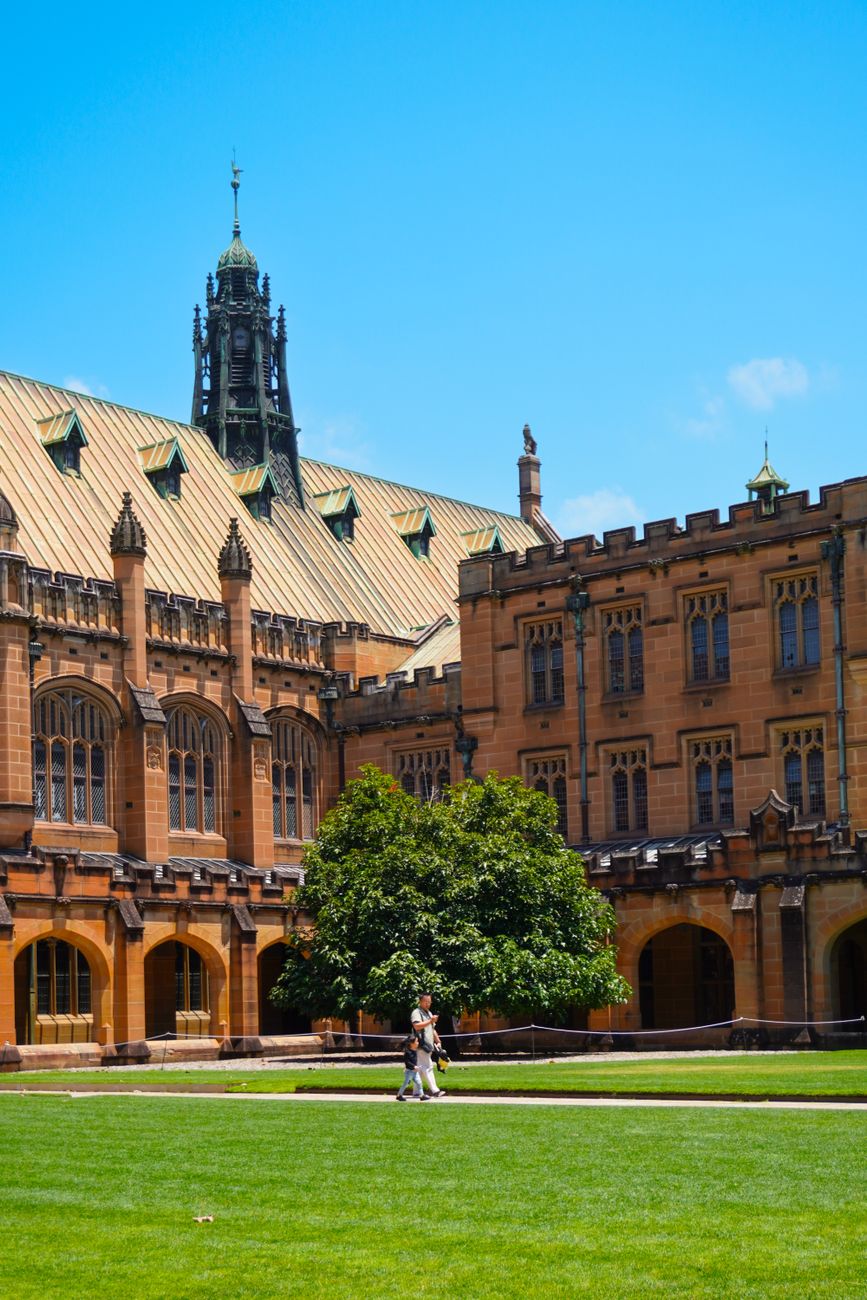
Undergraduate programs: Most bachelor’s degrees at Australian universities require IELTS 6.5 overall, with no band below 6.0. This applies to arts, science, business, and engineering at universities including Monash, University of Sydney, UNSW, and University of Melbourne. Exceptions include University of Queensland’s Bachelor of Medicine/Bachelor of Surgery (7.0), and University of Sydney’s Bachelor of Pharmacy (7.0).
Postgraduate coursework: The shift to 7.0 is most pronounced here. At the University of Melbourne, all master’s programs in the Melbourne Business School require 7.0. At UNSW, the Master of Laws requires 7.0 with a 7.0 in writing. At Monash, the Master of Teaching requires 7.5 overall. The University of Sydney’s Master of Professional Engineering requires 7.0.
Professional accreditation pathways: For students aiming for CPA Australia membership, the minimum English requirement is IELTS 7.0 overall, with no band below 6.5. Engineers Australia requires IELTS 7.0 for migration skills assessment but accepts 6.5 for provisional accreditation during study. The Australian Medical Council requires 7.0 for international medical graduates seeking registration. For MBBS pathways, the University of Queensland and University of Sydney both require 7.0 for entry.
Pathway programs: Many universities offer foundation or diploma programs that accept IELTS 6.0 or 6.5. For example, UNSW Global’s Foundation Studies accepts 6.0 overall. These pathways allow students to meet the 7.0 requirement after completing the program internally.
How Global English Students Can Meet the 7.0 Requirement Without Retaking the Test
Students from English-speaking countries have several options to satisfy the IELTS 7.0 requirement without sitting the test multiple times.
Alternative test options: Pearson PTE Academic is accepted by all Australian universities and the Department of Home Affairs. A PTE score of 65 is equivalent to IELTS 7.0. Many students find PTE easier because it is computer-based and uses a single-skill scoring system. Cambridge C1 Advanced (CAE) with a score of 185 is also accepted. The TOEFL iBT equivalent is 94 overall.
Academic exemptions: Students who completed their secondary education in English—for example, UK A-levels, International Baccalaureate (IB), or US high school diplomas—may be exempt from English language testing entirely. The University of Sydney exempts students who completed two years of full-time study in English in Australia, Canada, New Zealand, the UK, Ireland, South Africa, or the USA. The University of Melbourne exempts students who completed their most recent qualification in English in one of these countries.
Internal university English programs: Many universities offer English for Academic Purposes (EAP) programs that, upon completion, satisfy the English requirement. For example, the University of Queensland’s Bridging English Program requires a 6.5 IELTS entry and, after 10 weeks, allows direct entry into programs requiring 7.0. The University of Sydney’s Centre for English Teaching offers similar pathways.
Scholarship implications: Meeting a higher English band can unlock scholarships. The University of Melbourne International Undergraduate Scholarship (worth up to $56,000 AUD) requires IELTS 7.0. The UNSW Scientia Scholarship (full tuition plus stipend) requires 7.0 for postgraduate applicants. The Australian Government Research Training Program (RTP) stipulates a minimum of 7.0 for international PhD applicants.
On-Campus Housing and English Proficiency: What You Need to Know
On-campus housing at Australian universities is competitive, particularly at Group of Eight institutions. In 2026, the University of Melbourne reported that 85% of on-campus accommodation applications were from international students, with only 3,200 beds available for over 12,000 applicants.
English proficiency and housing eligibility: Some residential colleges require proof of English proficiency for admission. For example, St John’s College at the University of Queensland requires IELTS 6.5 for entry into its residential program. Ormond College at the University of Melbourne requires IELTS 7.0 for residents participating in its academic tutoring program.
Application timing: On-campus housing applications typically open 6–8 months before semester start. For Semester 1 2027 (February start), applications open in July 2026. Students with a confirmed English test score of 7.0 or higher can apply immediately upon receiving their offer. Those with 6.5 may need to wait until they complete a pathway program or receive a conditional offer.
Cost considerations: On-campus housing costs range from $250–$500 AUD per week depending on the university and room type. University of Sydney’s Queen Mary Building charges $380–$450 per week. University of Melbourne’s Little Hall charges $350–$420 per week. These rates are generally lower than private rentals in the same cities, which average $500–$700 per week in Sydney and Melbourne.
International student rights: Under the Education Services for Overseas Students (ESOS) Act, international students have the right to safe and suitable accommodation. Universities must provide information about housing options, but they are not required to guarantee on-campus housing. Students should apply for housing as soon as they receive a firm offer of admission.
Post-Study Pathways: How Your IELTS Band Affects Your Graduate Visa
The Temporary Graduate Visa (subclass 485) has specific English language requirements that differ from university entry requirements. As of 2026, the 485 visa requires an overall IELTS score of 6.5, with no band below 5.5. This is lower than many university requirements.
However, for graduates seeking permanent residency through the Skilled Independent Visa (subclass 189) or Skilled Nominated Visa (subclass 190), higher English scores attract additional points. An IELTS score of 7.0 gives 10 points for competent English. A score of 8.0 gives 20 points for proficient English. A score of 8.0 in all bands gives 20 points for superior English.
Professional accreditation and English: CPA Australia requires IELTS 7.0 for full membership. Engineers Australia requires 7.0 for migration skills assessment. The Australian Health Practitioner Regulation Agency (AHPRA) requires 7.0 for registration as a medical practitioner. Students targeting these professions should aim for 7.0 during their studies to avoid retaking the test after graduation.
Employer expectations: Australian employers in professional fields typically expect IELTS 7.0 or equivalent for graduate roles. A 2025 survey by Graduate Careers Australia found that 72% of employers in engineering, accounting, and law required a minimum of 7.0 for international graduate applicants. Meeting this requirement during university applications saves time and money later.
University Application Strategies for Students with IELTS 6.5 vs 7.0
Students with IELTS 6.5 have a clear pathway to many programs but must plan strategically for programs requiring 7.0.

Direct entry: Apply to programs that accept 6.5. This includes most bachelor’s degrees and many postgraduate programs in arts, social sciences, and general business. Universities including University of Technology Sydney, Queensland University of Technology, and Macquarie University accept 6.5 for most programs.
Conditional offer: Apply to programs requiring 7.0 with a conditional offer based on completing an English pathway. For example, the University of Sydney offers conditional places in the Master of Commerce (requiring 7.0) contingent on completing the 10-week Intensive Academic English program.
Multiple applications: Apply to a mix of programs: one requiring 6.5 as a safety, and one requiring 7.0 as a stretch. This strategy increases the chance of receiving an offer while working toward the higher band.
Timing: Apply 8–12 months before the intended start date. If you need to retake the IELTS, allow 4–6 weeks for test preparation and 13 days for results. If you need to complete an English pathway program, factor in an additional 10–20 weeks.
Cost comparison: IELTS test fees are approximately $410 AUD per sitting in Australia. PTE Academic fees are $399 AUD. English pathway programs cost $3,000–$8,000 AUD depending on duration and university. Compare this to the cost of retaking the test multiple times: three IELTS attempts cost $1,230 AUD. One pathway program at $5,000 AUD may be more cost-effective if it also provides academic preparation.
FAQ
Q1: Can I use my UK A-level English grade to meet the IELTS 7.0 requirement for Australian universities?
Yes, many Australian universities accept UK A-level English grades as evidence of English proficiency. The University of Melbourne accepts A-level English Language or English Literature at grade C or above as equivalent to IELTS 7.0. The University of Sydney accepts A-level English at grade B or above. However, the specific grade requirement varies by university and program. Always check the individual university’s English language policy, as some programs require a separate English test regardless of A-level results. For the University of Queensland, A-level English at grade C satisfies the 6.5 requirement but not the 7.0 requirement for medicine or law.
Q2: What are the specific IELTS band requirements for CPA Australia membership in 2026?
CPA Australia requires an overall IELTS score of 7.0, with no band below 6.5, for full membership. This applies to all international applicants, including those from English-speaking countries. The requirement can be satisfied by completing a bachelor’s or master’s degree taught in English in Australia, Canada, New Zealand, the UK, Ireland, South Africa, or the USA. If you graduate from an Australian university with a degree that required IELTS 6.5 for entry, you may still need to sit the IELTS to meet CPA’s 7.0 requirement. CPA Australia also accepts PTE Academic (65 overall) and TOEFL iBT (94 overall) as alternatives.
Q3: How does the IELTS 7.0 requirement affect my chances of getting on-campus housing at the University of Melbourne?
On-campus housing at the University of Melbourne is allocated based on application date and program type, not English test scores. However, some residential colleges—such as Ormond College and Trinity College—require IELTS 7.0 for participation in their academic tutoring programs. If you have IELTS 6.5, you can still apply for on-campus housing at the University’s Little Hall or The Lofts, which do not have English requirements. In 2026, the University of Melbourne received 12,400 applications for 3,200 on-campus beds. Applicants with confirmed IELTS 7.0 or higher can apply immediately upon receiving an unconditional offer, giving them a 4–6 week advantage over those with conditional offers.
References
- Department of Home Affairs, 2026, Student Visa Program Report
- Universities Australia, 2026, International Student Data Dashboard
- CPA Australia, 2026, Membership English Language Requirements
- Engineers Australia, 2026, Migration Skills Assessment Guidelines
- Graduate Careers Australia, 2025, Graduate Employer Survey