2026-05-21 · Nathan Hartley
How to Calculate Tuition Fees in Australia: A Complete Guide for International Students 2026
International students paid an average of AUD 42,000 in annual undergraduate tuition fees in 2026, according to the Department of Home Affairs. Universities Aus

International students paid an average of AUD 42,000 in annual undergraduate tuition fees in 2026, according to the Department of Home Affairs. Universities Australia reported that international education generated AUD 48 billion in export revenue in 2025-26, with tuition fees representing 62% of that total. Understanding how to calculate tuition fees in Australia requires navigating multiple variables—course type, university band, location, and duration—before the first dollar is committed.
The Base Formula: Tuition Fee Components
The standard formula for how to calculate tuition fees in Australia is: Annual tuition fee = (Course fee per unit × Number of units per year) + compulsory fees. Australian universities typically charge per “equivalent full-time student load” (EFTSL). One EFTSL equals eight standard units (subjects) per academic year.
Compulsory fees add AUD 200–1,500 annually. These include Student Services and Amenities Fees (SSAF), which was capped at AUD 365 in 2026 for most universities, plus mandatory health cover contributions. International students must hold Overseas Student Health Cover (OSHC), costing AUD 600–1,200 per year depending on provider and coverage level.
The fee-per-unit method is the most transparent. A university may advertise a Bachelor of Commerce at AUD 45,000 per year. If the course comprises eight units, each unit costs AUD 5,625. Students who fail a unit must retake it at the same per-unit rate, not at a reduced “repeat rate.”
Course load adjustments change the total. A student taking 75% load (six units per year) pays 75% of the advertised annual fee. This is common for students working part-time or managing visa conditions that limit work hours to 48 per fortnight from July 2026.
University Fee Bands: Group of Eight vs. Regional Universities
Australian universities operate in distinct fee bands. The Group of Eight (Go8) universities—the research-intensive tier—charge the highest international tuition rates. In 2026, Go8 undergraduate fees ranged from AUD 38,000 to AUD 58,000 per year. Regional universities, such as those in the Regional Universities Network (RUN), charged AUD 22,000 to AUD 35,000.
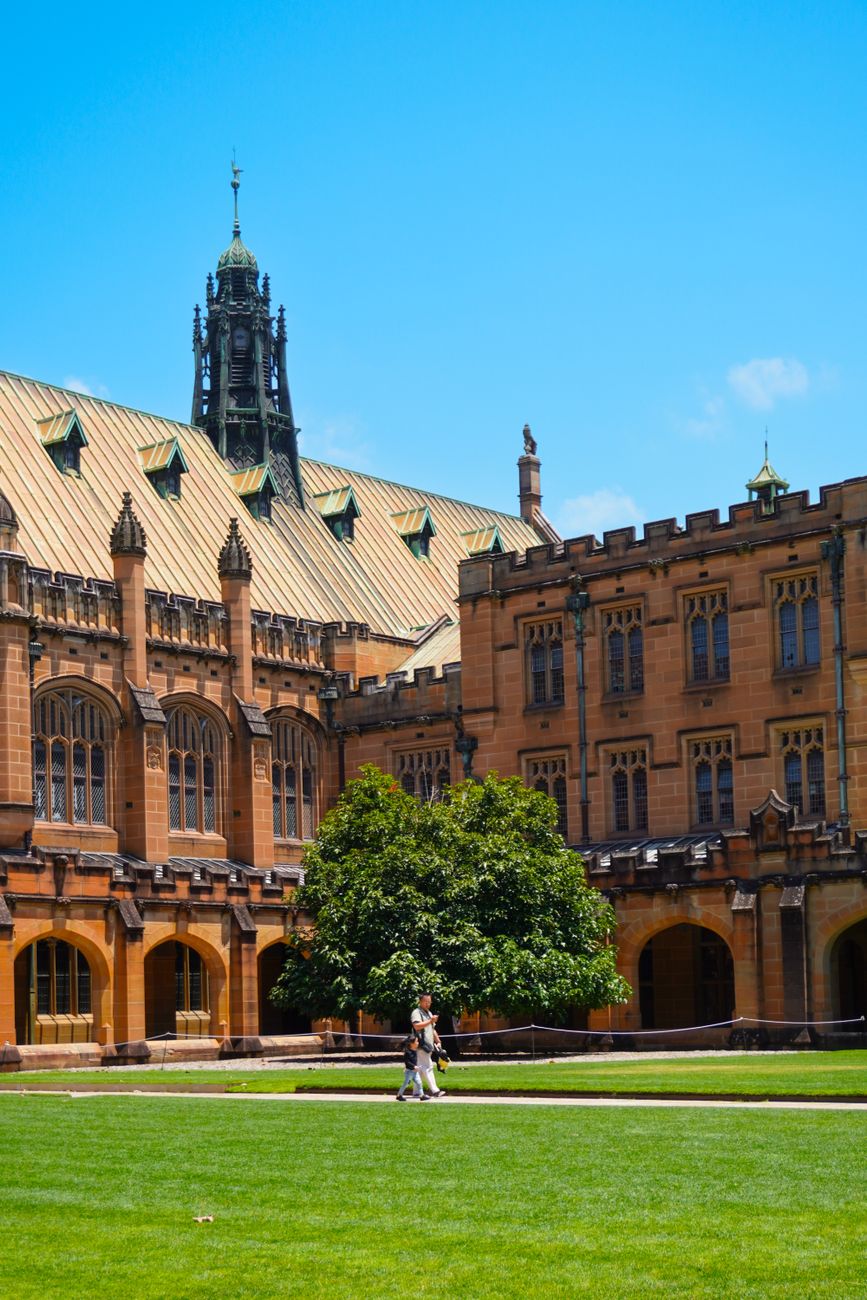
The fee band directly affects how to calculate tuition fees in Australia because the per-unit rate scales with the band. For example:
- University of Melbourne (Go8): Bachelor of Science, AUD 52,000/year → AUD 6,500 per unit
- University of New England (Regional): Bachelor of Science, AUD 28,000/year → AUD 3,500 per unit
- University of Technology Sydney (non-Go8 metro): Bachelor of Science, AUD 38,000/year → AUD 4,750 per unit
The difference of AUD 24,000 per year between the highest and lowest bands compounds over a three-year degree to AUD 72,000. Students should factor this into their total cost of attendance calculation, not just the headline fee.
Fee band inflation matters. Go8 universities increased fees by 5-7% annually from 2024 to 2026, while regional universities held increases to 2-4%. Projecting fee growth over a multi-year degree is essential for accurate budgeting.
Course-Specific Fees: Medicine, Engineering, and Business
Course type is the second-largest cost driver after university band. Medicine (MBBS) is the most expensive undergraduate program. In 2026, MBBS fees at Go8 universities ranged from AUD 70,000 to AUD 85,000 per year for international students. A six-year program totals AUD 420,000–510,000. Regional medical schools, such as James Cook University, charged AUD 55,000–65,000 per year.
Engineering programs cost AUD 40,000–55,000 per year at Go8 institutions, reflecting laboratory and equipment costs. Students pursuing accreditation through Engineers Australia—which recognises Washington Accord qualifications from Australian universities—must complete a four-year bachelor’s degree. The total fee for a Go8 engineering degree: AUD 160,000–220,000.
Business and commerce programs are the most common for international students. Fees range from AUD 35,000 (regional) to AUD 55,000 (Go8). Students targeting CPA Australia accreditation should note that the CPA program itself costs AUD 4,500–6,000 separately, after the degree.
Scholarships reduce the effective fee. Australian universities offer merit-based international scholarships covering 10-50% of tuition. The Australia Awards scholarship covers full tuition plus living costs but requires a return to the home country for two years post-graduation. University-specific scholarships, such as the University of Sydney International Scholarship (20% reduction) or Monash International Merit Scholarship (AUD 10,000 per year), are competitive.
Pathways: A-Level, IB, and American High School to Australian Fees
International students entering via UK A-levels, International Baccalaureate (IB), or US high school GPA/SAT follow different fee calculation rules. Australian universities publish guaranteed entry scores in an “A-level equivalent” or “IB equivalent” table. The fee calculation remains the same as for domestic international students, but the pathway duration affects total cost.
Foundation programs are common for students who do not meet direct entry requirements. A foundation year costs AUD 25,000–35,000 and leads into first-year undergraduate. The total degree cost then becomes: foundation fee + three-year undergraduate fee. For a Go8 commerce degree: AUD 30,000 (foundation) + AUD 150,000 (three years) = AUD 180,000 total.
Diploma pathways (also called “international year one” programs) cost AUD 30,000–40,000 and provide direct entry into second year of a bachelor’s degree. The total cost: diploma fee + two remaining years of undergraduate. For a Go8 engineering degree: AUD 35,000 (diploma) + AUD 100,000 (two years) = AUD 135,000 total. This is AUD 25,000 cheaper than the three-year direct entry route.
IGCSE students from the UK system typically complete A-levels before applying. Australian universities accept IGCSE results only for foundation programs, not direct entry. The fee calculation must include the A-level program cost (in the UK or at an Australian foundation provider).
American high school students require a minimum GPA of 3.0–3.5 on a 4.0 scale for direct entry, plus SAT scores of 1200–1400 for competitive programs. The fee calculation is identical to other direct entry students, but the visa application may require proof of SAT scores as part of the Genuine Student (GS) requirement.
Living Costs and On-Campus Housing
Living costs are the second-largest expense after tuition. The Australian Government requires international students to show AUD 29,710 in living costs for a single student in 2026 (including accommodation, food, transport, and AUD 2,000 for miscellaneous). This is the minimum for visa purposes; actual costs vary by city.
On-campus housing is the most predictable cost. University-operated accommodation ranges from:
- Sydney and Melbourne: AUD 400–600 per week (AUD 20,800–31,200 per year)
- Brisbane and Perth: AUD 300–450 per week (AUD 15,600–23,400 per year)
- Regional cities: AUD 200–350 per week (AUD 10,400–18,200 per year)
On-campus housing includes utilities, internet, and often a meal plan. The total annual cost (tuition + housing + food + transport) for a single student in a Go8 city university is approximately:
- Sydney: AUD 55,000–75,000
- Melbourne: AUD 50,000–70,000
- Brisbane: AUD 45,000–60,000
- Regional: AUD 35,000–50,000
Off-campus housing can be cheaper but less predictable. Students should budget an extra AUD 2,000–5,000 per year for bond, furniture, and utility connection fees.
International Student Rights and Fee Protections
International students have specific rights regarding tuition fees under Australian consumer law and the Education Services for Overseas Students (ESOS) Act. The Tuition Protection Service (TPS) ensures students receive a refund or placement if their provider ceases operations. In 2025-26, the TPS processed 1,200 claims, with an average refund of AUD 18,000 per student.
Fee refund policies vary by university. Most institutions offer a full refund minus AUD 500–1,000 administrative fee if a student cancels before the census date (typically week 2-4 of semester). After census date, the student is liable for the full semester’s fees. The census date is the critical deadline for calculating tuition liability.
Visa condition 8105 limits work rights to 48 hours per fortnight during study periods and unlimited during scheduled breaks. Students earning AUD 30–40 per hour in casual work can offset AUD 15,000–20,000 per year in living costs. This does not reduce tuition fees but affects the total cost of attendance.
Health cover is mandatory. OSHC must be purchased for the entire visa duration. The cost for a single student: AUD 600–1,200 per year; for a family: AUD 1,500–3,000 per year. Students from countries with Reciprocal Health Care Agreements (UK, Sweden, Norway, Belgium) can apply for a Medicare exemption, but must still purchase OSHC for ambulance and hospital cover.
Post-Study Work and Fee Recovery
The post-study work visa (Subclass 485) allows graduates to work in Australia for 2-4 years after completing a degree. Fee recovery depends on the salary earned during this period. The median graduate salary in 2026 was AUD 73,000 for bachelor’s degree holders, according to the Graduate Outcomes Survey.
Fee recovery calculation: A student paying AUD 150,000 for a three-year Go8 degree and earning AUD 73,000 per year post-graduation would recover the tuition in approximately 2.1 years of post-tax earnings (assuming 30% tax rate). Regional graduates earning AUD 65,000 with lower tuition (AUD 90,000 total) would recover fees in 1.5 years.
Regional study incentives include an additional one-year post-study work visa and priority processing for permanent residency. The Department of Home Affairs designated 2026 regional areas as all locations except Sydney, Melbourne, and Brisbane. Students studying in these areas can access up to 4 years of post-study work rights, compared to 2 years for major cities.
Professional accreditation affects fee recovery. Engineers Australia-accredited graduates earn a median of AUD 80,000 starting salary. CPA Australia-accredited accountants earn AUD 72,000. MBBS graduates earn AUD 85,000 during internship year, rising to AUD 120,000+ after specialisation. These higher salaries shorten fee recovery timelines.
Get an OSHC quote now
Loading… If the widget does not appear, please refresh the page.

FAQ
Q1: How do I calculate the total cost of a three-year Australian degree in 2026?
Take the annual tuition fee (e.g., AUD 45,000 for a Go8 commerce degree) and multiply by three years. Add AUD 29,710 per year for living costs (government minimum), plus AUD 800 per year for OSHC. Total: AUD 135,000 (tuition) + AUD 89,130 (living) + AUD 2,400 (OSHC) = AUD 226,530. Add AUD 2,000 for visa application fee (Subclass 500). The final estimate: AUD 228,530 for three years.
Q2: What is the difference in tuition between a Go8 and a regional university for an engineering degree in 2026?
Go8 engineering tuition averages AUD 48,000 per year (four-year degree = AUD 192,000 total). Regional university engineering tuition averages AUD 32,000 per year (four-year degree = AUD 128,000 total). The difference is AUD 64,000 over the degree. Living costs are also lower in regional areas: AUD 15,000–18,000 per year versus AUD 25,000–30,000 in Sydney or Melbourne. Total cost difference: approximately AUD 90,000–100,000 over four years.
Q3: Can I reduce tuition fees through scholarships, and what percentage is typical?
Yes. University-specific merit scholarships typically cover 10-25% of tuition. The Australia Awards scholarship covers 100% of tuition plus living costs but requires a two-year return obligation. The Destination Australia program provides AUD 15,000 per year for regional study. In 2026, approximately 18% of international undergraduate students received a scholarship, with an average value of AUD 8,500 per year. Application deadlines are typically 6-12 months before course start date.
References
- Department of Home Affairs, 2026, Student Visa and Post-Study Work Visa Statistics
- Universities Australia, 2026, International Education Data Snapshot 2025-26
- Australian Government Department of Education, 2026, International Student Course Fees and Living Costs Report
- Graduate Careers Australia, 2026, Graduate Outcomes Survey National Report
- Tuition Protection Service, 2026, Annual Report on International Student Claims