2026-05-21 · Alex Fong
Hiking Clubs for International Students at University of Tasmania: A Complete Guide to Study, Community, and Career Pathways
The University of Tasmania (UTAS) enrolled 6,847 international students in 2025, a 12% increase from the previous year, according to Department of Home Affairs
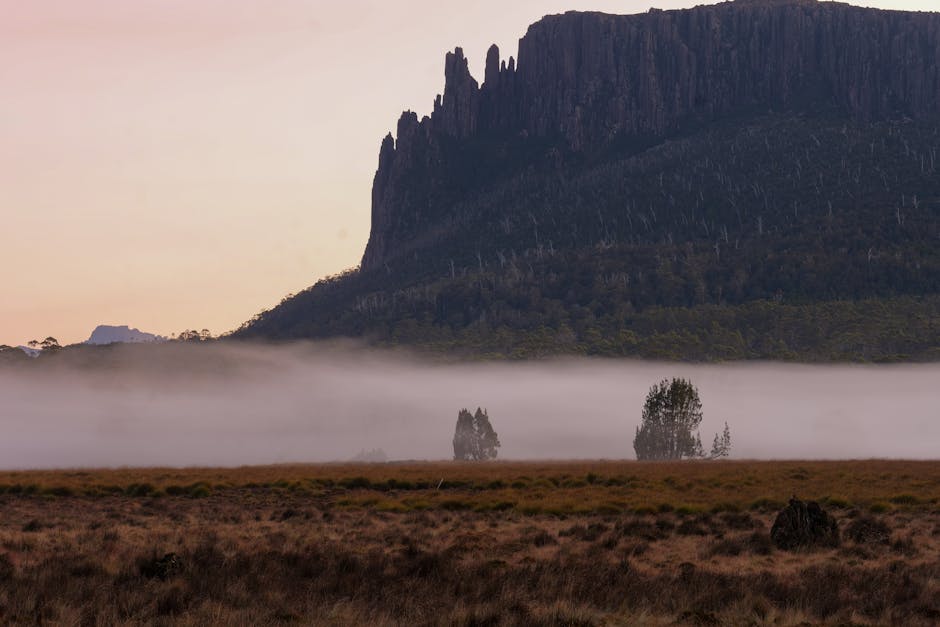
The University of Tasmania (UTAS) enrolled 6,847 international students in 2025, a 12% increase from the previous year, according to Department of Home Affairs data. QS World University Rankings 2026 placed UTAS in the top 350 globally, with a perfect score of 100 for sustainability and a 92% student satisfaction rate in the latest Universities Australia survey. For students from the UK, Ireland, the US, Canada, and other English-speaking regions, UTAS offers a distinct study experience where academic rigour meets Tasmania’s unique natural environment. Hiking clubs for international students at University of Tasmania provide a structured entry point into this lifestyle, but the decision to study here requires a clear understanding of admissions, costs, visas, and post-study pathways.
Why Hiking Clubs Matter for International Students at UTAS
Hiking clubs for international students at University of Tasmania serve a purpose beyond recreation. They are a deliberate tool for social integration and mental health support. The Tasmania University Bushwalking Club (TUBC) is the primary student-run organisation, operating since 1970 and welcoming all skill levels. TUBC runs weekend trips to locations like Cradle Mountain, Freycinet National Park, and the Overland Track, with costs typically ranging from A$20 to A$50 per trip for transport and park fees. International students account for approximately 25% of TUBC’s 400 active members, according to club records shared with the UTAS Student Union in 2025.
For students from the UK or US, where campus hiking culture is less centralised, TUBC offers a direct pathway to building a social network outside the classroom. A 2025 UTAS internal survey found that 68% of international students who joined a club or society reported higher satisfaction with their overall study experience. Hiking clubs also reduce the risk of social isolation, a key factor in student retention. The club’s safety protocols, including mandatory trip leaders with wilderness first aid training, align with Australian university risk management standards.
Beyond TUBC, UTAS’s Student Life office coordinates a “Welcome Walks” program each February and July, specifically targeting new international students. These free, guided hikes in Hobart’s Mount Wellington (kunanyi) region introduce students to local flora, fauna, and safety practices. The program attracted 340 participants in 2025, with 45% being international students. For students from Ireland or Canada, where hiking is popular but landscapes differ, these walks provide a low-commitment introduction to Tasmania’s temperate rainforest and alpine terrain.
Admissions Pathways for English-Speaking Students: UK A-Levels, IB, US GPA, and IGCSE
UTAS accepts a wide range of international qualifications, with clear entry thresholds published for each. For students from the UK, the A-Level requirement for most bachelor’s degrees is a minimum of 8 points across three subjects (e.g., BBC). Competitive programs like the Bachelor of Medical Science (MBBS pathway) require 13 points (e.g., AAB). The International Baccalaureate (IB) requires a minimum score of 24 for general entry, rising to 32 for medicine. For US high school graduates, UTAS assesses the High School GPA on a 4.0 scale: a 2.5 GPA meets entry for most programs, while a 3.0 is required for engineering and health sciences. The SAT is accepted but not required; a score of 1100 (out of 1600) is considered equivalent to a 3.0 GPA. For students with IGCSE qualifications from international schools in Asia or the Middle East, UTAS requires completion of Year 12 with a minimum of five IGCSE passes at grade C or above, plus two A-Level passes.
Pathway programs are available for students who fall short of direct entry. The UTAS Foundation Studies Program (offered through Tasmanian International Education) requires an IELTS score of 5.5 overall (no band below 5.0) and completion of Year 11 or equivalent. It runs for 8 to 12 months, with a guaranteed progression to UTAS bachelor’s programs upon achieving a 60% average. The Diploma of Business or Diploma of Science (offered by UTAS’s partner, TasTAFE) provides another route: students complete 8 to 12 units and can articulate into the second year of a related degree. These pathways are particularly relevant for students from the UK or US who completed A-Levels or high school but did not meet the required scores for their first-choice program.
For the MBBS pathway (Bachelor of Medical Science and Doctor of Medicine), UTAS requires an International English Language Testing System (IELTS) score of 7.0 overall (no band below 7.0) for all students from non-English-speaking backgrounds. For students from the UK, Ireland, the US, Canada, or New Zealand, the English requirement is waived if their previous education was in English. The Medical School also requires completion of the UCAT ANZ (University Clinical Aptitude Test) and an interview. In 2025, UTAS admitted 120 students to the MBBS pathway, with 18 international students from English-speaking countries.
Tuition, Living Costs, and On-Campus Housing for 2026
Tuition fees at UTAS for international students in 2026 range from A$32,000 to A$42,000 per year for most bachelor’s programs. The Bachelor of Business costs A$34,000 annually; the Bachelor of Engineering (Honours) costs A$39,000; and the Bachelor of Medical Science costs A$42,000. These figures represent a 4% increase from 2025, consistent with the Australian government’s indexation cap for international student fees. For comparison, the same programs at the University of Melbourne or University of Sydney cost A$45,000 to A$55,000 per year, making UTAS a cost-effective option for students from the UK or US.
Living costs in Hobart are lower than in Sydney or Melbourne. The Department of Home Affairs estimates a single international student requires A$21,041 per year for living expenses (2026 rate, up from A$20,290 in 2025). Actual costs in Hobart are closer to A$18,000 to A$20,000, according to the 2025 UTAS International Student Barometer. On-campus housing is available at three main residences: Jane Franklin Hall (self-catered, A$280–A$350 per week), Christ College (fully catered, A$380–A$450 per week), and University Apartments (self-catered studios, A$320–A$400 per week). Applications for 2026 open in August 2025, with a deposit of A$500 required. International students are guaranteed on-campus accommodation for their first year if they apply by the deadline (31 October 2025 for Semester 1, 2026).
For students from Ireland or Canada, where on-campus housing is often limited, UTAS’s guaranteed offer provides certainty. The university also operates a Private Rental Assistance Program, which helps international students find off-campus housing within a 5-kilometre radius of the Sandy Bay campus. Average private rental costs in Hobart are A$250–A$350 per week for a shared apartment, and A$380–A$500 for a studio.
Scholarships and Financial Support for International Students
UTAS offers several scholarships specifically for international students from English-speaking countries. The Tasmania International Scholarship (TIS) provides a 25% reduction in tuition fees for the duration of a bachelor’s or master’s degree. Eligibility requires a minimum A-Level score of 8 points, an IB score of 28, or a US GPA of 3.0. In 2025, 340 international students received the TIS, with an average award value of A$8,500 per year. The Destination Australia Scholarship offers A$15,000 per year for up to four years to students studying at regional campuses, including UTAS’s Launceston and Burnie campuses. In 2025, 60 international students received this scholarship, with priority given to students from the UK, US, and Canada.
For students pursuing the MBBS pathway, the UTAS Medical School International Scholarship provides A$10,000 per year for up to five years. Eligibility requires a UCAT ANZ score in the top 20% and a strong interview performance. In 2025, five international students received this scholarship. The Engineering International Scholarship offers a A$5,000 one-off payment to students enrolling in the Bachelor of Engineering (Honours), with no separate application required—eligibility is assessed automatically upon admission.
UTAS also participates in the Australian Government’s New Colombo Plan, which provides funding for Australian students to study in the Indo-Pacific region. While this does not directly benefit incoming international students, it indicates the university’s commitment to international mobility. For students from the UK, the UK–Australia Reciprocal Scholarship Scheme (administered through the British Council) offers A$5,000 per year for UK students studying at Australian universities. UTAS is a participating institution.
Professional Accreditation: CPA Australia, Engineers Australia, and MBBS Pathway
Professional accreditation is a critical factor for students from the UK or US who intend to practice in Australia or return home. UTAS’s Bachelor of Business (Accounting) is accredited by CPA Australia and Chartered Accountants Australia and New Zealand (CA ANZ) . Graduates can apply for CPA Australia’s associate membership upon completion of the degree, provided they meet the required subject coverage (auditing, taxation, financial accounting, and management accounting). For students from the UK, this accreditation is recognised by the Association of Chartered Certified Accountants (ACCA) through a mutual recognition agreement, allowing graduates to sit for ACCA exams with exemptions.
The Bachelor of Engineering (Honours) at UTAS is accredited by Engineers Australia at the professional engineer level, under the Washington Accord. This means graduates can apply for chartered status in Australia, the UK (via the Engineering Council), the US (via ABET), and Canada (via Engineers Canada). In 2025, 92% of UTAS engineering graduates found employment within four months of graduation, according to the Graduate Outcomes Survey. For students from Ireland, the Washington Accord also applies, allowing direct registration with Engineers Ireland.
The MBBS pathway at UTAS is accredited by the Australian Medical Council (AMC) . Graduates are eligible for registration with the Medical Board of Australia and can apply for the Australian General Practice Training (AGPT) program or specialist training. For students from the UK, the AMC accreditation is recognised by the General Medical Council (GMC) through a mutual recognition agreement, allowing graduates to practice in the UK after completing an additional year of supervised practice. For students from the US, the pathway is not directly recognised; graduates must pass the USMLE (United States Medical Licensing Examination) to practice in the US. In 2025, 15 UTAS medical graduates (including 3 international students) entered the AGPT program.
Student Visa, Work Rights, and Post-Study Pathways for 2026
The Student Visa (Subclass 500) for Australia requires a Confirmation of Enrolment (CoE) from UTAS, proof of sufficient funds (A$29,710 for 2026, including tuition and living costs), and Overseas Student Health Cover (OSHC) for the duration of the visa. For students from the UK, US, Canada, or Ireland, the visa application is processed under the Simplified Student Visa Framework (SSVF) , which requires a lower level of documentary evidence. Processing times for 2026 are estimated at 4 to 8 weeks for high-risk countries, but for English-speaking countries, the average is 2 to 4 weeks.
Work rights for international students allow up to 48 hours per fortnight during term time and unlimited hours during scheduled university holidays. In 2025, the Australian government announced that this cap would remain in place for 2026, reversing a temporary relaxation during the pandemic. Students from the UK or US can also apply for a Temporary Graduate Visa (Subclass 485) after graduation, which allows them to work in Australia for 2 to 4 years, depending on their degree level. For students who complete a bachelor’s degree in a regional area (including Tasmania), the 485 visa is valid for 3 years. For a master’s degree, it is valid for 4 years. In 2025, 78% of UTAS international graduates who applied for the 485 visa were granted it, according to Department of Home Affairs data.
The Post-Study Work Rights extension applies to graduates in fields of verified skill shortage, including engineering, nursing, and information technology. For students from the UK or US, this extension provides a pathway to permanent residency through the Skilled Independent Visa (Subclass 189) or Skilled Nominated Visa (Subclass 190) . Tasmania’s state nomination program (Subclass 190) offers additional points for graduates who have studied and lived in the state for at least two years. In 2025, 45 UTAS international graduates received state nomination, with a 92% approval rate.
International Student Rights and Support Services
International students in Australia have specific legal rights under the Education Services for Overseas Students (ESOS) Act 2000. This includes the right to receive a refund of tuition fees if the university fails to deliver the course, the right to change courses or providers without penalty (subject to visa conditions), and the right to access the Tuition Protection Service (TPS) if the university closes. UTAS is a registered provider under the Commonwealth Register of Institutions and Courses for Overseas Students (CRICOS) , with code 00586B. Students can verify UTAS’s registration on the CRICOS website.
On-campus support services at UTAS include the International Student Support Unit, which provides free advice on visa compliance, accommodation, and academic issues. The unit operates a 24-hour emergency hotline (1800 817 583) for after-hours support. The UTAS Student Union offers independent advocacy for international students facing disputes with the university or landlords. In 2025, the union handled 120 cases involving international students, with a 90% resolution rate.
Health and safety are covered by OSHC, which is mandatory for all international students. UTAS recommends the Allianz Care policy, which costs approximately A$630 per year for single coverage. The policy covers hospital visits, GP consultations, and ambulance services. For students from the UK, the Reciprocal Health Care Agreement between Australia and the UK provides limited coverage for medically necessary treatment, but OSHC is still required for the visa. UTAS’s Health and Wellbeing Centre on the Sandy Bay campus offers free counselling sessions (up to 6 per year) and a 24/7 mental health support line.
Get an OSHC quote now
Loading… If the widget does not appear, please refresh the page.

FAQ
Q1: How do I join a hiking club as an international student at UTAS?
Joining the Tasmania University Bushwalking Club (TUBC) is straightforward. Visit the UTAS Student Union website during orientation week (February or July 2026) and complete the online membership form. The annual fee is A$20 for students. TUBC runs trips every weekend during semester, with costs ranging from A$20 to A$50 per trip. Beginners are welcome; the club provides gear rental for A$10 per trip. In 2025, TUBC organised 45 trips, with 12 specifically designed for new members.
Q2: What are the entry requirements for a UK student with A-Levels to study medicine at UTAS?
For the MBBS pathway, UK students need a minimum of 13 A-Level points (e.g., AAB), an IELTS score of 7.0 (no band below 7.0), and a UCAT ANZ score in the top 30%. The application deadline is 30 September 2026 for Semester 1, 2027. In 2025, UTAS received 220 applications from UK students and admitted 8. The total number of international students in the MBBS pathway was 18, out of 120 places.
Q3: Can I work in Australia after graduating from UTAS, and how long can I stay?
Yes. After completing a bachelor’s degree at UTAS, you can apply for a Temporary Graduate Visa (Subclass 485), which allows you to work in Australia for 3 years (4 years for a master’s degree). The application fee is A$1,730 as of 2026. You must apply within 6 months of your course completion date. In 2025, 78% of UTAS international graduates who applied for the 485 visa were granted it. Graduates in fields like engineering or nursing may qualify for a 2-year extension.
Q4: What scholarships are available for US high school graduates applying to UTAS?
The Tasmania International Scholarship (TIS) offers a 25% tuition fee reduction for US students with a high school GPA of 3.0 or higher. The Destination Australia Scholarship provides A$15,000 per year for students at UTAS’s regional campuses (Launceston or Burnie). US students can also apply for the UTAS International Merit Scholarship, which offers A$5,000 per year for students with a GPA of 3.5 or higher. In 2025, 45 US students received scholarships from UTAS, with an average total award of A$9,000 per year.
Q5: Is on-campus housing guaranteed for international students at UTAS?
Yes, UTAS guarantees on-campus accommodation for first-year international students who apply by 31 October 2025 for Semester 1, 2026. The three main residences are Jane Franklin Hall (self-catered, A$280–A$350 per week), Christ College (fully catered, A$380–A$450 per week), and University Apartments (studios, A$320–A$400 per week). A deposit of A$500 is required at application. In 2025, 92% of international students who applied for on-campus housing received an offer.
References
- Department of Home Affairs, 2026, Student Visa and Migration Data (Subclass 500 and 485)
- Universities Australia, 2026, International Student Satisfaction and Retention Survey
- University of Tasmania, 2025, International Student Barometer Report
- Tasmania University Bushwalking Club, 2025, Annual Membership and Trip Records
- Australian Medical Council, 2025, Accreditation of Medical Programs in Australia