2026-05-21 · Marcus Whitlam
Gold Coast vs Brisbane: The Real Cost of Living for International Students in 2026
Australia’s Department of Home Affairs reported in Q1 2026 that international student visa applications from the UK and USA rose 14% year-on-year, driven by com
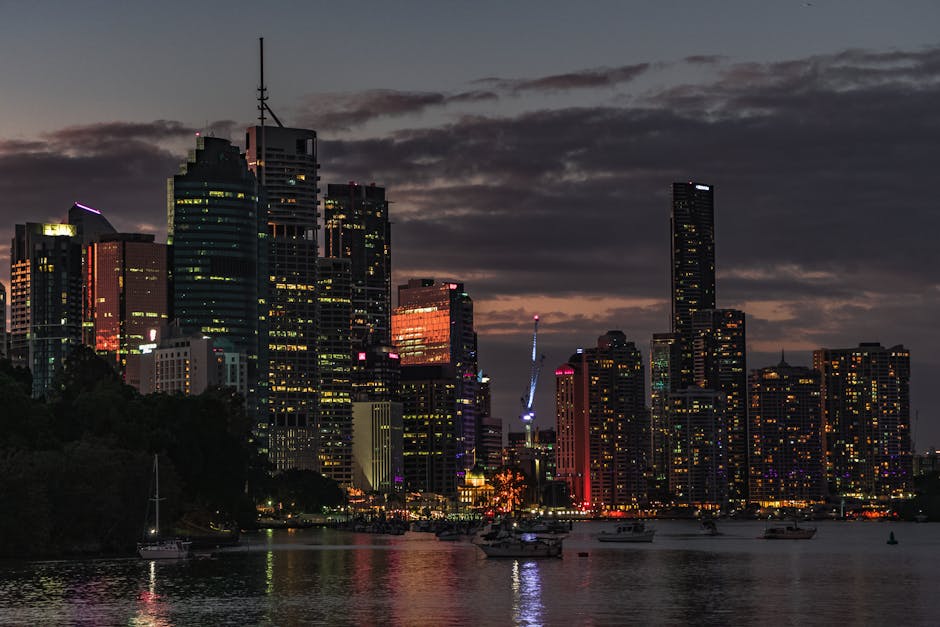
Australia’s Department of Home Affairs reported in Q1 2026 that international student visa applications from the UK and USA rose 14% year-on-year, driven by competitive tuition and post-study work rights. Meanwhile, QS 2026 data shows Brisbane and the Gold Coast now host 18% of all international students in Queensland. For students weighing these two cities, the cost differential is narrowing: the Gold Coast’s median weekly rent for a one-bedroom apartment in February 2026 was AUD 420, compared to Brisbane’s AUD 480—a 12.5% gap that has halved since 2024. This article provides a data-driven comparison for English-speaking students, covering tuition, housing, transport, and pathways from UK A-levels, IB, and US high school curricula.
The Core Cost Comparison: Gold Coast vs Brisbane
The Gold Coast cost of living for international students vs Brisbane favours the Gold Coast by roughly 8–10% overall, but the gap is shrinking. According to the Australian Bureau of Statistics 2026 rental data, a Gold Coast student in shared accommodation pays AUD 220–280 per week, while Brisbane averages AUD 260–320. Utilities (electricity, water, internet) add AUD 40–60 per week in both cities, though Gold Coast apartments often include more energy-efficient cooling due to the subtropical climate.
Groceries are comparable: a weekly shop for one person costs AUD 80–110 in both cities, with Gold Coast fresh produce slightly cheaper due to local supply chains. Public transport is a key differentiator. Brisbane’s Translink network offers a student Go Card with capped fares at AUD 50 per week. The Gold Coast’s tram and bus system costs AUD 40–45 per week for unlimited travel within the city. However, students commuting to Brisbane from the Gold Coast (a 70-minute train ride) pay AUD 60–70 per week—eliminating the housing cost advantage.
Tuition fees are more uniform. A typical bachelor’s degree at a public university costs AUD 32,000–45,000 per year in both cities, with Gold Coast institutions like Griffith University and Bond University (private) charging AUD 38,000–50,000 for business or engineering. Brisbane’s University of Queensland (UQ) and Queensland University of Technology (QUT) range AUD 34,000–48,000. The net saving for a Gold Coast student is approximately AUD 2,500–3,500 per year on living costs—significant but not transformative.
Entry Pathways from UK A-Levels, IB, and US High School Curricula
Australian universities accept A-Levels, International Baccalaureate (IB), and US high school diplomas with SAT or ACT scores. For 2026 entry, the typical A-Level requirement for a bachelor’s degree is ABB to AAB, depending on the program. Engineering at Griffith University requires AAB, while business at QUT accepts BBB. IB students need 30–36 points total, with higher-level subjects in relevant fields. US high school graduates must present a minimum 3.0 GPA on a 4.0 scale, plus SAT scores of 1200–1350 or ACT composite of 25–29.
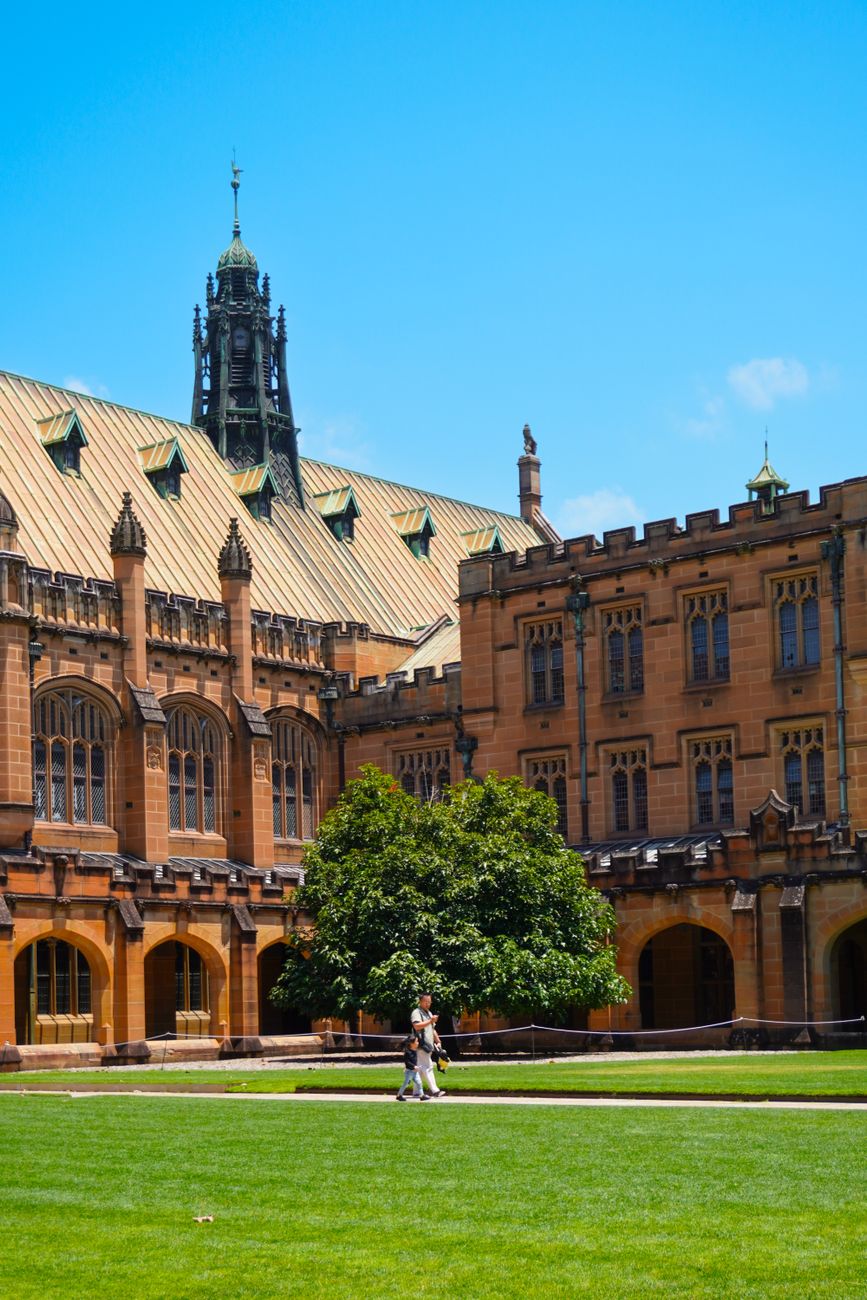
Foundation programs remain a common pathway for students who fall short. UQ’s Foundation Year (8 months) requires IGCSE with five B grades or US high school GPA 2.8. Completion guarantees entry to most bachelor’s programs. The University of Adelaide College offers similar pathways. Importantly, these programs count as “acceptable study” for student visa purposes, provided the institution is on the Department of Home Affairs’ register.
For students with IGCSE qualifications, direct entry is rare. Most universities require A-Levels or equivalent. However, some diploma programs (e.g., UQ College’s Diploma in Business) accept IGCSE with five C grades, then articulate into second-year bachelor’s. This route saves one year of tuition and living costs—a AUD 35,000–45,000 benefit.
Scholarships and Financial Support for International Students
Australian universities offer merit-based scholarships that reduce tuition by 15–50%. In 2026, Griffith University’s International Student Excellence Scholarship awards AUD 5,000 per year for students with ATAR-equivalent of 90+ (A-Level ABB, IB 34). Bond University’s Bond Advantage Scholarship covers 25% of tuition for students with strong academic records and a personal statement. UQ’s UQ International Excellence Scholarship provides AUD 10,000 per year for the first two years of study.
Program-specific scholarships exist for high-demand fields. The Queensland Government’s Destination Australia Program offers AUD 15,000 per year for students studying in regional areas (including the Gold Coast). Engineering students can apply for Engineers Australia’s International Student Scholarship (AUD 3,000 per year). For accounting and finance, CPA Australia’s International Student Award grants AUD 5,000 to students enrolled in accredited programs.
Application deadlines vary. Most scholarships require submission by October of the year prior to enrolment (e.g., October 2025 for February 2026 intake). Students must provide academic transcripts, personal statements, and sometimes referee reports. No external agencies are needed—apply directly via the university’s scholarship portal.
Professional Pathways: CPA Australia, Engineers Australia, and MBBS
CPA Australia accreditation is available for accounting programs at UQ, QUT, Griffith, and Bond. Students must complete a CPA-accredited bachelor’s or master’s degree, then pass the CPA Program (six exams, AUD 1,100 each). The pathway takes 3–4 years post-graduation. International students can sit exams while on a Temporary Graduate visa (subclass 485), which allows 2–4 years of work in Australia.
Engineers Australia accreditation follows the Washington Accord. A four-year bachelor’s degree (e.g., Bachelor of Engineering Honours) from Griffith or UQ is required. Graduates then complete a Competency Demonstration Report (CDR) and an interview. The process takes 6–12 months post-graduation. Engineers Australia charges AUD 1,200 for assessment. International students on a 485 visa can work as graduate engineers during this period.
MBBS (medical degree) pathways are highly competitive. UQ’s Doctor of Medicine (MD) requires a completed bachelor’s degree (any discipline) with a GPA of 5.5+ and a score of 50+ in the GAMSAT or 500+ in the MCAT. Bond University offers a 4.8-year MD program (AUD 90,000 per year) directly from high school with an ATAR of 96+ (A-Level AAA, IB 38). International students must secure a place in the Commonwealth Supported Places (CSP) system, which is limited. The Australian Medical Council (AMC) exam is required for overseas-trained doctors, but graduates from Australian MD programs are exempt.
On-Campus Housing and Student Rights
On-campus housing is limited but available. Griffith University’s Gold Coast campus has 550 beds in the Village, costing AUD 280–350 per week (including utilities and internet). UQ’s St Lucia campus offers 1,200 beds at AUD 320–400 per week. Bond University’s on-campus accommodation (The Boulevard) costs AUD 350–450 per week. Waitlists are common—apply 6–8 months before arrival.
International student rights are protected under the Education Services for Overseas Students (ESOS) Act 2000 and the National Code 2018. These mandate: transparent fee policies, refunds for course cancellations (pro-rated), access to complaint mechanisms via the Overseas Student Ombudsman, and minimum attendance requirements (80% for visa compliance). Students can work 48 hours per fortnight during term and unlimited hours during scheduled breaks. The Fair Work Ombudsman enforces minimum wage (AUD 24.10 per hour in 2026) and workplace rights.
For housing disputes, the Residential Tenancies Authority (RTA) in Queensland provides free mediation. Students should never sign a lease without inspecting the property or reading the tenancy agreement. Bond lodgements (usually 4 weeks’ rent) must be lodged with the RTA.
Transport, Healthcare, and Other Daily Costs
Public transport in Brisbane uses the Go Card, with student fares discounted 50%. The Gold Coast’s tram network (G:link) connects key suburbs and universities. A student Go Card on the Gold Coast costs AUD 1.50 per journey (up to AUD 45 per week). Brisbane’s equivalent is AUD 2.00 per journey (AUD 50 per week cap). For students living near campus, walking or cycling is cheaper and common.
Healthcare is mandatory. The Overseas Student Health Cover (OSHC) costs AUD 600–900 per year for single cover, depending on the provider. It covers doctor visits, hospital stays, and some prescriptions. Dental and optical are not included. Students from the UK, Sweden, and some other countries may be exempt if their home country has a reciprocal agreement—check the Department of Home Affairs website.
Other daily costs include mobile phone plans (AUD 20–40 per month for 30–50GB), entertainment (AUD 30–60 per week for dining out or cinema), and textbooks (AUD 500–1,000 per year, though many are available digitally). A Gold Coast student’s total monthly living cost is approximately AUD 1,500–1,800, compared to Brisbane’s AUD 1,700–2,100. The difference is real but modest.
Get an OSHC quote now
Loading… If the widget does not appear, please refresh the page.

FAQ
Q1: What is the exact cost difference between Gold Coast and Brisbane for an international student in 2026?
A1: Based on Department of Home Affairs 2026 living cost guidelines (AUD 21,041 per year for a single student), the Gold Coast is 8–10% cheaper. Actual student budgets show Gold Coast: AUD 1,500–1,800 per month (AUD 18,000–21,600 per year) vs Brisbane: AUD 1,700–2,100 per month (AUD 20,400–25,200 per year). The key driver is rent: Gold Coast shared accommodation averages AUD 250 per week versus Brisbane’s AUD 290.
Q2: Can I use my UK A-Levels to directly enter an Australian medical program?
A2: Yes, but only at Bond University, which offers a direct-entry MD program requiring AAA at A-Level (or 38 IB points). UQ’s MD requires a completed bachelor’s degree first. Bond’s MD costs AUD 90,000 per year for 4.8 years. International students must also meet English language requirements (IELTS 7.0 overall, no band below 7.0). Acceptance is highly competitive—Bond admits approximately 30 international students per year.
Q3: What is the post-study work visa duration for graduates in 2026?
A3: Under current rules (effective July 2025, unchanged in 2026), the Temporary Graduate visa (subclass 485) allows: 2 years for bachelor’s graduates, 3 years for master’s (coursework), 4 years for master’s (research), and 4 years for PhD. Graduates with degrees in “priority” fields (engineering, IT, healthcare) may qualify for an additional 1–2 years. The visa costs AUD 1,895 and requires a valid skills assessment for some occupations.
References
- Department of Home Affairs, 2026, Student Visa Program Report (Quarter 1 2026)
- Australian Bureau of Statistics, 2026, Rental Vacancy and Price Data (February 2026)
- QS World University Rankings, 2026, QS World University Rankings 2026
- Universities Australia, 2026, International Student Enrolment Data 2026
- Fair Work Ombudsman, 2026, National Minimum Wage Order 2026