2026-05-21 · Diana Chu
Destination Australia Program Scholarship: Eligibility, Regional Study, and Pathways for International Students
Australia’s regional universities are offering a financial lifeline for international students through the Destination Australia Program (DAP). In 2026, the

Australia’s regional universities are offering a financial lifeline for international students through the Destination Australia Program (DAP). In 2026, the Australian government allocated AUD 22.5 million to fund DAP scholarships, with over 1,200 scholarships available for international students studying at regional campuses. According to QS 2026 data, 8 of Australia’s top 20 universities now have regional campuses, and the Department of Home Affairs reports a 14% increase in regional student visa grants in the first quarter of 2026 compared to 2025. For students from the UK, the US, and other English-speaking regions, the DAP offers a unique opportunity to reduce tuition costs by up to AUD 15,000 per year while accessing Australia’s high-quality education system.
Understanding the Destination Australia Program Scholarship
The Destination Australia Program is a government-funded initiative designed to attract and support students—including international students—to study in regional and remote areas of Australia. Administered by the Department of Education, the program provides scholarships to students enrolled at eligible regional tertiary education providers. For 2026, the DAP has expanded its scope, with scholarships ranging from AUD 5,000 to AUD 15,000 per year for up to four years of study. International students are eligible for the same scholarship amounts as domestic students, provided they meet the program’s criteria.
Eligibility hinges on three core requirements. First, the student must be enrolled in a full-time course at an approved regional campus. Second, the course must lead to a qualification at a certificate IV level or higher, including bachelor’s degrees, master’s degrees, and PhDs. Third, the student must demonstrate a commitment to living and studying in the regional area for the duration of their scholarship. The DAP does not require a separate visa category; international students on a valid Student Visa (Subclass 500) are eligible. However, students must be aware that the scholarship is tied to the regional campus—transferring to a metropolitan campus or discontinuing study may result in repayment of funds.
Eligibility Criteria for International Students
For international students, the DAP scholarship eligibility is straightforward but requires careful documentation. As of 2026, the key criteria include: being a citizen of a country other than Australia or New Zealand; holding a valid Student Visa (Subclass 500); and enrolling in a full-time course at an eligible regional campus. The Department of Home Affairs defines “regional” as any location classified as a Regional Area (RA) under the Australian Statistical Geography Standard—this includes categories RA2 to RA5, covering cities like Cairns, Townsville, Geelong, and Launceston, but excluding major cities like Sydney, Melbourne, and Brisbane.
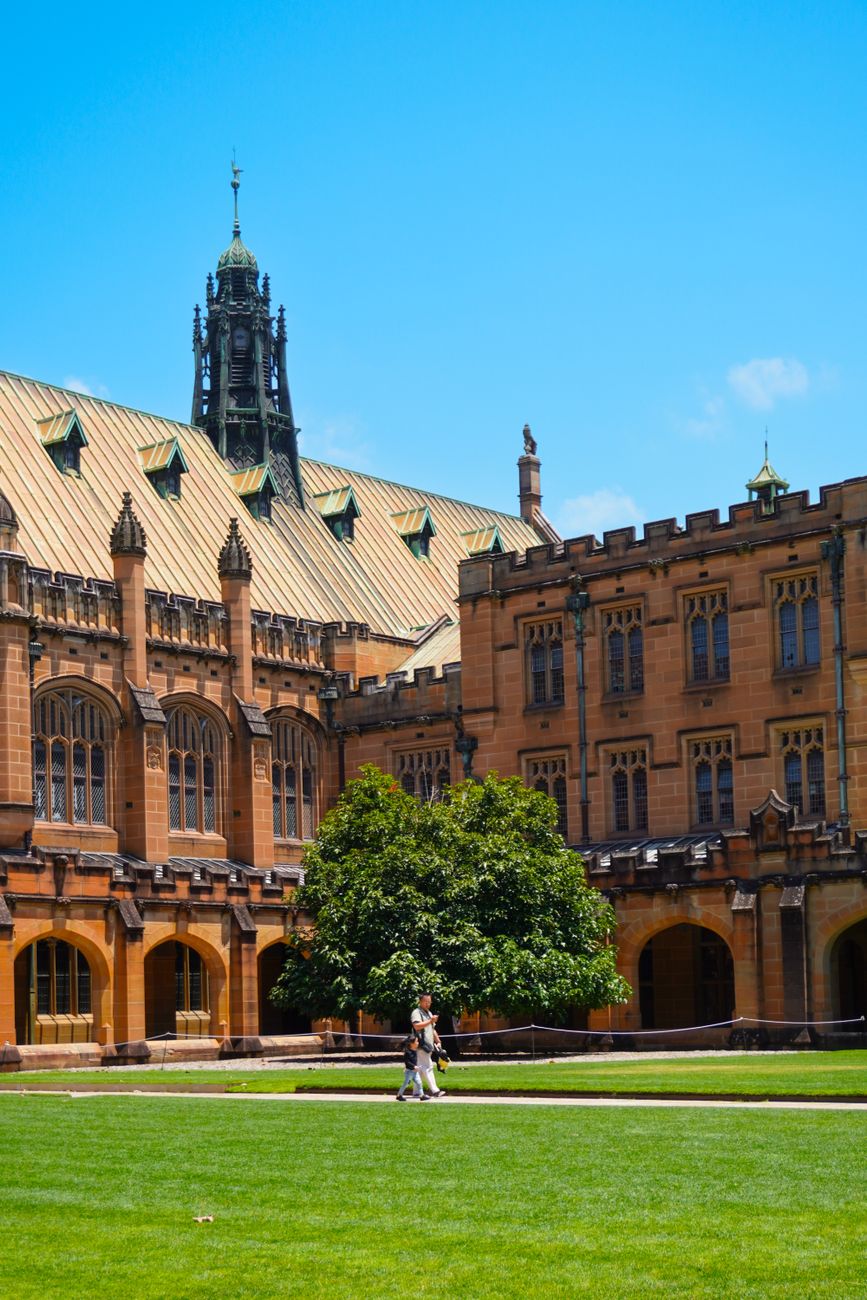
Students from English-speaking regions—such as the UK, the US, Canada, and Ireland—face no additional English language testing requirements if they hold a passport from a majority English-speaking country. The DAP does not impose a minimum GPA or ATAR score; however, individual universities may set their own academic thresholds for scholarship consideration. For example, the University of New England (UNE) requires a minimum 70% average in prior studies, while James Cook University asks for a 65% GPA equivalent. Students should check specific university criteria, as these can vary by institution and course.
Application Process and Key Deadlines
Applying for the DAP scholarship involves a two-step process. First, students must apply for admission to an eligible regional university or provider. Second, they submit a separate scholarship application directly to the institution. The DAP is not a centralised application system; each university manages its own allocation. For 2026, most regional universities have set application deadlines between June and October for Semester 1, 2027 intake. For example, the University of Tasmania’s DAP scholarship deadline is 31 August 2026, while Charles Sturt University’s is 15 September 2026.
The application typically requires: a personal statement explaining why the student chose regional study; evidence of academic qualifications; a copy of the passport; and a student visa confirmation letter (if available). Some universities also request a letter of recommendation from a previous educator. The selection process is competitive—in 2025, the average acceptance rate for DAP scholarships at regional universities was 62%, according to Universities Australia. To improve chances, students should apply early and ensure all documents are translated and certified if not in English.
Pathways from UK A-Levels, IB, and US High School to Australian Regional Universities
Students from the UK, the US, and other English-speaking regions have well-defined pathways to Australian regional universities. For UK students holding A-Levels, most regional universities require a minimum of two A-Level passes at grade C or above for bachelor’s degree entry, with competitive courses like engineering or medicine requiring three passes at grade B or higher. The International Baccalaureate (IB) is accepted widely: a total score of 24 points is the minimum for many programs, with 30+ points needed for health sciences. US students with a High School GPA of 3.0 (on a 4.0 scale) and a SAT score of 1100 or above are eligible for direct entry into most bachelor’s programs at regional universities. For example, the University of Southern Queensland accepts a US high school diploma with a GPA of 2.8 for its business programs.
IGCSE results are not typically used for direct entry but are considered for foundation or diploma programs, which act as bridging courses. For instance, a student with five IGCSE passes at grade C or above can enter a one-year foundation program at James Cook University, leading to a bachelor’s degree. These pathways are particularly advantageous for DAP eligibility because foundation and diploma programs are offered at regional campuses. The DAP scholarship applies to these pathways as well, provided the student progresses to a full degree program.
Professional Accreditation Pathways: CPA Australia, Engineers Australia, and MBBS
Regional universities offer strong pathways to professional accreditation, which is critical for students targeting careers in accounting, engineering, or medicine. For accounting, CPA Australia accreditation is available at several regional institutions. For example, the University of New England’s Bachelor of Accounting is CPA-accredited, and students can complete the CPA Program while studying in a regional area. The DAP scholarship can cover the first year of study, reducing overall costs by up to AUD 15,000.
For engineering, Engineers Australia accredits programs at regional universities like the University of Wollongong’s regional campus in Shoalhaven and Central Queensland University. A four-year Bachelor of Engineering (Honours) at these campuses qualifies graduates for professional membership in Engineers Australia. The DAP scholarship supports students through this duration, with a total potential value of AUD 60,000 over four years.
The MBBS pathway (Bachelor of Medicine, Bachelor of Surgery) is available at regional universities such as James Cook University and the University of Tasmania. These programs are highly competitive, requiring high ATAR scores (95+ in Australia) or equivalent international qualifications. For UK A-Level students, this typically means three A* grades in biology, chemistry, and mathematics. US students need a GPA of 3.7 and an MCAT score of 500+. The DAP scholarship for MBBS students is limited but exists—James Cook University offers up to five DAP scholarships annually for medical students, each worth AUD 10,000 per year.
International Student Rights and On-Campus Housing
International students studying under the DAP scholarship retain all standard rights under Australian law. These include the right to work up to 48 hours per fortnight during study periods and unlimited hours during scheduled breaks, as per the Department of Home Affairs 2026 guidelines. Students also have access to Overseas Student Health Cover (OSHC), which is mandatory for the visa. The DAP scholarship does not affect OSHC requirements; students must still purchase cover from an approved provider.
On-campus housing is a significant benefit of regional study. Many regional universities guarantee on-campus accommodation for first-year DAP scholarship holders. For example, Charles Sturt University offers 100% guarantee for single rooms at its Wagga Wagga campus, with costs ranging from AUD 200 to AUD 350 per week. The University of Tasmania provides on-campus housing at AUD 180 per week for shared apartments. This is often cheaper than metropolitan housing, where rents average AUD 400 per week in Sydney. On-campus housing also provides a built-in community, which can ease the transition for international students.
Cost Comparison and Financial Planning
Studying in regional Australia under the DAP scholarship can significantly reduce total costs. Tuition fees at regional universities are generally lower than at metropolitan institutions. For example, a Bachelor of Business at the University of Southern Queensland costs AUD 28,000 per year for international students in 2026, compared to AUD 45,000 at the University of Sydney. With a DAP scholarship of AUD 15,000, the effective cost drops to AUD 13,000 per year—a 71% reduction from the Sydney benchmark.
Living costs in regional areas are also lower. The Department of Home Affairs estimates annual living expenses at AUD 21,041 for 2026, but regional students often spend less. For instance, rent in Geelong averages AUD 250 per week versus AUD 600 in Sydney. Total annual costs (tuition plus living) for a DAP-supported student in regional Australia can range from AUD 30,000 to AUD 40,000, compared to AUD 65,000 to AUD 80,000 in Sydney or Melbourne. This makes regional study a financially viable option for students from the UK, the US, and other English-speaking regions.
Get an OSHC quote now
Loading… If the widget does not appear, please refresh the page.

FAQ
Q1: Can I apply for the Destination Australia Program scholarship if I have already started my studies in Australia?
Yes, you can apply if you are already enrolled in a full-time course at an eligible regional campus and have more than one year of study remaining. The DAP scholarship is not limited to new students. However, you must apply directly to your university, and the scholarship is typically for the remaining duration of your course. For example, if you are in your second year of a three-year degree, you could receive AUD 10,000 per year for the final two years.
Q2: What is the minimum academic requirement for the DAP scholarship?
There is no national minimum academic requirement for the DAP itself. However, individual universities set their own criteria. For example, the University of New England requires a 70% average in prior studies, while Charles Sturt University asks for a 65% GPA equivalent. For UK A-Level students, this typically means grades of C or above. US students need a GPA of 3.0 or higher. Always check the specific university’s scholarship page.
Q3: Does the DAP scholarship cover the cost of on-campus housing?
No, the DAP scholarship is a cash payment applied to tuition fees, not directly to housing. However, many regional universities offer separate housing bursaries for DAP recipients. For instance, James Cook University provides a AUD 2,000 housing grant for first-year DAP scholars. Students should budget separately for accommodation, which ranges from AUD 180 to AUD 350 per week depending on the campus.
References
- Department of Education, Australian Government, 2026, Destination Australia Program Guidelines
- Department of Home Affairs, Australian Government, 2026, Student Visa (Subclass 500) Statistics
- Universities Australia, 2026, Regional University Funding Report
- QS Quacquarelli Symonds, 2026, QS World University Rankings: Regional Campuses
- CPA Australia, 2026, Accredited Programs List