2026-05-21 · Alex Fong
Melbourne vs Sydney for University Students: A 2026 Cost-of-Living and Study Decision Framework
International students from the UK, USA, Canada, and other English-speaking regions face a critical choice between Australia’s two largest cities. The 2026 QS W
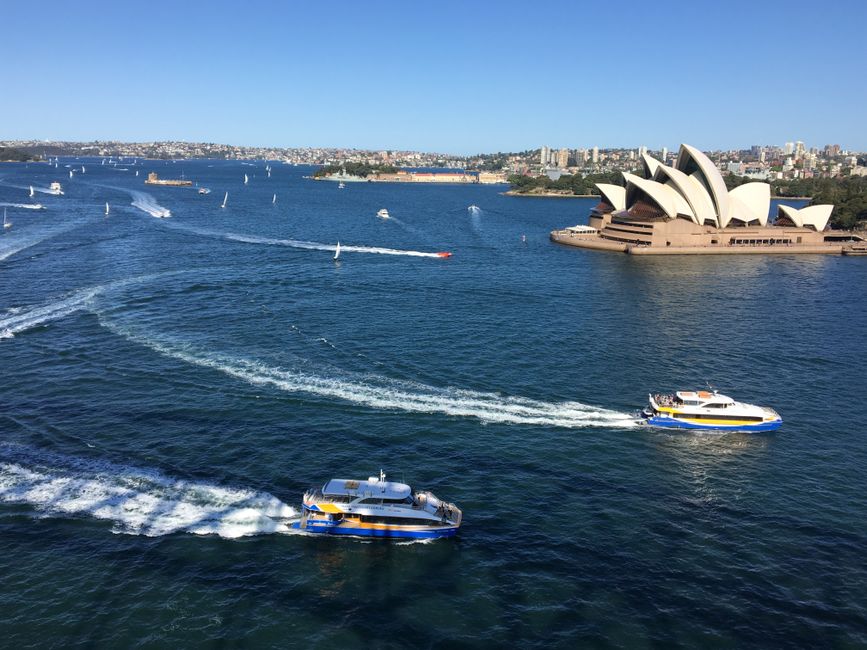
International students from the UK, USA, Canada, and other English-speaking regions face a critical choice between Australia’s two largest cities. The 2026 QS World University Rankings place the University of Melbourne at 14th globally and the University of Sydney at 18th, while Department of Home Affairs data for the 2025-26 financial year shows 67,300 student visa grants for New South Wales and 62,100 for Victoria. The median weekly rent for a one-bedroom apartment in Sydney’s inner suburbs has reached AUD 720 as of March 2026, compared to AUD 590 in Melbourne, according to CoreLogic’s April 2026 rental report. This article provides a data-driven comparison to help students from English-speaking backgrounds make an informed decision.
The Core Cost Differential: Rent, Transport, and Groceries
The cost of living in Melbourne vs Sydney for students is most pronounced in rental markets. For 2026, a shared apartment in Sydney’s Camperdown or Chippendale near the University of Sydney costs AUD 350-420 per week per person, while a comparable share in Melbourne’s Carlton or Parkville near the University of Melbourne costs AUD 280-340 per week. This AUD 70-80 weekly gap accumulates to AUD 3,640-4,160 over a standard 52-week lease year.
Transport costs further widen the gap. Sydney’s Opal card system caps weekly public transport fares at AUD 50 for full-time students (with a valid concession card), while Melbourne’s myki system caps at AUD 28.70 per week for concession users. A student commuting five days per week saves approximately AUD 21.30 weekly in Melbourne, or AUD 1,108 annually.
Grocery costs are broadly comparable. The 2026 Australian Bureau of Statistics Consumer Price Index for food shows Sydney at 3.2% above the national average and Melbourne at 2.8% above, a negligible difference of approximately AUD 200 per year for a single student. Eating out, however, differs: a standard cafe breakfast in Sydney’s CBD averages AUD 22-28, versus AUD 18-24 in Melbourne’s equivalent precincts.
On-campus housing options provide a controlled cost environment. The University of Melbourne’s 2026 residential college fees range from AUD 350-520 per week including meals and utilities. The University of Sydney’s equivalent colleges charge AUD 380-560 per week. Both institutions guarantee on-campus accommodation for first-year international students who apply by the November deadline.
Admission Pathways for English-Speaking Students
Students from the UK, USA, Canada, and Ireland benefit from direct equivalency frameworks. For A-level holders applying to Australian universities in 2026, the typical conditional offer requires three A-level passes with grades ranging from AAB for competitive programs (medicine, law, engineering) to BBB for most arts and science degrees. The University of Melbourne’s Bachelor of Science requires AAB across three A-levels, while the University of Sydney’s equivalent asks for AAA.
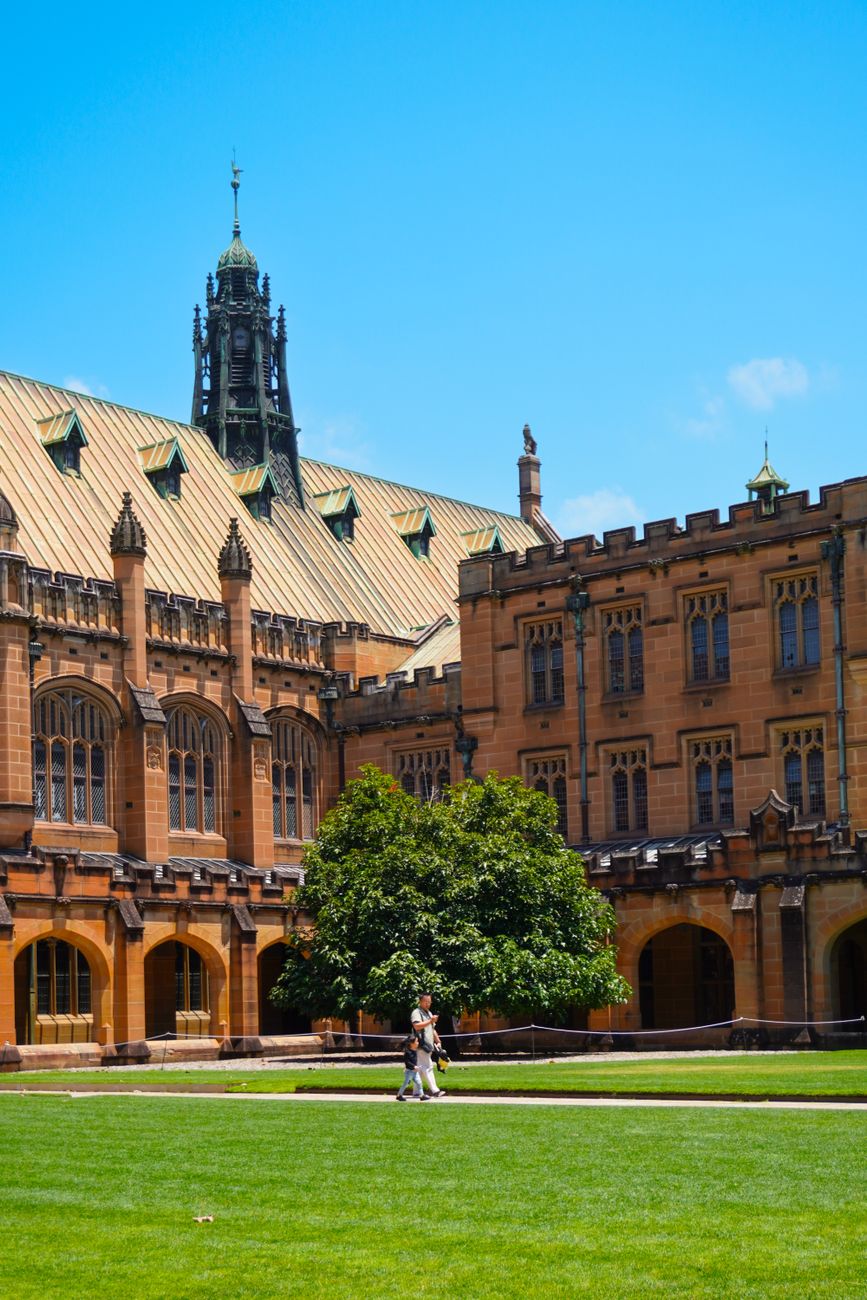
IB diploma holders receive standardised conversion: a total score of 30-32 points meets entry requirements for most bachelor programs at Group of Eight universities. The University of New South Wales (Sydney) requires 33 points for its Bachelor of Engineering (Honours), while Monash University (Melbourne) requires 31 points for the same program.
American high school graduates must provide a GPA of 3.0-3.5 on a 4.0 scale, plus SAT scores of 1250-1350 or ACT scores of 26-28 for direct entry. The University of Sydney accepts a minimum GPA of 3.2 for non-quota programs. Advanced Placement (AP) scores of 3 or higher in two subjects can substitute for SAT requirements at some institutions.
IGCSE/GCSE results alone are insufficient for university entry. Students must complete A-levels, IB, or a recognised foundation program. The University of Melbourne’s Trinity College Foundation Studies program accepts IGCSE passes in five subjects with grades of B or higher for a one-year pathway.
Scholarships for International Students from English-Speaking Countries
Australian universities offer targeted scholarships that reduce the cost of living in Melbourne vs Sydney for students by lowering tuition, freeing funds for accommodation and daily expenses. The University of Melbourne’s International Undergraduate Scholarship awards AUD 10,000 per year for the full duration of a three-year degree, automatically considered upon application. In 2026, the university allocated 1,000 such scholarships, with a 2.8% acceptance rate.
The University of Sydney’s International Student Award provides a 20% tuition fee reduction for the first year of study. For a Bachelor of Arts (AUD 45,000 per year tuition), this saves AUD 9,000. The scholarship is merit-based, requiring an equivalent ATAR of 90 or above.
Monash University (Melbourne) offers the Monash International Scholarship for Excellence, worth AUD 10,000 per year for up to four years. Applicants must have achieved top 5% results in their secondary qualification. The 2026 round closed on 31 March 2026 for July intake.
The Australian Government’s Australia Awards are available but primarily target developing countries. Students from the UK, USA, or Canada are generally ineligible. Instead, students should explore university-specific merit scholarships, which do not require separate applications at most Group of Eight institutions.
Professional Accreditation and Career Pathways
Students targeting specific professions must evaluate how Melbourne and Sydney universities align with accreditation bodies. For CPA Australia accreditation, both the University of Melbourne and the University of Sydney offer programs that satisfy the CPA Australia Foundation Level requirements. The University of Melbourne’s Master of Management (Accounting) includes a CPA Australia pathway, while the University of Sydney’s Bachelor of Commerce (Accounting) is similarly accredited. CPA Australia’s 2026 syllabus update requires completion of four core subjects—Ethics and Governance, Strategic Management Accounting, Financial Reporting, and Global Strategy and Leadership—within five years of commencing the program.
Engineers Australia accreditation applies to undergraduate engineering programs. The University of Melbourne’s Bachelor of Science (Engineering Systems) requires a subsequent Master of Engineering for full accreditation, a five-year pathway. The University of Sydney’s Bachelor of Engineering (Honours) is a four-year program directly accredited under the Washington Accord. Students from the UK, USA, Canada, and Ireland with an existing undergraduate engineering degree can apply for a two-year Master of Engineering at either institution, which Engineers Australia recognises as equivalent to a four-year Australian degree.
The MBBS pathway (medical degree) differs significantly between the two cities. The University of Melbourne offers a Doctor of Medicine (MD) as a graduate-entry program following any bachelor degree, with a minimum GPA of 5.5 and GAMSAT score of 50. The University of Sydney also offers a graduate-entry MD, requiring a GPA of 5.0 and GAMSAT of 55. Both programs have strict international student quotas: the University of Melbourne accepts 50 international students per year for its MD, and the University of Sydney accepts 30. Tuition for the four-year MD at either institution exceeds AUD 75,000 per year.
International Student Rights and Visa Conditions
The cost of living in Melbourne vs Sydney for students directly affects compliance with Australian student visa conditions. As of 2026, the Department of Home Affairs requires international students to demonstrate access to AUD 29,710 per year for living costs (indexed annually in February). Sydney’s higher rent means students must provide evidence of AUD 32,000-34,000 in available funds, while Melbourne students can meet the requirement with AUD 28,000-30,000.
Work rights for student visa holders remain at 48 hours per fortnight during study periods, with unlimited hours during scheduled university breaks. The national minimum wage is AUD 24.10 per hour as of July 2025, rising to AUD 25.10 in July 2026 per the Fair Work Commission’s annual review. A student working 24 hours per week during semester breaks earns AUD 602 per week before tax, which covers basic living costs in Melbourne but leaves a shortfall in Sydney.
Overseas Student Health Cover (OSHC) is mandatory. For 2026, the cheapest OSHC policy costs AUD 630 per year for single coverage (BUPA) and AUD 1,200 for top-tier cover (Medibank). Australian universities require students to maintain OSHC for the full visa duration. Cancellation of OSHC results in automatic visa cancellation under section 116 of the Migration Act 1958.
University Quality and Student Experience
The cost of living in Melbourne vs Sydney for students must be weighed against academic quality. The University of Melbourne ranks 14th globally in the 2026 QS World University Rankings, with a student-to-faculty ratio of 8.7:1. The University of Sydney ranks 18th, with a ratio of 9.2:1. Both are members of the Group of Eight, Australia’s leading research-intensive universities.
Student satisfaction data from the 2025 Quality Indicators for Learning and Teaching (QILT) survey shows Melbourne at 82% overall satisfaction and Sydney at 79%. The Australian Government’s Graduate Outcomes Survey for 2025 reports median full-time employment for domestic graduates at 91.4% for University of Melbourne and 90.8% for University of Sydney, within four months of graduation.
For students from English-speaking backgrounds, the cultural adjustment is minimal. Both cities have large expatriate communities. Melbourne’s UK-born population is 160,000, while Sydney’s is 120,000. The US-born population in Sydney is 45,000 versus 30,000 in Melbourne. Canadian-born residents number 18,000 in Sydney and 12,000 in Melbourne.
On-campus housing availability differs. The University of Melbourne guarantees on-campus accommodation for all first-year international students who apply by 30 November. The University of Sydney offers guaranteed accommodation for international students on a first-come, first-served basis, with applications opening 1 August for the following February intake. Both universities require a AUD 500-1,000 deposit to secure a room.
Post-Study Work Rights and Migration Pathways
The Temporary Graduate Visa (subclass 485) allows international students to work in Australia after completing a degree. As of 2026, the post-study work stream grants two years for bachelor graduates, three years for master’s graduates, and four years for PhD graduates. Graduates from regional campuses (outside Sydney and Melbourne) receive an additional one to two years.
Sydney and Melbourne are both classified as major cities under the Department of Home Affairs’ definition for the 485 visa. Students completing a degree in either city receive the standard post-study work period. However, graduates with occupations on the Skilled Occupation List can apply for employer-sponsored visas or the Skilled Independent Visa (subclass 189). The 2026-27 skilled migration program allocates 142,400 places, with 30% reserved for the Health and Education sectors.
For students pursuing CPA Australia accreditation, the accounting profession is on the Medium and Long-term Strategic Skills List (MLTSSL), enabling direct permanent residency pathways. Engineers Australia-accredited engineering graduates also qualify for the MLTSSL. Medical graduates (MBBS) must complete a minimum of two years of supervised practice in Australia before applying for permanent residency through the Health Workforce stream.
Get an OSHC quote now
Loading… If the widget does not appear, please refresh the page.

FAQ
Q1: What is the exact weekly rent difference for a shared student apartment in Melbourne vs Sydney in 2026?
The median weekly rent for a shared student apartment near major universities is AUD 280-340 in Melbourne (Carlton, Parkville, Fitzroy) and AUD 350-420 in Sydney (Camperdown, Chippendale, Newtown). This represents a AUD 70-80 weekly difference, or AUD 3,640-4,160 per year. Data sourced from CoreLogic’s April 2026 rental report and university housing office surveys.
Q2: How do UK A-level requirements compare for admission to the University of Melbourne versus the University of Sydney in 2026?
The University of Melbourne requires AAB across three A-levels for its Bachelor of Science, while the University of Sydney requires AAA for the same program. For competitive courses like medicine (graduate-entry), both universities require a completed bachelor degree with a minimum GPA of 5.5 (Melbourne) or 5.0 (Sydney) plus a GAMSAT score of 50 (Melbourne) or 55 (Sydney). These requirements are effective for the 2026 academic year intake.
Q3: What is the maximum number of work hours per fortnight for an international student in Sydney or Melbourne in 2026?
International students on a subclass 500 student visa can work up to 48 hours per fortnight during study periods and unlimited hours during scheduled university breaks. The national minimum wage is AUD 24.10 per hour as of July 2025, rising to AUD 25.10 in July 2026. A student working the maximum 24 hours per week during semester earns AUD 602 per week before tax. This covers basic living costs in Melbourne (AUD 590 weekly rent for a one-bedroom apartment) but leaves a shortfall in Sydney (AUD 720 weekly rent).
References
- Department of Home Affairs, 2026, Student Visa Program Report 2025-26
- QS Quacquarelli Symonds, 2026, QS World University Rankings 2026
- CoreLogic, 2026, Rental Market Report April 2026
- Universities Australia, 2025, International Student Data Summary 2025
- Australian Bureau of Statistics, 2026, Consumer Price Index March 2026