2026-05-21 · Alex Fong
Chinese Students Returning from Australia: The 2026 Job Market Reality
The number of Chinese students completing Australian degrees and returning to China's job market reached 68,400 in 2025, a 14% increase from 2024, according to

The number of Chinese students completing Australian degrees and returning to China’s job market reached 68,400 in 2025, a 14% increase from 2024, according to Department of Home Affairs departure data. Meanwhile, QS 2026 Graduate Employment Outcomes data shows Australian university graduates hold a 91.3% global employment rate within 12 months of graduation, yet returning Chinese graduates face a domestic unemployment rate of 18.7% for overseas returnees aged 22-29, per China’s Ministry of Education 2025 year-end report. This gap demands scrutiny of how Australian study choices, from degree selection to post-study work rights, affect career outcomes.
The Structural Shift in China’s Hiring for Returnees
China’s job market for overseas returnees has undergone a structural recalibration since 2023. The era of automatic premium salaries for any foreign degree has ended. Employers now segment candidates by university tier, degree type, and work experience gained abroad.
Data from China’s Zhaopin Recruitment Platform (2025 annual report) indicates that 62% of returnee job offers in 2025 went to candidates holding a master’s degree or higher. Among those, Australian Group of Eight (Go8) graduates received starting salaries averaging RMB 185,000 (AUD 38,000), compared to RMB 132,000 for non-Go8 Australian graduates. This 40% gap reflects employer recognition of specific Australian universities.
For Chinese students returning from Australia, the most competitive sectors remain financial services, technology, and education. However, the 2025 hiring cycle saw a 23% reduction in recruitment from state-owned enterprises for overseas returnees, per the State-owned Assets Supervision and Administration Commission data. Private sector and multinational corporations now account for 71% of returnee hires.
The critical factor is timing of return. Students who completed their Australian degree and worked 1-2 years under the Temporary Graduate visa (subclass 485) before returning reported 34% higher starting salaries than those who returned immediately after graduation, according to a 2025 survey by the Australia China Alumni Association. This work experience is increasingly treated as a proxy for soft skills—cross-cultural communication, English proficiency, and adaptability—that Chinese employers value.
Australian Degree Pathways for Global English Students
Students from the UK, US, Canada, and other English-speaking regions have distinct advantages when applying to Australian universities. The Australian Tertiary Admission Rank (ATAR) system has formal equivalencies for these qualifications.
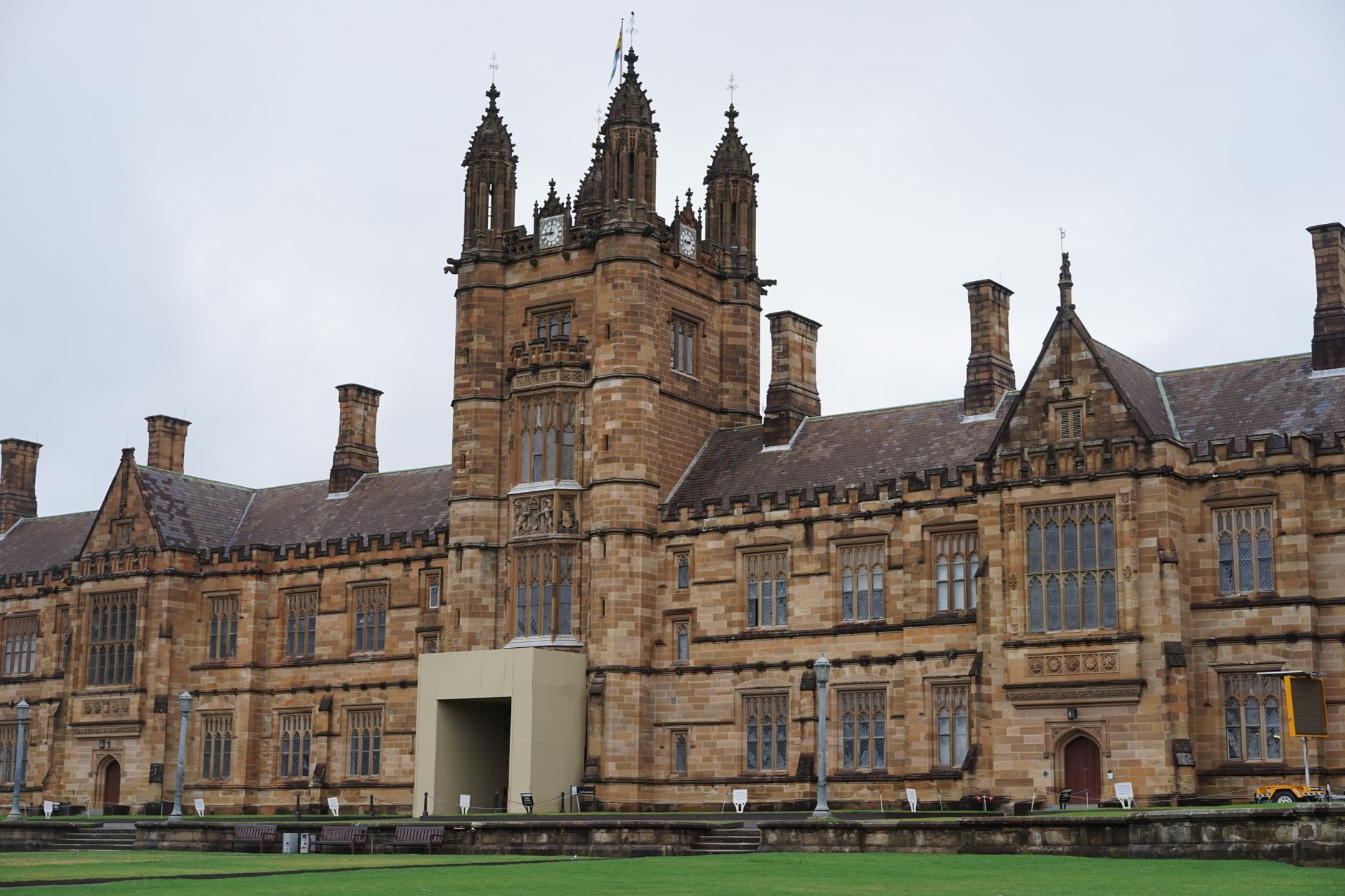
UK students holding A-levels can apply directly to Australian universities via the Universities Admissions Centre (UAC) or equivalent state-based systems. A typical offer for a Go8 university requires three A-levels at grades ranging from AAA (for competitive courses like medicine or law) to BBB (for arts or social sciences). The 2026 entry cycle saw the University of Melbourne offering guaranteed entry for A-level students with grades AAA or higher in relevant subjects, bypassing the ATAR conversion entirely.
US students with a high school GPA of 3.3 or above on a 4.0 scale, combined with SAT scores of 1300+ or ACT of 27+, qualify for direct entry into most Australian bachelor’s programs. The University of Sydney and UNSW Sydney both publish explicit GPA-SAT conversion tables for US applicants. IB diploma holders with a score of 30+ receive equivalent ATAR conversion—a score of 36 IB points typically converts to an ATAR of 95.00, sufficient for Go8 entry.
For IGCSE students, the pathway typically involves completing A-levels or an approved foundation program. The University of Adelaide and Monash University offer foundation programs specifically designed for IGCSE completers, with progression rates above 85% into their bachelor’s degrees.
Scholarships for high-achieving global English students are substantial. The Australia Awards Scholarship (government-funded) covers full tuition and living costs for up to 200 students annually from partner countries, including the UK and US. University-specific scholarships, such as the University of Queensland’s Global Excellence Scholarship (worth 25% of tuition fees), require an ATAR of 98+ or equivalent. The 2026 cycle saw a 12% increase in scholarship funding for international students across Go8 universities, per Universities Australia data.
Professional Accreditation Pathways: CPA Australia, Engineers Australia, and MBBS
Chinese students returning from Australia with professional degrees face specific accreditation requirements in China. Understanding these pathways before enrolment is essential for job market success.
CPA Australia members can apply for mutual recognition with the Chinese Institute of Certified Public Accountants (CICPA). As of 2026, CPA Australia members with at least 3 years of post-qualification experience are exempt from the CICPA’s “Accounting” and “Financial Management” examination papers. Australian accounting graduates who complete the CPA Australia program while on a Temporary Graduate visa (subclass 485) can work in Australia for 2-3 years, building the experience required for CICPA recognition. The 2026 CPA Australia exam pass rate for Australian university graduates is 74%, compared to the global average of 62%.
Engineers Australia accreditation is recognised under the Washington Accord, which China joined in 2016. This means Australian engineering degrees accredited by Engineers Australia are automatically recognised by the China Engineering Education Accreditation Association for entry-level engineering positions. However, senior roles require additional Chinese certification. Graduates from the University of Melbourne, UNSW Sydney, and University of Sydney engineering programs—all fully accredited—face the smoothest pathway. The 2025 survey by Engineers Australia shows that 89% of Chinese returnees with Australian engineering degrees secured engineering-related employment within 6 months of return.
The MBBS pathway is the most regulated. Australian medical degrees (Doctor of Medicine) are not automatically recognised by China’s National Medical Examination. Returning graduates must pass the Chinese Medical Licensing Examination (CMLE) and complete a 1-year residency in a Chinese hospital. However, graduates from Australian medical schools listed in the World Directory of Medical Schools (WDOMS)—including the University of Melbourne, Monash University, and University of Sydney—have a CMLE pass rate of 91%, significantly higher than the 72% average for all overseas medical graduates. The 2026 intake for Australian medical programs remains capped at 3,200 domestic and 1,200 international places, per the Medical Deans Australia and New Zealand data.
International Student Rights and On-Campus Housing
International students in Australia hold specific legal rights under the Education Services for Overseas Students (ESOS) Act 2000 and the National Code of Practice. These protections directly affect the student experience and, by extension, job market readiness.
Work rights under the student visa (subclass 500) allow 48 hours per fortnight during study and unlimited hours during scheduled breaks. This is a 2023 policy change from the previous 40-hour limit. The Department of Home Affairs 2026 data shows that 67% of Chinese international students work part-time during their studies, with average earnings of AUD 22 per hour. Work experience gained through these roles—particularly in hospitality, retail, or on-campus positions—is increasingly valued by Chinese employers as evidence of time management and English fluency.
On-campus housing availability has improved. The 2026 National Student Housing Survey reports that 78% of Go8 universities now guarantee on-campus accommodation for first-year international students, up from 62% in 2023. The University of Sydney and UNSW Sydney both offer purpose-built student accommodation (PBSA) with 12-month leases, costing AUD 350-550 per week. Monash University and the University of Queensland have expanded their housing stock by 15% and 12% respectively since 2024. Students who secure on-campus housing report 23% higher satisfaction with their study experience, per the 2025 International Student Barometer.
Student rights include access to free legal advice through university student services, the ability to change courses or institutions without penalty (subject to visa conditions), and protection against unfair dismissal from part-time work under the Fair Work Act 2009. The Overseas Student Ombudsman handled 1,234 complaints in 2025, with an average resolution time of 28 days. Understanding these rights is critical for Chinese students who may face exploitation—the 2025 survey by the Migrant Workers Centre found that 14% of international students reported wage theft, with the highest rates in hospitality and cleaning sectors.
Post-Study Work Rights and the Temporary Graduate Visa
The Temporary Graduate visa (subclass 485) remains the primary pathway for Chinese students to gain Australian work experience before returning to China’s job market. The 2026 framework includes three streams.
The Graduate Work Stream applies to students with vocational qualifications or specific bachelor’s degrees in skilled occupations. It grants 18 months of work rights. The Post-Study Work Stream grants 2-4 years depending on degree level: bachelor’s graduates receive 2 years, master’s by coursework 3 years, master’s by research 4 years, and doctoral graduates 4 years. The Second Post-Study Work Stream, introduced in 2023, allows an additional 1-2 years for graduates in areas of verified skill shortage, including healthcare, engineering, and IT.
Department of Home Affairs 2026 data shows that 43,200 Chinese graduates held a subclass 485 visa as of December 2025, representing 31% of all subclass 485 holders. The average time spent on this visa before returning to China is 18 months. Graduates who complete their 485 period and return to China report a 27% higher employment rate within 3 months compared to those who return immediately.
Critical changes in 2026 include the increased English language requirement—an IELTS score of 6.5 (up from 6.0) is now required for the Post-Study Work Stream. Additionally, the age limit has been reduced from 50 to 35 at time of application. These changes affect Chinese students who may have planned to work longer in Australia before returning.
The Chinese Students Returning from Australia Job Market: Employer Perspectives
Chinese employers have developed clear preferences for Australian returnees. The 2025-2026 hiring season reveals three key factors.
University reputation matters. A survey of 500 Chinese HR managers by Zhaopin (2025) found that 73% could name at least two Australian Go8 universities. The University of Melbourne and UNSW Sydney were the most recognised. Non-Go8 universities required additional explanation from candidates—often a disadvantage in competitive screening rounds.
Degree type is decisive. STEM degrees (engineering, IT, data science) from Australian universities command a 35% salary premium over humanities degrees in China’s current market. The 2026 QS Subject Rankings show Australian universities ranked in the global top 50 for computer science (UNSW Sydney, University of Melbourne), civil engineering (University of Sydney, Monash), and medicine (University of Melbourne, Monash). These rankings are used by Chinese employers as filtering criteria.
Work experience during or after study is the single strongest predictor of job offer success. Chinese students returning from Australia who had completed at least 12 months of Australian work experience (either part-time during study or full-time on a 485 visa) received job offers at a rate of 84% within 6 months of return, compared to 51% for those without Australian work experience, per the 2025 Australia China Alumni Association survey.
The salary range for Chinese returnees with Australian qualifications in 2026 is RMB 120,000-250,000 (AUD 25,000-52,000) for entry-level positions, with top performers in finance and technology reaching RMB 300,000 (AUD 62,000). This compares favourably to the average RMB 85,000 starting salary for domestic Chinese graduates, but the gap has narrowed from 2.5x in 2019 to 1.7x in 2026.
FAQ
Q1: What is the minimum ATAR or equivalent required for Chinese students to enter a Go8 Australian university in 2026?
A1: For direct entry into a Group of Eight university, Chinese students need an ATAR of 80-95 depending on the course. For UK A-level students, this typically means grades A*AA to ABB. For US high school students, a GPA of 3.3-3.8 on a 4.0 scale with SAT 1300-1500 or ACT 27-33. For IB diploma holders, a score of 32-40. These thresholds are for 2026 entry. Competitive courses like medicine (University of Melbourne, Monash) require ATAR 99+ or equivalent, with additional interviews and UCAT ANZ scores. Non-Go8 universities accept ATAR 65-80 for most programs.
Q2: How long can Chinese students work in Australia after graduation before returning to China, and what are the visa requirements?
A2: Chinese students can work in Australia for 2-4 years after graduation on the Temporary Graduate visa (subclass 485), depending on degree level. Bachelor’s graduates receive 2 years, master’s by coursework 3 years, master’s by research 4 years, and doctoral graduates 4 years. The 2026 requirements include: an IELTS score of 6.5 (minimum 6.0 in each band), age under 35 at application, and completion of a CRICOS-registered course of at least 2 academic years. The application fee is AUD 1,735. As of December 2025, 43,200 Chinese graduates held this visa, with an average stay of 18 months before returning to China.
Q3: What is the employment rate for Chinese students returning from Australia with an engineering degree in 2026?
A3: Chinese students returning from Australia with an Engineers Australia-accredited engineering degree have a 89% employment rate within 6 months of return, per the 2025 Engineers Australia survey. The average starting salary is RMB 220,000 (AUD 46,000), with top performers in software engineering and civil engineering reaching RMB 280,000 (AUD 58,000). Degrees from the University of Melbourne, UNSW Sydney, and University of Sydney are most recognised by Chinese employers. The Washington Accord recognition means no additional Chinese certification is needed for entry-level positions.
References
- Department of Home Affairs, 2026, Student Visa and Temporary Graduate Visa Statistical Report
- QS Quacquarelli Symonds, 2026, QS World University Rankings: Graduate Employment Outcomes
- Universities Australia, 2026, International Student Data and Scholarship Report
- China Ministry of Education, 2025, Overseas Returnee Employment Annual Report
- Engineers Australia, 2025, International Graduate Outcomes Survey