2026-05-21 · Tessa Shaw
Canberra Student Life Guide: A Data-Driven Analysis for International Students
Canberra enrolled 28,400 international students in 2025, a 12% increase from the previous year, according to Department of Home Affairs data. The Australian Cap

Canberra enrolled 28,400 international students in 2025, a 12% increase from the previous year, according to Department of Home Affairs data. The Australian Capital Territory (ACT) now accounts for 4.2% of Australia’s total international student population, with 72% concentrated at the Australian National University (ANU) and the University of Canberra (UC). Median weekly rent for a one-bedroom apartment in the city centre sits at AUD 520, 18% lower than Sydney’s equivalent, while public transport costs average AUD 35 per week for students using the MyWay card system. These figures position Canberra as a cost-effective alternative to Sydney and Melbourne, but prospective students must weigh specific trade-offs in academic offerings, housing availability, and post-study pathways.
Academic Landscape: Two Major Universities, Distinct Profiles
The Australian National University (ANU) and University of Canberra (UC) dominate the city’s higher education sector. ANU, ranked 30th globally in the QS World University Rankings 2026, focuses on research-intensive programs, particularly in political science, international relations, and environmental science. UC, ranked 501-600 globally, emphasises professional degrees in nursing, education, and sports management, with lower entry requirements and stronger industry placement programs.
For students from the UK, A-level entry thresholds differ markedly. ANU typically requires AAB for competitive programs like Law (LLB) and AAA for Medicine (MBBS pathway). UC accepts BBB for most bachelor’s degrees. American high school students need a GPA of 3.5 (on a 4.0 scale) for ANU and 2.8 for UC, with SAT scores of 1350+ recommended for ANU scholarships. IB diploma holders require 36 points for ANU and 28 for UC.
IGCSE qualifications alone do not satisfy Australian university entry. Students must complete A-levels, IB, or an Australian Year 12 equivalent. Foundation programs are available at both ANU College and UC College, lasting 8-12 months, with guaranteed progression pathways. The ANU Foundation Studies program, for example, accepts IGCSE results with a minimum of 4 B grades across relevant subjects.
Cost of Living: A Detailed Breakdown
Canberra’s cost of living advantage over Sydney and Melbourne is substantial but narrowing. The ACT Government’s 2026 Cost of Living Index reports that total monthly expenses for a single international student average AUD 1,850, compared to AUD 2,350 in Sydney and AUD 2,100 in Melbourne. Housing is the primary differentiator.
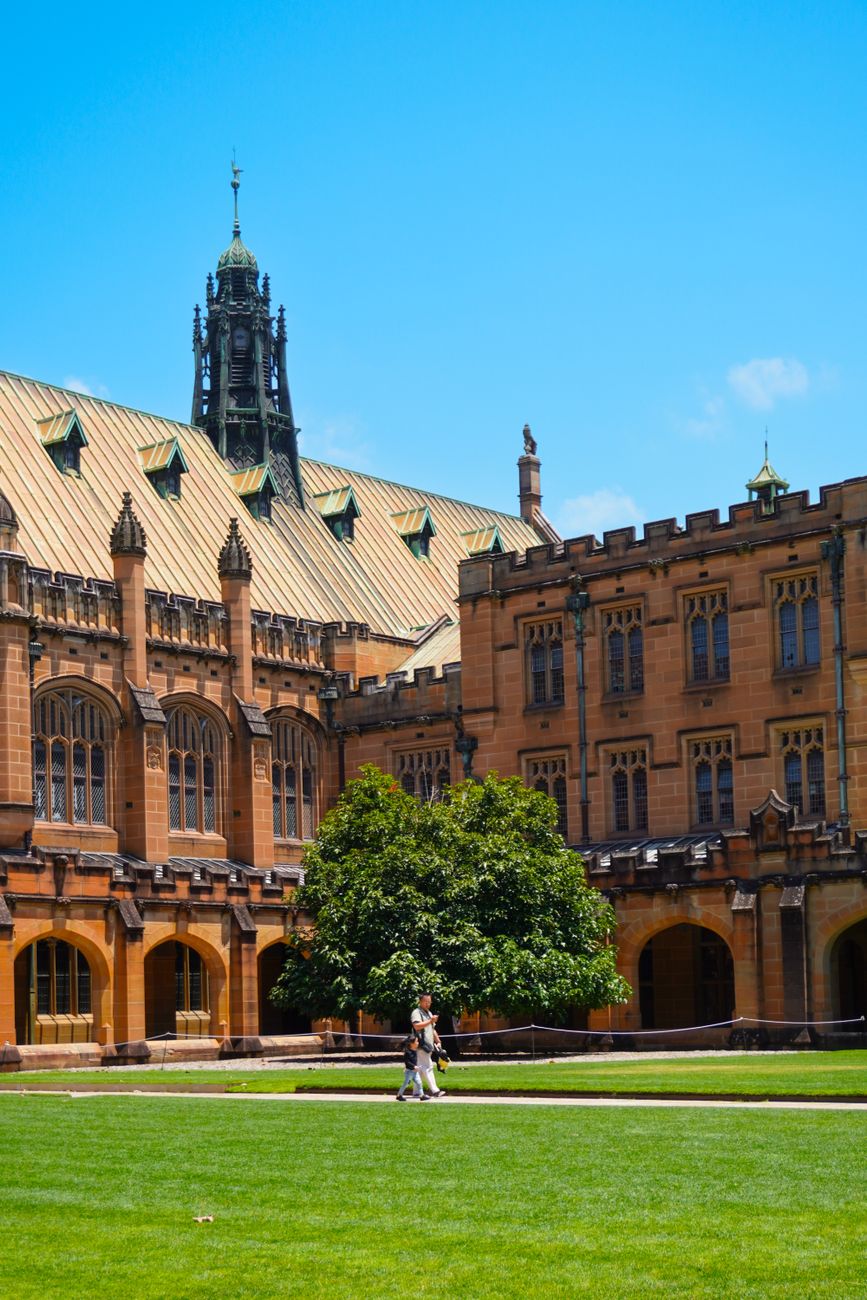
On-campus accommodation at ANU costs between AUD 280 and AUD 420 per week, depending on room type and meal plan. UC’s on-campus housing ranges from AUD 250 to AUD 380 per week. Off-campus rentals in suburbs like Braddon, Acton, and Kingston average AUD 350 per week for a studio apartment. Shared housing in Belconnen or Gungahlin reduces costs to AUD 200-280 per week.
Utilities (electricity, gas, internet) add AUD 50-80 per month. Groceries cost AUD 300-400 per month for a single person. Public transport, heavily subsidised for students, costs AUD 35 per week for unlimited travel on buses and light rail. Health insurance (OSHC) adds AUD 50-70 per month, depending on provider.
The ACT Government’s International Student Concession Card provides 50% discounts on public transport and reduced entry fees for museums and galleries. This card is available to all enrolled international students, not just those at ANU or UC.
Housing Options: On-Campus vs Off-Campus
On-campus housing at ANU and UC offers convenience but limited availability. ANU guarantees on-campus accommodation for first-year international students who apply by the November deadline, but only 1,200 beds exist across its 10 residential halls. UC offers 900 beds, with priority given to students from regional and remote areas.
ANU’s residential halls, such as Bruce Hall and Ursula Hall, provide catered options costing AUD 380-420 per week. Self-catered apartments at Graduate House cost AUD 280-340 per week. UC’s Cooper Lodge and Weeden Lodge offer similar pricing, with all utilities included.
Off-campus housing requires careful planning. The Canberra rental market experienced a 7% vacancy rate in early 2026, down from 9% in 2024, indicating tightening supply. Students should budget for a 4-6 week rental search. The ACT Tenancy Act requires landlords to register bonds with the ACT Revenue Office, and international students have full legal protections under Australian consumer law. Disputes are handled by the ACT Civil and Administrative Tribunal (ACAT), which offers free mediation services.
Short-term accommodation options include student hostels (AUD 200-300 per week) and homestay arrangements (AUD 280-350 per week, including meals). The University of Canberra’s Homestay Program places students with approved local families, providing a cultural immersion option.
Professional Pathways: Accreditation and Post-Study Work
Canberra’s universities offer clear pathways to professional accreditation for international students. CPA Australia recognises accounting degrees from both ANU and UC, provided students complete specific core units. ANU’s Bachelor of Commerce (Accounting) includes all required CPA Australia and CA ANZ accreditation components. UC’s Bachelor of Accounting similarly meets these standards.
Engineers Australia accredits ANU’s Bachelor of Engineering (Honours) and UC’s Bachelor of Engineering (Honours) programs. Accreditation is automatic for programs listed on Engineers Australia’s accredited course database. International students must ensure their chosen program is on this list before enrolling, as non-accredited programs require a separate skills assessment for migration purposes.
The MBBS pathway at ANU is highly competitive. The Doctor of Medicine (MD) program accepts 30 international students annually out of 120 total places. Entry requires completion of a bachelor’s degree (any discipline) with a minimum GPA of 5.5 (on a 7.0 scale), plus a score in the Graduate Medical School Admissions Test (GAMSAT) or MCAT. International students pay AUD 80,000 per year in tuition fees for the four-year program.
Post-study work rights for Canberra graduates are governed by the Temporary Graduate Visa (subclass 485). Students who complete a bachelor’s degree at an ACT institution can apply for a two-year post-study work visa. Those with a master’s by coursework receive three years, and PhD graduates receive four years. Canberra is classified as a regional area for migration purposes, meaning graduates may qualify for an additional one-year extension on their 485 visa under the Regional Australia migration framework.
International Student Rights and Support Services
International students in Canberra have the same legal rights as domestic students under Australian law. The Education Services for Overseas Students (ESOS) Act 2000 and the National Code of Practice for Providers of Education and Training to Overseas Students 2018 govern university obligations. These include transparent fee policies, refund procedures, and support services.
The ACT Government’s International Student Support Office provides free legal advice, tenancy assistance, and mental health counselling. The Canberra Multicultural Service offers settlement support, including help with opening bank accounts, obtaining tax file numbers, and enrolling in Medicare.
Universities are required to provide orientation programs for new international students. ANU’s International Student Orientation runs for two weeks before each semester, covering academic integrity, Australian workplace culture, and safety. UC’s equivalent program includes a dedicated International Student Welcome event with representatives from the Department of Home Affairs and the ACT Police.
Mental health services are accessible through university health centres. ANU’s Health and Wellbeing Centre offers free counselling appointments for students, with wait times averaging 5-7 days. UC’s Medical and Counselling Centre provides similar services. The Lifeline Canberra crisis support line operates 24/7 and is free for all residents.
Scholarships and Financial Aid
Both ANU and UC offer substantial scholarships for international students. The ANU Chancellor’s International Scholarship awards 200 students annually, covering 50% of tuition fees for the duration of their degree. Eligibility requires a minimum GPA of 6.0 (on a 7.0 scale) in previous studies. The ANU College of Business and Economics International Scholarship provides AUD 10,000 per year for up to four years to students with strong academic records.
UC’s International Merit Scholarship offers AUD 5,000 per year for the first two years of study. The UC Vice-Chancellor’s International Scholarship covers 25% of tuition fees for the entire degree, awarded to students with a minimum of 80% (or equivalent) in their previous qualification.
External scholarships include the Australia Awards Scholarship, funded by the Australian Government, which covers full tuition, airfares, and living expenses for students from eligible developing countries. The Destination Australia Program provides AUD 15,000 per year to students studying at regional campuses, including UC’s Bruce campus.
Scholarship applications for ANU and UC open in February for the following academic year. Deadlines typically fall in April for semester two intake and October for semester one intake. Students should apply directly through the universities’ scholarship portals, not through external agencies.
Transportation and Getting Around
Canberra’s public transport system is centred on buses and light rail. The MyWay card system allows students to purchase weekly, monthly, or semester passes. A weekly student pass costs AUD 35, providing unlimited travel on all bus and light rail routes. The light rail line runs from Gungahlin to the City, with stops at ANU and the Canberra Centre.
Cycling is a popular alternative. Canberra has over 140 kilometres of dedicated bike paths, including the Lake Burley Griffin loop. The ACT Government’s Cycle Canberra program offers free bike safety checks and discounted helmets for students. Bike rental costs AUD 30 per day or AUD 120 per month.
Ride-sharing services like Uber and Ola operate in Canberra, with typical fares of AUD 10-20 for short trips within the city. Taxis are available but more expensive. The Canberra Airport is 10 kilometres from the city centre, with bus services costing AUD 8 per trip.
Walking is feasible for students living near the city centre or university campuses. ANU’s Acton campus is within walking distance of the city centre (15-20 minutes). UC’s Bruce campus is further out, requiring a 30-minute bus ride or 25-minute bike ride.
Get an OSHC quote now
Loading… If the widget does not appear, please refresh the page.

FAQ
Q1: What are the specific entry requirements for UK A-level students applying to ANU and UC in 2026?
A1: For ANU, typical A-level requirements are AAB for Law (LLB), AAA for Medicine (MBBS pathway), and ABB for Engineering. UC requires BBB for most bachelor’s programs, including Nursing and Education. Both universities accept A-level results from all UK examination boards. Results must be submitted through the Universities Admissions Centre (UAC) for ANU or directly to UC. Conditional offers are issued based on predicted grades, with final confirmation upon release of results in August.
Q2: How does Canberra’s cost of living compare to Sydney and Melbourne for international students?
A2: According to the ACT Government’s 2026 Cost of Living Index, Canberra’s average monthly expenses for a single international student are AUD 1,850, compared to AUD 2,350 in Sydney and AUD 2,100 in Melbourne. Rent is the primary differentiator: Canberra’s median one-bedroom rent is AUD 520 per week versus AUD 630 in Sydney and AUD 580 in Melbourne. However, Canberra’s grocery and utility costs are similar to Sydney’s, at AUD 300-400 and AUD 50-80 per month respectively.
Q3: What post-study work rights do Canberra graduates receive under the Temporary Graduate Visa (subclass 485) in 2026?
A3: Graduates with a bachelor’s degree from an ACT institution receive a two-year post-study work visa. Master’s by coursework graduates receive three years, and PhD graduates receive four years. Because Canberra is classified as a regional area, graduates may qualify for a one-year extension on their 485 visa, bringing the total to three years for bachelor’s, four for master’s, and five for PhD. Eligibility requires completion of a CRICOS-registered course of at least two academic years in duration.
Q4: Are there scholarships available for international students at ANU and UC?
A4: Yes. ANU offers the Chancellor’s International Scholarship covering 50% of tuition fees for 200 students annually, requiring a minimum GPA of 6.0. UC offers the International Merit Scholarship of AUD 5,000 per year for two years and the Vice-Chancellor’s International Scholarship covering 25% of tuition fees. External scholarships include the Australia Awards Scholarship (full tuition and living expenses) and the Destination Australia Program (AUD 15,000 per year for regional study). Application deadlines are typically April for semester two and October for semester one.
Q5: What professional accreditation pathways are available for engineering and accounting students in Canberra?
A5: Engineers Australia accredits ANU’s Bachelor of Engineering (Honours) and UC’s Bachelor of Engineering (Honours) programs. Graduates can apply for Chartered Professional Engineer (CPEng) status after three years of supervised work. CPA Australia recognises accounting degrees from both universities, provided students complete core units in financial accounting, management accounting, taxation, and auditing. Graduates must complete the CPA Program (six subjects) and three years of mentored work experience to achieve full CPA status.
References
- Australian National University, 2026, International Student Handbook and Entry Requirements
- University of Canberra, 2026, International Prospectus and Scholarship Guidelines
- Department of Home Affairs, 2026, Student Visa and Temporary Graduate Visa Statistics
- ACT Government, 2026, Cost of Living Index and International Student Support Services Report
- Engineers Australia, 2026, Accredited Engineering Programs Database