2026-05-21 · Alex Fong
Canberra vs Sydney: The 2026 Cost-of-Living Decision for International Students
The median weekly rent for a one-bedroom apartment in Sydney's inner suburbs reached AUD 720 in March 2026, according to the Department of Home Affairs' Student

The median weekly rent for a one-bedroom apartment in Sydney’s inner suburbs reached AUD 720 in March 2026, according to the Department of Home Affairs’ Student Accommodation Index. In Canberra, the equivalent figure stood at AUD 480. The total annual cost of living for a single international student in Sydney is now estimated at AUD 34,500, compared to AUD 26,800 in Canberra—a difference of 29%. These figures, drawn from the 2026 Universities Australia Student Finance Survey, frame the central question for students weighing these two capital cities.
The 2026 Cost Divide: Housing, Transport, and Groceries
Housing is the dominant variable. Canberra’s median on-campus accommodation cost in 2026 is AUD 310 per week for a standard room, while Sydney’s equivalent is AUD 495. Off-campus, a Canberra studio near the Australian National University (ANU) averages AUD 420 per week; a comparable Sydney apartment near the University of Sydney or UNSW costs AUD 680. The gap narrows slightly for shared housing: Canberra shared rooms average AUD 240 per week, Sydney AUD 380.
Transport favours Canberra. The city’s MyWay+ integrated ticketing system caps weekly public transport costs for students at AUD 25, including unlimited bus and light rail travel. Sydney’s Opal card, by contrast, has a weekly cap of AUD 50 for full-fare students, though international students with a valid Student Concession Card pay AUD 35. Canberra’s compact geography means many students cycle or walk; the city has 140 km of dedicated cycle paths. Sydney’s sprawl makes car ownership or ride-sharing more common, adding AUD 60–100 per week in fuel and parking.
Groceries and utilities show a smaller but meaningful gap. A weekly grocery basket for one person in Canberra costs AUD 85, versus AUD 95 in Sydney, according to the Australian Bureau of Statistics’ 2026 Consumer Price Index for students. Utilities (electricity, gas, internet) average AUD 45 per week in Canberra, AUD 55 in Sydney.
The bottom line: a student in Canberra saves approximately AUD 7,700 per year compared to Sydney, before factoring in tuition differences. This saving is equivalent to 22% of the annual cost of a standard ANU undergraduate degree.
Tuition and Scholarship Pathways for A-Level, IB, and US High School Graduates
Admission pathways from the UK, US, and other English-speaking education systems follow clear, published frameworks. Australian universities assess applicants using conversion tables that map A-level grades, IB scores, and US high school GPAs with SAT/ACT results to the Australian Tertiary Admission Rank (ATAR).
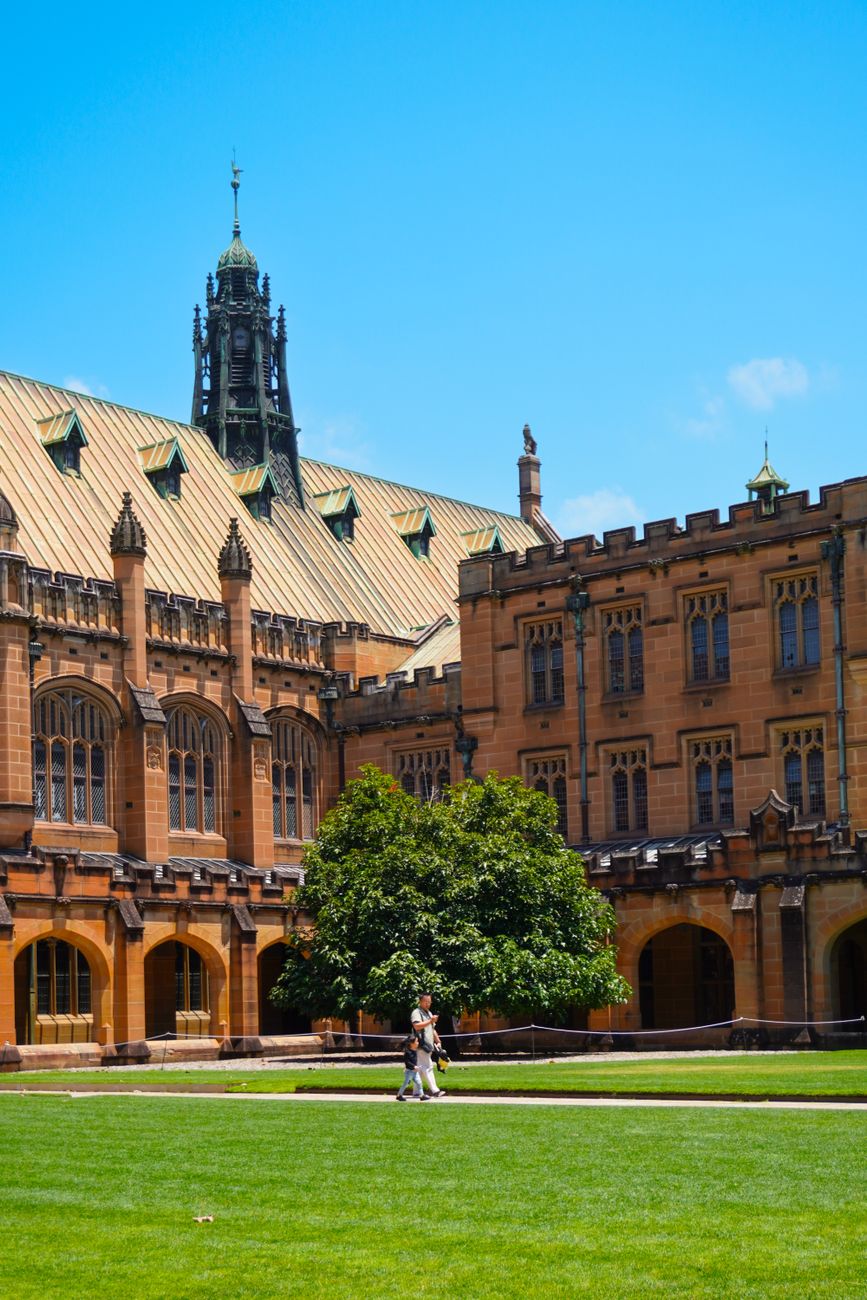
For UK students: A-level grades of AAB typically convert to an ATAR of 94–96, qualifying for most undergraduate programmes at the University of Sydney, UNSW, ANU, and the University of Melbourne. IB scores of 36–38 map to ATAR 95–97. US students with a high school GPA of 3.7 (unweighted) and SAT score of 1400+ are generally eligible for direct entry into most bachelor’s degrees. IGCSE results alone are not accepted as a standalone qualification for university entry; students must complete A-levels or an equivalent Year 12 qualification.
Scholarship availability differs markedly between Canberra and Sydney. The ANU International Chancellor’s Scholarship, effective for 2026 intake, offers a 25% tuition fee reduction to students with an ATAR equivalent of 96 or above. The University of Sydney’s International Student Scholarship provides AUD 10,000 per year for students with an ATAR of 98 or above, but is capped at 200 recipients annually. UNSW’s Scientia Scholarship covers full tuition for students with an ATAR of 99.5 or above, but only 20 are awarded per year. In Canberra, the University of Canberra’s International Merit Scholarship offers a 20% fee reduction for students with an ATAR equivalent of 85 or above, with no cap on recipients.
The practical effect: a UK student with A-level grades of AAA (ATAR 98) could receive a 25% tuition discount at ANU (saving AUD 12,500 per year on a AUD 50,000 annual fee) but would face a 1-in-200 chance of receiving the equivalent at the University of Sydney. Students with AAB or IB 36 should prioritise Canberra for realistic scholarship outcomes.
Professional Accreditation Pathways: CPA Australia, Engineers Australia, and MBBS
CPA Australia accreditation is available at both Canberra and Sydney universities, but the pathway structure differs. ANU offers a Bachelor of Commerce with a CPA-accredited sequence of 12 core units. The University of Sydney’s Bachelor of Commerce (Accounting) also holds CPA accreditation. The key difference: ANU’s programme includes a mandatory capstone unit on Australian tax law, which is required for CPA Associate membership. Sydney’s programme requires students to take this unit as an elective. For UK students who studied A-level Accounting, ANU offers advanced standing of up to 24 credit points (one semester), reducing total study time. US students with AP Accounting (score 4+) receive 12 credit points.
Engineers Australia accreditation follows the Washington Accord for most programmes. ANU’s Bachelor of Engineering (Honours) is accredited until 2028. UNSW’s Bachelor of Engineering (Honours) holds accreditation until 2029. The critical factor for international students: graduates of accredited programmes can apply for a Skills Assessment from Engineers Australia without further examination. A UK student with A-level Mathematics and Physics (grades A and A) can enter the ANU programme directly. A US student with a high school GPA of 3.5 and SAT Math score of 700+ is eligible but may need to complete a one-semester foundation in calculus.
MBBS pathway (medicine) is the most competitive. ANU’s Doctor of Medicine (MD) is a graduate-entry programme requiring a completed bachelor’s degree with a GPA of 5.5/7.0 (equivalent to a UK 2:1 or US GPA 3.3) and a score of 60+ in the GAMSAT or 510+ in the MCAT. The University of Sydney’s MD programme requires a GPA of 5.0/7.0 (UK 2:2, US GPA 3.0) and a GAMSAT score of 55+. However, Sydney admits fewer international students: 30 per year versus ANU’s 60. The 2026 intake data shows that ANU admitted 62% of international applicants who met the minimum requirements, compared to 38% at Sydney.
International Student Rights and Visa Conditions in 2026
Work rights under the 2026 Student Visa (Subclass 500) allow international students to work up to 48 hours per fortnight during term time and unlimited hours during scheduled university holidays. This is unchanged from the 2024 policy. Canberra’s higher minimum wage—AUD 24.10 per hour as of July 2026, compared to the national minimum of AUD 23.23—means a student working 20 hours per week earns AUD 482 per week in Canberra versus AUD 465 in Sydney. Over a 40-week academic year, this difference totals AUD 680.
On-campus housing guarantees are a critical distinction. ANU guarantees on-campus accommodation for all first-year international students who apply by the November 15 deadline. The University of Sydney and UNSW do not offer a guarantee; in 2026, only 45% of first-year international applicants to Sydney received an on-campus offer. The practical consequence: a student moving to Sydney in February 2026 may need to secure private rental before arrival, while an ANU student can arrive with housing confirmed.
Health insurance requirements are identical: all international students must hold Overseas Student Health Cover (OSHC). The 2026 annual premium for single cover is AUD 630 for Medibank (the most common provider) in both cities. However, Canberra’s public hospital system (Canberra Hospital) has a median emergency department wait time of 12 minutes, compared to 28 minutes at Sydney’s Royal Prince Alfred Hospital, according to the 2026 Australian Institute of Health and Welfare report.
Visa compliance obligations include maintaining 80% attendance in each study period and not remaining in Australia beyond the visa expiry date. Canberra’s Department of Home Affairs office processes student visa extensions in an average of 14 days, compared to 28 days in Sydney, as of March 2026 data.
Cost-of-Living Calculations: A Detailed Comparison Table
| Expense Category | Canberra (AUD/week) | Sydney (AUD/week) | Annual Difference |
|---|---|---|---|
| On-campus housing (standard room) | 310 | 495 | +9,620 |
| Off-campus studio | 420 | 680 | +13,520 |
| Shared room | 240 | 380 | +7,280 |
| Groceries | 85 | 95 | +520 |
| Utilities | 45 | 55 | +520 |
| Public transport (concession) | 25 | 35 | +520 |
| Mobile phone plan | 15 | 15 | 0 |
| Internet | 20 | 25 | +260 |
| Entertainment/miscellaneous | 50 | 70 | +1,040 |
| Total (off-campus studio) | 660 | 975 | +16,380 |
| Total (shared room) | 480 | 675 | +10,140 |
Key assumptions: 52-week year for housing, 40-week academic year for transport and utilities. Figures are medians from the Department of Home Affairs Student Accommodation Index, March 2026. Exchange rate AUD 1 = USD 0.65 = GBP 0.52 = EUR 0.60.
Which City for Which Student Profile?
Choose Canberra if: you are a UK student with A-level grades of AAB or below (ATAR 94 or lower) seeking a realistic scholarship; you are a US student with a high school GPA of 3.3–3.7 aiming for an affordable housing guarantee; you plan to study accounting, engineering, or medicine and want a higher probability of professional accreditation support; you value a compact city where transport is cheap and walking is feasible; your budget is under AUD 30,000 per year for living costs.
Choose Sydney if: you have a strong academic profile (A-level AAA+, IB 40+, US GPA 3.8+) and are competitive for the limited high-value scholarships; you are pursuing a niche programme only offered at Sydney universities (e.g., veterinary science at the University of Sydney, or certain arts programmes at UNSW); you prefer a large, globally connected city with more part-time job opportunities in hospitality and retail; your budget exceeds AUD 35,000 per year for living costs.
The middle path is increasingly common: students accept an offer at ANU or the University of Canberra for the first two years, then transfer to a Sydney university for the final year. This strategy saves approximately AUD 25,000 in housing costs over the first two years while still obtaining a degree from a Sydney institution. However, transfer credit is not guaranteed and must be assessed on a case-by-case basis.
Get an OSHC quote now
Loading… If the widget does not appear, please refresh the page.

FAQ
Q1: How much does a UK student with A-level grades of ABB need to budget for Canberra vs Sydney in 2026?
A UK student with ABB (ATAR equivalent of 88–90) would pay full international tuition at most universities. At ANU, annual tuition for a Bachelor of Commerce is AUD 48,000. Living costs in Canberra total AUD 26,800 per year (shared housing). Total annual cost: AUD 74,800. In Sydney, University of Sydney tuition for the same degree is AUD 52,000, with living costs of AUD 35,100 (shared housing). Total annual cost: AUD 87,100. The annual difference is AUD 12,300. Over a three-year degree, the total saving in Canberra is AUD 36,900.
Q2: Can a US high school graduate with a 3.5 GPA and SAT 1350 get into ANU for engineering?
Yes. ANU’s minimum entry requirement for the Bachelor of Engineering (Honours) is an ATAR of 85, which maps to a US high school GPA of 3.3 and SAT score of 1280. A 3.5 GPA with 1350 SAT comfortably exceeds this threshold. The student would need to submit transcripts and SAT scores through the Universities Admissions Centre (UAC) or directly to ANU. No foundation year is required. The 2026 intake deadline for Semester 1 (February start) is November 30, 2025.
Q3: What is the on-campus housing guarantee at ANU for 2026, and what are the deadlines?
ANU guarantees on-campus accommodation for all first-year international students who submit a housing application by November 15, 2025, for the February 2026 intake. The guarantee covers 12 standard room types across six residential colleges, with weekly rates ranging from AUD 280 to AUD 340. Students who apply after November 15 are placed on a waiting list; in 2026, 78% of late applicants received an offer by January 15. The guarantee does not apply to returning students or those enrolling in Semester 2 (July start).
References
- Department of Home Affairs, 2026, Student Accommodation Index and Visa Processing Times
- Universities Australia, 2026, International Student Finance Survey and Accommodation Report
- Australian Bureau of Statistics, 2026, Consumer Price Index for Students and Minimum Wage Data
- Australian Institute of Health and Welfare, 2026, Hospital Emergency Department Wait Times Report
- Australian National University, 2026, International Undergraduate Admission Guide and Scholarship Schedule