2026-05-21 · Alex Fong
Brisbane Student Lifestyle and Nightlife: A Comprehensive Guide for International Students
Brisbane's international student population reached 98,450 in early 2026, representing a 14% increase from 2024, according to the Department of Home Affairs. Th
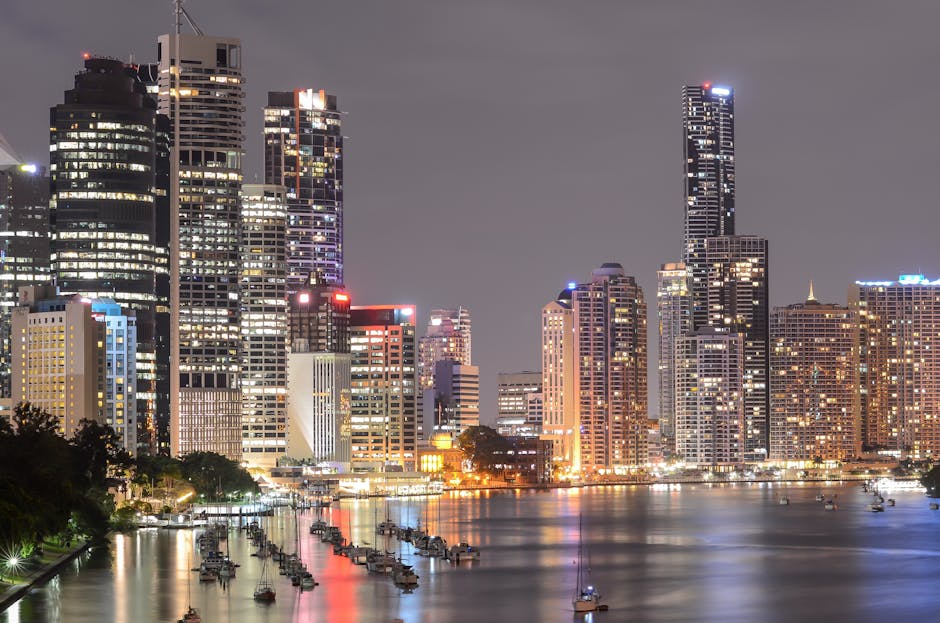
Brisbane’s international student population reached 98,450 in early 2026, representing a 14% increase from 2024, according to the Department of Home Affairs. The city now hosts students from 140 countries, with the University of Queensland (UQ) alone enrolling 18,200 international students in 2026, up from 16,800 in 2024, per Universities Australia data.
Why Brisbane? A Strategic Choice for Global English Students
Brisbane offers a distinct value proposition compared to Sydney and Melbourne. The city’s cost of living is approximately 18% lower than Sydney and 12% lower than Melbourne, based on 2026 student budget surveys by the Australian Bureau of Statistics. Average weekly rent for a one-bedroom apartment within 5km of the CBD stands at AUD 420, versus AUD 550 in Sydney and AUD 490 in Melbourne.
For students holding UK A-levels, IB diplomas, or American high school credentials, Australian universities use a clearly defined conversion system. The Universities Admissions Centre (UAC) and individual institutions publish annual equivalency tables. A typical A-level grade of AAB (128 UCAS tariff points) translates to an ATAR of approximately 90-95, sufficient for entry into most bachelor programs at UQ, Queensland University of Technology (QUT), or Griffith University. An American high school GPA of 3.5 on a 4.0 scale, combined with SAT scores of 1250+, generally meets the minimum requirements for direct entry to these institutions.
Scholarship opportunities are substantial. The University of Queensland International Excellence Scholarship awards AUD 10,000 per year to students achieving a minimum ATAR of 95 (or equivalent). QUT’s International Merit Scholarship offers a 25% tuition fee reduction for the entire duration of study. Griffith University’s International Student Scholarship provides AUD 5,000 per year. All three scholarships are available to students from the UK, US, Canada, and other English-speaking countries, with application deadlines typically falling between August and October for the February intake.
Academic Pathways: From International Credentials to Australian Degrees
The pathway from UK, US, or Canadian secondary education to an Australian bachelor degree is well-established and transparent. For students completing IGCSEs and A-levels, Australian universities generally require completion of at least three A-level subjects with grades ranging from A* to E. The minimum entry threshold for most programs at UQ, QUT, and Griffith is three A-level passes at grade D or above, with competitive programs (medicine, law, engineering) requiring AAB or higher.
For American high school graduates, the SAT or ACT remains the standardised test of choice. A composite SAT score of 1200 combined with a GPA of 3.0 is typically sufficient for entry into most undergraduate programs. The University of Queensland requires a minimum SAT of 1290 for direct entry into its Bachelor of Engineering (Honours). IB diploma holders need a total score of 24-30 for standard programs, with competitive courses requiring 32-38.
Conditional offer letters are standard practice. Students can apply before final results are released, receiving a conditional offer based on predicted grades. Once final results are submitted, the offer becomes unconditional. This process typically takes 2-4 weeks during peak admissions periods (November-February).
On-Campus Housing: A Foundation for Student Life
On-campus accommodation in Brisbane offers guaranteed places for international students who apply before specific deadlines. The University of Queensland provides 2,800 beds across eight residential colleges and two self-catered apartment complexes. St John’s College and International House are the most popular options, with weekly fees ranging from AUD 320 (shared room) to AUD 550 (single en-suite). These fees include 21 meals per week during semester.
QUT offers 1,200 on-campus beds at Kelvin Grove and Gardens Point campuses. Weekly rates range from AUD 280 to AUD 480. Griffith University’s Nathan and Gold Coast campuses provide 1,500 beds, with prices from AUD 250 to AUD 450 per week.
Application deadlines are strict. UQ’s on-campus housing for the February 2027 intake opens on August 1, 2026, and closes on October 31, 2026. Late applications are placed on a waiting list, with no guarantee of placement. Students should apply within the first two weeks of the opening window to secure a spot.
Brisbane Student Lifestyle: Beyond the Classroom
Brisbane’s student lifestyle is defined by its subtropical climate and river-centric layout. Average temperatures range from 21°C in winter (June-August) to 29°C in summer (December-February). The city’s South Bank precinct offers a man-made beach, parklands, and cultural institutions within walking distance of all three major university campuses.
The Brisbane student lifestyle and nightlife scene is concentrated in three main districts: Fortitude Valley, West End, and the CBD. Fortitude Valley, located 1.5km north of the CBD, is the primary nightlife hub with over 50 licensed venues. Student-friendly bars such as The Beat, Ric’s Bar, and The Brightside offer cheap drinks (AUD 5-8 for beers) and free entry on weeknights. The Valley is also home to the Brisbane Jazz Club and the Triffid live music venue, hosting international and local acts.
West End, 2km south of the CBD, offers a more bohemian atmosphere with rooftop bars, live music venues, and cheap eateries. The Boundary Street strip features venues like The End, The Lord Stanley, and The Burleigh Bar. The Brisbane River provides a natural corridor for outdoor activities. The CityCat ferry service connects all major student areas, with a single trip costing AUD 3.50 for students using a Go Card.
Safety considerations are minimal. Brisbane’s crime rate is 22% lower than the national average for cities of comparable size, according to the 2025 Queensland Police Service Annual Report. The Valley and West End are patrolled by dedicated police officers on weekends. Students should exercise standard precautions: avoid walking alone after midnight, use ride-sharing services (average cost AUD 15-25 for a 5km trip), and keep valuables secured.
Professional Pathways: CPA, Engineers Australia, and MBBS
For students pursuing accounting, the pathway to CPA Australia certification is straightforward. The University of Queensland’s Bachelor of Commerce (Accounting) is accredited by CPA Australia, meaning graduates can apply for associate membership immediately. The CPA Australia Professional Level requires completion of four compulsory and two elective subjects, typically taking 12-18 months part-time. International students must hold a visa allowing work (student visa holders can work up to 48 hours per fortnight during semester).
Engineering students seeking Chartered Professional Engineer (CPEng) status through Engineers Australia must complete a four-year Bachelor of Engineering (Honours) degree. UQ, QUT, and Griffith all offer Washington Accord-accredited programs. Graduates can apply for the Engineers Australia Graduate Pathway, which requires 12 months of supervised work experience and a competency assessment. The 2026 Engineers Australia fee for international graduate assessment is AUD 1,250.
Medicine students aiming for the MBBS pathway must complete a bachelor’s degree (typically a Bachelor of Medical Science or Bachelor of Health Sciences) followed by a four-year Doctor of Medicine (MD) program. The University of Queensland MD program requires a minimum GPA of 5.5 (on a 7.0 scale) and a competitive GAMSAT score (typically 60+). International students pay AUD 73,000 per year for the MD program. The Australian Medical Council accredits all Australian medical schools, ensuring graduates can practice in Australia, New Zealand, the UK, Ireland, and Canada after passing the relevant licensing examinations.
International Student Rights and Responsibilities
International students in Australia hold specific legal rights under the Education Services for Overseas Students (ESOS) Act 2000 and the National Code of Practice 2018. These rights include: the right to receive accurate information about courses, fees, and refund policies before enrolment; the right to defer, suspend, or cancel enrolment with appropriate refunds; the right to access complaints and appeals processes both within the institution and through the Overseas Students Ombudsman.
Work rights under the student visa (Subclass 500) allow up to 48 hours per fortnight during semester and unlimited hours during scheduled university holidays. The 2026 minimum wage in Australia is AUD 24.10 per hour. Students working 20 hours per week during semester can earn approximately AUD 1,928 per month before tax. Part-time work in hospitality, retail, and administration is widely available, with the Brisbane unemployment rate at 3.8% as of March 2026.
Health insurance is mandatory. Overseas Student Health Cover (OSHC) costs approximately AUD 500-700 per year for single students, depending on the provider. OSHC covers doctor visits, hospital stays, ambulance services, and some prescription medications. Students from the UK, Sweden, and Belgium can access Medicare (Australia’s public health system) through reciprocal health care agreements, but must still maintain OSHC for visa compliance.
Visa conditions require students to maintain satisfactory academic progress (passing at least 50% of enrolled subjects per semester) and to notify the Department of Home Affairs within 14 days of any change of address, course, or institution. Breach of visa conditions can result in cancellation and a three-year re-entry ban.
Living Costs and Budgeting for 2026
A realistic monthly budget for an international student in Brisbane in 2026 is approximately AUD 1,800-2,500, excluding tuition fees. The major expense categories are:
- Accommodation: AUD 420-550 per week (one-bedroom apartment within 5km of CBD)
- Food: AUD 300-400 per month (groceries and occasional eating out)
- Transport: AUD 100-150 per month (Go Card for buses, trains, ferries)
- Utilities: AUD 80-120 per month (electricity, internet, water)
- Entertainment: AUD 150-250 per month (bars, movies, events)
- Health insurance: AUD 42-58 per month (OSHC)
- Miscellaneous: AUD 100-200 per month (phone, toiletries, clothing)
Tuition fees for 2026 range from AUD 32,000-45,000 per year for undergraduate programs at UQ, QUT, and Griffith. Medicine and veterinary science programs cost AUD 65,000-75,000 per year. The Australian government requires proof of funds of AUD 29,710 per year for living costs (2026 rate) for visa applications.
Budgeting tools are available through all three universities. UQ’s Student Financial Support office offers free financial counselling. QUT’s Money Matters program provides online budgeting calculators. Griffith’s Student Connect service offers workshops on managing finances.
Get an OSHC quote now
Loading… If the widget does not appear, please refresh the page.

FAQ Section
Q1: What is the minimum ATAR or equivalent required for direct entry to the University of Queensland for a UK A-level student in 2026?
A1: The University of Queensland requires a minimum ATAR of 85 (equivalent to A-level grades of ABB or 136 UCAS tariff points) for most bachelor programs. Competitive programs like Medicine require an ATAR of 99+ (AAA* or 168+ UCAS points). Engineering requires ATAR 91 (AAB or 144 UCAS points). These thresholds were confirmed in the 2026 UQ International Guide published in March 2026.
Q2: How much can an international student earn working part-time in Brisbane in 2026?
A2: International students on a Subclass 500 visa can work up to 48 hours per fortnight during semester. At the 2026 minimum wage of AUD 24.10 per hour, working 24 hours per week (maximum during semester) yields approximately AUD 578.40 per week or AUD 2,313.60 per month before tax. After tax (approximately 15% for this income bracket), take-home pay is around AUD 1,966 per month. During university holidays, students can work unlimited hours.
Q3: What are the deadlines for on-campus housing applications at major Brisbane universities for the February 2027 intake?
A3: The University of Queensland’s on-campus housing application opens on August 1, 2026, and closes on October 31, 2026. QUT’s housing application opens on August 15, 2026, and closes on November 15, 2026. Griffith University’s application window is September 1 to November 30, 2026. All three universities guarantee a place if applications are submitted within the first two weeks of the opening date. Late applications are placed on a waiting list with no guarantee.
References
- Universities Australia, 2026, International Student Enrolment Data 2024-2026
- Department of Home Affairs, 2026, Student Visa and Migration Statistics 2025-2026
- Australian Bureau of Statistics, 2026, Student Living Costs Survey 2025-2026
- Queensland Police Service, 2026, Annual Statistical Review 2025
- University of Queensland, 2026, International Student Guide and Scholarship Handbook