2026-05-21 · Nathan Hartley
Australian University Study 2026: Admissions, Costs, and Your No-Fee Bank Account
The number of international students commencing Australian university programs from English-speaking source countries (UK, USA, Canada, Ireland) rose 18% in 202

The number of international students commencing Australian university programs from English-speaking source countries (UK, USA, Canada, Ireland) rose 18% in 2025, reaching 14,200 enrolments, according to Department of Home Affairs preliminary 2026 data. Simultaneously, the QS World University Rankings 2026 placed nine Australian institutions in the global top 100, a record high that has intensified competition for undergraduate places among A-level, IB, and US high school graduates. For students navigating this landscape, a bank account for international students Australia no fees is not a luxury—it is a financial prerequisite that directly affects visa compliance, tuition payments, and daily living costs.
From UK A-Levels, IB, and US High School to Australian Admissions
Australian universities accept three principal academic credentials from English-speaking applicants: UK GCE A-levels, the International Baccalaureate (IB) Diploma, and US high school transcripts with GPA and SAT/ACT scores. The Australian Tertiary Admission Rank (ATAR) conversion tables, updated for 2026 intakes, show that an A-level result of AAA typically converts to an ATAR of 95.00–97.00, placing applicants in the competitive range for programs like medicine, law, and engineering at the University of Melbourne and the University of Sydney. IB scores of 38–42 points correspond to ATARs of 94.00–98.00, while US high school graduates need a GPA of 3.6–4.0 combined with SAT scores of 1350–1500 to meet entry thresholds for Group of Eight universities.
The application process differs by credential. UK and IB students apply through the Universities Admissions Centre (UAC) or direct to each institution, with deadlines typically falling between September and November for February 2026 intake. US students must provide a credential evaluation from a recognised service such as World Education Services (WES) or the relevant Australian university’s own assessment unit. A critical point: Australian universities do not require US students to complete the SAT Subject Tests, but they do require official transcripts sent directly from the high school. For all pathways, a bank account for international students Australia no fees must be opened within 14 days of arrival to satisfy visa conditions requiring access to funds for living expenses.
Scholarships for English-Speaking International Students in 2026
Scholarships specifically targeting students from English-speaking countries have expanded in 2026. The Australia Awards program, funded by the Department of Foreign Affairs and Trade, allocated 1,200 places for 2026 intake, with 30% reserved for applicants from Canada, the UK, Ireland, and the USA. These awards cover full tuition, return airfares, establishment allowance (AUD 5,000), and a contribution to living expenses (AUD 35,000 per year). Application deadlines are typically August–October 2025 for February 2026 start.
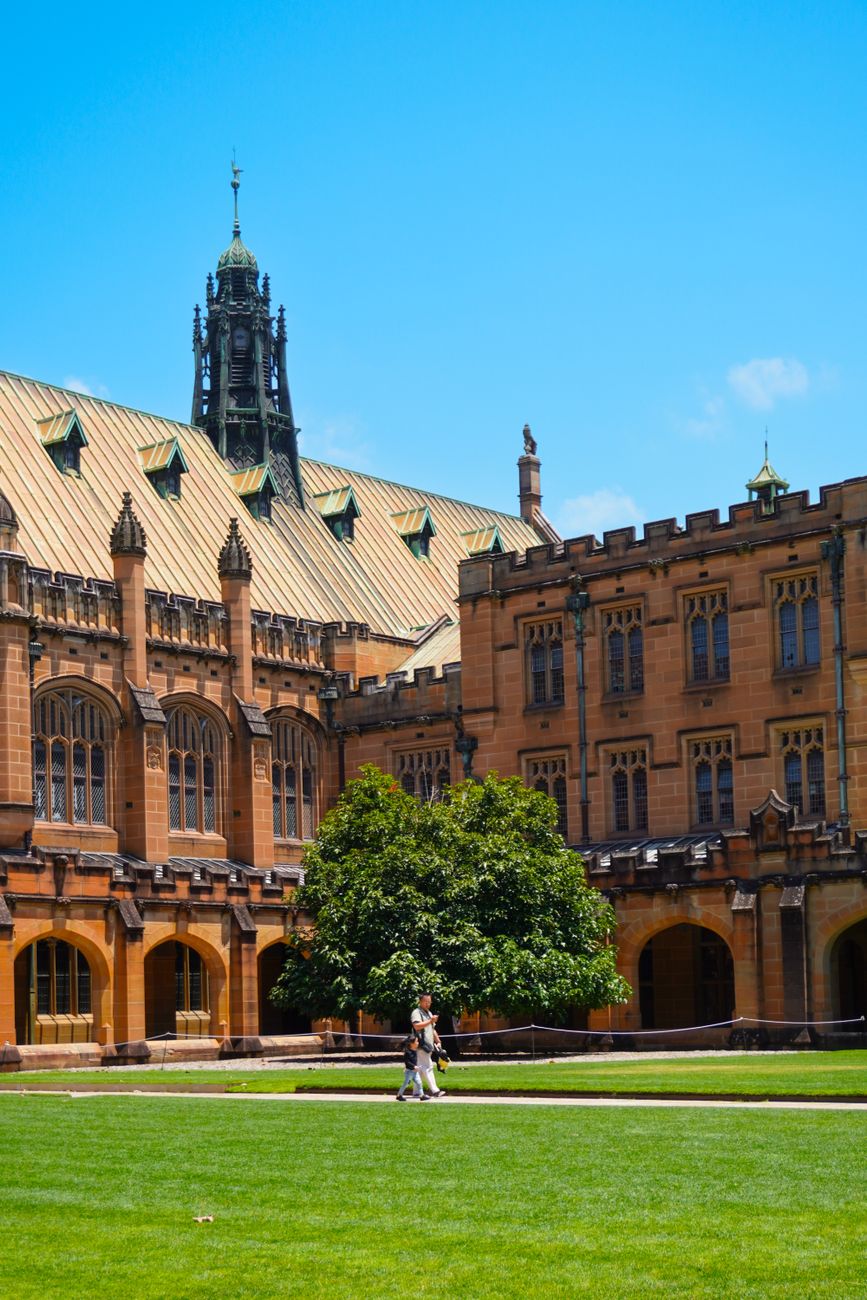
Individual universities offer targeted scholarships. The University of Queensland’s International Excellence Scholarship provides AUD 12,000 per year for up to four years to students with an equivalent ATAR of 95.00 or above. Monash University’s International Merit Scholarship offers AUD 10,000 per year for students who achieve an A-level result of A*AA or an IB score of 40. The University of New South Wales (UNSW) Global Scholarship awards AUD 5,000–20,000 per year based on academic merit and a personal statement. Critically, scholarship recipients must still demonstrate access to AUD 29,710 in living costs for 2026, per Department of Home Affairs rules. Opening a bank account for international students Australia no fees upon arrival allows scholarship funds to be deposited directly without incurring monthly maintenance charges that can erode the scholarship value by AUD 5–15 per month.
On-Campus Housing: Availability, Costs, and Deposit Requirements
On-campus accommodation remains the most sought-after housing option for first-year international students. For 2026, on-campus housing at eight of the nine Group of Eight universities offers guaranteed places for international students who apply by the priority deadline (typically October 31, 2025 for February intake). The University of Sydney, for example, guarantees on-campus accommodation for all first-year international students who apply by this date, with rooms in colleges and halls ranging from AUD 350–650 per week. The University of Melbourne’s on-campus housing costs AUD 380–700 per week, with a mandatory 4-week deposit (AUD 1,520–2,800) required at booking.
Deposit requirements present a specific challenge. Most on-campus accommodation providers require a deposit equivalent to 4–6 weeks’ rent, plus a non-refundable application fee of AUD 50–150. For a student securing a room at AUD 450 per week, the upfront cost is AUD 1,800–2,700. This is where a bank account for international students Australia no fees becomes essential: standard accounts charge AUD 5–10 per month in maintenance fees, which over a 12-month tenancy adds AUD 60–120 in unnecessary costs. A no-fee account eliminates this drag, preserving the full deposit amount for housing security. Students should also note that on-campus housing contracts typically run for 44–52 weeks, with early termination penalties of 2–4 weeks’ rent.
CPA Australia, Engineers Australia, and MBBS Pathway Requirements
Professional accreditation pathways are a decisive factor for students targeting regulated professions. For accounting, the CPA Australia program requires international students to complete a recognised undergraduate or postgraduate degree that covers the CPA Australia foundation-level competencies: accounting systems and processes, financial accounting and reporting, management accounting, finance, and taxation law. As of 2026, 17 Australian universities offer CPA-accredited programs, including the University of Melbourne, UNSW, and the University of Sydney. Graduates must then pass the CPA Program’s six elective subjects and complete three years of mentored practical experience. The total pathway time from undergraduate commencement to CPA certification is typically 5–7 years.
For engineering, Engineers Australia accreditation is mandatory for those seeking professional engineer status under the Washington Accord. As of 2026, 22 Australian universities offer Engineers Australia-accredited four-year Bachelor of Engineering (Honours) programs. Accreditation requires the program to cover the 11 Elements of Competency, including engineering knowledge, problem analysis, and design/development of solutions. International students from the UK, USA, Canada, and Ireland benefit from mutual recognition: their home-country engineering degrees may be assessed under the Washington Accord, potentially reducing the pathway to two years of Australian study for a Master of Engineering. The median salary for graduate engineers in Australia in 2026 is AUD 75,000, according to Graduate Careers Australia.
The MBBS pathway (Bachelor of Medicine, Bachelor of Surgery) remains the most competitive. As of 2026, 18 Australian medical schools offer MBBS or Doctor of Medicine (MD) programs accredited by the Australian Medical Council. International students must sit the ISAT (International Student Admissions Test) or UCAT ANZ, depending on the institution. Entry requirements typically include an ATAR of 98.00–99.95, plus a high ISAT score (180–200 out of 200). Tuition fees for international medical students range from AUD 65,000–85,000 per year for the four-year MD program. A bank account for international students Australia no fees is particularly critical for medical students, who must frequently pay for clinical placement fees (AUD 2,000–5,000 per year), uniform costs, and professional indemnity insurance, all of which require a fee-free transaction account to avoid monthly charges.
International Student Rights: Work, Health, and Consumer Protections
International students in Australia hold specific legal rights under the Education Services for Overseas Students (ESOS) Act 2000 and the National Code of Practice for Providers of Education and Training to Overseas Students 2018. As of 2026, the key protections include: unlimited work rights for students enrolled in a bachelor’s degree or higher, effective from July 1, 2024, and continuing through 2026; the right to work 48 hours per fortnight during term time for all other students; and the right to remain in Australia for up to 18 months after graduation under the Temporary Graduate visa (subclass 485). Students must maintain valid enrolment, satisfactory course progress (50% pass rate per study period), and attendance of at least 80% for courses that specify attendance requirements.
Consumer protections under the ESOS Act include a mandatory refund policy for course fees if the provider fails to deliver the course. The Tuition Protection Service (TPS) guarantees that students receive a refund or alternative placement if their education provider closes or ceases to offer the course. For 2026, the TPS covers tuition fees up to AUD 50,000 per student. Students also have the right to access the Overseas Student Health Cover (OSHC) complaints process and to appeal academic decisions through the university’s internal grievance procedure, then to the Commonwealth Ombudsman. Opening a bank account for international students Australia no fees supports these rights by ensuring that any refunds or OSHC claim payments are deposited without bank fees reducing the amount.
No-Fee Bank Accounts: A Practical Requirement for Visa Compliance
The Department of Home Affairs requires international students to demonstrate access to AUD 29,710 for living costs (2026 figure, updated annually) as part of the student visa application. This proof can be met through a bank statement showing funds in a personal account for at least three consecutive months, a loan approval, or a scholarship letter. A bank account for international students Australia no fees is the most efficient vehicle for maintaining this proof, as it avoids monthly maintenance fees that can reduce the balance below the required threshold. Standard bank accounts in Australia typically charge AUD 5–15 per month in account-keeping fees unless a minimum monthly deposit (often AUD 2,000–5,000) is maintained.
The four major Australian banks—Commonwealth Bank, Westpac, NAB, and ANZ—all offer no-fee bank accounts specifically marketed to international students. These accounts typically require no minimum balance, no monthly fees, and allow unlimited domestic transactions. The application process requires: a valid passport, a student visa grant letter, an Australian residential address (which can be the university’s international student support office address initially), and an Australian tax file number (TFN) application receipt. The account can be opened online before arrival in Australia, with the debit card sent to the university’s international office for collection. For 2026, students from the UK, USA, Canada, and Ireland can also use their home-country credit history through the Global Transfer service offered by some banks, which allows them to establish an Australian credit history without a local record.
Cost of Living by City: Sydney, Melbourne, Brisbane, and Perth
The cost of living for international students varies significantly by city. For 2026, the Department of Home Affairs’ benchmark of AUD 29,710 per year for living costs is a minimum; actual expenses are higher in major cities. Sydney remains the most expensive, with median weekly rent for a studio apartment at AUD 550–700, groceries at AUD 120–160, public transport at AUD 50–70 (with an international student concession card reducing fares by 50%), and utilities at AUD 40–60. Total weekly expenditure for a single student in Sydney averages AUD 760–990, or AUD 39,520–51,480 per year.
Melbourne is slightly less expensive: studio rent at AUD 450–600, groceries AUD 110–150, public transport AUD 40–60 (concession available), utilities AUD 35–55. Weekly total: AUD 635–865, or AUD 33,020–44,980 per year. Brisbane offers lower costs: studio rent AUD 350–500, groceries AUD 100–140, public transport AUD 30–50, utilities AUD 30–50. Weekly total: AUD 510–740, or AUD 26,520–38,480 per year. Perth is similar to Brisbane: studio rent AUD 320–480, groceries AUD 100–130, public transport AUD 30–50, utilities AUD 30–45. Weekly total: AUD 480–705, or AUD 24,960–36,660 per year.
A bank account for international students Australia no fees helps students manage these costs by allowing unlimited fee-free withdrawals from ATMs within the bank’s network, avoiding the AUD 2–3 fee per transaction charged by standard accounts. Students should also note that rent payments are typically made via electronic transfer, which is free from a no-fee account, whereas other account types may charge AUD 0.50–1.50 per transfer.
Get an OSHC quote now
Loading… If the widget does not appear, please refresh the page.

FAQ
Q1: What are the specific visa requirements for a bank account for international students in Australia in 2026?
The Department of Home Affairs requires proof of access to AUD 29,710 for living costs. A bank account for international students Australia no fees can be used to demonstrate this by providing a three-month bank statement showing the balance. The account must be in the student’s name, opened with an Australian bank, and the statement must be dated within 30 days of the visa application. Students from the UK, USA, Canada, and Ireland can open the account online before arrival, with the debit card collected from the university’s international office. The no-fee requirement is not mandated by visa rules, but it prevents monthly fees (AUD 5–15) from reducing the balance below the threshold.
Q2: How do UK A-level results convert to Australian ATAR for 2026 university admissions?
UK A-level results convert to ATAR using a standardised table published by the Universities Admissions Centre (UAC) for 2026. An AAA result converts to an ATAR of 97.00–98.00, AAA to 95.00–97.00, AAB to 93.00–95.00, and ABB to 90.00–93.00. These conversions apply to all Australian universities, though some institutions like the University of Melbourne and the University of Sydney may require higher equivalents for competitive programs. For example, the University of Sydney’s Bachelor of Laws requires an ATAR of 99.50, equivalent to AAA in A-levels. Students must submit their A-level results through UAC or direct application by November 30, 2025 for February 2026 intake.
Q3: What is the maximum amount of tuition fee refund an international student can receive if their university closes in 2026?
Under the Tuition Protection Service (TPS), international students can receive a refund of up to AUD 50,000 in tuition fees if their education provider ceases to deliver the course or the course is cancelled. For 2026, the TPS covers all student visa holders enrolled in registered courses. The refund is processed through the TPS website, and students must submit a claim within 12 months of the provider’s closure. Additionally, students are entitled to a refund of any unused portion of their Overseas Student Health Cover (OSHC) premium, which averages AUD 500–700 per year for single cover. A bank account for international students Australia no fees ensures that these refunds are deposited without any bank charges.
References
- Department of Home Affairs, 2026, Student Visa Program Report: Living Cost and Financial Capacity Requirements
- Universities Australia, 2026, International Student Enrolment Data: English-Speaking Source Countries
- QS Quacquarelli Symonds, 2026, QS World University Rankings 2026: Australian Institutions
- Australian Medical Council, 2026, Accreditation of Medical Programs for International Students
- Engineers Australia, 2026, Accredited Engineering Programs and Washington Accord Pathways