2026-05-21 · Tessa Shaw
Australian Skills Quality Authority Accreditation for Vocational Courses: A Guide for International Students
The Australian Skills Quality Authority (ASQA) is the national regulator for vocational education and training (VET) in Australia. As of 2026, ASQA oversees ove

The Australian Skills Quality Authority (ASQA) is the national regulator for vocational education and training (VET) in Australia. As of 2026, ASQA oversees over 4,200 registered training organisations (RTOs), with approximately 1,800 of those enrolling international students. International student commencements in VET courses reached 145,000 in 2025, a 12% increase from 2024, according to Department of Home Affairs data. This guide explains how ASQA accreditation affects your study pathway, from UK A-levels or American high school diplomas to Australian university degrees.
How ASQA Accreditation Works for Vocational Courses
ASQA accreditation is a mandatory requirement for any vocational course that leads to a nationally recognised qualification in Australia. The regulator assesses RTOs against the Standards for Registered Training Organisations (RTOs) 2015, which were updated in 2024 to include stricter oversight of international student recruitment. As of January 2026, ASQA requires all RTOs to demonstrate that at least 60% of their graduates from the previous two years have found employment or progressed to further study in their field.
ASQA accreditation covers qualifications from Certificate I to Advanced Diploma, typically spanning 6 to 24 months of full-time study. For international students, the critical distinction is between “CRICOS-registered” courses—those approved for student visa holders—and non-CRICOS courses. ASQA accredits the training organisation, while the Commonwealth Register of Institutions and Courses for Overseas Students (CRICOS) lists specific courses eligible for student visas.
In 2025, ASQA conducted 1,200 compliance audits, resulting in 85 RTOs losing their registration. The regulator also introduced a new “risk-based” assessment framework in March 2026, prioritising audits for RTOs with high international student enrolments. Students should verify that their chosen course appears on both the ASQA national register and CRICOS before applying.
Pathways from UK A-Levels, IB, and American High School Diplomas
International students from English-speaking backgrounds—including the UK, Ireland, the US, Canada, and New Zealand—can use their secondary qualifications to enter Australian vocational courses directly. UK A-levels, International Baccalaureate (IB) diplomas, and American high school diplomas with a GPA of 2.5 or above (on a 4.0 scale) are generally accepted for entry into Certificate IV or Diploma programs.
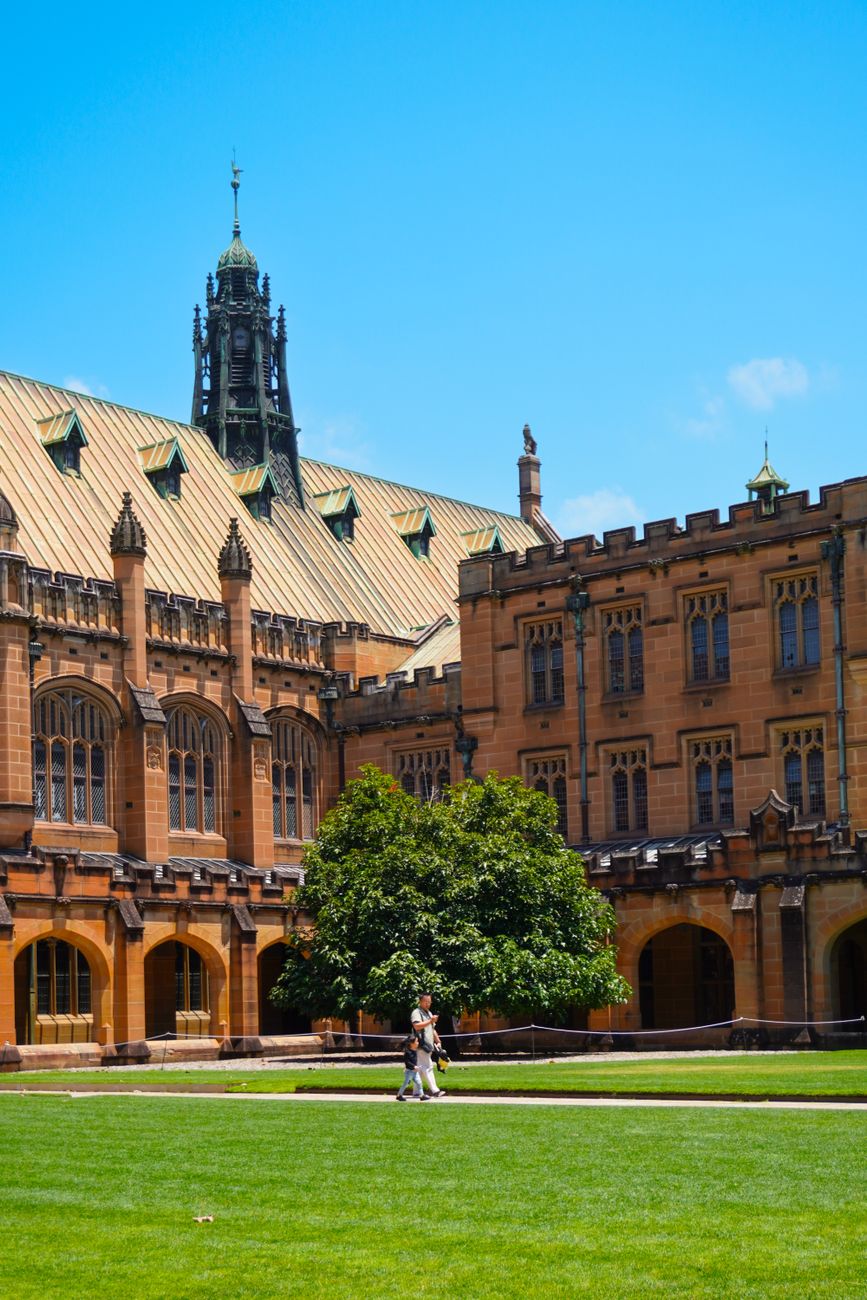
UK A-level students with at least two passes at grade E or higher can typically enter a Diploma program (equivalent to first-year university). IB students with a minimum score of 24 points are eligible for most Advanced Diploma programs. American students with a high school GPA of 2.5 and SAT scores of 1000 or above (or ACT 20) can also apply directly. These pathways allow students to complete a vocational qualification in 1–2 years, then articulate into the second year of a related bachelor’s degree at an Australian university.
For example, a Diploma of Business from an ASQA-accredited RTO can lead to entry into the second year of a Bachelor of Commerce at many universities. Over 40 Australian universities now have formal articulation agreements with ASQA-accredited providers, according to Universities Australia’s 2026 Pathways Report. Students should confirm these arrangements before enrolling, as credit transfer policies vary by institution.
Scholarships and Financial Support for International Students
Scholarships for international students in vocational courses are less common than for university degrees, but they do exist. As of 2026, the Australian government offers the Australia Awards VET Scholarship, which covers full tuition and living expenses for 50 students annually from eligible countries, including the UK, US, and Canada. The application deadline is 30 April each year.
Industry-specific scholarships are available through professional bodies. CPA Australia, for instance, offers the CPA Australia Scholarship for International Students, valued at AUD 5,000, for students enrolled in an ASQA-accredited Diploma of Accounting. Engineers Australia provides the Engineering Pathways Scholarship of AUD 3,000 for students in a Diploma of Engineering (Advanced). These scholarships require a minimum GPA of 3.0 and evidence of English proficiency (IELTS 6.5 or equivalent).
Many RTOs also offer merit-based scholarships ranging from AUD 2,000 to AUD 10,000 per year. For example, TAFE Queensland and TAFE NSW—both ASQA-accredited—award up to 200 international student scholarships annually, covering 20–50% of tuition fees. Students should check individual RTO websites for deadlines, typically between August and November for the following academic year.
Professional Accreditation: CPA Australia, Engineers Australia, and MBBS Pathways
ASQA-accredited vocational courses can serve as stepping stones to professional accreditation in fields like accounting, engineering, and medicine. The key is selecting a course that aligns with the professional body’s requirements.
CPA Australia recognises Diploma of Accounting qualifications from ASQA-accredited RTOs as meeting the academic entry requirements for the CPA Program. As of 2026, CPA Australia accepts 15 specific Diploma programs from 12 RTOs. Graduates can then complete the CPA Program (six exams) and three years of supervised work experience to become a Certified Practising Accountant. The pathway typically takes 3–4 years total.
Engineers Australia accredits Advanced Diploma of Engineering qualifications under the Sydney Accord, which allows graduates to work as engineering technologists in Australia and 12 other countries. As of 2026, Engineers Australia lists 22 ASQA-accredited Advanced Diploma programs that meet the educational requirements for membership at the Engineering Technologist level. Graduates can then apply for the Skilled Occupation List (SOL) occupation of Engineering Technologist (ANZSCO 233914).
For MBBS pathways, vocational courses are not direct entry routes, but they can support pre-medical requirements. A Diploma of Health Science (12 months) from an ASQA-accredited RTO can satisfy prerequisite subjects for some undergraduate medical programs. For example, the University of Queensland and University of Sydney accept Diploma of Health Science graduates into their Bachelor of Medical Studies programs, provided the student achieves a GPA of 5.5 or above and meets GAMSAT or UCAT requirements.
International Student Rights and On-Campus Housing
International students in ASQA-accredited vocational courses have the same rights as university students under the Education Services for Overseas Students (ESOS) Act 2000. Key protections include the right to a refund if the course is cancelled, access to a free complaints process through the Overseas Students Ombudsman, and the requirement that RTOs provide a “fit-for-purpose” learning environment.
On-campus housing is available at many RTOs, particularly those affiliated with universities or large public TAFE institutions. As of 2026, approximately 35% of ASQA-accredited RTOs with international enrolments offer on-campus accommodation. Costs range from AUD 200 to AUD 400 per week for shared rooms and AUD 350 to AUD 600 for single rooms. Examples include TAFE NSW’s Sydney campus (AUD 280 per week for a shared room) and TAFE Queensland’s Brisbane campus (AUD 320 per week).
Students living off-campus should budget AUD 250–500 per week for private rental, depending on city and proximity to the RTO. Melbourne and Sydney are the most expensive cities, with median rents of AUD 450 and AUD 480 per week, respectively, for a one-bedroom apartment near the city centre. Regional RTOs, such as those in Adelaide or Hobart, offer lower costs, with median rents around AUD 300–350 per week.
Post-Study Work Rights and Visa Pathways
Graduates of ASQA-accredited vocational courses may be eligible for the Temporary Graduate visa (subclass 485) if they complete a qualification at Diploma, Advanced Diploma, or Graduate Diploma level. As of July 2026, the post-study work period for VET graduates is 18 months for Diploma holders and 24 months for Advanced Diploma holders. This is shorter than the 2–4 years available to bachelor’s degree graduates, but it allows graduates to gain Australian work experience.

The Skilled Occupation List (SOL) includes around 200 occupations that VET graduates can target. For example, a Diploma of Automotive Technology can lead to a Motor Mechanic (ANZSCO 321211) visa pathway, while an Advanced Diploma of Hospitality Management can support a Chef (ANZSCO 351311) application. The Department of Home Affairs reported in 2025 that 65% of VET graduates who applied for the 485 visa within 12 months of course completion were granted the visa.
Students should note that ASQA accreditation does not guarantee a visa pathway. The course must be on the CRICOS register, and the occupation must be on the relevant skilled occupation list. As of 2026, the Australian government has tightened requirements, requiring VET graduates to have at least 12 months of post-study work experience before applying for permanent residency through the General Skilled Migration (GSM) program.
FAQ
Q1: How long does ASQA accreditation last, and how can I verify it?
ASQA registration for an RTO is valid for up to five years, with annual compliance reports required. To verify a course’s ASQA accreditation, visit the national register at training.gov.au. As of February 2026, the register lists 4,212 active RTOs. You can search by RTO name or course code. For student visa eligibility, also check CRICOS at cricos.education.gov.au. Only courses listed on both registers are valid for international student visas.
Q2: Can I use a UK A-level or US high school diploma to enter an ASQA-accredited Diploma program?
Yes. UK A-level students with at least two passes at grade E or higher are eligible for Diploma programs. IB students with a minimum score of 24 points can enter Advanced Diploma programs. US students with a high school GPA of 2.5 and SAT score of 1000 (or ACT 20) are accepted. These pathways are standard across ASQA-accredited RTOs, but individual RTOs may set higher requirements. As of 2026, the acceptance rate for international students with these qualifications is approximately 85% for Diploma programs, according to ASQA’s 2025–26 Annual Report.
Q3: What are the tuition fees for ASQA-accredited vocational courses in 2026?
Tuition fees vary by course and RTO. For Diploma programs, fees range from AUD 8,000 to AUD 15,000 per year. Advanced Diploma programs cost AUD 10,000 to AUD 20,000 per year. Graduate Diploma programs (12 months) range from AUD 12,000 to AUD 25,000. For example, a Diploma of Business at TAFE NSW costs AUD 12,000 per year, while a Diploma of Information Technology at a private RTO in Sydney costs AUD 14,500 per year. These fees are typically 30–50% lower than equivalent university bachelor’s degree fees.
References
- Australian Skills Quality Authority, 2026, ASQA Annual Report 2025–26
- Department of Home Affairs, 2026, Student Visa and Temporary Graduate Visa Statistics
- Universities Australia, 2026, Pathways and Articulation Report
- CPA Australia, 2026, Recognition of Vocational Qualifications for CPA Program Entry
- Engineers Australia, 2026, Accreditation of Engineering Technology Programs