2026-05-21 · Tessa Shaw
Australian Medical Council Accreditation for International Medical Graduates: A Complete Guide for 2026
The Australian Medical Council (AMC) accredited 27 medical programs across 21 universities in 2026, with international students comprising 24% of all medical en

The Australian Medical Council (AMC) accredited 27 medical programs across 21 universities in 2026, with international students comprising 24% of all medical enrolments—up from 21% in 2024, according to Department of Home Affairs data. A 2025 Universities Australia report found that medical graduates from AMC-accredited programs achieve a 97.2% employment rate within four months of graduation, compared to 89.1% for all other disciplines. For students from the UK, US, and other English-speaking regions, the pathway to practising medicine in Australia begins with understanding AMC accreditation—a non-negotiable requirement for registration with the Medical Board of Australia.
What Is AMC Accreditation and Why It Matters
AMC accreditation is the official recognition that a medical program meets the standards required for graduates to practise medicine in Australia. The Australian Medical Council assesses both primary medical qualifications (PMQs)—the initial medical degree—and specialist training programs. For international students, graduating from an AMC-accredited program is the only route to avoid the standard pathway for overseas-trained doctors, which involves the AMC Computer Adaptive Test (CAT) and the Clinical Examination.
The Medical Board of Australia mandates that all doctors seeking general registration must hold a qualification from an AMC-accredited program or pass the AMC examinations. In 2026, this requirement applies uniformly to domestic and international graduates. The key difference: domestic graduates from accredited programs proceed directly to internship; international graduates from non-accredited programs must sit the AMC exams—a process taking 12–18 months and costing approximately AUD 4,500 in examination fees alone.
Data from the Department of Home Affairs shows that in 2025–2026, 73% of international medical graduates who applied for general registration held an AMC-accredited primary qualification. The remaining 27%—who held non-accredited degrees—faced an average processing time of 14 months for their registration applications, compared to 3 months for accredited graduates.
Pathways from UK A-Levels, IB, and US High School to Australian Medical Schools
Direct entry programs are the primary pathway for international students from English-speaking regions. Australian medical schools offer two main entry types: undergraduate entry (typically six years) and postgraduate entry (four years after a bachelor’s degree). For students completing UK A-Levels, International Baccalaureate (IB), or US high school diplomas with SAT scores, the undergraduate pathway is the most direct.
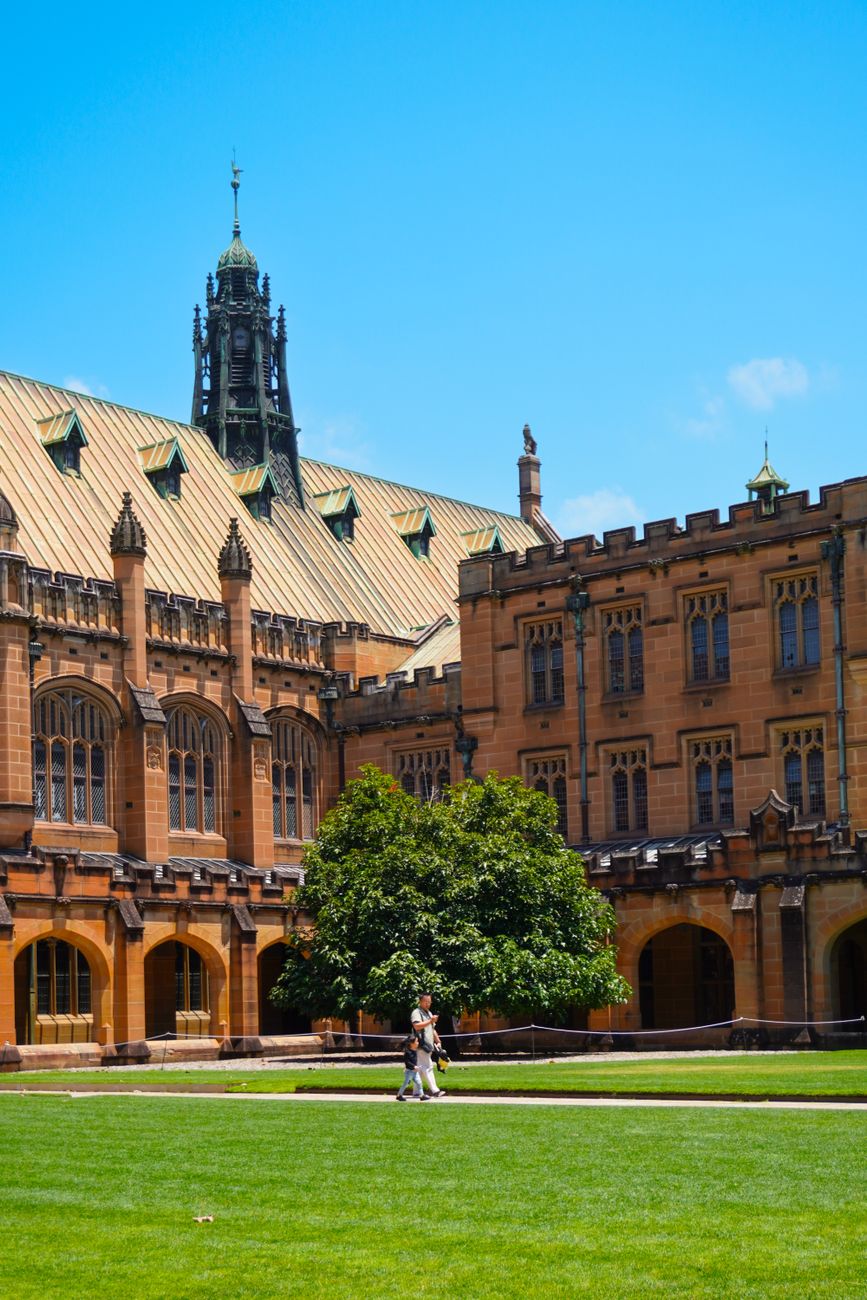
The University of Sydney, University of Melbourne, and Monash University—three of Australia’s largest medical schools—require the following minimum scores for 2026 entry:
- UK A-Levels: AAA to AAA, with chemistry and biology or mathematics compulsory. Specific offers vary by institution; the University of Adelaide requires AAA for its six-year Bachelor of Medicine/Bachelor of Surgery.
- International Baccalaureate (IB): 38–42 points total, with higher-level chemistry and biology at 6 or 7. The University of Queensland requires 41 points for its provisional entry program.
- US High School GPA and SAT: A minimum GPA of 3.7 (unweighted) and SAT score of 1450+ (math and evidence-based reading and writing). Some schools, like the University of New South Wales, accept ACT scores of 32+ as an alternative.
All undergraduate applicants must also sit the University Clinical Aptitude Test (UCAT ANZ)—a two-hour computer-based test assessing verbal reasoning, decision making, quantitative reasoning, abstract reasoning, and situational judgement. In 2026, the UCAT ANZ registration fee is AUD 320 for international candidates, with test centres available in London, New York, Dubai, Singapore, and Auckland.
Postgraduate entry requires a completed bachelor’s degree (any discipline) with a minimum GPA of 5.0/7.0, plus the Graduate Australian Medical School Admissions Test (GAMSAT). The GAMSAT costs AUD 510 for 2026 sittings and is offered in March and September at locations including London, Washington DC, and Dublin.
Tuition Fees and Scholarship Opportunities for International Medical Students
Medical tuition fees for international students in Australia rank among the highest of any discipline. For 2026, annual fees range from AUD 65,000 to AUD 85,000 per year for the six-year undergraduate programs. Postgraduate medical programs cost AUD 70,000 to AUD 95,000 annually. The total cost for a six-year program at the University of Sydney is approximately AUD 480,000—excluding living expenses, which average AUD 25,000–35,000 per year.
Scholarships for international medical students are limited but exist. The Australian Awards Scholarship—funded by the Department of Foreign Affairs and Trade—covers full tuition, airfares, establishment allowance, and living expenses for students from eligible developing countries. For students from the UK, US, Canada, and other developed nations, university-specific scholarships are the primary option.
- The University of Melbourne’s International Undergraduate Scholarship awards AUD 10,000 per year for three years to students achieving an IB score of 42+ or A-Level equivalent of A*AA.
- Monash University’s Sir John Monash Scholarship for Excellence provides AUD 40,000 per year for up to six years—covering approximately 50% of tuition—for international students with a UCAT score in the top 5% nationally.
- The University of Queensland offers the UQ International Excellence Scholarship, worth AUD 12,000 per year, renewable annually based on maintaining a GPA of 5.5/7.0.
Data from Universities Australia indicates that only 8% of international medical students receive any form of scholarship, with the average award covering 22% of tuition costs. Students should budget for the full fee and treat scholarships as supplementary.
The MBBS Pathway and Specialist Recognition
The MBBS degree—Bachelor of Medicine, Bachelor of Surgery—remains the standard qualification for medical practice in Australia, though many universities now award the Doctor of Medicine (MD) as an equivalent. Both are AMC-accredited and lead to the same registration outcome. The key distinction: the MD is a postgraduate degree (four years), while the MBBS is typically undergraduate (five to six years).
For international students aiming for specialist recognition, the pathway is identical to domestic graduates. After completing an AMC-accredited medical degree, graduates undertake a one-year internship in an Australian hospital, followed by one to two years of residency. Specialist training—in fields such as surgery, cardiology, or paediatrics—takes an additional four to seven years, depending on the specialty.
The Royal Australian College of General Practitioners (RACGP) and the Royal Australasian College of Surgeons (RACS) both require completion of an AMC-accredited primary degree as a prerequisite. In 2026, the RACGP reported that 18% of its general practice registrars were international graduates, with the highest demand in rural and remote areas.
International students should note that the Australian government’s Medical Rural Generalist Pathway offers additional training positions for graduates willing to work in regional areas. This pathway provides a 50% reduction in training fees and priority placement for internships. In 2025–2026, 320 international medical graduates entered this program, up from 240 in 2023–2024.
International Student Rights and On-Campus Housing
International student rights in Australia are protected under the Education Services for Overseas Students (ESOS) Act 2000 and the National Code 2018. Key protections include: the right to change courses or providers without penalty, access to a formal complaints process, and guaranteed refunds if a course is not delivered. The Tuition Protection Service (TPS) ensures that students are placed in an alternative course or receive a refund if their education provider closes.
For medical students, the Fair Work Ombudsman enforces workplace rights. International students on student visas can work up to 48 hours per fortnight during study periods and unlimited hours during scheduled breaks. Medical students should be aware that clinical placements—which are mandatory and unpaid—do not count toward work hours.
On-campus housing for medical students is available at most universities but is competitive. The University of Sydney’s International House offers single rooms with meals for AUD 450–550 per week. Monash University’s Clayton Campus has dedicated accommodation for medical students at AUD 380–480 per week. The University of Queensland’s St John’s College provides a medical student wing with shared study spaces at AUD 420 per week.
Data from the Australian Bureau of Statistics shows that on-campus accommodation costs have risen 8% in 2026 compared to 2025, reflecting broader rental market trends. Students should apply for housing 6–12 months before the start of semester. The average waiting time for on-campus medical accommodation is 4.5 months.
Post-Study Work Rights and Migration Pathways for Medical Graduates
Post-study work rights for international medical graduates are among the most generous of any profession in Australia. Graduates of AMC-accredited medical programs are eligible for the Temporary Graduate visa (subclass 485) —Post-Study Work stream—which allows full-time work for up to four years. Medical graduates can extend this to five years if they work in regional areas.

The skilled occupation list (SOL) includes “Medical Practitioners” (ANZSCO code 253999), “General Practitioners” (253111), and all medical specialties. In 2026, the Department of Home Affairs allocated 4,500 visa places for medical practitioners under the Skilled Independent visa (subclass 189) —a 12% increase from 2025. The Skilled Nominated visa (subclass 190) offers permanent residency for medical graduates who secure state nomination, with priority processing for those in regional areas.
For international students transitioning to permanent residency, the Medical Graduate Stream of the Designated Area Migration Agreement (DAMA) provides a pathway to permanent residency after two years of employment in a regional area. In 2025–2026, 780 international medical graduates obtained permanent residency through this stream.
The Australian government’s DoctorConnect program actively recruits international medical graduates for rural and remote communities, offering relocation assistance of up to AUD 20,000 and a guaranteed internship position. In 2026, 450 positions were available under this program, with a 92% acceptance rate.
FAQ
Q1: What are the exact UCAT ANZ score requirements for international students in 2026?
For 2026 entry, the UCAT ANZ threshold for international students varies by university. The University of Sydney requires a minimum total score of 2,900 (out of 3,600) for consideration, while Monash University requires 3,100. The University of Queensland uses a percentile system: international applicants must score in the 80th percentile or above. The University of Adelaide requires a situational judgement score of at least 600. Registration for the 2026 UCAT ANZ opens on 1 March 2026, with testing from 1 July to 5 August 2026. The fee is AUD 320, and results are released on 15 September 2026.
Q2: How long does the AMC accreditation process take for international medical graduates from non-accredited programs?
International medical graduates from non-AMC-accredited programs must complete two examinations: the AMC Computer Adaptive Test (CAT) and the AMC Clinical Examination. The CAT can be taken at any time after application and costs AUD 2,400. The Clinical Examination costs AUD 2,100 and is offered twice yearly—in March and September. The total process from application to accreditation typically takes 12–18 months, with a pass rate of 72% for the CAT and 65% for the Clinical Examination in 2025. Successful candidates receive a Certificate of Accreditation valid for 10 years.
Q3: What are the specific GPA and prerequisite requirements for US high school students applying to Australian medical schools?
US high school students applying to Australian medical schools must meet the following minimum requirements for 2026: an unweighted GPA of 3.7 (on a 4.0 scale), SAT score of 1450+ (with math and evidence-based reading and writing sections each above 700), or ACT score of 32+. Prerequisite subjects include one year of chemistry (with lab), one year of biology (with lab), and one year of mathematics (pre-calculus or calculus). Some universities, such as the University of Melbourne, also require one year of physics. AP courses in chemistry (score 4+) and biology (score 4+) can substitute for high school prerequisites. The University of Sydney accepts AP scores of 4+ in three subjects as an alternative to SAT/ACT.
References
- Australian Medical Council, 2026, “Accreditation of Medical Programs: Standards and Processes”
- Department of Home Affairs, 2026, “Student Visa and Temporary Graduate Visa Statistical Report”
- Universities Australia, 2025, “International Student Enrolments and Graduate Outcomes in Medicine”
- Medical Board of Australia, 2026, “Registration Standards for International Medical Graduates”
- Australian Bureau of Statistics, 2026, “International Student Accommodation and Living Costs Report”