2026-05-21 · Alex Fong
Australian Catholic University vs University of Sydney Nursing Program: A 2026 Comparative Analysis
ACU and USyd both run AHPRA-accredited nursing degrees in Sydney, but tuition, placement structure and campus setting differ. what applies for 2026 entry.

Sydney, Australia — Nursing remains one of the most consistently in-demand professions in Australia, with Registered Nurse (ANZSCO 254412) sitting on the Medium and Long-term Strategic Skills List (MLTSSL) and hospital systems across every state reporting ongoing workforce shortfalls. Two Sydney-based providers sit at opposite ends of the market: the Australian Catholic University (ACU), a non–Group of Eight university with a placement-heavy, community-oriented model, and the University of Sydney (USyd), a Group of Eight research university with a research-integrated nursing degree. For international students weighing cost, campus environment and career pathway, the two programs represent genuinely different propositions rather than a simple “which is better” comparison.
Admissions Pathways for Global English Readers
Entry requirements differ meaningfully because ACU and USyd sit in different competitiveness tiers. UK A-level applicants: ACU’s Bachelor of Nursing typically asks for mid-range grades with a science subject preferred; USyd’s nursing program, as a Go8 degree, sets a materially higher bar and expects strong performance in a science subject. IB students: ACU’s published minimum entry points sit well below USyd’s, which is common across non-Go8 versus Go8 comparisons in Australia. North American applicants: both universities assess secondary school GPA and standardised test scores case by case through their international admissions teams — ACU’s thresholds are generally more accessible, USyd’s less so.
English language requirements are close for both, because AHPRA registration standards apply regardless of provider: IELTS 7.0 overall with no band below 6.5–7.0 (exact band requirements are set per intake and should be checked on each university’s current admissions page, since AHPRA’s English standards are reviewed periodically). Applicants without A-level, IB or an equivalent qualification typically need a recognised foundation or diploma pathway before entry — both ACU and USyd publish current pathway options on their course pages, and fees for these vary by intake.
Scholarship availability: ACU has for several years offered a nursing-specific tuition scholarship at its Ballarat campus (around 15% of tuition for commencing international students in nursing) alongside its broader merit-based international scholarships. USyd’s scholarship offer for nursing changes by intake and is administered through the university’s central scholarships portal rather than a nursing-specific fixed award. Both figures move year to year — confirm the current offer on each university’s official scholarships page before applying, rather than relying on a fixed percentage.
Visa implications: Nursing’s presence on the MLTSSL gives graduates a stronger PR pathway than many other degrees, and from the 2025 policy round the Temporary Graduate (subclass 485) Post-Higher Education Work stream extends work rights for select bachelor’s degrees in verified skills-shortage areas from two years to four — nursing qualifies under this expanded settings. Note the 2026 age-limit change: most 485 applicants must be under 35 at the time the Department receives the application (with narrow exceptions for research higher degrees). Confirmation of Enrolment (CoE) timelines vary by intake completeness at both universities rather than following a fixed two-week rule.
Curriculum Design and Clinical Placement Structure
ACU’s Bachelor of Nursing is a three-year, ANMAC-accredited program delivered across ACU’s Sydney (North Sydney), Melbourne, Brisbane, Canberra and Ballarat campuses. ACU’s own published figures describe five clinical placements totalling approximately 800 hours of professional experience across a range of healthcare settings, which meets ANMAC’s accreditation requirements for entry-to-practice registration. ACU maintains simulation facilities across its health campuses that replicate ward environments for skills training before students go on placement.
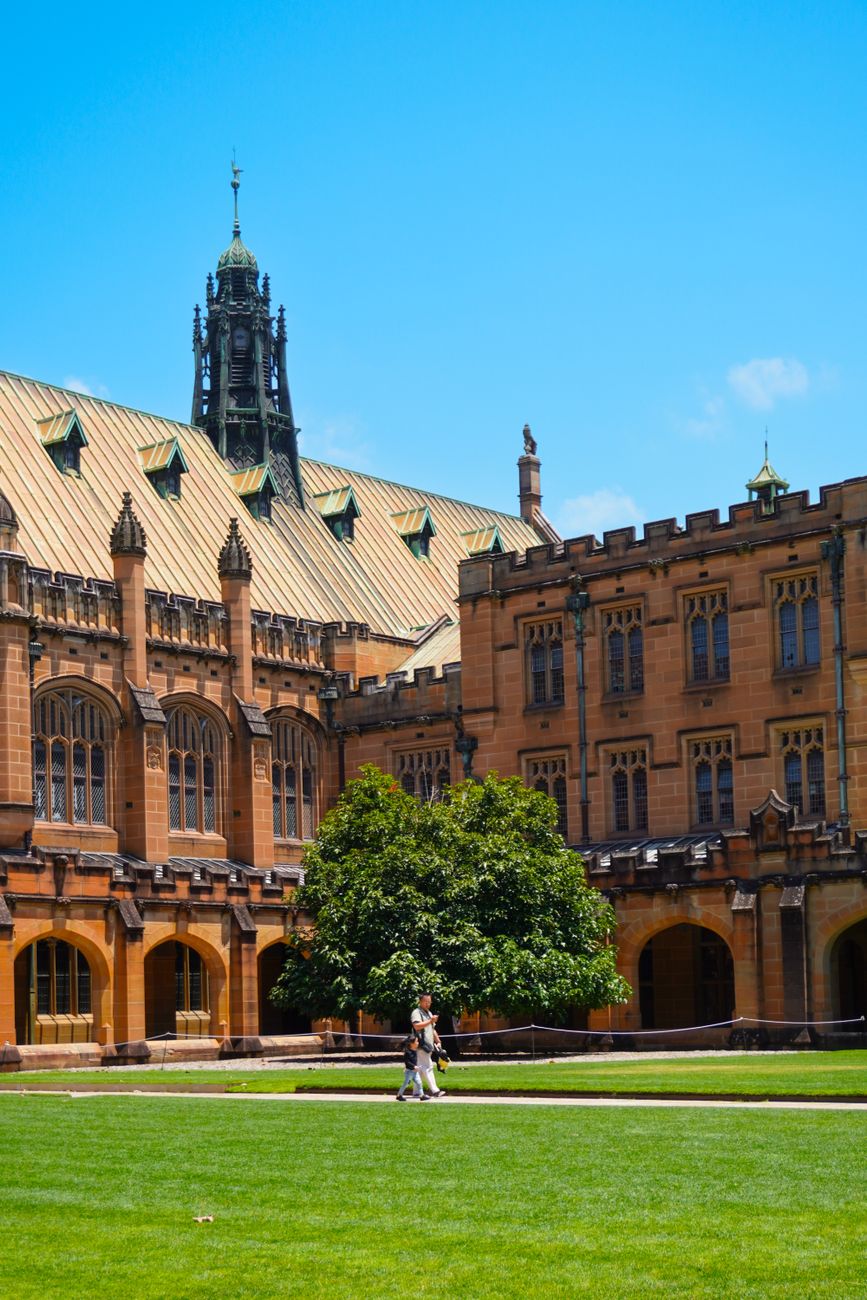
USyd’s Bachelor of Nursing (Advanced Studies) is also a three-year, AHPRA/ANMAC-accredited degree, delivered at USyd’s Camperdown campus. It is positioned as a research-integrated degree — students engage with research methodology from earlier in the course and can pursue a capstone research component, which is more typical of the Go8 nursing model. USyd also offers global-health-elective options in some years, subject to availability and additional cost.
Key difference: ACU’s model emphasises broad, hands-on clinical exposure spread across five placement blocks; USyd’s model integrates research training alongside clinical placement and suits students who may later pursue postgraduate research, a Nurse Practitioner pathway, or nursing leadership roles. Neither structure is objectively “better” — the right fit depends on whether a student’s priority is maximum clinical hours in varied settings or an academically research-integrated pathway.
AHPRA registration for graduates of both programs follows the standard domestic pathway: on completing an ANMAC-accredited Bachelor of Nursing, graduates apply directly for AHPRA registration as a Registered Nurse — they do not sit the NCLEX-RN. NCLEX-RN and the OSCE clinical exam apply only to a separate pathway for nurses who trained and are already registered overseas (the Outcomes Based Assessment route); as of the April 2025 policy update, applicants from the UK, US, Canada and Ireland with at least 1,800 hours of recent clinical experience can in some cases bypass NCLEX-RN/OSCE entirely under that overseas-qualified pathway. This distinction matters: it does not apply to students completing a full Australian nursing degree at ACU or USyd.
Tuition, Living Costs, and On-Campus Housing
Tuition differs substantially between the two. On ACU’s published international fee schedule, the Bachelor of Nursing sits at roughly AUD 39,280 per year at 2026 rates (ACU has not yet released its full 2027 schedule at the time of writing — check ACU’s current international tuition fees page, since ACU sets a fixed rate for a course’s minimum duration at the point of commencement). USyd’s Bachelor of Nursing (Advanced Studies) is reported by third-party admissions aggregators at roughly AUD 46,900 for first-year international students entering in 2027 — this figure should be confirmed directly against USyd’s official international tuition fee schedule before budgeting, as Go8 nursing fees are typically reviewed annually.
Over a three-year degree, the gap between the two adds up to a meaningful five-figure difference in tuition alone, before living costs. The Department of Home Affairs publishes an annual minimum living-cost figure used for visa financial-capacity checks (roughly the high-AUD-20,000s per year as of recent settings) — applicants should use the current published Home Affairs figure rather than an older estimate, since it is indexed periodically.
Living costs and housing: ACU’s North Sydney campus and USyd’s Camperdown campus sit in different rental markets, with North Sydney generally the more affordable of the two for shared housing. Both universities offer on-campus or partnered student accommodation with priority access for first-year international students who apply early — exact weekly rates change each year and are best checked on each university’s current accommodation page rather than quoted as a fixed figure here. Compulsory Overseas Student Health Cover (OSHC) is required at both institutions for the length of the student visa; rates are set by OSHC providers and reviewed regularly, so use a current quote rather than a prior year’s price.
Post-Study Work Rights and Migration Pathways
Graduate visa eligibility is broadly the same for graduates of either program: nursing’s MLTSSL listing supports a Temporary Graduate visa (subclass 485) application, and because nursing sits in a verified skills-shortage area, eligible bachelor’s-degree graduates fall under the extended Post-Higher Education Work stream (up to four years, rather than the standard two) introduced from the 2025 policy round. As above, most applicants must be under 35 at the time the Department receives the application.
Skilled migration: Registered Nurse is a long-standing MLTSSL occupation, supporting both the Skilled Independent visa (subclass 189) and state/territory nomination pathways (subclass 190/491), plus employer sponsorship (subclass 186) where a genuine job offer exists. Regional or rural clinical placements and regional employment after graduation can add points under the regional migration settings for either ACU or USyd graduates — this is a function of where a graduate works after registration, not which university they attended. Skilled migration points thresholds change by invitation round — check the current Department of Home Affairs SkillSelect figures rather than a fixed historical number before assuming eligibility.
Salary expectations: New graduate Registered Nurse salaries in NSW public hospitals are set under the state’s public health sector award and reviewed periodically; check the current NSW Health award rate for an accurate figure rather than a historical estimate, since award rates are indexed and vary by year of experience and location (metropolitan vs regional).
International Student Rights and Support Services
Education Services for Overseas Students (ESOS) Act protections apply equally to students at ACU and USyd. Both universities are covered by the Tuition Protection Service (TPS), which places students in an equivalent program (or arranges a refund) if their institution is unable to continue teaching a course. Both comply with the National Code, requiring orientation, academic support and welfare services for international students.
ACU’s international student support runs through its central International Student Support team, with nursing students able to access placement-specific advice from the School of Nursing, Midwifery and Paramedicine. ACU’s North Sydney campus provides standard campus security and student welfare services common to Australian university campuses.
USyd’s international student support runs through its Student Centre and central international student services, including visa and welfare advice, a bulk-billing-linked Health Service, and a free short-term counselling service through its Mental Health Hub. Disability support services, including note-taking and exam adjustments, are available for nursing students with documented needs at both universities.
Work rights: International students on a valid student visa can work up to 48 hours per fortnight during teaching periods, with unrestricted hours during scheduled course breaks — confirm the current settings on the Department of Home Affairs student visa work conditions page, as fortnightly caps have been adjusted more than once in recent years. Both universities run a student jobs board that lists part-time clinical-adjacent roles (nursing assistant, aged care support) at partner health services, though availability is competitive and varies by semester.
Career Outcomes and Employer Reputation
Nursing graduates from AHPRA-accredited Australian programs — including both ACU and USyd — are broadly employable across the public and private hospital system, aged care, and community health settings, reflecting the national shortage rather than a university-specific outcome. ACU’s model, with its emphasis on early and extensive clinical placement across multiple settings, is often cited by rural and regional health services as well-matched to generalist ward-based roles. USyd’s research-integrated model is more commonly the entry point for graduates who go on to postgraduate study — a Master of Nursing (Nurse Practitioner) pathway, for example — or into nursing leadership and policy roles.
Postgraduate pathways: USyd offers direct entry from its Bachelor of Nursing (Advanced Studies) into postgraduate nursing programs including Nurse Practitioner training. ACU offers postgraduate nursing study including honours and graduate diploma options for students who want to add a research or specialisation component after their undergraduate degree. Exact program length and current fees for postgraduate study should be checked on each university’s current course pages, since postgraduate nursing offerings are updated periodically at both institutions.
International registration recognition: Graduates of ACU and USyd nursing degrees typically need to complete additional registration steps to practise in other countries — for example, engaging with the Nursing and Midwifery Council (UK) registration process, or with the relevant US state board for those pursuing NCLEX-RN in the US context. Requirements change by destination country and should be confirmed with that country’s regulator directly rather than assumed from an Australian qualification alone.
Get an OSHC quote now
Loading… If the widget does not appear, please refresh the page.

FAQ
Q1: What are the entry requirements for UK A-level and IB students applying to ACU versus USyd nursing programs?
ACU’s Bachelor of Nursing sets a more accessible entry bar than USyd’s Bachelor of Nursing (Advanced Studies), which as a Go8 degree is more competitive and typically requires a science subject at a stronger grade. Both accept IB, and both expect IELTS 7.0 overall to meet AHPRA’s English standard, though exact band requirements should be checked on each university’s current admissions page. Students without A-levels, IB or an equivalent should check each university’s current foundation or diploma pathway options and fees, as these are reviewed each intake.
Q2: How does the total cost compare between ACU and USyd for a three-year nursing degree?
At current published rates, ACU’s Bachelor of Nursing sits at roughly AUD 39,280 per year (2026 international fee schedule; 2027 rates were not yet published at the time of writing). USyd’s Bachelor of Nursing (Advanced Studies) is reported by third-party sources at roughly AUD 46,900 for a 2027-entry first year. Over three years this is a meaningful tuition gap before living costs, which should be estimated using the Department of Home Affairs’ current annual minimum living-cost figure rather than an older estimate. Confirm both universities’ current fee schedules directly before budgeting, since international tuition is reviewed annually.
Q3: Do ACU and USyd nursing graduates have the same post-study work and migration options?
Yes, in the sense that both are AHPRA/ANMAC-accredited nursing degrees and Registered Nurse sits on the MLTSSL regardless of which university a graduate attended. Eligible bachelor’s-degree nursing graduates from either institution can access the extended Temporary Graduate visa (subclass 485) Post-Higher Education Work stream (up to four years under current skills-shortage settings), subject to the current age limit (most applicants must be under 35 at application). Skilled migration options — subclass 189/190/491/186 — depend on points, nomination and employer sponsorship rather than which university the applicant attended; current thresholds should be checked on SkillSelect before assuming eligibility.
References
- Australian Catholic University, 2026, Bachelor of Nursing course page and international fee schedule, acu.edu.au
- The University of Sydney, 2026, Bachelor of Nursing (Advanced Studies) course page, sydney.edu.au
- Australian Health Practitioner Regulation Agency / Nursing and Midwifery Board of Australia, 2026, Registration standards and overseas-qualified nurse pathway updates
- Australian Government Department of Home Affairs, 2026, Temporary Graduate visa (subclass 485) settings and SkillSelect occupation lists
- Australian Government Department of Jobs and Skills Australia, 2026, Medium and Long-term Strategic Skills List (MLTSSL)