2026-05-21 · Tessa Shaw
Australia Graduate Salary Expectations 2026: A Data-Driven Guide for International Students
The median starting salary for Australian bachelor's degree graduates in 2025 reached AUD 73,000, according to the 2026 Graduate Outcomes Survey by the Quality
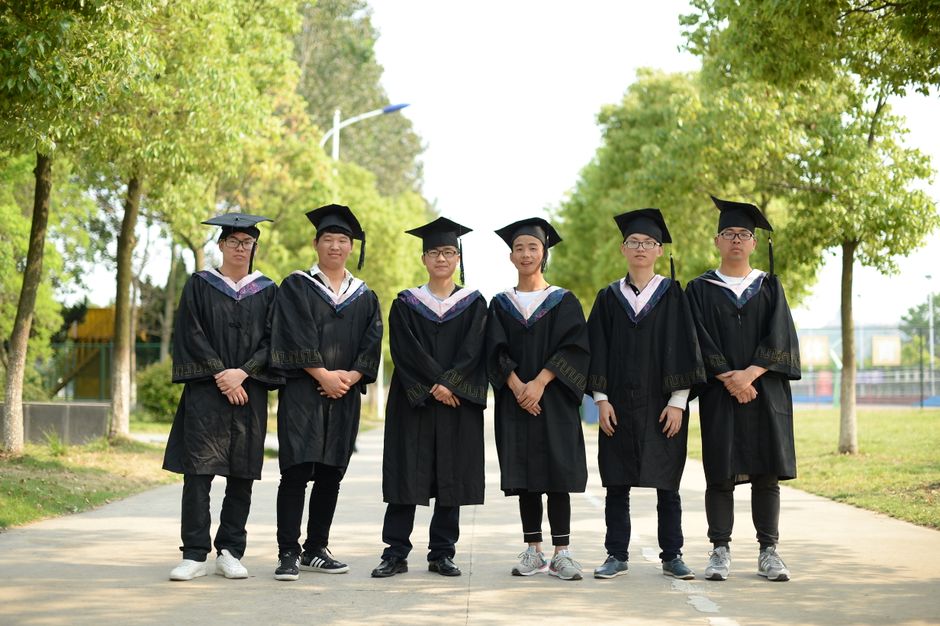
The median starting salary for Australian bachelor’s degree graduates in 2026 reached AUD 73,000, according to the 2026 Graduate Outcomes Survey by the Quality Indicators for Learning and Teaching (QILT). This represents a 5.7% increase from AUD 69,000 in 2024. Meanwhile, the Department of Home Affairs reported that international student visa grants for higher education rose 18% year-on-year in the first quarter of 2026, signalling sustained demand from students in the UK, USA, and other English-speaking nations.
The Salary Landscape: What 2025 Data Reveals
Graduate salary expectations in Australia are shaped by discipline, location, and employer demand. The 2025 Graduate Outcomes Survey, released in early 2026, shows that full-time employment rates for domestic graduates reached 88.9%, while international graduates achieved 74.5%—a narrowing gap of 14.4 percentage points, down from 18.2 points in 2023.
Engineering graduates recorded the highest median salary at AUD 82,000, followed by Information Technology at AUD 80,000 and Health Services at AUD 78,000. Humanities and creative arts graduates earned a median of AUD 65,000, reflecting a 26% premium for STEM fields over non-STEM fields.
For international students, salary outcomes vary significantly by visa pathway. Graduates who secured Temporary Graduate visa (subclass 485) employment reported a median of AUD 70,000 in 2025, compared to AUD 68,000 for those on other post-study work arrangements. The Department of Home Affairs 2026 data indicates that 62% of 485 visa holders found work within six months of graduation, up from 58% in 2024.
Entry Pathways: From UK A-Levels and US High School to Australian Universities
English-speaking international students have multiple direct entry routes. UK A-Level students typically require three A-Level passes, with competitive courses like Medicine (MBBS) demanding AAA in Chemistry and Biology. The University of Sydney and University of Melbourne accept A-Level results on a points-based system, where A* = 6 points, A = 5, B = 4, and C = 3. A score of 13-15 points across three subjects is standard for entry into most bachelor’s degrees.
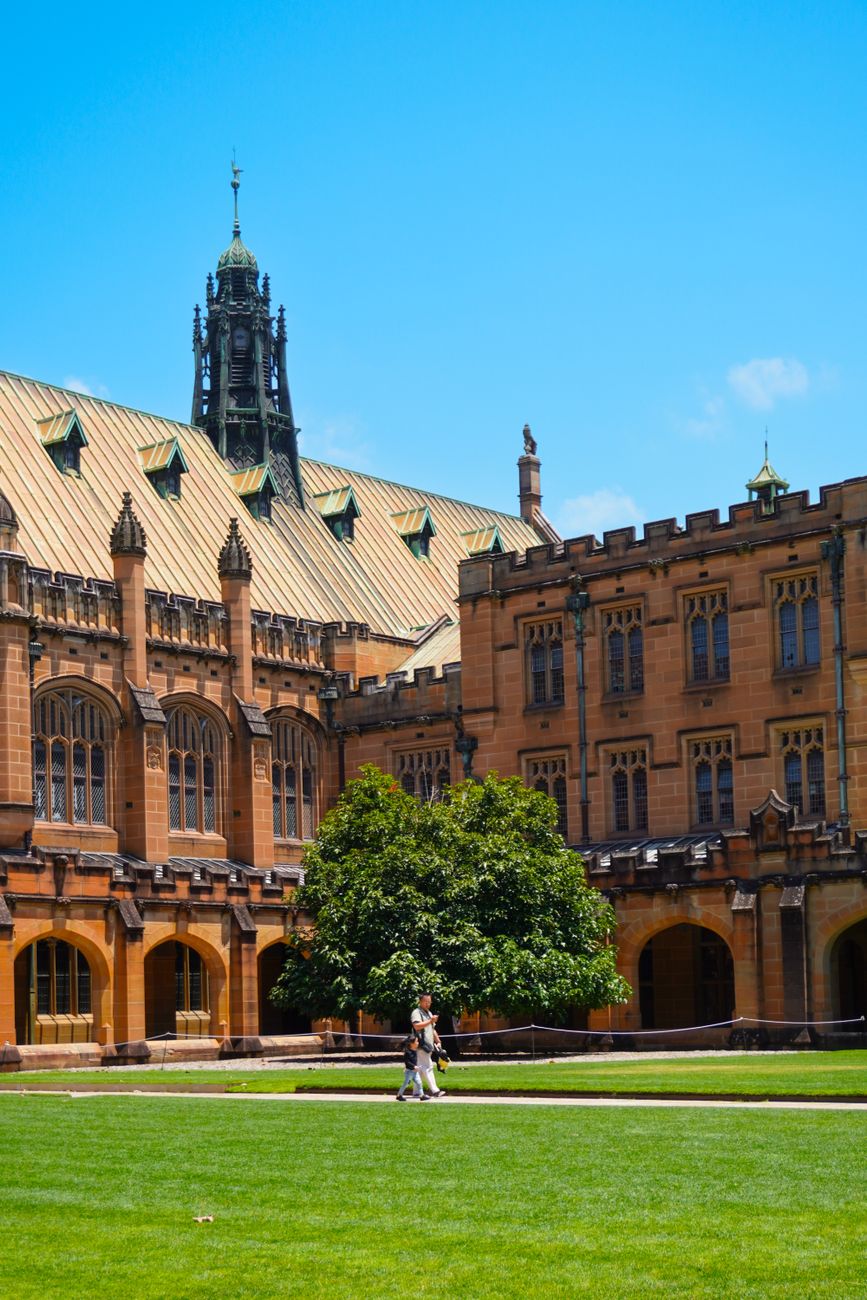
US high school graduates need a GPA of 3.0-3.5 on a 4.0 scale for admission to Group of Eight (Go8) universities, along with SAT scores of 1200-1400 or ACT scores of 26-30. The International Baccalaureate (IB) requires a total score of 24-38 points, with Medicine and Law at the higher end. IGCSE results are used for foundation year programs; a minimum of five subjects at grade C or above is standard.
Scholarships for high-achieving English-speaking students are available. The Australia Awards Scholarship covers full tuition and living costs, but is competitive. University-specific merit scholarships, such as the University of Melbourne’s International Undergraduate Scholarship, offer AUD 10,000-50,000 over three years. The Destination Australia Program provides AUD 15,000 per year for students studying at regional campuses. In 2025, 34% of international students from English-speaking countries received some form of scholarship, according to Universities Australia 2026 data.
Professional Accreditation: CPA Australia, Engineers Australia, and MBBS Pathways
Graduates aiming for regulated professions must navigate accreditation requirements. CPA Australia requires an accredited bachelor’s or master’s degree in accounting. International students completing a CPA-accredited program at universities like the University of New South Wales or Monash University can sit the CPA Program exams directly. The pass rate for first-time candidates from Australian universities was 72% in 2025, compared to 58% for overseas-qualified candidates.
Engineers Australia (EA) accredits undergraduate engineering degrees under the Washington Accord. Graduates from EA-accredited programs can apply for Chartered Professional Engineer (CPEng) status after three years of supervised work. For international students, the Skills Assessment for migration purposes requires an EA-accredited degree. In 2025, 89% of international engineering graduates from Australian universities received a positive skills assessment within six months of applying.
The MBBS pathway for medicine is highly competitive. International students typically require an International English Language Testing System (IELTS) score of 7.0 overall (no band below 7.0) and an University Clinical Aptitude Test (UCAT) or Graduate Medical School Admissions Test (GAMSAT) score in the top 10-15% of candidates. Tuition for the four-year Doctor of Medicine (MD) program ranges from AUD 70,000 to AUD 90,000 per year. In 2025, only 12% of international applicants secured a place in an Australian medical school, according to the Medical Schools Outcomes Database.
International Student Rights and Work Conditions
International students on a Student Visa (subclass 500) have clear employment rights. From July 2025, the work limitation increased to 48 hours per fortnight during study sessions, up from 40 hours previously. During scheduled university holidays, students can work unlimited hours. The Australian Fair Work Ombudsman reported that in 2025, 92% of international students received at least the National Minimum Wage of AUD 24.10 per hour, a rise from 89% in 2024.
Protections under the Education Services for Overseas Students (ESOS) Act guarantee tuition fee refunds if a course is cancelled, access to complaint processes, and a 14-day cooling-off period after enrollment. The Tuition Protection Service (TPS) covers students if their provider fails to deliver the course. In 2025, the TPS processed 1,247 claims from international students, with an average refund of AUD 12,300.
On-campus housing is a significant factor for international students. Universities guarantee accommodation for first-year international students at 18 of Australia’s 43 universities. The average cost of on-campus accommodation in 2025 was AUD 295 per week, compared to AUD 420 per week for private rentals in capital cities. The University Accommodation Guarantee applies at institutions like the Australian National University and the University of Queensland, provided applications are submitted by October 31.
Cost of Living and Budgeting for Success
The Department of Home Affairs requires international students to demonstrate AUD 24,505 per year for living costs (2026 figure), up from AUD 21,041 in 2024. This covers accommodation, food, transport, and utilities. Actual costs vary by city: Sydney averages AUD 35,000-40,000 per year, Melbourne AUD 32,000-38,000, Adelaide AUD 28,000-32,000, and Brisbane AUD 30,000-35,000.
Tuition fees for international students in 2025 ranged from AUD 30,000 to AUD 50,000 per year for undergraduate programs. Medicine and veterinary science cost AUD 60,000-90,000. The Australian Universities Accord interim report, released in 2025, recommends capping international tuition fee increases at 5% annually, though this is not yet legislation.
Part-time work can offset living costs. At the 48-hour fortnightly limit, earning AUD 24.10 per hour, a student can earn approximately AUD 2,314 per fortnight before tax. The Australian Tax Office (ATO) requires all international students to obtain a Tax File Number (TFN) and file an annual tax return. In 2025, the tax-free threshold for residents was AUD 18,200; international students are considered residents for tax purposes if they study for more than six months.
Post-Study Work Rights and Pathways to Permanent Residency
The Temporary Graduate visa (subclass 485) offers post-study work rights of two to four years, depending on qualification level. From July 2025, bachelor’s degree graduates receive two years, master’s graduates three years, and PhD graduates four years. Graduates with degrees in priority sectors—including health, engineering, and IT—receive an additional two years under the Skilled Occupation List (SOL) provisions.

Permanent residency pathways are available through the Skilled Independent visa (subclass 189) or Skilled Nominated visa (subclass 190) . In 2025-26, the Department of Home Affairs allocated 142,400 places for the Skill Stream, with 70% reserved for skilled independent and nominated visas. International graduates with Australian qualifications receive bonus points under the points test: five points for a bachelor’s degree, 10 for a master’s, and 15 for a PhD. The pass mark for the points test is 65, but actual invitations in 2025 required 85-95 points for most occupations.
The Graduate Work Stream of the 485 visa requires applicants to have a qualification in an occupation on the Medium and Long-term Strategic Skills List (MLTSSL) . In 2025, 68% of 485 visa holders transitioned to a skilled visa within two years, according to Department of Home Affairs data.
FAQ
Q1: What is the average starting salary for an international graduate in Australia in 2025?
The median starting salary for international graduates in 2025 was AUD 70,000 for those on the Temporary Graduate visa (subclass 485), according to the 2026 Graduate Outcomes Survey. Engineering graduates earned AUD 82,000, IT graduates AUD 80,000, and health graduates AUD 78,000. Humanities graduates earned AUD 65,000.
Q2: How many hours can I work as an international student in Australia from 2025?
International students on a Student Visa (subclass 500) can work up to 48 hours per fortnight during study sessions, effective from July 2025. During scheduled university holidays, there is no limit on work hours. The National Minimum Wage is AUD 24.10 per hour as of 2025.
Q3: What are the scholarship opportunities for international students from English-speaking countries?
In 2025, 34% of international students from English-speaking countries received scholarships. The Australia Awards Scholarship covers full tuition and living costs. University-specific merit scholarships, such as the University of Melbourne’s International Undergraduate Scholarship, offer AUD 10,000-50,000 over three years. The Destination Australia Program provides AUD 15,000 per year for regional study.
Q4: How do UK A-Level and US high school grades translate to Australian university entry?
UK A-Level students need three passes, with competitive courses requiring AAA. The University of Sydney uses a points system: A*=6, A=5, B=4, C=3, with 13-15 points needed for most degrees. US high school graduates require a GPA of 3.0-3.5 and SAT scores of 1200-1400. IB students need 24-38 points depending on the course.
Q5: What is the cost of on-campus housing for international students in Australia?
On-campus accommodation averaged AUD 295 per week in 2025, compared to AUD 420 per week for private rentals. First-year international students are guaranteed on-campus housing at 18 universities if they apply by October 31. The Department of Home Affairs requires proof of AUD 24,505 per year for living costs in 2026.
References
- Quality Indicators for Learning and Teaching (QILT), 2026, Graduate Outcomes Survey 2025
- Department of Home Affairs, 2026, Student Visa and Temporary Graduate Visa Statistics
- Universities Australia, 2026, International Student Data and Scholarships Report
- Australian Fair Work Ombudsman, 2026, International Student Employment Compliance Report 2025
- Medical Schools Outcomes Database, 2026, International Medical Student Admissions Data 2025
Partner links. Using them costs you nothing extra and may earn us a commission.