2026-05-21 · Diana Chu
Australia Cost of Living for International Students: A 2026 Guide for English-Speaking Applicants
The Australian government increased the cost of living requirement for student visa applicants to AUD 29,710 per year on 1 July 2025, reflecting a 17% rise

The Australian government increased the cost of living requirement for student visa applicants to AUD 29,710 per year on 1 July 2025, reflecting a 17% rise from the previous AUD 25,414 threshold. This adjustment aligns with data from the Department of Home Affairs showing that international students in Australia spent an average of AUD 31,200 on living expenses in 2025, with on-campus housing costs in Sydney and Melbourne exceeding AUD 400 per week. For students from the UK, US, Canada, and Ireland, these figures represent a 20–35% premium compared to living costs in their home countries, making financial planning a critical component of the Australian study decision.
Understanding the 2026 Cost of Living Landscape
The cost of living for international students in Australia varies significantly by city and lifestyle. According to the Australian Bureau of Statistics 2026 Consumer Price Index data, Sydney remains the most expensive student city, with average weekly rent for a one-bedroom apartment in the inner-city suburbs at AUD 520. Melbourne follows at AUD 470, while Brisbane and Perth average AUD 380 and AUD 360 respectively. Regional cities like Adelaide, Hobart, and Geelong offer lower rents, typically AUD 250–320 per week.
Key fixed costs beyond rent include:
- Groceries: AUD 80–120 per week (national average)
- Public transport: AUD 30–50 per week (concession rates available)
- Health insurance (OSHC): AUD 500–700 per year for single coverage
- Utilities (electricity, internet, gas): AUD 50–80 per week
- Mobile phone plan: AUD 15–30 per week
The Department of Home Affairs requires students to demonstrate access to AUD 29,710 for living expenses, but this figure excludes tuition fees, airfares, and initial setup costs. Universities Australia 2026 data indicates that 68% of international students spend between AUD 30,000 and AUD 37,000 annually on living costs, with the top quartile exceeding AUD 40,000. Students from English-speaking countries should budget an additional AUD 3,000–5,000 for upfront costs including bond payments, furniture, and course materials.
Admissions Pathways for English-Speaking Applicants
Students from the UK, US, Canada, and Ireland benefit from streamlined admissions pathways that recognise their secondary education qualifications directly. UK A-level applicants typically receive offers based on three A-level results, with competitive programs like medicine, law, and engineering requiring AAA or higher. The University of Sydney and University of Melbourne publish explicit A-level conversion tables: an A* equals a 6.0 GPA on the Australian 7.0 scale, while a B converts to 4.5.
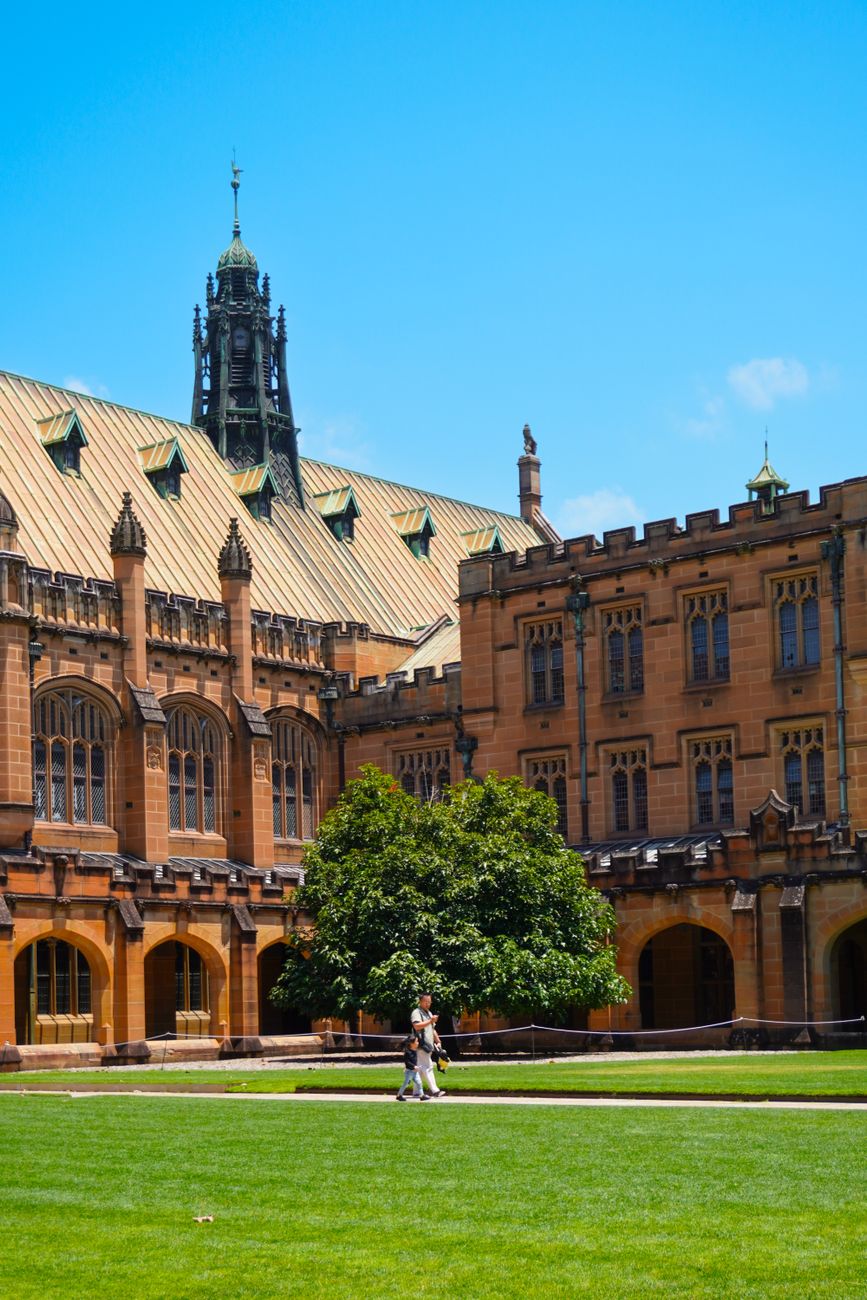
American High School graduates with a GPA of 3.0 or above (on a 4.0 unweighted scale) generally meet minimum entry requirements for Australian bachelor degrees. Top-tier programs at Group of Eight universities require a 3.5–3.8 GPA plus SAT scores of 1350–1500 or ACT composite of 28–32. The International Baccalaureate (IB) diploma is accepted universally, with a score of 30–36 points typically sufficing for most programs and 38+ required for high-demand fields.
IGCSE results alone are insufficient for direct entry; students must complete A-levels, IB, or an approved foundation program. Many Australian universities offer pathway programs through their dedicated colleges—for example, the University of New South Wales Global Foundation or Monash College—which accept IGCSE results with specific grade requirements. These one-year programs guarantee progression to bachelor degrees upon achieving minimum grades.
Standardised test requirements: UK applicants rarely need additional tests, while US students may need to submit SAT/ACT scores if their high school GPA falls below thresholds. Some programs—notably medicine, dentistry, and veterinary science—require the UCAT ANZ or GAMSAT for graduate-entry pathways.
Tuition Fees and Scholarship Opportunities
Tuition fees for international students in 2026 range from AUD 30,000 to AUD 55,000 per year for undergraduate programs, depending on the university and discipline. Engineering and technology programs at Group of Eight universities cost AUD 45,000–52,000 annually, while arts and humanities fees sit lower at AUD 30,000–38,000. Medicine and veterinary science are the most expensive, with annual fees of AUD 65,000–85,000 for full-degree programs.
Scholarships specifically targeting students from English-speaking countries include:
- Australia Awards: Full tuition, living allowance, and airfares for high-achieving applicants from select countries (including UK and US under certain development programs)
- University-specific merit scholarships: The University of Melbourne International Undergraduate Scholarship offers AUD 10,000–50,000 over three years. The University of Sydney International Scholarship covers 50–100% of tuition for students with A-level AAA or IB 38+
- Destination Australia Program: AUD 15,000 per year for students studying at regional campuses (e.g., University of New England, Charles Darwin University)
The Australian government allocated AUD 400 million in 2026 for international student scholarships, a 12% increase from 2025. To maximise scholarship chances, applicants should submit applications by the early round deadlines (typically August–October for February 2027 intake) and provide strong academic references. Scholarship committees prioritise students with A-level A*AA or equivalent, IB 36+, or US GPA 3.7+.
Professional Accreditation Pathways: CPA Australia, Engineers Australia, and MBBS
For students targeting professional careers, understanding accreditation requirements is essential. CPA Australia accreditation for accounting degrees requires completion of a bachelor’s degree with specific core subjects including financial accounting, management accounting, taxation, and audit. Australian universities typically embed these subjects into their Bachelor of Commerce or Bachelor of Accounting programs. International students from the UK and US with existing accounting qualifications may receive exemptions of up to 6 subjects from the CPA Australia program, reducing the pathway to full membership.
Engineers Australia accreditation follows the Washington Accord, meaning engineering degrees from UK, US, Canada, and Ireland institutions are generally recognised. However, students seeking to practice in Australia must have their qualifications assessed by Engineers Australia. The process takes 8–12 weeks and costs AUD 1,200. Australian bachelor of engineering (honours) programs are automatically accredited, providing a direct pathway to chartered status after 4–5 years of supervised practice.
The MBBS pathway for medicine is highly competitive. Direct-entry undergraduate programs (e.g., University of Queensland, University of Adelaide) require UCAT ANZ scores above the 90th percentile, plus A-level AAA or IB 38+. Graduate-entry programs (e.g., University of Melbourne, University of Sydney) require a completed bachelor degree with a GPA of 5.5+ (7.0 scale) and GAMSAT scores of 60+. International students face capped places: in 2026, Australian medical schools offer approximately 350 places to international students across all programs. Tuition fees for the full MBBS degree range from AUD 280,000 to AUD 400,000.
On-Campus Housing and Student Rights
On-campus housing is the most secure option for new international students, though availability varies. University-managed accommodation costs AUD 250–450 per week, including utilities, internet, and sometimes meals. The University of Melbourne guarantees on-campus housing for all first-year international students who apply by 31 October. The University of Sydney offers 4,500 on-campus beds, with applications opening in August for February intake.
Key housing types:
- Residential colleges: AUD 400–600 per week, includes meals, academic support, and social programs
- University apartments: AUD 300–450 per week, self-catered, shared facilities
- Homestay: AUD 250–350 per week, includes meals and utilities, ideal for younger students
International student rights are protected under the Education Services for Overseas Students (ESOS) Act and the National Code of Practice. These frameworks guarantee:
- Access to complaint and appeals processes
- Minimum 20 hours per week work rights during semester (unlimited during breaks)
- Protection against unfair tuition fee refund policies
- Access to free legal advice through university student services
The Department of Home Affairs introduced new protections in 2026: universities must now publish annual cost-of-living updates and cannot increase tuition fees by more than 5% per year for continuing students. Students who face financial hardship can apply for reduced study loads (minimum 75% of full-time) without visa cancellation, provided they maintain academic progress.
Work Rights and Post-Study Pathways
International students in Australia can work up to 48 hours per fortnight during semester and unlimited hours during scheduled breaks. The 2026 work rights framework maintains this structure, with the minimum wage at AUD 24.10 per hour (rising to AUD 25.00 from 1 July 2026). Students working 20 hours per week during semester can earn approximately AUD 480 per week, offsetting 40–50% of typical living costs.
Post-study work rights were expanded in 2025 and remain in effect for 2026:
- Bachelor degree graduates: 2–4 years (4 years for STEM and healthcare fields)
- Master degree graduates: 3–5 years (5 years for STEM and healthcare)
- PhD graduates: 4–6 years (6 years for STEM and healthcare)
The Temporary Graduate Visa (subclass 485) requires applicants to have completed at least 2 years of study in Australia, meet English language requirements (IELTS 6.5 overall, minimum 6.0 each band), and obtain health insurance. The application fee in 2026 is AUD 1,730.
For students pursuing permanent residency, the Skilled Independent Visa (subclass 189) and Skilled Nominated Visa (subclass 190) are key pathways. Occupations in demand include registered nurses, software engineers, accountants, and civil engineers. The Department of Home Affairs 2026 skilled occupation list includes 200+ occupations, with priority processing for healthcare and construction roles.
Budgeting Tools and Financial Planning
Effective financial planning requires understanding both fixed and variable costs. The Australian government’s Study in Australia website provides a living cost calculator that adjusts for city and lifestyle. Students should budget for:
- Initial setup costs: AUD 3,000–5,000 (bond, furniture, first month rent, transport pass)
- Semester books and materials: AUD 500–1,000 per semester
- Social and entertainment: AUD 50–100 per week
- Emergency fund: AUD 2,000–3,000 (recommended)
Sample monthly budget for a student in Melbourne (2026):
- Rent (shared apartment): AUD 1,600
- Groceries: AUD 400
- Transport: AUD 160
- Utilities and internet: AUD 280
- Health insurance: AUD 50
- Mobile phone: AUD 80
- Social/entertainment: AUD 300
- Miscellaneous: AUD 200
- Total: AUD 3,070 per month
Students from the UK and US should note that Australian banks offer fee-free international student accounts (e.g., Commonwealth Bank, ANZ, NAB) with no monthly fees for the first 12 months. Currency exchange costs typically add 1–3% to transfers; using specialist services like Wise or Revolut can reduce this to 0.5%.
Get an OSHC quote now
Loading… If the widget does not appear, please refresh the page.

FAQ
Q1: What is the minimum cost of living requirement for an Australian student visa in 2026?
The Department of Home Affairs requires student visa applicants to demonstrate access to AUD 29,710 per year for living expenses as of 1 July 2025. This amount does not include tuition fees, airfares, or initial setup costs. Students must provide bank statements or financial guarantees showing this amount is available for the first year of study, with a further declaration of ongoing support for subsequent years.
Q2: How much can an international student earn from part-time work in Australia?
International students can work up to 48 hours per fortnight during semester and unlimited hours during scheduled breaks. At the 2026 minimum wage of AUD 24.10 per hour, working 20 hours per week during semester yields approximately AUD 482 per week, or AUD 8,676 over an 18-week semester. During semester breaks, full-time work at 40 hours per week could generate AUD 964 per week. Total annual earnings potential ranges from AUD 15,000 to AUD 25,000, depending on work hours and wage rates.
Q3: What scholarships are available for students from the UK and US applying to Australian universities?
University-specific merit scholarships include the University of Melbourne International Undergraduate Scholarship (AUD 10,000–50,000 over three years) and the University of Sydney International Scholarship (50–100% tuition coverage). The Australian government’s Destination Australia Program offers AUD 15,000 per year for regional study. The Australia Awards program provides full tuition, living allowance, and airfares for eligible applicants from select countries, including the UK and US under specific development categories. Scholarship applications typically close 8–12 months before the intended start date.
References
- Department of Home Affairs, 2026, Student Visa Financial Capacity Requirements
- Australian Bureau of Statistics, 2026, Consumer Price Index: Living Costs for International Students
- Universities Australia, 2026, International Student Experience and Financial Survey
- Engineers Australia, 2026, Accreditation and Assessment Guidelines for International Qualifications
- CPA Australia, 2026, International Student Pathway to Membership Handbook
Partner links. Using them costs you nothing extra and may earn us a commission.