2026-05-21 · Nathan Hartley
Australia Cost of Living Calculator for Students: A 2026 Guide to Budgeting for University Study
Australian university tuition for international students rose by an average of 7.2% in 2025, according to the Department of Home Affairs 2026 data, while living

Australian university tuition for international students rose by an average of 7.2% in 2025, according to the Department of Home Affairs 2026 data, while living costs in major cities increased 4.8% year-on-year. The Australian Government now requires international student visa applicants to demonstrate access to AUD 29,710 in living expenses per year (up from AUD 24,505 in 2024), excluding tuition and travel. For students from the UK, USA, Canada, and Ireland, the Australia cost of living calculator for students has become an essential first step in planning a realistic budget before applying.
The 2026 Student Visa Living Cost Requirement: What It Means for Your Budget
The Department of Home Affairs mandates that all international student visa (subclass 500) applicants provide evidence of sufficient funds for living costs, travel, and tuition. As of 2026, the minimum living cost requirement is AUD 29,710 per year for a single student. This figure is based on the Australian Government’s assessment of reasonable living expenses, including accommodation, food, transport, and utilities.
This requirement is not a recommended budget—it is a visa compliance threshold. Students who rely solely on this figure may face financial shortfalls, particularly in high-cost cities like Sydney and Melbourne. For example, the 2026 average weekly rent for a one-bedroom apartment in Sydney is AUD 650, while in Adelaide it is AUD 420. Using the government calculator, a student in Sydney would spend AUD 33,800 annually on rent alone, exceeding the entire living cost allowance.
The Australia cost of living calculator for students available on the Department’s website (via the “Living Expenses” page) allows prospective students to input their city, accommodation type, and lifestyle preferences. The tool then generates a personalised estimate. It is updated annually with data from the Australian Bureau of Statistics and rental market reports.
For students from the UK, USA, Canada, and Ireland, currency fluctuations add complexity. As of March 2026, AUD 1 equals approximately USD 0.65, GBP 0.52, CAD 0.88, and EUR 0.60. A budget of AUD 40,000 per year (tuition plus living) translates to USD 26,000 or GBP 20,800. Using the calculator with real-time exchange rates is critical.
Academic Pathways: From UK A-Levels and American High School to Australian Universities
Australian universities accept a wide range of international qualifications. For students from the UK, A-Levels are assessed on a points-based system. A typical offer from a Group of Eight (Go8) university for a Bachelor of Commerce requires A-Level grades of AAB or ABB, depending on the institution. The same university may require an International Baccalaureate (IB) score of 32 to 36 points for comparable courses.
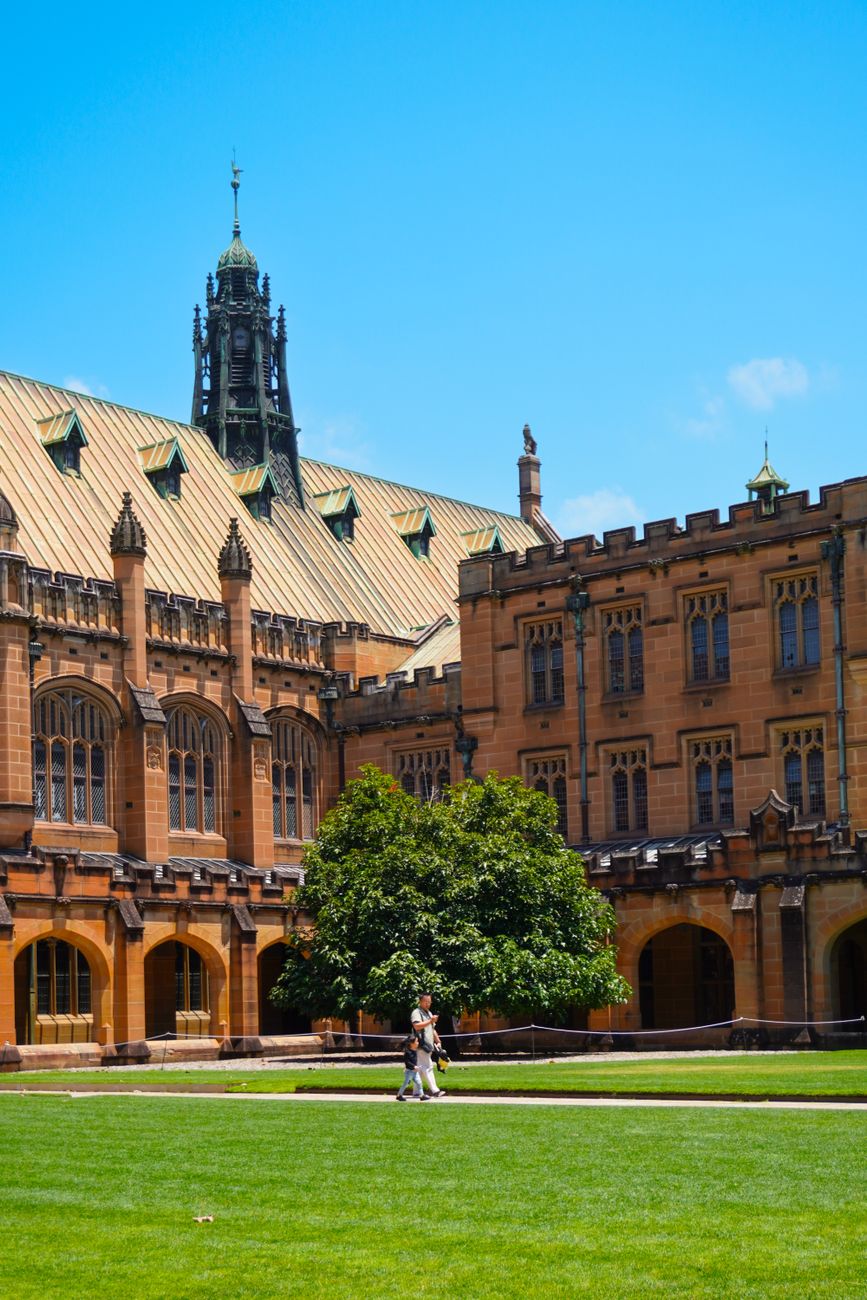
For American students, the US High School Diploma is accepted, but most universities require a minimum GPA of 3.0 on a 4.0 scale, plus SAT scores of 1200 or higher for competitive programs. The University of Sydney, for example, lists SAT 1350 and GPA 3.3 for direct entry into Engineering. ACT scores of 27 or above are also accepted.
Students from Canada and Ireland can use their respective secondary school certificates—the Ontario Secondary School Diploma (OSSD) or the Irish Leaving Certificate. Australian universities publish clear equivalency tables. For instance, the University of Melbourne requires an Irish Leaving Certificate score of 350 points for Arts programs.
The Australia cost of living calculator for students should be used alongside academic pathway assessments. A student completing A-Levels in the UK may need to factor in a foundation year if grades fall short, adding AUD 25,000–35,000 in tuition and another year of living costs. Similarly, American students with lower SAT scores may need to complete a Diploma program at a TAFE or private college before transferring to university, which changes the budget timeline.
Tuition Fees by Discipline and University Tier
Tuition fees for international students in 2026 vary significantly by discipline and institution. Go8 universities charge the highest rates. For a Bachelor of Engineering, annual tuition ranges from AUD 48,000 at the University of New South Wales to AUD 44,000 at the University of Queensland. Medicine (MBBS) is the most expensive, with fees of AUD 75,000–85,000 per year at most Go8 universities.
Non-Go8 universities offer lower fees. For example, a Bachelor of Information Technology at the University of Technology Sydney costs AUD 38,000, while at Charles Darwin University it is AUD 30,000. Regional universities often have lower tuition and living costs, making them attractive for budget-conscious students.
The Australia cost of living calculator for students can be customised with tuition data. The tool allows users to input their specific university and course, then calculates total annual costs. For a student studying Engineering at the University of Melbourne in 2026, the calculator shows tuition of AUD 48,000 plus estimated living costs of AUD 35,000 (based on shared accommodation in Carlton), for a total of AUD 83,000 per year.
Postgraduate fees follow a similar pattern. A Master of Business Administration (MBA) at the University of Sydney costs AUD 58,000, while a Master of Data Science at Deakin University costs AUD 38,000. Students should use the calculator to compare multiple scenarios.
City-by-City Living Cost Comparison
The Australia cost of living calculator for students provides city-specific estimates. Sydney is the most expensive city for international students. Average weekly rent for a room in a shared house is AUD 350–450, while a studio apartment costs AUD 500–700. Groceries for one person average AUD 100 per week, and public transport costs AUD 50 per week. Total monthly living expenses in Sydney are approximately AUD 2,500–3,200.
Melbourne is slightly cheaper. Shared accommodation rents range from AUD 280–380 per week, and groceries are similar to Sydney. Public transport is AUD 45 per week. Total monthly costs are AUD 2,200–2,800.
Brisbane and Perth are mid-range. Weekly rent for a shared room is AUD 250–320, and total monthly expenses are AUD 1,800–2,400. Adelaide and Hobart are the most affordable. Shared rent is AUD 200–280 per week, and total monthly costs are AUD 1,500–2,000.
The calculator allows users to select a city and accommodation type (on-campus, off-campus shared, or off-campus solo). It then generates a breakdown by category: rent, utilities, food, transport, entertainment, and health insurance. For example, a student in Brisbane choosing on-campus housing will see rent of AUD 1,200 per month, while off-campus shared is AUD 900.
On-campus housing is limited and competitive. Most universities guarantee accommodation for first-year international students but charge a premium. The University of Sydney’s on-campus residential colleges cost AUD 450–600 per week, including meals. Off-campus shared housing is cheaper but requires a bond (usually four weeks’ rent) and advance payment.
Scholarships and Financial Aid: What English-Speaking Students Can Access
Australian universities offer a range of scholarships for international students from English-speaking countries. The Australia Awards are government-funded and cover full tuition, return airfares, and a living allowance. However, they are highly competitive and primarily target students from developing nations. Students from the UK, USA, Canada, and Ireland are generally not eligible.
University-specific scholarships are more accessible. The University of Melbourne International Scholarship offers a 50% tuition fee reduction for high-achieving students. Eligibility requires an A-Level equivalent of AAA or an IB score of 38. The University of Sydney International Scholarship covers up to 100% of tuition for students with a GPA of 3.8 or above.
The Australia cost of living calculator for students includes a scholarship input field. Users can enter the amount and duration of a scholarship, and the tool recalculates total costs. For example, a student receiving a 50% tuition scholarship at the University of Queensland (original tuition AUD 44,000) would pay AUD 22,000, reducing the total annual cost from AUD 79,000 to AUD 57,000.
Professional accreditation scholarships exist for specific fields. CPA Australia offers a scholarship for international students pursuing a Master of Professional Accounting, covering AUD 10,000. Engineers Australia provides a similar award for engineering students. These scholarships are not widely advertised but can significantly reduce costs.
Students should apply for scholarships at least 12 months before their intended start date. Most deadlines fall between August and October for the following February intake.
Post-Study Work Rights and the Temporary Graduate Visa (Subclass 485)
The Temporary Graduate visa (subclass 485) allows international students to work in Australia after completing their degree. As of 2026, the duration of post-study work rights depends on the qualification level and location. A Bachelor’s degree from a Go8 university in a major city (Sydney, Melbourne, Brisbane) grants a two-year visa. A Master’s degree by coursework grants three years. A PhD grants four years.
Regional study extends these periods. Students who complete a degree at a university in a designated regional area (e.g., Adelaide, Hobart, Darwin) receive an additional one to two years on their visa. For example, a Bachelor’s graduate from the University of Tasmania in Hobart qualifies for a three-year 485 visa.
The Australia cost of living calculator for students can model post-study scenarios. A student who plans to work after graduation should factor in the cost of living during the job search period. The calculator allows users to add a “post-study” phase, estimating expenses for an additional 6–12 months.
Work rights during study are also important. International students can work up to 48 hours per fortnight during term and unlimited hours during scheduled breaks. In 2026, the national minimum wage is AUD 23.23 per hour. A student working 20 hours per week during term earns approximately AUD 1,860 per month, which can offset living costs. The calculator includes a “part-time work” input to show net expenses.
International Student Rights and Practical Protections
International students in Australia have specific rights under the Education Services for Overseas Students (ESOS) Act 2000 and the National Code 2018. These include the right to receive a refund of tuition fees if the provider fails to deliver the course, the right to change providers after completing six months of study, and the right to access the Overseas Student Health Cover (OSHC) system.
OSHC is mandatory for all international students on a student visa. As of 2026, the annual premium for a single student is approximately AUD 600–800, depending on the provider. The Australia cost of living calculator for students includes OSHC in its “health” category. Students should budget for this cost.
Accommodation rights are governed by state tenancy laws. In New South Wales, for example, landlords must provide a written tenancy agreement, and bonds must be lodged with the Rental Bonds Board. Students should never pay a bond directly to a landlord without a receipt.
The Fair Work Ombudsman enforces workplace rights. International students are entitled to the same minimum wage, penalty rates, and leave entitlements as domestic workers. Employers who underpay or exploit students can be reported.
The calculator includes a “rights and protections” informational section, linking to official government resources. It also provides a checklist for students before signing a lease or accepting a job offer.
Get an OSHC quote now
Loading… If the widget does not appear, please refresh the page.

FAQ
Q1: What is the minimum living cost I need to show for an Australian student visa in 2026?
The Department of Home Affairs requires AUD 29,710 per year for a single student as of 2026. This amount covers accommodation, food, transport, and utilities but excludes tuition, OSHC, and travel. Students with dependents must show additional funds: AUD 10,410 for a partner and AUD 4,490 for each child. The Australia cost of living calculator for students on the Department’s website can generate a personalised estimate based on your city and lifestyle.
Q2: How do UK A-Level grades translate to Australian university entry requirements?
A typical Go8 university offer for a Bachelor of Commerce requires A-Level grades of AAB or ABB. The University of Melbourne uses a points system: A* = 6, A = 5, B = 4, C = 3. A total of 14 points from three A-Levels is often required for competitive courses. For the International Baccalaureate (IB), a score of 32–36 is typical. The Australia cost of living calculator for students can be used alongside the university’s admissions page to plan total costs.
Q3: Can I work while studying in Australia, and how much can I earn?
International students can work up to 48 hours per fortnight during term and unlimited hours during scheduled breaks. The national minimum wage in 2026 is AUD 23.23 per hour. Working 20 hours per week during term yields approximately AUD 1,860 per month before tax. The Australia cost of living calculator for students includes a part-time work input, allowing you to see how this income reduces your net living costs. Tax rates for temporary residents start at 15% for income up to AUD 45,000.
Q4: Are there scholarships for students from the UK, USA, Canada, or Ireland?
Yes, but they are limited. The University of Melbourne International Scholarship offers 50% tuition reduction for students with A-Level AAA or IB 38. The University of Sydney International Scholarship covers up to 100% tuition for GPA 3.8+. Professional bodies like CPA Australia and Engineers Australia offer smaller scholarships (AUD 5,000–10,000). The Australia cost of living calculator for students allows you to input scholarship amounts to see adjusted total costs. Most scholarships require separate applications with deadlines 12 months before start.
Q5: What is the difference in living costs between Sydney and Adelaide?
Sydney is approximately 40% more expensive than Adelaide. In Sydney, average weekly rent for a shared room is AUD 350–450, while in Adelaide it is AUD 200–280. Monthly living expenses in Sydney total AUD 2,500–3,200, compared to AUD 1,500–2,000 in Adelaide. The Australia cost of living calculator for students allows you to compare multiple cities side by side, including accommodation type, and shows the annual difference. For a two-year degree, choosing Adelaide over Sydney could save AUD 24,000–30,000 in living costs.
References
- Department of Home Affairs, 2026, “Student Visa Living Cost Requirements”
- Australian Bureau of Statistics, 2026, “Consumer Price Index: Education and Living Costs”
- Universities Australia, 2026, “International Student Data Summary”
- Study Australia (Australian Government), 2026, “Cost of Living Calculator for International Students”
- Fair Work Ombudsman, 2026, “Minimum Wage and Employment Rights for International Students”