2026-05-21 · Diana Chu
Adelaide Metro Student Saver Fares for International Students: A 2026 Cost-Benefit Analysis for Global Applicants
International students in Adelaide now pay AUD 1.70 per trip on public transport under the Student Saver fare, compared to AUD 4.05 for a standard adult sin

International students in Adelaide now pay AUD 1.70 per trip on public transport under the Student Saver fare, compared to AUD 4.05 for a standard adult single. This represents a 58% discount per journey. With the average international student making 10-12 trips per week for study, work, and social activities, annual savings reach approximately AUD 1,200–1,500. South Australia’s Department for Infrastructure and Transport confirmed in February 2026 that these fares apply to all full-time international students holding a valid student visa, regardless of nationality. For students from the UK, USA, Canada, and Ireland—where public transport subsidies for international students are rare—this policy is a material financial advantage when comparing Adelaide to other Australian capitals. The University of Adelaide and Flinders University both report that transport costs rank among the top three financial concerns for incoming international students, ahead of tuition and housing.
How the Adelaide Metro Student Saver Fare Works for International Students
The Student Saver fare is a concession rate available to all full-time international students enrolled at an eligible South Australian institution. To access it, students must obtain a MetroCard—the rechargeable smart card used across Adelaide’s bus, tram, and train network—and load a valid student concession entitlement onto the card. The process requires presenting a current student ID card and a confirmation of enrolment letter at any Adelaide Metro InfoCentre or authorised retailer.
The fare structure for 2026 is as follows: a single trip costs AUD 1.70, a day pass (unlimited travel until 3:00 AM the next day) costs AUD 5.10, and a 28-day pass costs AUD 68.00. These rates apply across all zones within Adelaide’s metro area, which covers the CBD, suburbs, and major campuses. For comparison, a standard adult single fare is AUD 4.05, and a 28-day pass is AUD 146.00. International students are not eligible for the free travel periods sometimes offered to domestic concession holders, but the Student Saver fare is available year-round.
The discount applies automatically when tapping on with a correctly configured MetroCard. No additional application or means testing is required, provided the student maintains full-time enrolment. Students who drop below full-time load—typically less than three courses per semester—lose eligibility until they re-enrol full-time. This is a critical point for students considering reduced study loads for work or personal reasons.
Comparing Adelaide’s Transport Costs to Other Australian University Cities
Adelaide’s Student Saver fare is among the most generous in Australia for international students. In Sydney, a single trip on public transport costs AUD 4.55 for an adult, with international students receiving only a 30% discount under the Opal card’s concession scheme, bringing the per-trip cost to approximately AUD 3.18. Melbourne’s myki system offers a 50% discount for international students, reducing the standard AUD 4.60 single fare to AUD 2.30. Brisbane’s go card provides a 50% concession for full-time international students, yielding a single fare of about AUD 2.00.
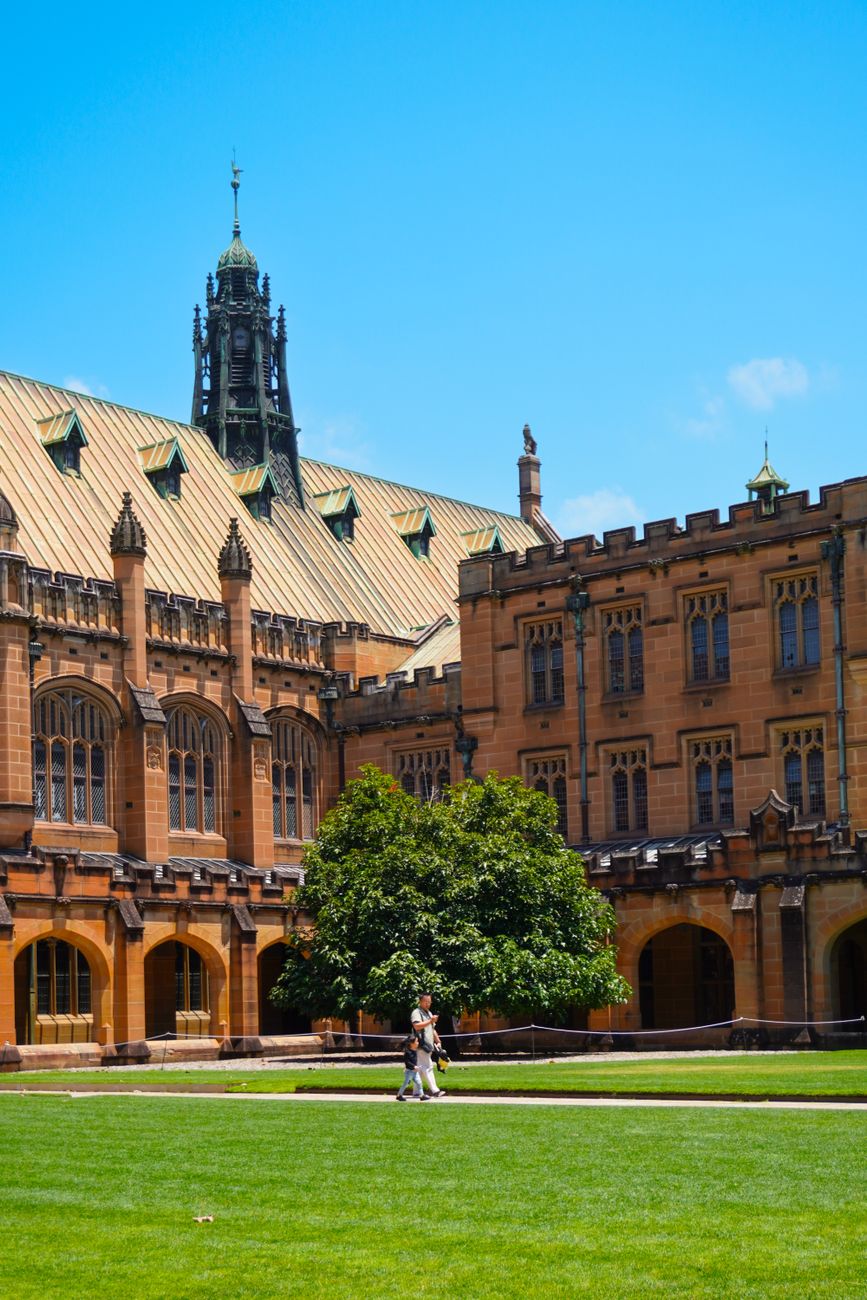
Adelaide’s AUD 1.70 per trip is the lowest among mainland Australian capitals. The difference compounds over a semester. A student commuting five days per week from the suburbs to the city campus will spend approximately AUD 68 per month in Adelaide, versus AUD 92 in Brisbane, AUD 127 in Melbourne, and AUD 140 in Sydney. Over a 12-month academic year, that is a saving of AUD 288–864 compared to other cities—money that can be redirected to housing, textbooks, or savings.
Adelaide’s transport network is also smaller and more predictable. The average commute time from suburban student accommodation to the CBD is 25–35 minutes, compared to 45–60 minutes in Sydney or Melbourne. This time saving is rarely factored into cost-of-living comparisons but is significant for students balancing study, part-time work, and social life.
Pathways from UK A-Levels, IB, US High School GPA, and IGCSE to Australian Universities
International students from English-speaking countries face distinct admissions requirements when applying to Australian universities. The Australian Tertiary Admission Rank (ATAR) is the standard metric, but universities accept equivalent qualifications. For UK students, A-Level results are converted: three A-Levels at grades AAB typically equate to an ATAR of 95–97, while BBB equates to 80–85. The International Baccalaureate (IB) is also recognised—a score of 30 points maps to approximately ATAR 83, and 36 points to ATAR 93.
US high school students applying with a GPA and SAT should note that Australian universities generally require a minimum GPA of 3.0 on a 4.0 scale, combined with an SAT score of at least 1200 for competitive courses like medicine, engineering, or law. Some universities, such as the University of Adelaide and Flinders, accept the SAT alone for direct entry if the score exceeds 1350. IGCSE results alone are not sufficient for direct university entry; students must complete A-Levels, IB, or an approved foundation program.
For students who do not meet direct entry requirements, foundation programs and diploma pathways are available. These one-year programs are offered by most universities and guarantee progression to the second year of a bachelor’s degree upon successful completion. The University of Adelaide College and Flinders University International Pathway programs are common examples. Importantly, these pathways do not affect visa eligibility, as long as the student maintains full-time enrolment.
Scholarships and Financial Aid Specifically for International Students from English-Speaking Countries
Australian universities offer targeted scholarships for international students, though competition is intense. The University of Adelaide’s Global Citizens Scholarship provides a 15–30% reduction in tuition fees for students from the UK, USA, Canada, and Ireland who achieve an ATAR equivalent of 80 or above. Flinders University’s Go Beyond Scholarship offers AUD 5,000 per year for students with a strong academic record. The University of South Australia’s International Merit Scholarship covers up to 50% of tuition for students with a GPA of 3.5 or higher.
For students from the UK, the Commonwealth Shared Scholarship is available for postgraduate study, covering tuition and living costs. However, this is limited to students from developing Commonwealth countries, not the UK itself. US students may apply for the Fulbright Program, which supports graduate study in Australia, but this is highly competitive.
Need-based scholarships are rare for international students. Most scholarships are merit-based and require a separate application, usually due six months before the semester starts. Students should also check their home country’s government schemes. For example, the UK’s Student Loans Company does not fund Australian tuition, but US students can use Federal Direct Loans for eligible Australian universities. Canadian students can access the Canada Student Loans Program for study abroad, though amounts are capped.
Professional Accreditation Pathways: CPA Australia, Engineers Australia, and MBBS
International students aiming for regulated professions in Australia must understand accreditation pathways. For accounting, a degree accredited by CPA Australia or the Chartered Accountants Australia and New Zealand (CA ANZ) is required for migration and professional practice. The University of Adelaide’s Bachelor of Commerce (Accounting) and Flinders’ Bachelor of Accounting are both fully accredited. Graduates must then complete the CPA Program or CA program, which involves additional exams and three years of supervised work experience.
For engineering, accreditation by Engineers Australia is essential. The University of Adelaide offers a Bachelor of Engineering (Honours) that is accredited under the Washington Accord, meaning UK and US engineering degrees may be recognised through mutual agreement. However, international students with non-accredited degrees must pass a Competency Demonstration Report (CDR) assessment. The pathway to Chartered Professional Engineer (CPEng) status requires four years of postgraduate experience.
For medicine, the MBBS pathway is highly competitive. International students must sit the UCAT ANZ or GAMSAT (for graduate entry) and achieve a high ATAR—typically 99+ for the University of Adelaide’s Bachelor of Medicine, Bachelor of Surgery (MBBS). Flinders University offers a graduate-entry MD program requiring a bachelor’s degree with a GPA of 5.5 or higher and a strong GAMSAT score. International students face capped places—typically 10–20% of total cohort—and higher tuition fees, often exceeding AUD 70,000 per year. Post-graduation, international medical graduates must complete a 12-month internship in an Australian hospital to gain general registration.
International Student Rights and On-Campus Housing in Adelaide
International students in Australia hold specific rights under the Education Services for Overseas Students (ESOS) Act and the National Code of Practice. These include the right to a refund if the course is not delivered, access to complaint and appeals processes, and protection against unfair dismissal from the course. Students can work up to 48 hours per fortnight during the semester and unlimited hours during holidays, though this may change with policy updates. The Fair Work Ombudsman provides free advice on workplace rights, including minimum wage (AUD 24.10 per hour as of July 2025).

On-campus housing is available at all three major Adelaide universities. The University of Adelaide’s Roseworthy Campus offers accommodation for agricultural students, while the North Terrace Campus has the University of Adelaide Village—a private provider—with studios starting at AUD 320 per week. Flinders University’s Flinders Living provides on-campus apartments at AUD 280–400 per week, including utilities and internet. University of South Australia’s Mawson Lakes Campus offers accommodation at AUD 250–350 per week.
Off-campus private rentals in Adelaide’s suburbs cost AUD 200–350 per week for a room in a shared house, or AUD 400–600 for a one-bedroom apartment near the CBD. The median rent for a two-bedroom unit in Adelaide is AUD 450 per week as of Q1 2026, according to the Real Estate Institute of South Australia. International students are advised to budget at least AUD 12,000–15,000 per year for housing, excluding utilities.
FAQ
Q1: How do I apply for the Adelaide Metro Student Saver fare as an international student?
To apply, obtain a MetroCard from any Adelaide Metro InfoCentre (locations include the Adelaide Railway Station and major shopping centres). Present your valid student ID and a current confirmation of enrolment letter. The card will be set up with the student concession entitlement. The process takes 10–15 minutes. There is no fee for the card itself, but you must load funds (minimum AUD 10 for the first load). The fare is AUD 1.70 per trip as of 2026. You must revalidate your concession each semester by visiting an InfoCentre with updated enrolment documents.
Q2: What are the typical ATAR or GPA requirements for direct entry into Australian universities for UK and US students?
UK A-Level students: three A-Levels at grades AAB typically equate to ATAR 95–97, while BBB equates to ATAR 80–85. IB students: a score of 30 points maps to ATAR 83, and 36 points to ATAR 93. US students: a minimum GPA of 3.0 on a 4.0 scale combined with an SAT score of 1200 is generally required for competitive courses. For the University of Adelaide’s Bachelor of Engineering (Honours), an ATAR of 85 or equivalent is typical. For medicine (MBBS), an ATAR of 99+ is required. These thresholds are for 2026 intake and may vary by course.
Q3: Can international students use Federal Direct Loans or UK student loans for Australian university fees?
US students can use Federal Direct Loans (Subsidized, Unsubsidized, and PLUS) for eligible Australian universities, provided the university participates in the US Department of Education’s Title IV program. The University of Adelaide, Flinders University, and the University of South Australia are all eligible. The annual loan limit for dependent undergraduates is AUD 31,000 (USD 20,500) for 2025–2026. UK students cannot use the Student Loans Company for Australian tuition, as loans are only available for UK institutions. Canadian students can access the Canada Student Loans Program for study abroad, with a maximum of CAD 7,500 per semester for full-time study.
Q4: What are the post-study work visa options for international students graduating from Adelaide universities?
Graduates can apply for the Temporary Graduate Visa (subclass 485) . The Post-Study Work stream allows graduates of bachelor’s degrees to stay for two years, master’s by coursework for three years, and master’s by research or PhD for four years. As of 2026, graduates from Adelaide (classified as a regional area) receive an additional one-year extension, making it three years for bachelor’s, four years for master’s by coursework, and five years for PhD graduates. Applicants must have a valid student visa at the time of application, meet English language requirements (IELTS 6.5 overall), and have completed a CRICOS-registered course of at least two academic years.
Q5: How does the cost of living in Adelaide compare to other Australian cities for international students?
Adelaide is the most affordable mainland Australian capital for international students. The average weekly rent for a room in a shared house is AUD 200–350, compared to AUD 350–550 in Sydney and AUD 300–450 in Melbourne. Public transport costs AUD 1.70 per trip versus AUD 3.18 in Sydney and AUD 2.30 in Melbourne. Groceries are approximately 10–15% cheaper than in Sydney. The total estimated annual cost of living for an international student in Adelaide is AUD 25,000–30,000, versus AUD 35,000–45,000 in Sydney. These figures are based on the Department of Home Affairs’ 2026 cost-of-living estimates.
References
- Department for Infrastructure and Transport, South Australia, 2026, “Adelaide Metro Fares and Concessions”
- Universities Australia, 2026, “International Student Data Summary”
- Australian Department of Home Affairs, 2026, “Student Visa and Post-Study Work Arrangements”
- Real Estate Institute of South Australia, 2026, “Quarterly Rental Market Report”
- CPA Australia, 2025, “Accreditation Pathways for International Accounting Graduates”