2026-07-07 · StudyAU Editorial
University of Adelaide 2027: The Go8's Best-Kept Value Secret
Adelaide University ranks 79th in QS 2027 and is a Group of Eight member — yet its total cost of study is 25–35% lower than Sydney or Melbourne. After merging with UniSA in 2026, the city now has Australia's newest major university. This guide covers what studying in Australia's most affordable Go8 city is actually like.
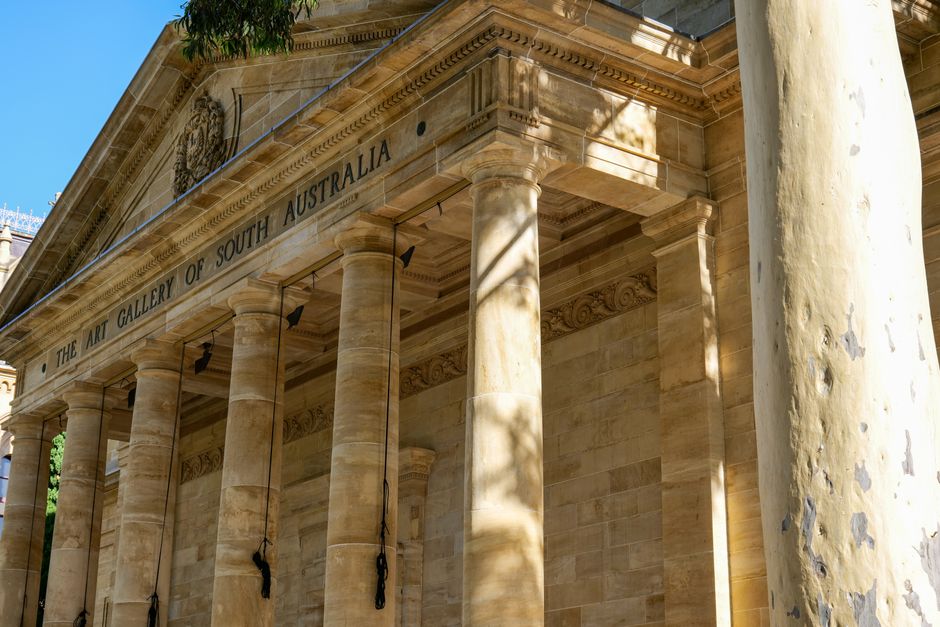
The University of Adelaide — or Adelaide University as it’s known since the 2026 merger — sits at #79 in the QS 2027 World University Rankings and remains a proud member of Australia’s Group of Eight. But the number that matters more to most international students is this: Adelaide is 25–35% cheaper than Sydney or Melbourne for combined tuition and living costs, while delivering the same Go8 degree credential. Annual tuition for international undergraduates ranges from A$39,000–$48,000, with living costs around A$21,000–$26,000 per year. Add the regional 485 visa extension and a city that takes 20 minutes to cross, and you have a combination that’s hard to beat on value.
The New Adelaide University: What the 2026 Merger Means for You
In June 2026, the University of Adelaide (est. 1874) and the University of South Australia (UniSA, est. 1991) merged to form Adelaide University. This was not a takeover — it was the largest university merger in Australian history, creating an institution with over 60,000 students and an annual research budget exceeding A$600 million.
For international students, the merger brings three practical changes. First, the program range has expanded significantly. UniSA’s strong applied disciplines — aviation, marketing, creative industries, and health services management — now sit under a Go8 banner, meaning you get access to vocational and creative programs that don’t typically exist at traditional research universities. Second, the campus footprint now spans three major sites: North Terrace (city centre, humanities and sciences), Mawson Lakes (northern suburbs, engineering and IT), and Waite (agricultural research). Third, the research scale has increased, with particular investment in health sciences, artificial intelligence, and renewable energy — fields where Adelaide University now competes directly with the eastern-state Go8 universities.
The merged university retained its Go8 membership, so the international recognition is intact. If you’re choosing between Adelaide and a Russell Group or US public university, the credential carries equivalent weight in most fields.
📖 Related: Melbourne vs Adelaide: A 2026 Cost of Living Comparison for International Students
How Much You’ll Actually Spend: Adelaide vs the Eastern States
The cost argument for Adelaide is not subtle. Here are the numbers for 2027.
Annual international undergraduate tuition (2027, selected programs):
- Bachelor of Commerce: Adelaide A$41,000 vs Melbourne A$49,920 vs UNSW A$48,600
- Bachelor of Engineering (Honours): Adelaide A$44,500 vs Melbourne A$52,000 vs UNSW A$53,000
- Bachelor of Computer Science: Adelaide A$42,000 vs Sydney A$50,000 vs UNSW A$48,000
- Bachelor of Nursing: Adelaide A$39,500 vs Sydney A$44,000 vs Monash A$42,500
Annual living costs (single student, 2027 real-world estimates):
- Adelaide: A$21,000–$26,000
- Brisbane: A$22,000–$28,000
- Melbourne: A$26,000–$32,000
- Sydney: A$28,000–$35,000
Over a three-year bachelor’s degree, the total cost difference between Adelaide and Sydney is approximately A$45,000–$65,000. That’s a year and a half of extra living expenses, or a deposit on a house, or two years of travel. For students funding their own education, it’s a genuinely life-changing margin.
The savings come from housing. A room in a shared house near Adelaide University costs A$180–$280 per week, compared to A$280–$400 in Sydney’s inner suburbs. On-campus residential colleges at Adelaide charge A$280–$420 per week including meals, versus A$380–$520 at UNSW. Groceries, public transport, and entertainment are all 10–15% cheaper in Adelaide.
Scholarships sweeten the deal further. Adelaide University’s Global Citizens Scholarship offers an automatic 15–30% tuition reduction for international students meeting minimum academic thresholds (equivalent to UK A-levels ABB or US GPA 3.0+). This is less competitive than Melbourne’s International Undergraduate Scholarship, which awards only about 1,000 scholarships across 40,000+ applicants.
The Adelaide Vibe: Wine, Festivals, and a 20-Minute City
Adelaide calls itself the 20-minute city, and for once the marketing is accurate. The airport is 15 minutes from the CBD. North Terrace campus is a 10-minute walk from the Central Market. Glenelg Beach is 20 minutes by tram. There is no traffic to speak of, and you will never plan your day around rush hour. For students coming from genuinely big cities — London, Jakarta, Mumbai, Los Angeles — this can feel disorienting at first. Then it feels liberating.
Adelaide Central Market is the city’s food heart. Open Tuesday through Saturday, it’s been operating since 1869 and houses over 70 traders selling fresh produce, cheese, smallgoods, and prepared food. Saturday mornings at the Market are a ritual — grab a coffee, browse the stalls, eat a laksa from one of the food-court stalls for under A$15. It’s the single best introduction to Adelaide’s food culture.
Adelaide’s festival calendar is what puts it on the international map. The Adelaide Fringe (February–March) is the Southern Hemisphere’s largest arts festival, with hundreds of shows across comedy, theatre, music, and visual arts — many free or under A$25. Adelaide Festival runs concurrently and programs higher-end international performances. WOMADelaide (March) brings world music to the Botanic Park. For students, Fringe season is the social highlight of the year — the Garden of Unearthly Delights in Rundle Park becomes an open-air festival hub every night for a month.
Wine country is absurdly accessible. The Barossa Valley (home to Penfolds, Henschke, and Seppeltsfield) is 50 minutes north. McLaren Vale is 40 minutes south. Adelaide Hills wineries are 20 minutes east. Weekend cellar-door visits are a standard student activity — far more so than in Sydney or Melbourne, where wine regions are 2–3 hours away. If you study viticulture, oenology, or agricultural science at Adelaide, these are your classrooms.
Where You’ll Live: From North Terrace Colleges to East End Share Houses
Adelaide’s student housing market is the most affordable in any Australian Go8 city, but you still need to plan ahead.
On-campus residential colleges include St Mark’s College, Aquinas College, and Lincoln College, all located within a 5-minute walk of North Terrace campus. Rates run A$280–$420 per week including meals, utilities, and internet. These are smaller and more community-focused than Sydney equivalents — you’ll know most people in your college by name. Applications for February 2027 opened in mid-2026 and are competitive, particularly for St Mark’s (the largest and most centrally located).
Private share houses are the dominant student housing model. The most popular student suburbs are:
- North Adelaide: Leafy, heritage streetscapes, 15-minute walk to campus. Rooms A$220–$300 per week.
- East End / CBD: Closest to campus and the nightlife. Rooms A$240–$320 per week.
- Bowden / Brompton: Up-and-coming inner-north suburbs, 10 minutes by train. Rooms A$180–$250 per week.
- Prospect: Family-oriented suburb north of the city, good for quieter living. Rooms A$160–$230 per week.
Purpose-built student accommodation is a growing segment. Providers like Scape and UniLodge operate buildings near campus with studio apartments from A$320–$450 per week. These include bills, internet, and communal facilities like gyms and study rooms. They’re more expensive than share houses but offer security and simplicity, which appeals to first-year international students.
Adelaide’s rental market is less cutthroat than Sydney’s. Vacancy rates hover around 1.2–1.8% (versus Sydney’s 1.0%), and international students report less discrimination in Adelaide’s rental applications than in the eastern capitals. The South Australian Residential Tenancies Tribunal provides strong protections for renters, including limits on rent increases and mandatory repair timeframes.
📖 Related: Student Accommodation Options in Australia 2026: A Complete Guide
Strong Programs Worth Moving For
Adelaide University’s strengths are concentrated in specific fields where it ranks among the world’s best.
Health sciences are Adelaide’s strongest suit. The Adelaide Medical School is ranked in the global top 100, with attached teaching hospitals including the Royal Adelaide Hospital — one of Australia’s newest and most advanced. Nursing at Adelaide has a 94% graduate employment rate within South Australia. Dentistry at Adelaide is one of only three Go8 dental schools and has strong pathways to registration with the Dental Board of Australia.
Agriculture, wine, and food science are unique strengths. The Waite Campus in the Adelaide Hills is the Southern Hemisphere’s largest agricultural research precinct, housing CSIRO, the Australian Wine Research Institute, and several industry partners. The Bachelor of Viticulture and Oenology at Adelaide is the pre-eminent wine degree in the Asia-Pacific. For students interested in food security, agricultural technology, or wine science, there is no better university in Australia.
Engineering, particularly mining, mechanical, and civil engineering, benefits from South Australia’s status as a hub for defence manufacturing and renewable energy. The state government’s Lot Fourteen innovation precinct — built on the site of the old Royal Adelaide Hospital — houses the Australian Space Agency, the Australian Institute for Machine Learning, and a growing cluster of defence technology companies. Adelaide University engineering students have direct access to internship and research opportunities here.
Computer Science and AI have been significantly strengthened by the merger. The Australian Institute for Machine Learning (AIML) at Lot Fourteen is one of Australia’s top AI research centres, and Adelaide University now offers dedicated degrees in artificial intelligence and data science. For students targeting the growing Australian tech sector, Adelaide offers a lower-cost entry point than Sydney or Melbourne while providing comparable industry connections.
The Regional Visa Advantage (and Its Fine Print)
Adelaide is classified as a Category 2 regional city for migration purposes. This creates a meaningful post-study advantage that many international students overlook.
485 Temporary Graduate Visa extensions:
- Bachelor’s graduates in Adelaide: 3 years (vs 2 years in Sydney/Melbourne)
- Master’s graduates in Adelaide: 4 years (vs 3 years in Sydney/Melbourne)
- PhD graduates in Adelaide: 5 years (vs 4 years in Sydney/Melbourne)
That extra year matters. It gives you more time to find employer sponsorship, accumulate points for skilled migration, or simply earn Australian dollars to offset your education costs. For students targeting permanent residency, Adelaide’s regional status also means access to South Australia’s state nomination program (190 and 491 visas), which offers additional occupation listings and priority processing for SA graduates.
The catch — and it’s a real catch — is that the regional extension is conditional on living and working in regional Australia. If you graduate from Adelaide and immediately move to Sydney for a job, you lose the extension and revert to the standard visa length. The extension only works if you intend to build at least the early part of your career in South Australia.
Honest assessment: if you’re certain you want to work in Sydney or Melbourne after graduating, Adelaide’s regional visa advantage should not be the deciding factor. Choose Adelaide for the university quality, the cost savings, and the lifestyle. Treat the visa extension as a bonus, not the primary reason.
What Adelaide Doesn’t Have (and Why That Might Be Fine)
Adelaide is not Sydney or Melbourne, and it’s worth naming the trade-offs explicitly.
Smaller job market. Adelaide’s economy is dominated by health, education, defence, and government. If you’re targeting investment banking, management consulting, or big-tech software engineering, the opportunities in Adelaide are thinner. You can still build a strong career there, but the early-career options are more limited than in the eastern capitals.
Quieter nightlife. Adelaide is not a party city in the way Sydney and Melbourne are. There is a solid bar scene — Peel Street and Leigh Street in the CBD have excellent small bars — but the scale is more intimate. If you want a clubbing scene that rivals Berlin or London, you won’t find it here. Most Adelaide students would tell you they don’t miss it.
International flight connections are weaker. Adelaide Airport has direct flights to major Asian hubs (Singapore, Kuala Lumpur, Hong Kong, Doha) but nowhere near the route density of Sydney or Melbourne. Connecting through Melbourne or Sydney adds 3–5 hours to any trip home. If you plan on returning home multiple times per year, factor this in.
The upside of these trade-offs is that Adelaide forces a different kind of student experience. You’ll know your classmates better because the social circles are tighter. You’ll explore South Australia’s natural environment — Kangaroo Island, the Flinders Ranges, the Eyre Peninsula — because there’s less urban distraction. And you’ll graduate with substantially less debt than if you’d studied in a more expensive city. For the right student, those are all wins.
FAQ
Is Adelaide University less respected than Melbourne or Sydney?
Adelaide University sits at #79 globally in QS 2027, compared to Melbourne at #15 and Sydney at #18. The ranking difference is real, but it matters far more in some fields than others. In health sciences, agriculture, and wine science, Adelaide is world-class and the rankings gap is negligible. In law, finance, and consulting — fields where institutional prestige carries more weight — Sydney and Melbourne graduates do have an edge in the Australian job market. Within Australia, Go8 status confers broad recognition regardless of which Go8 university you attended. Internationally, employers familiar with Australian universities tend to treat all Go8 institutions similarly for recruitment purposes.
What are the entry requirements for UK A-level and IB students?
For 2027 entry, Adelaide University typically requires AAB–ABB at A-level or 30–36 points in the IB. Compare this to Sydney’s AAA–AAA and IB 36–42, or UNSW’s AAA–AAA and IB 34–40. The lower entry threshold at Adelaide reflects demand rather than quality — fewer international students apply to Adelaide, which means more competitive offers for those who do. Conditional offers are common and Adelaide is more willing than eastern-state universities to make offers to students with slightly lower predicted grades.
Can I work in Adelaide while studying?
Student visa holders (Subclass 500) can work up to 48 hours per fortnight during study periods and unlimited hours during holidays. Adelaide’s student job market includes hospitality (cafes, restaurants, bars — particularly around Rundle Street and the East End), retail, university tutoring, and administrative temp roles. Hourly wages start at A$24.10 (the national minimum). The smaller job market means fewer total opportunities than Sydney, but also less competition from other international students. Adelaide’s hospitality industry, in particular, faces chronic staff shortages and actively hires students.
How does Adelaide’s climate compare to the UK, Southeast Asia, or North America?
Adelaide has a Mediterranean climate: hot, dry summers (December–February, 17–35°C) and mild, wet winters (June–August, 8–16°C). The dry heat makes summer more tolerable than tropical humidity in Southeast Asia or Queensland. For UK students, Adelaide summers are dramatically hotter — invest in air conditioning and sunscreen. Winter is mild by any standard and far warmer than a British or North American winter. The city averages around 2,500 hours of sunshine annually, among the highest of any Australian capital.
References
- Adelaide University Official Website — https://www.adelaide.edu.au/
- QS World University Rankings 2027 — https://www.topuniversities.com/
- Study Adelaide — International Student Cost of Living Report 2026
- Department of Home Affairs — Temporary Graduate Visa (Subclass 485) Regional Classifications 2026
- Universities Australia — International Student Tuition Fee Survey 2026