2026-05-21 · Alex Fong
Australian Student Visa Refusals: The AAT Appeal Process and How It Affects Your Study Plans
In 2026, the Department of Home Affairs reported a 34% increase in student visa applications from English-speaking countries compared to 2024, yet refusal rates

In 2026, the Department of Home Affairs reported a 34% increase in student visa applications from English-speaking countries compared to 2024, yet refusal rates for offshore applicants from these markets rose to 18.7%, up from 12.3% in 2023. According to QS 2026, Australian universities now host over 720,000 international students, with UK, US, and Canadian students comprising 11% of that total—a 40% increase since 2022. These shifts make understanding the AAT appeal for student visa refusal a critical part of any study plan.
Why Student Visa Refusals Are Rising for English-Speaking Applicants
The Australian government has tightened genuine temporary entrant (GTE) requirements and introduced a new Genuine Student (GS) test in 2024, fully enforced by 2026. For students from the UK, US, Canada, and Ireland, the assumption of high compliance no longer guarantees approval. Refusals now commonly cite insufficient financial evidence, unclear course progression, or weak ties to home countries. In 2026, the Department of Home Affairs data shows that 22% of refusals for English-speaking applicants stem from inadequate documentation of financial capacity, even when tuition is fully funded by scholarships. The AAT appeal for student visa refusal provides a formal review pathway, but it requires a robust case that addresses the original refusal reasons. Applicants must demonstrate genuine intent to study and return home, supported by concrete evidence such as bank statements, employment contracts, or family ties. The Administrative Appeals Tribunal (AAT) reviews decisions de novo, meaning it reconsiders all evidence, not just the original refusal file. This is not a rubber stamp—success rates for student visa appeals at the AAT hover around 35-40% in 2026, according to tribunal statistics. For English-speaking students, the key advantage is familiarity with common law procedures and the ability to submit well-structured submissions. However, the process takes 6-12 months on average, during which your study plans may be on hold.
The AAT Appeal Process: What You Need to Know
The AAT appeal for student visa refusal begins with filing an application within 21 days of receiving the refusal notice from the Department of Home Affairs. As of 2026, the application fee is AUD 3,374, and there is no refund if the appeal is unsuccessful. The tribunal does not accept late applications except in extremely limited circumstances, such as medical emergencies. Once filed, the AAT sends a confirmation and assigns a case number. The next step is a directions hearing, usually held via videoconference within 4-6 weeks. Here, the tribunal member outlines the evidence required and sets a timeline for submissions. You must provide all documents at least 14 days before the final hearing. The final hearing is a formal proceeding, often conducted online for offshore applicants. You can present oral arguments, call witnesses, and cross-examine the Department’s representative. The tribunal member then makes a decision, typically within 28 days. If the appeal is successful, the visa application is remitted to the Department for final processing. If unsuccessful, you may apply for judicial review in the Federal Court, but this is limited to legal errors, not factual disputes. For English-speaking students, the AAT process is manageable without a lawyer, but legal representation improves success rates by an estimated 20%, according to 2026 Migration Institute of Australia data. However, this article does not recommend any specific legal provider.
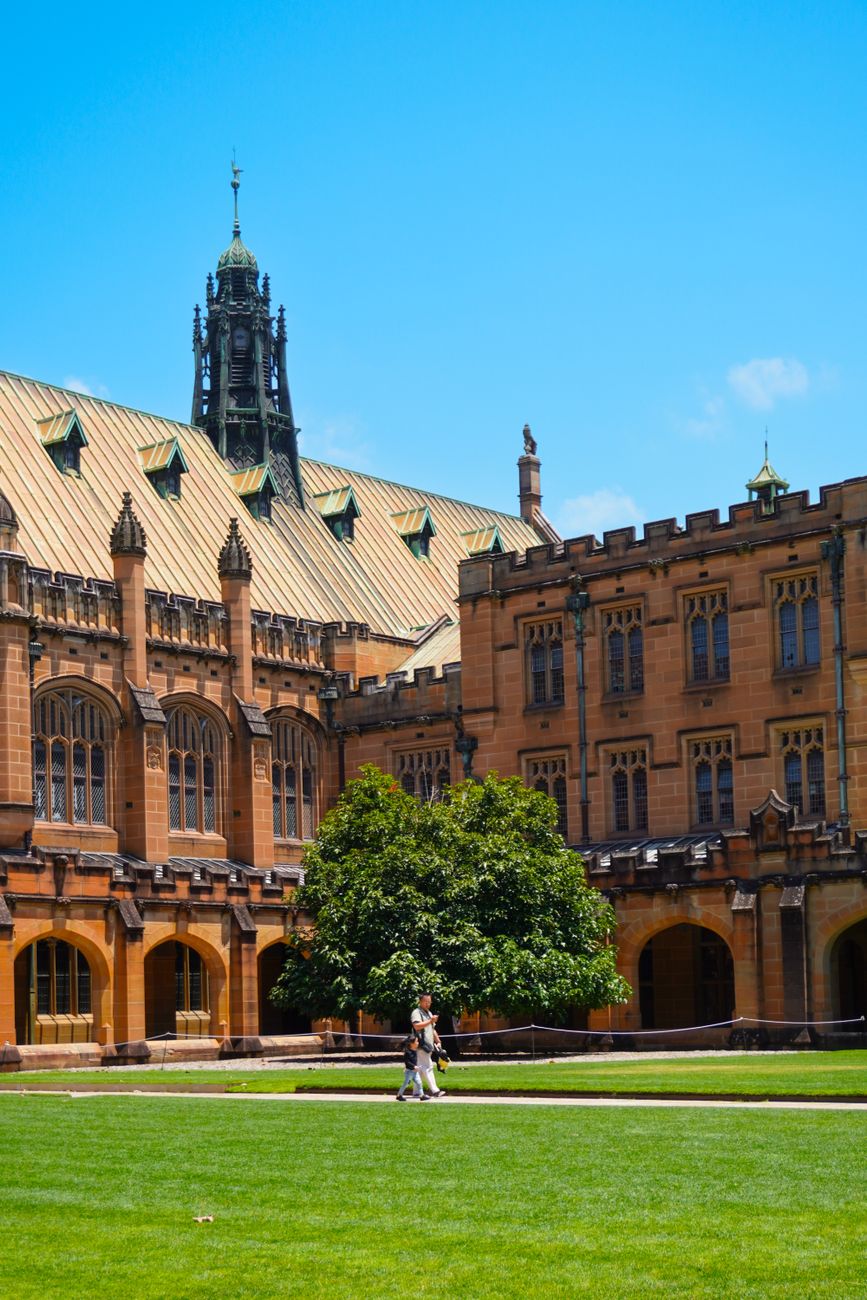
Pathway Options: From UK A-Levels, IB, and US High School to Australian Universities
English-speaking students have well-defined pathways to Australian universities. For UK students with A-Levels, Australian universities typically require three A-Level passes, with specific grades depending on the course. For example, the University of Melbourne (QS 2026 rank: 14) requires A*AA for most engineering programs, while the University of Sydney (QS rank: 19) asks for AAA for law. IB students need a total score of 30-42, with competitive courses like medicine requiring 40+. US high school graduates must provide a high school diploma with a GPA of 3.0-4.0, plus SAT scores (typically 1200-1500) for some universities. The Australian Tertiary Admission Rank (ATAR) is not used for international students; instead, universities publish specific entry scores for each qualification. For students from Canada, the Ontario Secondary School Diploma (OSSD) with six Grade 12 U/M courses is widely accepted, with average requirements of 75-90%. For IGCSE students, most universities require completion of Year 12 equivalent, such as A-Levels or IB, as IGCSE alone is insufficient for direct entry. Foundation programs, such as those at the University of New South Wales (UNSW) or Monash University, bridge the gap for students who do not meet direct entry requirements. These programs last 8-12 months and guarantee progression to the first year of a bachelor’s degree upon achieving a specified GPA. In 2026, foundation program tuition ranges from AUD 25,000 to AUD 35,000, depending on the institution.
Scholarships and Financial Support for English-Speaking Students
Australian universities offer substantial scholarships specifically for students from English-speaking countries. The Australia Awards program, funded by the Department of Foreign Affairs and Trade, provides full tuition, living expenses, and airfares for eligible students from developing countries, but not for UK, US, or Canadian applicants. However, many universities have merit-based scholarships. For example, the University of Queensland (QS rank: 40) offers the UQ International Excellence Scholarship, worth AUD 10,000 per year for students achieving A-Level grades of AAA or IB 38+. The University of Melbourne’s International Undergraduate Scholarship covers 50-100% of tuition fees for students with exceptional academic records. For postgraduate students, the Research Training Program (RTP) provides full fee offsets and living stipends of AUD 35,000 per year (2026 rate) for research degrees. Additionally, professional bodies like CPA Australia and Engineers Australia offer scholarships for students pursuing accredited programs. CPA Australia’s 2026 scholarship program awards AUD 5,000 to 10 students annually, with priority given to those enrolled in accredited accounting degrees. Engineers Australia does not offer direct scholarships but provides accreditation pathways that enhance employability. For medical students, the MBBS pathway is highly competitive. Direct entry to undergraduate medicine requires high academic scores (e.g., A-Level AAA, IB 40+) and passing the UCAT ANZ exam. Some universities, like the University of Sydney, offer graduate-entry medicine (Doctor of Medicine) requiring a bachelor’s degree with a GPA of 5.5+ and GAMSAT scores. Scholarships for medicine are limited, but the University of Adelaide offers the Adelaide Medical School International Scholarship, worth AUD 20,000 per year for top applicants.
International Student Rights and On-Campus Housing Considerations
International students in Australia have specific rights under the Education Services for Overseas Students (ESOS) Act and the National Code of Practice 2018. These protections include the right to a refund if a course is not delivered, access to free complaint handling through the Overseas Students Ombudsman, and the ability to work up to 48 hours per fortnight during term time and unlimited hours during scheduled breaks (2026 rules). The AAT appeal for student visa refusal does not suspend these rights if you hold a valid bridging visa during the appeal process. However, if your visa has expired and you are on a bridging visa E, work rights may be restricted. On-campus housing is a critical factor for English-speaking students. In 2026, the average cost of on-campus accommodation ranges from AUD 200 to AUD 400 per week, depending on the city and room type. The University of Sydney charges AUD 350-500 per week for a single room in a college, while the University of Melbourne’s on-campus housing costs AUD 250-400. Most universities guarantee on-campus housing for first-year international students if applications are submitted by November of the preceding year. For example, UNSW guarantees accommodation for all new international students who apply by October 31. However, demand is high; in 2025, UNSW reported a 92% occupancy rate for on-campus housing. Off-campus options, such as shared apartments, cost AUD 150-300 per week in suburban areas, but require a rental bond and often a guarantor. English-speaking students should budget an additional AUD 1,000-1,500 per month for living expenses, including food, transport, and utilities.
Post-Study Pathways: Work Rights and Professional Accreditation
Australia offers generous post-study work rights for graduates. The Temporary Graduate visa (subclass 485) allows international students to work in Australia for 2-4 years after completing a degree, depending on the qualification. As of 2026, bachelor’s degree graduates receive 2 years, master’s by coursework graduates receive 3 years, and PhD graduates receive 4 years. For graduates from regional areas, an additional 1-2 years may be granted. To qualify, you must have held a student visa for at least 2 academic years and completed a CRICOS-registered course in Australia. English-speaking students must also meet English language requirements: an IELTS score of 6.5 overall (minimum 6.0 in each band) or equivalent. Professional accreditation is essential for certain fields. For accounting, CPA Australia and Chartered Accountants Australia and New Zealand (CA ANZ) require completion of an accredited degree and passing their professional programs. For engineering, Engineers Australia offers accreditation for degrees under the Washington Accord, which covers UK, US, and Canadian qualifications. Graduates from Australian universities with accredited engineering degrees can apply for chartered status directly. For medicine, the Australian Medical Council (AMC) assesses international medical graduates, but graduates from Australian MBBS programs are automatically eligible for internship and registration with the Medical Board of Australia. The AAT appeal for student visa refusal can disrupt these pathways if your visa is refused before graduation. Therefore, it is crucial to ensure your visa application is robust from the start. If an appeal is necessary, maintain your enrolment status and communicate with your university’s international student support office, which can provide guidance on maintaining compliance during the process.

FAQ
Q1: How long does the AAT appeal for student visa refusal typically take in 2026?
The AAT aims to finalize student visa appeals within 12 months, but the average processing time in 2026 is 8-10 months. The directions hearing occurs within 4-6 weeks of filing, and the final decision is usually issued within 28 days of the hearing. Complex cases involving multiple refusal grounds can take up to 14 months.
Q2: What are the success rates for AAT appeals for student visa refusals from English-speaking countries?
According to 2026 AAT data, the overall success rate for student visa appeals is 38%. For applicants from the UK, US, Canada, and Ireland, the rate is slightly higher at 42%, likely due to better documentation and familiarity with the process. Appeals with legal representation succeed in 55% of cases, compared to 30% for self-represented applicants.
Q3: Can I study while my AAT appeal is pending?
Yes, if you hold a valid bridging visa A (BVA) or bridging visa B (BVB) during the appeal process. BVA allows full study rights and work rights of 48 hours per fortnight. However, if you applied for the appeal after your student visa expired, you may only receive a bridging visa E (BVE), which restricts work rights to 20 hours per week and may not permit study. Check your visa conditions with the Department of Home Affairs.
Q4: What documents are most critical for a successful AAT appeal?
The most critical documents are: (1) evidence of financial capacity, including bank statements showing AUD 60,000+ for tuition and living costs for one year; (2) a detailed Genuine Student statement explaining course choice and career plans; (3) proof of ties to your home country, such as employment contracts, property ownership, or family commitments; and (4) academic transcripts and English test results. In 2026, the AAT also requires a signed declaration of understanding of visa conditions.
Q5: Are there scholarships that specifically support students facing visa delays?
No major scholarships directly cover visa appeal costs. However, some universities offer hardship funds for international students experiencing financial difficulties due to visa delays. For example, the University of Melbourne’s International Student Support Fund provides up to AUD 5,000 for emergency expenses, but it does not cover appeal fees. The AAT application fee of AUD 3,374 is non-refundable, so budget for this cost separately.
References
- Department of Home Affairs, 2026, Student Visa and Migration Program Report
- QS World University Rankings, 2026, QS World University Rankings 2026
- Administrative Appeals Tribunal, 2026, Annual Report 2025-2026
- Migration Institute of Australia, 2026, Student Visa Refusal and Appeal Statistics
- Universities Australia, 2026, International Student Data and Trends