2026-05-21 · Marcus Whitlam
500 Student Visa Health Insurance: The Essential Guide for International Students in Australia
Australia's international education sector reached a record 720,000 enrolled international students in 2025, representing a 12% increase year-on-year, according

Australia’s international education sector reached a record 720,000 enrolled international students in 2025, representing a 12% increase year-on-year, according to Department of Home Affairs data. The 500 student visa requires all applicants to maintain Overseas Student Health Cover (OSHC) for the entire visa duration, with non-compliance resulting in visa cancellation. In 2026, the minimum OSHC premium for single coverage starts at AUD $478 per year for the most basic policy, while family policies range from AUD $1,200 to AUD $3,500 annually depending on provider and coverage tier.
Understanding the 500 Student Visa Health Insurance Mandate
The Australian government mandates that every 500 student visa holder must maintain OSHC for every day of their stay. This requirement is non-negotiable and applies to the primary visa applicant and all accompanying family members. The Department of Home Affairs requires proof of OSHC coverage at the time of visa application, with the policy length matching the visa duration.
Students from countries with Reciprocal Health Care Agreements (RHCA) — including the United Kingdom, Sweden, New Zealand, and several others — may access Medicare for medically necessary treatment but still must purchase OSHC to meet visa conditions. The RHCA does not cover ambulance services, hospital admissions as a private patient, or dental care, which OSHC policies typically include.
OSHC covers GP visits, specialist consultations, hospital treatment, ambulance services, and limited pharmaceuticals. A standard single policy from approved providers — including Medibank, Allianz Care, Bupa, and nib — covers approximately 85% of the Medical Benefits Schedule (MBS) fee for GP and specialist services. Hospital cover is generally 100% for public hospital treatment as a public patient.
The 2026 OSHC minimum standards require all policies to include: unlimited ambulance cover, AUD $50,000 minimum psychiatric cover, and AUD $100,000 minimum repatriation cover. Providers must also offer telehealth consultations, which remain popular post-pandemic.
Pathways from UK A-Levels, IB, and US High School to Australian Universities
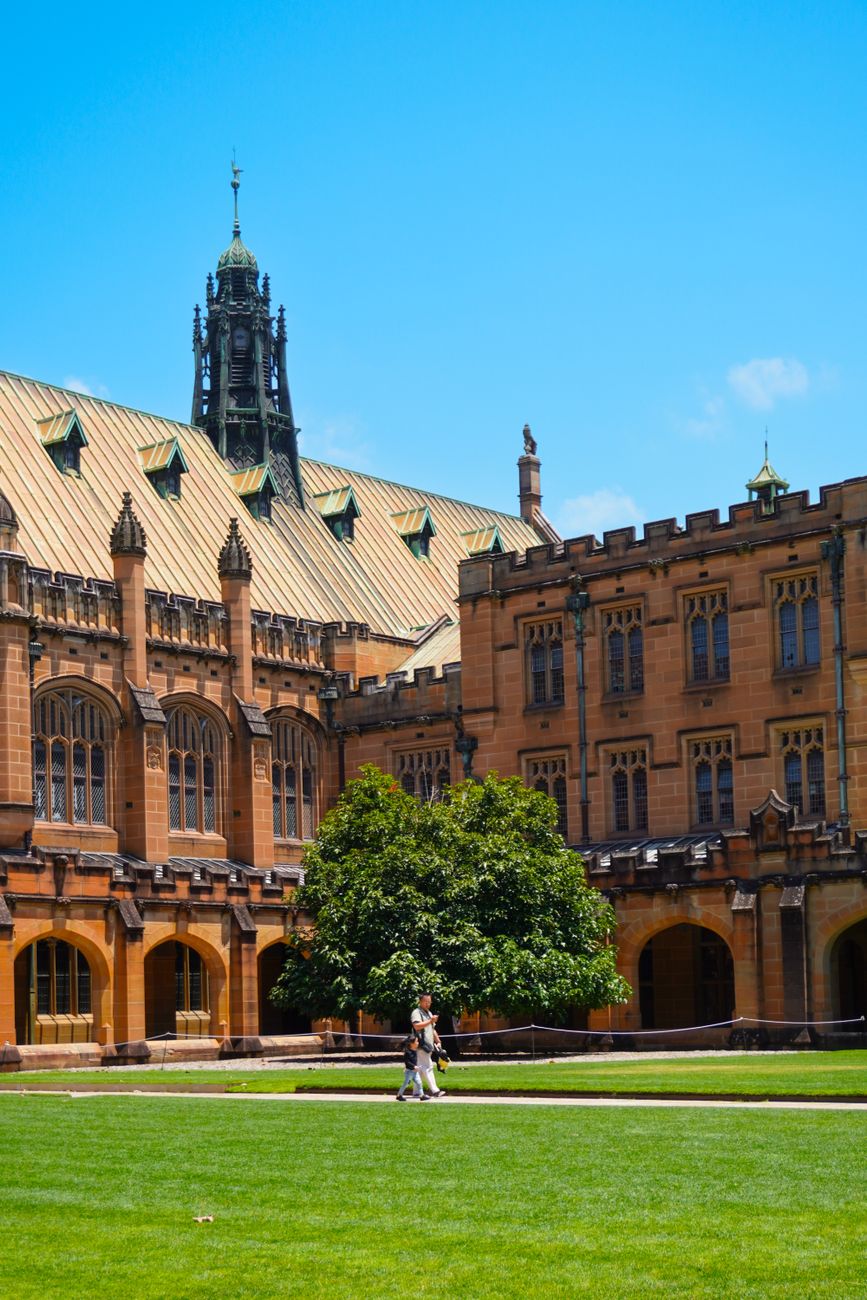
Australian universities accept a wide range of international qualifications for direct entry. For students with UK A-Levels, the typical conditional offer requires three A-Level subjects with grades ranging from ABB to AAA for competitive programs like medicine, law, and engineering. The University of Sydney, University of Melbourne, and Australian National University publish specific A-Level grade conversion tables on their admissions pages.
International Baccalaureate (IB) diploma holders generally need a total score between 24 and 45 points, with competitive programs requiring 32-40 points. The University of Queensland typically requires 32-36 for most bachelor degrees, while the University of Melbourne requires 31-38 for arts and science programs.
US high school graduates with a GPA of 3.0-4.0 on a 4.0 scale plus SAT scores of 1200-1500 (or ACT 25-32) can gain direct entry to most programs. Some universities accept the SAT Essay or ACT Writing as evidence of English proficiency, though IELTS or TOEFL remain the standard for non-native speakers.
IGCSE results alone are insufficient for university entry; students must complete A-Levels, IB, or an approved foundation program. Foundation programs — typically one year — are offered by all major universities and require IGCSE passes in 5 subjects including English and mathematics.
The Scholarships available for high-achieving international students include the Australia Awards Scholarships (full tuition, living allowance, and airfares) and university-specific merit scholarships worth 20-50% of tuition fees. The University of Melbourne’s International Undergraduate Scholarship awards AUD $10,000 to AUD $50,000 over three years for students with A-Level grades of AAA or IB 38+.
Post-Study Work Rights and Professional Pathways
The Temporary Graduate visa (subclass 485) allows international graduates to work in Australia for 2-4 years after completing their degree. In 2026, the post-study work period is 2 years for bachelor’s graduates, 3 years for master’s by coursework, and 4 years for master’s by research or PhD. Graduates with degrees in specified skilled occupations may qualify for an additional 1-2 years.
CPA Australia accreditation is available to graduates of accounting programs at universities such as the University of New South Wales, University of Melbourne, and Monash University. Students must complete a CPA-accredited degree and pass the CPA Program’s six professional exams. The pathway to CPA membership requires 3 years of supervised practical experience.
Engineers Australia accreditation applies to engineering programs at universities including the University of Sydney, University of Queensland, and RMIT University. Graduates from Washington Accord signatory countries (including the UK, US, and Canada) may have their qualifications recognised through mutual recognition agreements. Engineers Australia offers a skills assessment for migration purposes, requiring a 4-year accredited engineering degree.
The MBBS pathway for international students is highly competitive. Medical programs at the University of Sydney, University of Melbourne, and Monash University require undergraduate entry scores equivalent to ATAR 99+ and successful completion of the UCAT ANZ or GAMSAT exam. International students typically pay AUD $70,000-AUD $90,000 per year in tuition for medical degrees.
International Student Rights and Workplace Protections
International students on a 500 student visa have the right to work up to 48 hours per fortnight during study periods and unlimited hours during scheduled university holidays. The Australian Fair Work Act 2009 applies equally to all workers, including international students. Minimum wage in 2026 is AUD $24.10 per hour for full-time adults.
Students are entitled to: written employment contracts, payslips within 24 hours, superannuation contributions (11.5% of earnings), and protection from unfair dismissal. The Fair Work Ombudsman provides free advice and can investigate employer non-compliance. In 2025, the Ombudsman recovered AUD $4.2 million in unpaid wages for international students.
On-campus housing is available at most universities, though supply is limited. University-managed accommodation costs AUD $250-AUD $500 per week for a single room in a shared apartment or dormitory. Private rental in major cities costs AUD $350-AUD $700 per week for a one-bedroom apartment. The University of Sydney guarantees on-campus housing for first-year international students who apply by the deadline.
Cost of Living and Tuition Planning
The Department of Home Affairs requires international students to demonstrate access to AUD $29,710 per year for living costs (2026 figure) in addition to tuition and travel. Tuition fees vary significantly by program and institution. Bachelor’s degrees in arts and humanities cost AUD $30,000-AUD $40,000 per year, while science and engineering programs cost AUD $40,000-AUD $50,000. Medical and veterinary programs are the most expensive at AUD $70,000-AUD $90,000 annually.
Health insurance costs are a mandatory additional expense. A single OSHC policy for 12 months costs AUD $478-AUD $650 from approved providers. Family policies (couple or couple with children) cost AUD $1,200-AUD $3,500 per year. Some universities offer OSHC through preferred partners at reduced rates.
Students can reduce costs through: scholarships (as noted above), part-time work (up to 48 hours per fortnight), and choosing regional universities where living costs are 20-30% lower. The University of Tasmania offers tuition discounts of 15-25% for international students compared to mainland universities.
University Selection and Application Process
The QS World University Rankings 2026 places Australian National University at 34th, University of Melbourne at 37th, University of Sydney at 41st, University of New South Wales at 45th, and University of Queensland at 50th globally. These five universities form the “Group of Eight” (Go8) along with Monash, University of Western Australia, and University of Adelaide.
Application processes vary by institution. Most universities accept applications through the Universities Admissions Centre (UAC) for New South Wales and ACT, or directly through the university’s international admissions portal. Standard application deadlines are: Semester 1 (February start) applications due October-December; Semester 2 (July start) applications due April-May.
Required documents include: certified academic transcripts, English language test scores (IELTS 6.5 overall, minimum 6.0 in each band for most programs; higher for medicine and law), personal statement, and two academic references. Some programs require interviews or portfolios.
Conditional offers are common for international students, requiring completion of current studies or achieving specified grades. Students can accept conditional offers and apply for a visa, but must provide final transcripts before enrolment.
Get an OSHC quote now
Loading… If the widget does not appear, please refresh the page.

FAQ
Q1: What happens if my 500 student visa health insurance lapses while I am in Australia?
If your OSHC lapses, you must purchase a new policy immediately. The Department of Home Affairs may cancel your visa if you are uninsured for more than 28 consecutive days. In 2025, 1,247 student visas were cancelled for health insurance non-compliance, according to Department data. You can purchase a new policy online and upload the certificate to your ImmiAccount.
Q2: Can I use my UK NHS or US health insurance to satisfy the 500 visa requirement?
No. Only Australian-approved OSHC providers meet visa requirements. UK NHS coverage and US health insurance are not recognised for visa purposes, even if they offer global cover. The Department of Home Affairs lists 5 approved OSHC providers: Medibank, Allianz Care, Bupa, nib, and Australian Unity. You must purchase a policy from one of these providers before your visa is granted.
Q3: How much does OSHC cost for a student with a spouse and one child in 2026?
A family OSHC policy (couple with one child) from approved providers costs between AUD $2,400 and AUD $3,500 per year in 2026. Medibank’s family policy costs AUD $2,820, Allianz Care charges AUD $2,950, and Bupa’s policy is AUD $3,200. These policies cover GP visits, hospital treatment, ambulance, and limited pharmaceuticals for all family members. You must purchase the policy for the full visa duration, typically 3-5 years for a bachelor’s degree.
Q4: Can I switch OSHC providers during my stay in Australia?
Yes, you can switch providers at any time, but you must maintain continuous coverage. If you switch, your previous provider will refund the unused portion of your premium. The new provider must cover you from the day your old policy ends. Some providers charge a switching fee of AUD $50-AUD $100. Ensure you receive a confirmation of cover from the new provider before cancelling your old policy.
Q5: What does OSHC cover for mental health services?
OSHC covers psychiatric consultations and hospital treatment for mental health conditions. The 2026 minimum standards require AUD $50,000 minimum psychiatric cover per policy year. GP visits for mental health issues are covered at 85% of the MBS fee. Psychological services (counselling) are not covered by basic OSHC but may be covered by higher-tier policies. University health services often provide free or low-cost counselling for students.
References
- Department of Home Affairs, 2026, Student Visa (Subclass 500) Requirements
- QS Quacquarelli Symonds, 2026, QS World University Rankings
- Australian Government Department of Health, 2026, Overseas Student Health Cover (OSHC) Guidelines
- Fair Work Ombudsman, 2025, Annual Report on Workplace Compliance
- Universities Australia, 2025, International Student Data Summary