2026-05-21 · Diana Chu
500 Student Visa Australia Requirements: A Complete Guide for 2026 Applicants
Australia granted 287,500 student visas in the 2024-25 program year, a 12% decrease from the previous year, according to the Department of Home Affairs. The Gen

Australia granted 287,500 student visas in the 2024-25 program year, a 12% decrease from the previous year, according to the Department of Home Affairs. The Genuine Student (GS) requirement replaced the Genuine Temporary Entrant (GTE) criteria on 23 March 2024, and a new Ministerial Direction 111 now caps onshore visa applications at 270,000 for 2025-26. These shifts mean applicants must prepare with precision.
This editorial analysis provides the current 500 student visa requirements for students from English-speaking regions—including the UK, USA, Canada, Ireland, and New Zealand—who plan to study at an Australian university. It covers admissions pathways, visa criteria, costs, and post-study options. No education agent or migration firm is recommended. All data reflects 2026 policy settings unless otherwise noted.
Understanding the 500 Student Visa: Core Requirements for 2026
The 500 student visa is the primary visa for full-time study at an Australian educational institution. To apply, you must meet several mandatory criteria established by the Department of Home Affairs under the Migration Regulations 1994.
First, you must have Confirmation of Enrolment (CoE) in a registered course. This is a unique code issued by your university after you accept an offer and pay the required deposit. Without a CoE, a visa application is invalid. Second, you must satisfy the Genuine Student (GS) requirement, which replaced the GTE on 23 March 2024. The GS test assesses your intention to study genuinely and temporarily in Australia, considering your academic history, career prospects, and ties to your home country. Third, you must meet English language proficiency standards. For most university courses, this means an IELTS score of 6.0 overall (minimum 5.5 per band) or equivalent, though some programs require 6.5 or 7.0. Fourth, you must demonstrate sufficient funds to cover tuition, living costs, and travel. As of 2026, the minimum living cost is AUD 29,710 per year for a single student, plus AUD 12,000 for a spouse and AUD 5,000 per child. Fifth, you need Overseas Student Health Cover (OSHC) for the duration of your stay. Finally, you must be a genuine temporary entrant, meaning you intend to leave Australia after your studies, unless you apply for a subsequent visa.
Processing times vary. As of early 2026, 75% of applications are processed within 42 days for Higher Education Sector visas, and 90% within 56 days. Applications lodged online through the ImmiAccount portal are standard. You can apply from inside or outside Australia, but onshore applications are now subject to a cap of 270,000 for the 2025-26 program year under Ministerial Direction 111.
Admissions Pathways for English-Speaking Students: UK, US, and Global Qualifications
Students from English-speaking regions often have well-defined pathways into Australian universities. The Australian Tertiary Admission Rank (ATAR) system is the primary benchmark, but international qualifications are assessed through comparability tables maintained by the National Office of Overseas Skills Recognition (NOOSR) and individual universities.
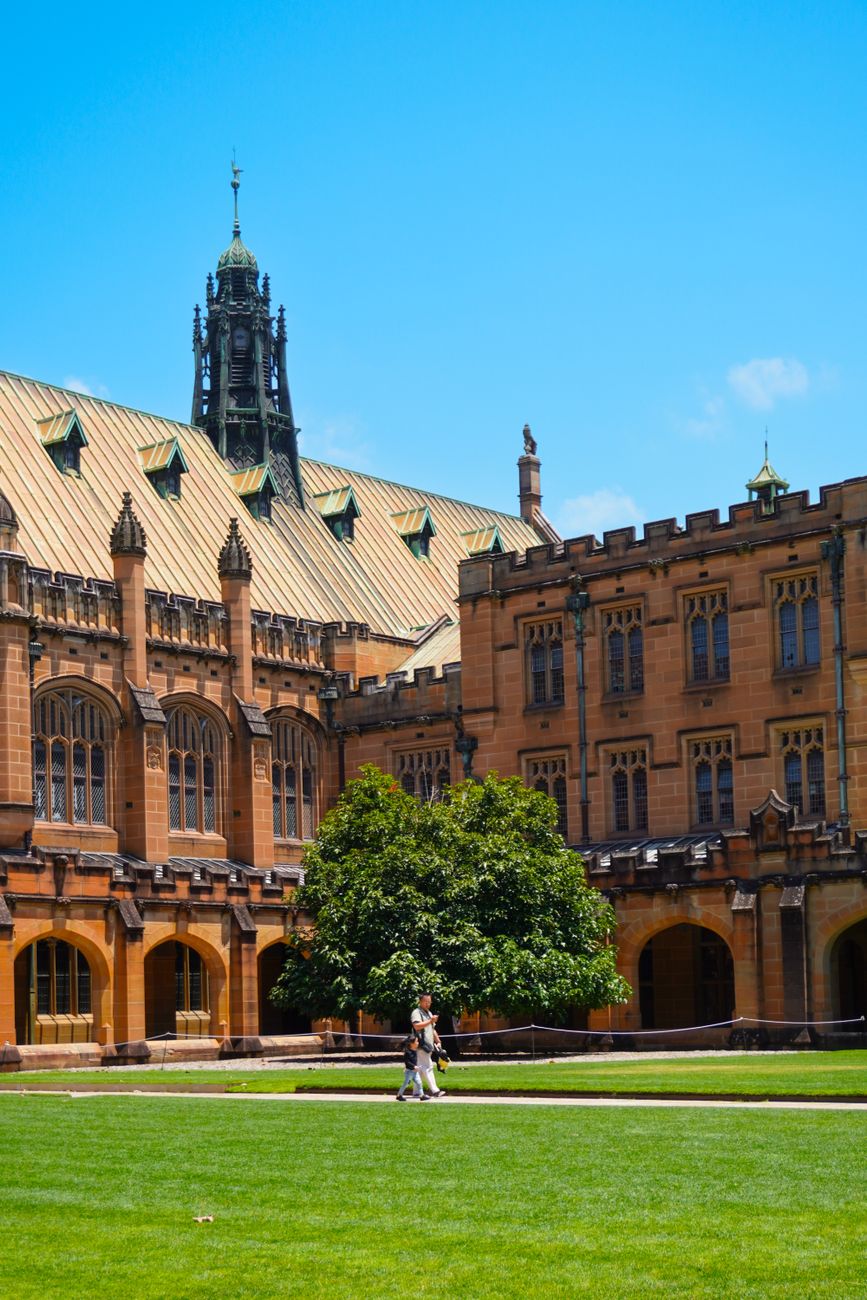
For UK students, A-levels are widely accepted. A typical offer for a bachelor’s degree at a Group of Eight (Go8) university—such as the University of Melbourne or the University of Sydney—requires three A-levels with grades ranging from AAB to AAA, depending on the course. For example, Medicine requires AAA, while Arts may accept ABB. The International Baccalaureate (IB) Diploma is also accepted, with a score of 32-38 out of 45 being competitive for most programs. UK students holding an HND or foundation degree may receive credit exemptions for up to one year of a bachelor’s degree.
For US students, the High School Diploma with a minimum GPA of 3.0 out of 4.0 is the baseline for many universities. However, competitive programs often require a GPA of 3.5 or higher. The SAT is not mandatory for most Australian universities, but a score of 1200-1400 can strengthen an application, especially for scholarships. Some universities, like the University of New South Wales, accept AP scores—typically 3 or above in two to four subjects—as a substitute for year 12 equivalency.
For Canadian students, the Ontario Secondary School Diploma (OSSD) with an average of 75-85% is common. For Irish students, the Leaving Certificate with 350-550 points is accepted. For New Zealand students, NCEA Level 3 with Merit or Excellence endorsements is typical. For IGCSE holders, most universities require completion of A-levels or an approved foundation program, as IGCSE alone is not considered equivalent to Australian Year 12.
Foundation programs are a popular alternative for students who do not meet direct entry requirements. These one-year courses, offered by universities themselves (e.g., UNSW Foundation Studies, Trinity College at the University of Melbourne), provide a pathway into first-year undergraduate programs. Completion with a specified grade guarantees progression.
Scholarships and Financial Aid for International Students
Australian universities offer a wide range of scholarships specifically for international students from English-speaking countries. These reduce tuition costs significantly. The Australia Awards program, funded by the Department of Foreign Affairs and Trade, provides full tuition, living expenses, and airfares for students from eligible countries. However, students from the UK, USA, Canada, and New Zealand are generally not eligible for Australia Awards, as these are targeted at developing nations.
Instead, university-specific scholarships are the primary option. The University of Sydney International Scholarship awards AUD 40,000 per year for up to four years to high-achieving students. The University of Melbourne International Undergraduate Scholarship provides a 50% or 100% tuition fee reduction for students with exceptional academic records. The Monash International Merit Scholarship offers AUD 10,000 per year for up to four years. The UNSW Scientia Scholarship covers full tuition and a living stipend of AUD 40,000 per year for PhD students, but undergraduate versions exist with partial coverage.
For students with strong SAT or ACT scores, some universities offer automatic merit scholarships. For example, the University of Queensland awards AUD 12,000 per year to students with a SAT score of 1350 or above. The Australian National University (ANU) offers the ANU Chancellor’s International Scholarship, which covers 50% of tuition fees for students with a GPA of 5.0/7.0 or equivalent.
Application deadlines vary. Most scholarships close between August and October for the February intake, and between March and May for the July intake. You must typically apply for the scholarship separately from the course application. Some require a personal statement and references. It is critical to check each university’s scholarship page for current eligibility criteria, as funding is limited and competitive.
Post-Study Work Rights and Professional Accreditation Pathways
The Temporary Graduate visa (subclass 485) allows international students to work in Australia after completing their studies. As of 2026, the post-study work period has been reduced from previous levels. For Bachelor’s degree graduates, the standard duration is two years. For Master’s by coursework graduates, it is two years. For Master’s by research and PhD graduates, it is three years. However, graduates with degrees in priority skills areas—such as nursing, engineering, IT, and teaching—may qualify for an additional two years under the extended post-study work stream.
For students pursuing professional accreditation, specific pathways exist. CPA Australia and Chartered Accountants Australia and New Zealand (CA ANZ) require completion of an accredited accounting degree. Most Australian universities offer programs that meet these accreditation standards. After graduation, you can apply for temporary membership and then complete the CPA Program or CA Program to become fully qualified. Engineers Australia accredits engineering programs under the Washington Accord. A bachelor’s degree in engineering from an accredited Australian university is automatically recognized in the UK, USA, Canada, and other signatory countries. For the MBBS pathway, international students can study medicine at universities like the University of Melbourne, University of Sydney, and Monash University. After graduation, you must complete an internship and register with the Medical Board of Australia. The Australian Medical Council (AMC) sets the standards.
For students aiming for permanent residency, the General Skilled Migration (GSM) program offers a pathway. Points are awarded for age, English proficiency, work experience, and Australian study. Graduates with a degree from an Australian institution receive five points. Those who study in regional areas—such as Adelaide, Perth, or Hobart—receive an additional five points. The Skilled Occupation List (SOL) and Medium and Long-term Strategic Skills List (MLTSSL) determine eligibility for specific visas.
International Student Rights and Protections
International students in Australia have robust legal protections under the Education Services for Overseas Students (ESOS) Act 2000 and the National Code of Practice for Providers of Education and Training to Overseas Students 2018. These frameworks ensure that universities meet strict standards for course quality, student support, and financial transparency.
Key rights include: the right to receive a refund if a course is not delivered as promised; the right to transfer between providers after six months of study, subject to the provider’s release; the right to work up to 48 hours per fortnight during study and unlimited hours during scheduled breaks; and the right to access complaints through the Overseas Student Ombudsman. If you believe a university has breached its obligations, you can lodge a complaint without fear of visa cancellation.
The Fair Work Ombudsman protects your workplace rights. You must be paid at least the national minimum wage, which as of 2026 is AUD 24.10 per hour. Employers cannot discriminate based on visa status. If you experience wage theft or unsafe conditions, you can report anonymously.
For on-campus housing, universities must provide clear information about accommodation options. Most universities guarantee on-campus housing for first-year international students if you apply by the deadline. Costs range from AUD 200 to AUD 500 per week, depending on the city and room type. Off-campus rental in Sydney and Melbourne averages AUD 350-600 per week for a one-bedroom apartment. The Residential Tenancies Act in each state governs your rights as a tenant, including bond lodgement and notice periods.
Cost of Living and Tuition: Budgeting for 2026
Tuition fees for international students vary by university and program. For 2026, the average annual tuition for a Bachelor’s degree is AUD 35,000 to AUD 50,000. For a Master’s degree, it is AUD 40,000 to AUD 60,000. Medicine and veterinary science are the most expensive, with fees up to AUD 80,000 per year. Arts and humanities are typically at the lower end.
Living costs are set by the Department of Home Affairs at AUD 29,710 per year for a single student. However, actual costs depend on location. Sydney is the most expensive city, with average monthly rent for a shared apartment at AUD 1,200-1,800. Melbourne is slightly cheaper at AUD 1,000-1,500. Brisbane, Adelaide, and Perth are more affordable, with rent from AUD 800-1,200 per month. Hobart and Darwin are the cheapest but have fewer university options.
Other costs include: health insurance (OSHC) at AUD 500-700 per year; textbooks at AUD 500-1,000 per year; public transport at AUD 30-60 per week; and groceries at AUD 80-150 per week. A realistic annual budget for a single student in Sydney is AUD 45,000-55,000 (tuition plus living). In Adelaide, it is AUD 35,000-45,000.
You must demonstrate evidence of funds when applying for the visa. Acceptable evidence includes: bank statements showing sufficient funds for at least three months; a loan approved by a financial institution; or a scholarship letter covering tuition and living costs. The funds must be in your name or your parent’s name. If using a parent’s account, you must provide a birth certificate and a letter of consent.
Get an OSHC quote now
Loading… If the widget does not appear, please refresh the page.

FAQ
Q1: What is the minimum IELTS score required for a 500 student visa in 2026?
For most university courses, the minimum IELTS score is 6.0 overall with no band below 5.5. However, for programs like Medicine, Law, or Teaching, the requirement is typically 7.0 overall with no band below 7.0. The Department of Home Affairs accepts IELTS, TOEFL iBT, PTE Academic, and Cambridge English (CAE) as equivalent. For example, a TOEFL iBT score of 60-78 is equivalent to IELTS 6.0. You must provide test results no older than two years at the time of visa application.
Q2: Can I apply for a 500 student visa without a Confirmation of Enrolment (CoE)?
No. A CoE is mandatory for a valid 500 visa application. You cannot substitute a Letter of Offer or a conditional offer. The CoE must be issued by a registered Australian education provider listed on the Commonwealth Register of Institutions and Courses for Overseas Students (CRICOS). If you have not yet received a CoE, you can apply for a visa after the university issues it. Processing times for CoEs vary by institution but typically take 1-2 weeks after accepting an offer and paying the deposit.
Q3: How long can I stay in Australia on a post-study work visa after completing a Bachelor’s degree in 2026?
The standard post-study work period for a Bachelor’s degree is two years under the Temporary Graduate visa (subclass 485) as of 2026. However, if your degree is in a priority skills area—such as nursing, engineering, IT, or teaching—you may qualify for an additional two years, making the total period four years. PhD graduates receive three years, with the possibility of a two-year extension in priority fields. You must apply for the 485 visa within six months of completing your course and within the validity of your student visa.
References
- Department of Home Affairs, 2026, “Student Visa (Subclass 500) – Document Checklist and Processing Times”
- Universities Australia, 2026, “International Student Data and Policy Update 2025-26”
- National Office of Overseas Skills Recognition (NOOSR), 2026, “Country Education Profiles – UK, USA, Canada, New Zealand”
- Australian Skills Quality Authority (ASQA), 2026, “ESOS Act and National Code Compliance Report”
- Australian Medical Council, 2026, “Pathways to Medical Registration for International Graduates”