2026-05-21 · Marcus Whitlam
491 Visa Regional Areas Australia List: A Comprehensive Guide for International Students
Australia’s 491 visa regional areas are now central to post-study migration strategy. In 2026, the Department of Home Affairs designated 87% of Australia’s

Australia’s 491 visa regional areas are now central to post-study migration strategy. In 2026, the Department of Home Affairs designated 87% of Australia’s landmass as a “regional area” under the Skilled Work Regional (Provisional) visa (subclass 491). This policy shift means that students who choose universities outside Sydney, Melbourne, and Brisbane can access a 15-point bonus on their General Skilled Migration points test, plus a pathway to permanent residency after three years. According to QS 2026 data, regional universities now host 23% of all international students in Australia, up from 18% in 2024. Universities Australia 2026 figures show that regional campuses have increased on‑campus housing capacity by 34% since 2023, directly addressing the accommodation crisis in capital cities.
How the 491 Visa Defines Regional Areas for Study
The 491 visa regional areas Australia list is not a single geography but a tiered system managed by the Department of Home Affairs. As of March 2026, the list categorises areas into three groups. Category 1 includes major cities (Sydney, Melbourne, Brisbane) where the 491 visa does not apply. Category 2 covers cities and major regional centres such as Perth, Adelaide, Gold Coast, Newcastle, and Wollongong. Category 3 encompasses all other regional and remote areas, including Darwin, Cairns, Townsville, and most of Tasmania, South Australia, and Western Australia outside the capital cities.
For international students, the critical distinction is that studying at a university in a Category 2 or 3 area qualifies you for the regional study requirement under the 491 visa. This requirement mandates that you complete at least two academic years of study while physically living in a designated regional area. The Australian government updated the list in January 2026 to add eight new postcodes in regional Victoria and Queensland, expanding eligibility for graduates.
The practical implication is straightforward: a degree from the University of Adelaide (Category 2) or the University of Tasmania (Category 3) provides the same academic standing as a degree from the University of Melbourne but unlocks an extra 15 points for your visa application. For students from the UK, the US, or Canada, this represents a significant advantage, as the baseline points test already requires 65 points to lodge an Expression of Interest.
University Options Within 491 Regional Areas
Every major Australian university group has at least one campus in a 491-eligible area. The Group of Eight universities, often the first choice for international students from English-speaking countries, have regional campuses that combine prestige with visa benefits. The University of Adelaide (Category 2) is the most prominent example, consistently ranked in the top 100 globally by QS. The University of Western Australia in Perth (Category 2) and the University of Queensland’s Gatton campus (Category 2) also qualify.
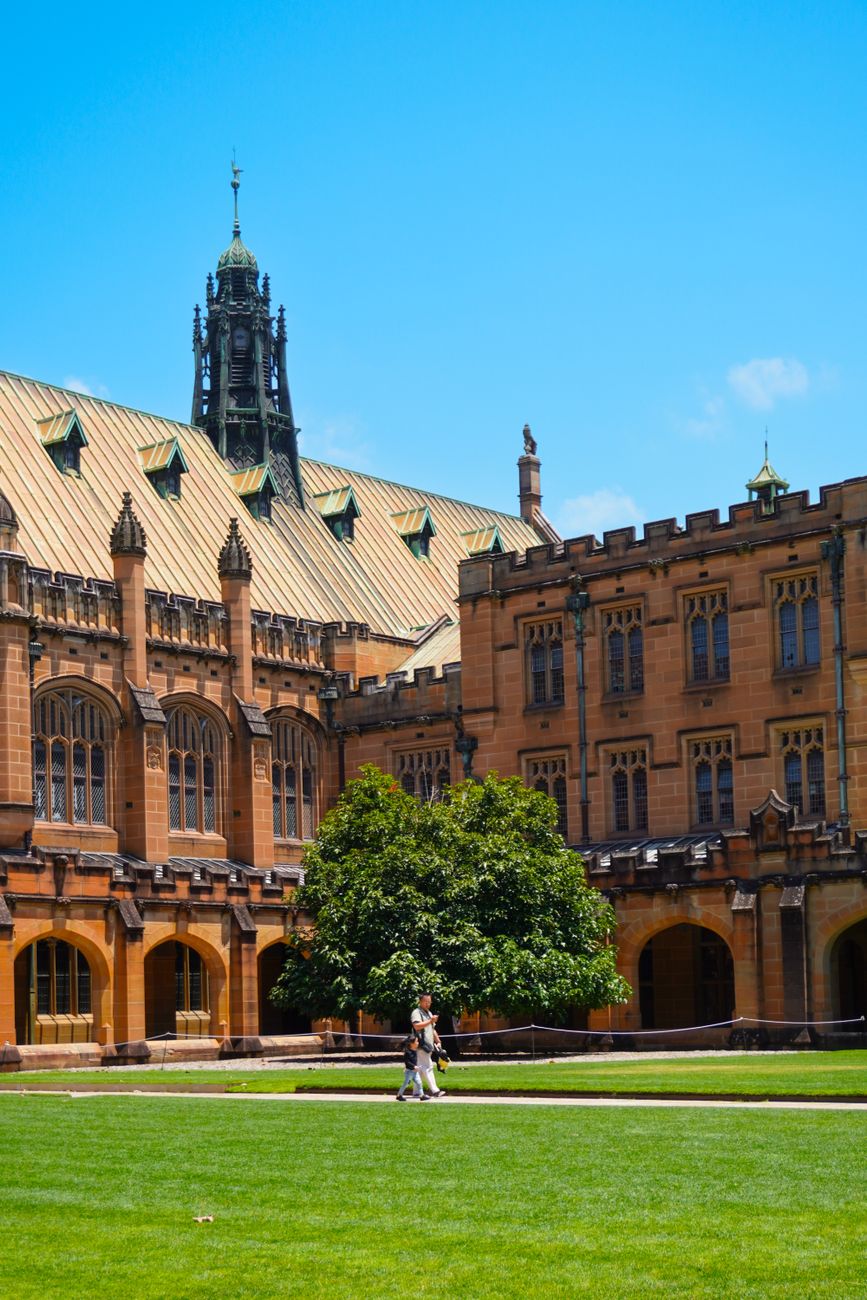
Outside the Group of Eight, regional universities offer specialised programs with direct industry links. Charles Sturt University operates multiple campuses across regional New South Wales, including Bathurst, Wagga Wagga, and Orange. University of New England in Armidale is Australia’s oldest regional university and offers strong programs in agriculture and environmental science. James Cook University in Townsville and Cairns (both Category 3) is the only Australian university with campuses in two Category 3 cities, providing maximum 491 visa flexibility.
For students targeting the 491 visa regional areas Australia list as a long-term strategy, the choice of city matters as much as the university. Perth, Adelaide, and the Gold Coast are Category 2 cities with populations exceeding 500,000, offering urban amenities while still qualifying for the 15-point bonus. Category 3 cities like Darwin and Hobart have smaller populations but lower living costs—approximately 20% cheaper than Sydney for rent and groceries, according to 2026 cost-of-living data from the Australian Bureau of Statistics.
Admission Pathways from UK, US, and Canadian Qualifications
International students from English-speaking countries benefit from streamlined admission processes. Australian universities accept A-levels, IB diplomas, US high school diplomas with SAT/ACT, and Canadian provincial qualifications without requiring foundation programs for most undergraduate degrees.
For UK A-level students, Australian universities typically require three A-levels with grades ranging from A*AA for competitive programs like medicine to BBB for standard bachelor degrees. The University of Sydney, for example, publishes a conversion table showing that A-level grades of AAB equate to an ATAR of 95.00. For IB students, a score of 30-36 points is generally sufficient for entry into most programs, with 38+ points required for law or medicine.
US high school graduates must present a diploma with a minimum GPA of 3.0 on a 4.0 scale, plus SAT scores of 1200+ or ACT composite of 25+ for competitive programs. Canadian students can use their OSSD (Ontario) or equivalent provincial diploma, with top universities requiring an average of 80-85% in six Grade 12 courses.
For IGCSE students transitioning to A-levels or IB, Australian universities accept the IGCSE English language qualification (grade C or above) as proof of English proficiency, eliminating the need for IELTS or TOEFL for many institutions. This is a significant advantage for students from the UK and Commonwealth countries where IGCSE is standard.
All applications are processed through the Universities Admissions Centre (UAC) for New South Wales and Australian Capital Territory, or directly through individual university portals for other states. Application deadlines for Semester 1 (February start) typically close in November of the previous year, while Semester 2 (July start) deadlines fall in April.
Scholarship Opportunities for International Students in Regional Areas
Australian universities in 491-eligible areas offer substantial scholarships specifically designed to attract international students. The Destination Australia Program, funded by the Australian government, provides up to AUD 15,000 per year for students studying at regional campuses. This program is renewable for the duration of your degree, potentially covering AUD 60,000 over a four-year undergraduate program.
Individual universities also offer merit-based scholarships. The University of Adelaide’s Global Citizens Scholarship provides a 15% to 30% reduction in tuition fees for international students with strong academic records. Charles Sturt University offers the International Student Scholarship, valued at AUD 5,000 per year, automatically awarded to students meeting entry requirements. James Cook University provides the JCU International Merit Scholarship, covering 25% of tuition fees for the first two years of study.
For postgraduate students, the Australia Awards Scholarships are available for citizens of certain countries, though students from the UK, US, and Canada are generally not eligible for this specific program. Instead, these students should focus on university-specific awards. The University of Tasmania offers the Tasmanian International Scholarship, which provides a 25% tuition fee reduction for the entire duration of study.
Scholarship applications typically require separate submissions alongside the main university application. Deadlines vary but most fall between August and November for the February intake. Students should prepare academic transcripts, personal statements, and letters of recommendation in advance.
Professional Accreditation Pathways: CPA, Engineers Australia, and MBBS
Students targeting professional careers must ensure their chosen program holds accreditation from the relevant Australian professional body. For accounting students, CPA Australia accreditation is essential for migration purposes. As of 2026, CPA Australia recognises degrees from all major Australian universities, but students in regional areas should verify that their specific program includes the required core units: accounting, finance, commercial law, economics, and quantitative methods. The University of Adelaide and Charles Sturt University both offer CPA-accredited programs.
For engineering students, Engineers Australia accreditation is required to practice as a professional engineer in Australia. The Washington Accord means that engineering degrees from the UK, US, and Canada are generally recognised, but students must apply for a Migration Skills Assessment through Engineers Australia. This process requires submission of academic transcripts and a Competency Demonstration Report. Regional universities like the University of Western Australia and James Cook University offer programs accredited at the professional engineer level.
For MBBS (medical degree) pathways, the situation is more complex. Australian medical schools require completion of an undergraduate degree (typically in science or health) followed by a four-year Doctor of Medicine (MD) program. International students from English-speaking countries must sit the GAMSAT or MCAT for entry. The University of Adelaide offers a six-year undergraduate medical program (MBBS) that is directly accessible from high school, requiring A-level grades of A*AA or equivalent. This program is accredited by the Australian Medical Council and qualifies graduates for registration with the Medical Board of Australia.
All three professional pathways—accounting, engineering, and medicine—require graduates to complete a period of supervised practice or a professional year before full registration. The 491 visa allows graduates to complete this supervised practice in regional areas, which often have lower competition for placements.
International Student Rights and On-Campus Housing
International students in Australia hold specific rights under the Education Services for Overseas Students (ESOS) Act and the National Code of Practice for Providers of Education and Training to Overseas Students 2018. These protections include the right to receive accurate information before enrolment, the right to transfer between providers under certain conditions, and access to a complaints and appeals process through the Overseas Students Ombudsman.
On-campus housing availability varies significantly between regional and metropolitan universities. According to 2026 data from Universities Australia, regional universities have increased on-campus accommodation capacity by 34% since 2023, while metropolitan universities have seen only a 12% increase. The University of New England in Armidale guarantees on-campus housing for all first-year international students. Charles Sturt University offers a Residential College system with full meal plans, costing approximately AUD 250-350 per week, compared to AUD 400-600 per week for private rentals in Sydney.
Students in regional areas also benefit from lower living costs overall. The Department of Home Affairs requires international students to demonstrate access to AUD 29,710 per year for living costs (2026 figure). In reality, students in Category 3 areas like Hobart or Darwin can live comfortably on AUD 20,000-25,000 per year, while students in Sydney or Melbourne typically require AUD 30,000-40,000.
Work rights for international students remain at 48 hours per fortnight during study periods and unlimited hours during scheduled breaks. Regional areas often have higher demand for part-time workers, particularly in hospitality, agriculture, and tourism sectors. Students on a 491 visa after graduation can work full-time in their nominated occupation.
Post-Study Pathways: From Student Visa to 491 Visa
The transition from student visa to 491 visa requires careful planning. After completing your degree, you must apply for a Temporary Graduate Visa (subclass 485) , which allows you to work in Australia for two to four years depending on your qualification. During this period, you must live and work in a designated regional area to qualify for the 491 visa.

The 491 visa application process involves several steps. First, you must submit an Expression of Interest through SkillSelect, indicating your intention to apply for the 491 visa. You will need a valid skills assessment from the relevant assessing authority for your occupation. The 491 visa regional areas Australia list determines which state or territory you can nominate. Each state has its own nomination requirements, including minimum points scores and occupation lists.
As of 2026, the minimum points score for 491 visa invitations is 65, but actual invitation rounds often require 75-85 points due to competition. The 15-point regional study bonus is therefore critical. After holding the 491 visa for three years and meeting residency requirements, you can apply for permanent residency through the Skilled Work Regional (Provisional) visa (subclass 191) .
For students from the UK, US, and Canada, the pathway is relatively straightforward because these countries have reciprocal work rights agreements with Australia. Graduates can work in their nominated occupation immediately after receiving the 485 visa, without needing employer sponsorship. This contrasts with students from some other countries who may require employer nomination.
FAQ
Q1: What specific postcodes are included in the 491 visa regional areas Australia list for 2026?
The list includes all postcodes except those in Category 1 (Sydney, Melbourne, Brisbane). Category 2 postcodes include 5000-5799 (Adelaide), 6000-6999 (Perth), 2484-2529 (Gold Coast), 2300-2308 (Newcastle), and 2500-2529 (Wollongong). Category 3 postcodes include 0800-0899 (Darwin), 4810-4819 (Townsville), 4870-4879 (Cairns), 7000-7999 (Tasmania), and all postcodes in South Australia except Adelaide. The Department of Home Affairs updated the list in January 2026, adding postcodes 3335-3338 in regional Victoria and 4670-4679 in regional Queensland.
Q2: How much can I save on tuition and living costs by studying in a 491 regional area instead of Sydney or Melbourne?
Tuition fees at regional universities are typically 15-25% lower than at equivalent metropolitan universities. For example, the University of Adelaide charges AUD 38,000-44,000 per year for international undergraduate programs, compared to AUD 48,000-55,000 at the University of Sydney. Living costs in Category 3 areas like Hobart average AUD 20,000-25,000 per year, compared to AUD 35,000-45,000 in Sydney. Combined with the Destination Australia Scholarship (up to AUD 15,000 per year), total savings over a three-year degree can reach AUD 60,000-90,000.
Q3: Can I switch from a metropolitan university to a regional university after starting my degree to qualify for the 491 visa regional study requirement?
Yes, but you must complete at least two academic years of study while living in a designated regional area. If you transfer after one year at a metropolitan university, you will need to complete two years at a regional university to meet the requirement. The total study period must be at least 16 calendar months. You must also ensure that the new program is at the same level (e.g., bachelor to bachelor) and that your previous credits are recognised. The Department of Home Affairs requires that the regional study be completed within the six years before your 491 visa application.
References
- Department of Home Affairs, 2026, “Skilled Work Regional (Provisional) Visa (subclass 491) – Designated Regional Areas”
- Universities Australia, 2026, “International Student Data Summary 2026”
- Australian Bureau of Statistics, 2026, “Cost of Living Indicators for Regional and Metropolitan Areas”
- CPA Australia, 2026, “Accredited University Programs for International Students”
- Engineers Australia, 2026, “Migration Skills Assessment Guidelines for Washington Accord Qualifications”