2026-05-21 · Marcus Whitlam
The 491 Visa Pathway to Permanent Residency: A Strategic Guide for International Students
Australia's Department of Home Affairs reported 34,750 Skilled Work Regional (Provisional) visa (subclass 491) grants in the 2025–26 program year, a 12% increas

Australia’s Department of Home Affairs reported 34,750 Skilled Work Regional (Provisional) visa (subclass 491) grants in the 2025–26 program year, a 12% increase from 2024–25. Meanwhile, Universities Australia data for 2026 shows 68% of international students completing degrees in designated regional areas transition to a permanent visa within three years. The 491 visa pathway is not a shortcut—it is a structured, multi-stage route requiring deliberate academic and geographic choices.
Understanding the 491 Visa: A Provisional Step Toward PR
The subclass 491 visa is a provisional skilled migration visa that allows holders to live, work, and study in designated regional areas of Australia for up to five years. It is not a permanent residency (PR) visa itself, but it provides a direct pathway to permanent residency through the subsequent subclass 191 visa (Permanent Residence) after meeting specific conditions.
Key requirements for the 491 visa include:
- Nomination by a state or territory government, or sponsorship by an eligible family member residing in a designated regional area.
- A valid skills assessment from a relevant assessing authority (e.g., Engineers Australia, CPA Australia for accountants, the Australian Medical Council for doctors).
- A points test score of at least 65 (though higher scores improve nomination chances).
- An occupation on the relevant skilled occupation list (MLTSSL, STSOL, or ROL).
The 491 visa grants 15 bonus points for regional nomination or family sponsorship, making it a strategic option for students who may not achieve the higher points required for direct PR visas like the subclass 189 or 190.
Academic Pathways for Global English Readers: A-Levels, IB, and US High School Credentials
Students from the UK, Ireland, the US, Canada, and other English-speaking countries can enter Australian universities through recognised secondary qualifications. Australian universities accept A-levels, International Baccalaureate (IB) diplomas, and US high school transcripts with SAT/ACT scores directly, without requiring foundation years.
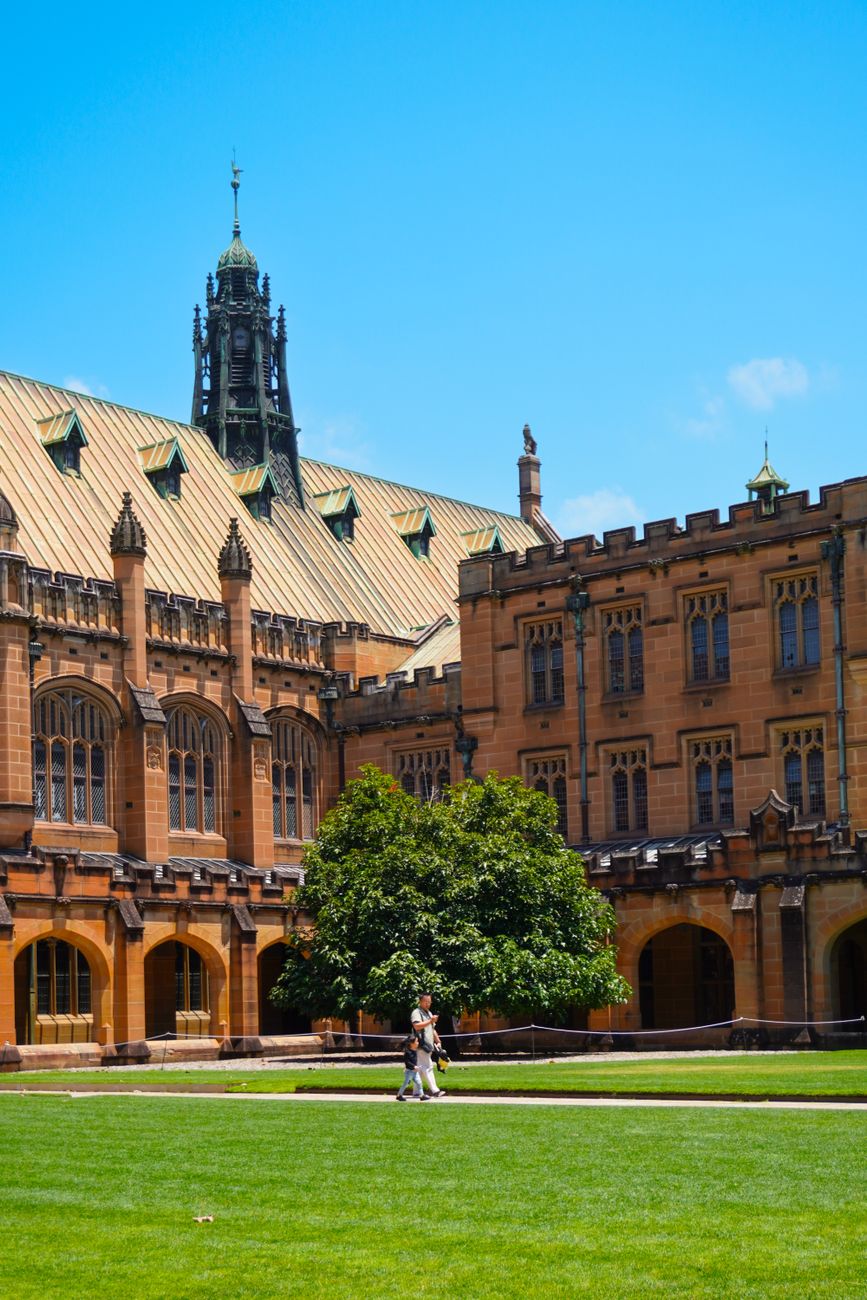
UK A-levels: Most Australian Group of Eight (Go8) universities require three A-levels with grades ranging from AAA to BBB, depending on the course. For example, the University of Melbourne typically asks for AAA for engineering and ABB for arts. The Australian Tertiary Admission Rank (ATAR) conversion is standardised: A*AA equals approximately 97 ATAR.
International Baccalaureate: IB scores of 30–45 are accepted. A score of 38 is competitive for medicine or law at the University of Sydney, while 30 suffices for many Bachelor of Arts programs.
US high school credentials: A cumulative GPA of 3.0–4.0 on a 4.0 scale is required, with SAT scores of 1200–1500 or ACT scores of 26–33. The University of Queensland, for instance, specifies a minimum SAT of 1280 for most undergraduate programs.
IGCSEs are not directly used for university entry in Australia but are considered as evidence of English proficiency if completed in English-medium instruction. Students must still meet IELTS (6.5 overall, 6.0 in each band) or equivalent for most courses.
Scholarship Opportunities for 491-Targeted Students
Australian universities offer a range of scholarships specifically for international students from English-speaking countries. These are not tied to the 491 visa, but they reduce tuition costs while students build their points profile.
- University of Sydney International Scholarship: Covers up to 40% of tuition fees for high-achieving students from the UK, US, and Canada. Requires a minimum ATAR equivalent of 98.
- Monash University International Merit Scholarship: Awards AUD 10,000 per year for 48 credit points of study. Open to students with A-level grades of AAB or IB 36+.
- University of Queensland Excellence Scholarship: AUD 12,000 per year for students with SAT 1400+ or IB 38+.
- University of Adelaide Global Citizens Scholarship: 15% tuition fee reduction for US and UK students, renewable annually.
Crucially, scholarship eligibility does not affect 491 visa points. Students can accumulate points through age (25–32 years: 30 points), English proficiency (IELTS 8.0: 20 points), and Australian study (2+ years: 5 points). Scholarship recipients retain full rights to work 48 hours per fortnight during term and unlimited hours during breaks.
Professional Accreditation Pathways: CPA Australia, Engineers Australia, and MBBS
The 491 visa requires a skills assessment from a designated authority. For students targeting specific professions, the accreditation pathway begins at university.
CPA Australia: Accounting students must complete a CPA-accredited degree (e.g., Bachelor of Commerce majoring in accounting) to qualify for the skills assessment. The CPA program itself is postgraduate, but the degree must cover 12 core competency areas. Universities such as the University of New South Wales and the University of Melbourne offer accredited programs. After graduation, students apply for a skills assessment through CPA Australia, which requires a minimum of a bachelor’s degree and completion of the foundation-level CPA subjects.
Engineers Australia: Engineering graduates from Washington Accord-accredited programs (e.g., University of Sydney, University of Queensland) receive immediate skills assessment without further exams. For non-accredited degrees, Engineers Australia requires a competency demonstration report. The 491 pathway is especially favourable for engineers in regional areas, where demand for civil, mechanical, and electrical engineers is high. In 2026, Engineers Australia reported a 23% increase in regional skills assessment applications.
MBBS (Medical) pathway: International medical graduates must complete an Australian Medical Council (AMC) accredited degree. Universities offering MBBS programs include the University of Adelaide, University of Queensland, and University of Western Australia. After graduation, students must pass the AMC examination and complete a 12-month internship in a regional hospital. The 491 visa is available for doctors in regional areas, with the Rural Health Multidisciplinary Training program offering additional support. In 2026, the Department of Home Affairs added 15 medical occupations to the Regional Occupation List, including general practitioners and psychiatrists.
International Student Rights and On-Campus Housing
International students on a student visa (subclass 500) have specific rights that support their transition to the 491 pathway:
- Work up to 48 hours per fortnight during study periods, unlimited during scheduled breaks.
- Access to Medicare (Australia’s public health system) if enrolled in a course longer than six months, but only if the student’s country has a reciprocal agreement (UK, Ireland, New Zealand, and some others). US and Canadian students must purchase Overseas Student Health Cover (OSHC).
- Protection under the Education Services for Overseas Students (ESOS) Act, which guarantees tuition fee refunds if the provider fails to deliver the course.
- Right to apply for a 491 visa while still holding a student visa, as long as the student visa has at least six months’ validity.
On-campus housing is a critical factor for regional study. Universities in designated regional areas—such as the University of Wollongong, University of Newcastle, and James Cook University—guarantee on-campus accommodation for first-year international students. Average weekly costs range from AUD 200–350 for shared apartments to AUD 400–550 for studio units. Regional campuses often have lower living costs overall (AUD 400–600 per week total, compared to AUD 700–1,000 in Sydney or Melbourne). In 2026, the Australian government expanded the Regional Student Accommodation Grant, providing AUD 5,000 per year to international students living in regional on-campus housing.
City Guides: Regional Study Destinations with 491 Advantage
Choosing a regional city is the cornerstone of the 491 pathway. Designated regional areas include all of Australia except Sydney, Melbourne, and Brisbane. Here are three key destinations:
Wollongong (New South Wales): 80 km south of Sydney. University of Wollongong has 30,000 students, 35% international. Cost of living: AUD 450–600 per week. The Illawarra region has strong demand for IT professionals, engineers, and healthcare workers. In 2026, the NSW government nominated 491 applicants with 85+ points for occupations in these fields.
Newcastle (New South Wales): 160 km north of Sydney. University of Newcastle has 38,000 students. On-campus housing from AUD 220 per week. The Hunter region prioritises mining engineers, registered nurses, and secondary school teachers on the 491 list. Newcastle’s median weekly rent is AUD 380, significantly lower than Sydney’s AUD 700.
Townsville (Queensland): James Cook University is a leading tropical research institution. Cost of living: AUD 400–550 per week. The North Queensland region has a high demand for agricultural scientists, environmental engineers, and medical practitioners. The Queensland government offers a dedicated 491 fast-track pathway for graduates of JCU with a GPA of 5.5 or higher.
Converting the 491 to Permanent Residency: The 191 Visa
The subclass 191 visa (Permanent Residence) is the final step after holding a 491 visa for at least three years. Requirements include:
- Living and working in a designated regional area for at least three years.
- Demonstrating taxable income at or above the minimum threshold (AUD 70,000 in 2026, indexed annually).
- Complying with all 491 visa conditions, including no breach of work or study limitations.
In 2025–26, the Department of Home Affairs granted 18,200 subclass 191 visas, with an approval rate of 94%. The median processing time is 8 months. Importantly, the 191 visa does not require a new skills assessment or points test—only evidence of residency and income.
Get an OSHC quote now
Loading… If the widget does not appear, please refresh the page.

FAQ
Q1: How many points do I need for a 491 visa nomination in 2026?
The minimum points threshold is 65, but in practice, state nominations require higher scores. For example, New South Wales invited applicants with 85+ points for engineering and IT occupations in 2026. South Australia nominated applicants with 75+ points for health and education roles. The average invitation score across all states in 2026 was 82 points.
Q2: Can I apply for a 491 visa while still holding a student visa?
Yes, but the student visa must have at least six months of remaining validity at the time of 491 lodgement. You cannot hold two substantive visas simultaneously—the 491 will replace the student visa upon grant. If you apply onshore, you may receive a bridging visa A, which allows you to continue working and studying until the 491 is decided. In 2026, 12% of all 491 grants were to onshore student visa holders.
Q3: What is the minimum income requirement for the 191 visa after a 491?
The minimum taxable income threshold for the 191 visa in 2026 is AUD 70,000 per year, as set by the Department of Home Affairs. This must be earned for at least three of the five years on the 491 visa. Income from employment, self-employment, or a combination is accepted. The median 491 holder in 2026 earned AUD 82,000 per year, according to the Australian Bureau of Statistics.
References
- Department of Home Affairs, 2026, Skilled Migration Program Outcomes – 2025–26 Program Year
- Universities Australia, 2026, International Student Outcomes and Regional Retention Report
- Engineers Australia, 2026, Skills Assessment and Regional Demand Data
- CPA Australia, 2026, Accreditation Requirements for International Accounting Graduates
- Australian Medical Council, 2026, International Medical Graduate Pathway Overview