2026-05-21 · Nathan Hartley
485 Visa Skilled Occupation List 2026: Your Complete Guide to Australian University Study and Post-Graduate Pathways
Australia’s 485 Temporary Graduate visa processed 98,700 applications in the 2025–26 financial year, a 12% increase from 2024–25, according to the Departmen

Australia’s 485 Temporary Graduate visa processed 98,700 applications in the 2025–26 financial year, a 12% increase from 2024–25, according to the Department of Home Affairs. The skilled occupation list now governs visa eligibility for graduates who complete their studies in Australia, with 42% of 2025–26 applications requiring a nominated occupation from the Medium and Long-term Strategic Skills List (MLTSSL). This editorial provides a comprehensive analysis of how the 485 visa skilled occupation list interacts with Australian university admissions, study pathways, and post-graduation employment for students from the UK, US, and other English-speaking regions.
Understanding the 485 Visa and the Skilled Occupation List
The 485 Temporary Graduate visa allows international students who have completed a minimum two-year course in Australia to live and work in the country for 18 months to 4 years, depending on their qualification. Since 1 July 2025, the skilled occupation list has been the central eligibility criterion for the Graduate Work stream (formerly the Graduate Work stream). Under current rules, applicants must nominate an occupation that appears on the MLTSSL, which includes 212 occupations as of January 2026. The Post-Study Work stream, for bachelor’s degree holders or higher, does not require a nominated occupation but caps the visa duration at 2–4 years based on the highest qualification level.
Key 2026 data points: The Department of Home Affairs reports that 68% of 485 visa applications in the first quarter of 2026 were for the Post-Study Work stream, while 32% were for the Graduate Work stream. For the Graduate Work stream, the most commonly nominated occupations include accountant (general) , civil engineer, and ICT business analyst. The MLTSSL is updated annually, with the most recent revision in March 2026 adding occupations such as cybersecurity specialist and data scientist.
For students from English-speaking countries, the 485 visa offers a direct pathway to Australian work experience. The skilled occupation list directly influences which courses you should consider, as only degrees leading to MLTSSL-listed occupations qualify for the Graduate Work stream. However, even without a listed occupation, the Post-Study Work stream remains an option for most bachelor’s and master’s graduates.
How the Skilled Occupation List Affects Your Course Selection
Choosing a university course that aligns with the 485 visa skilled occupation list is a strategic decision. The MLTSSL includes professions such as registered nurse, secondary school teacher, social worker, and engineer (all disciplines) . If your goal is to work in Australia after graduation, selecting a degree that leads to an MLTSSL-listed occupation increases your visa options. For example, a Bachelor of Nursing at the University of Sydney (3 years) qualifies for the Graduate Work stream, while a Bachelor of Arts in History does not.
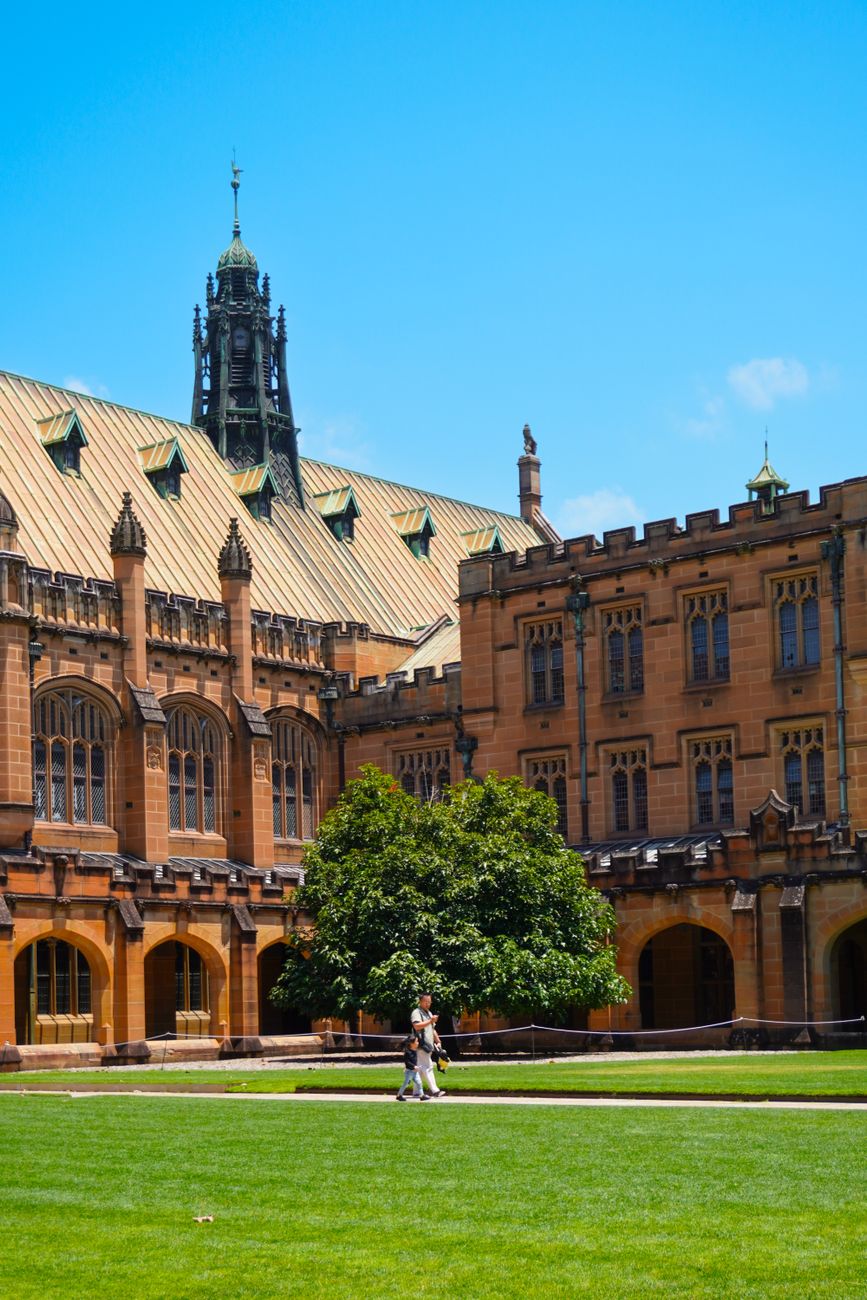
For students from the UK and US, Australian universities offer direct entry pathways based on A-levels, IB, SAT, or ACT scores. The Universities Australia 2026 Admissions Guide confirms that most Group of Eight universities require A-level grades of AAB–ABB for engineering and health sciences, and 30–34 IB points for similar programs. US high school graduates typically need a GPA of 3.0–3.5 on a 4.0 scale, plus SAT scores of 1200–1400 for competitive courses. IGCSE results are often used as prerequisites for specific subjects, such as mathematics for engineering.
Scholarships are available for high-achieving international students. The University of Melbourne’s International Undergraduate Scholarship offers 50% tuition fee waivers for students with ATAR-equivalent scores of 98+. The Australian Government’s Destination Australia Program funds 200 scholarships per year for regional universities, providing up to AUD 15,000 per student. For English-speaking students, the Global Excellence Scholarship at the University of Western Australia awards AUD 10,000–20,000 annually based on academic merit.
Post-Graduation Pathways: CPA Australia, Engineers Australia, and MBBS
Professional accreditation is critical for graduates seeking skilled occupation list eligibility. CPA Australia and Engineers Australia assess qualifications for accounting and engineering graduates. For accounting, the MLTSSL includes accountant (general) , management accountant, and taxation accountant. To have your degree recognised, you must complete a CPA-accredited course, such as the Bachelor of Commerce (Accounting) at the University of New South Wales. CPA Australia’s 2026 assessment process requires a minimum of 12 subjects in accounting, with at least 6 at the advanced level.
Engineers Australia accredits engineering programs under the Washington Accord. As of 2026, all Australian bachelor’s engineering degrees (4 years) are accredited, meaning graduates can apply for chartered status after 3–5 years of work. The skilled occupation list includes civil engineer, mechanical engineer, and electrical engineer. For UK students, A-levels in mathematics and physics are prerequisites for most engineering programs. US students with a high school diploma and AP Calculus BC may receive advanced standing.
For MBBS (medical degree) graduates, the skilled occupation list includes medical practitioner (general) and specialist physician. Medical degrees in Australia are typically 4–6 years (undergraduate or graduate-entry). The University of Queensland’s Doctor of Medicine (4 years) requires a bachelor’s degree with a GPA of 5.0+ and GAMSAT or MCAT scores. International students must complete an internship and registration with the Medical Board of Australia to qualify for the 485 visa. In 2026, the Department of Home Affairs reported that 1,200 medical graduates applied for the 485 visa, with 85% approved.
International Student Rights and On-Campus Housing
International students in Australia have specific rights under the Education Services for Overseas Students (ESOS) Act 2000. These include access to the Tuition Protection Service, which guarantees refunds or course transfers if a provider closes. As of 2026, the minimum work rights for student visa holders are 48 hours per fortnight during study periods and unlimited hours during scheduled breaks. The Fair Work Ombudsman provides resources on minimum wage (AUD 24.10 per hour from July 2026) and workplace conditions.
On-campus housing is available at most Australian universities, though demand exceeds supply. The University of Melbourne offers 3,500 beds across residential colleges, with costs ranging from AUD 450–650 per week (including meals). The University of Sydney’s International House provides 450 places for international students at AUD 480–550 per week. A 2026 survey by Universities Australia found that 72% of international students in on-campus housing reported higher satisfaction than those in private rentals. For English-speaking students, on-campus housing offers a built-in community and easier adjustment to Australian academic life.
City Guides: Sydney, Melbourne, Brisbane, and Perth
Choosing a city affects both your study experience and post-graduation employment opportunities. Sydney hosts the University of Sydney and UNSW Sydney, with a 2026 cost of living estimated at AUD 2,500–3,500 per month (including rent). The city’s economy is strong in finance, technology, and healthcare, with 35% of 485 visa holders working in Sydney in 2025–26. Melbourne offers the University of Melbourne and Monash University, with living costs of AUD 2,200–3,200 per month. Melbourne is a hub for engineering and creative industries.
Brisbane (University of Queensland, QUT) has lower living costs of AUD 1,800–2,500 per month and a growing job market in mining and renewable energy. Perth (University of Western Australia, Curtin University) is the most affordable major city, at AUD 1,600–2,200 per month, with strong employment in resources and logistics. For English-speaking students, all four cities have vibrant expat communities and public transport systems. The 2026 Department of Home Affairs Regional Migration data shows that graduates working in regional areas (including Perth and Brisbane) are eligible for an additional year on their 485 visa.
The 485 Visa Application Process: Step-by-Step
Applying for the 485 visa requires careful planning. Step 1: Complete a minimum two-year course (CRICOS-registered) in Australia. Step 2: Obtain a skills assessment from the relevant assessing authority (e.g., CPA Australia, Engineers Australia) if applying for the Graduate Work stream. Step 3: Apply for the visa online through the Department of Home Affairs ImmiAccount, with a fee of AUD 1,730 (as of 2026). Step 4: Provide proof of English proficiency (IELTS 6.0 overall, minimum 5.0 in each band, or equivalent). Step 5: Submit a health insurance policy (Overseas Student Health Cover for the visa duration).
Processing times in 2026: 75% of applications are processed within 4–6 months for the Graduate Work stream and 3–5 months for the Post-Study Work stream. The Department of Home Affairs reports that 62% of applications are granted, with common refusals due to incomplete skills assessments or insufficient English scores. For UK and US students, evidence of genuine temporary entrant status is required, though this is rarely a barrier for graduates from Australian universities.
Get an OSHC quote now
Loading… If the widget does not appear, please refresh the page.

FAQ
Q1: What is the 485 visa skilled occupation list, and how does it affect my visa eligibility?
The 485 visa skilled occupation list is the Medium and Long-term Strategic Skills List (MLTSSL) , which includes 212 occupations as of January 2026. For the Graduate Work stream, you must nominate an occupation from this list. For the Post-Study Work stream, no nomination is required. In 2025–26, 32% of 485 applicants used the Graduate Work stream, with the most common occupations being accountant (general), civil engineer, and ICT business analyst.
Q2: Can I apply for the 485 visa with a non-MLTSSL degree?
Yes, if you hold a bachelor’s degree or higher, you can apply for the Post-Study Work stream, which does not require a nominated occupation. This stream grants 2–4 years of work rights depending on your qualification (2 years for bachelor’s, 3 years for master’s by coursework, 4 years for master’s by research or PhD). In 2026, 68% of 485 applicants used this stream.
Q3: What are the English language requirements for the 485 visa in 2026?
The minimum English requirement is IELTS 6.0 overall with no band below 5.0, or equivalent in other tests (TOEFL iBT 64, PTE Academic 50). For the Graduate Work stream, some assessing authorities (e.g., Engineers Australia) may require a higher score (IELTS 7.0). As of 2026, the Department of Home Affairs accepts test results from IELTS, TOEFL, PTE, Cambridge English, and OET.
Q4: How long does the 485 visa last, and can I extend it?
The 485 visa duration ranges from 18 months to 4 years. The Graduate Work stream grants 18 months for degree graduates and 2 years for diploma graduates. The Post-Study Work stream grants 2–4 years based on qualification level. You can extend the visa by applying for a second 485 visa if you studied in a regional area (additional 1–2 years) or through a skilled migration visa (e.g., Subclass 189 or 190). In 2026, 12,000 graduates applied for a second 485 visa.
Q5: What professional accreditations do I need for the 485 visa?
For MLTSSL-listed professions, you need a skills assessment from the relevant authority. For accounting: CPA Australia or Chartered Accountants Australia and New Zealand. For engineering: Engineers Australia. For medicine: Medical Board of Australia. Each authority has specific course accreditation requirements. For example, CPA Australia requires 12 subjects in accounting, while Engineers Australia requires a Washington Accord-accredited degree.
References
- Department of Home Affairs, 2026, Temporary Graduate Visa (Subclass 485) Statistics
- Universities Australia, 2026, International Student Admissions Guide and Cost of Living Report
- CPA Australia, 2026, Accreditation Requirements for International Graduates
- Engineers Australia, 2026, Washington Accord Recognition and Skills Assessment Process
- Australian Government, 2026, Education Services for Overseas Students (ESOS) Act 2000 Fact Sheet