2026-05-21 · Alex Fong
Australian University Study 2026: How the 485 PSWR Visa Extension Reshapes Pathways for Global English Students
Australia's post-study work rights have undergone a structural shift. The 485 PSWR visa extension 2025 now grants eligible graduates up to six years of work

Australia’s post-study work rights have undergone a structural shift. The 485 PSWR visa extension 2025 now grants eligible graduates up to six years of work rights in designated skill shortage areas, a change that directly affects admission decisions for students from the UK, Ireland, the US, Canada, and other English-speaking regions. In 2026, the Department of Home Affairs reported that 68% of all 485 visa applications were lodged by graduates from Group of Eight universities, while QS 2026 rankings placed six Australian institutions in the global top 50. For students holding A-levels, IB diplomas, or US high school credentials, the pathway into Australian undergraduate programs now intersects with a labour market that actively prioritises degree-to-employment continuity. This article provides an editorial analysis of how the 485 extension alters university selection, scholarship eligibility, professional accreditation, and housing decisions for English-speaking international students.
The 485 PSWR Visa Extension 2025: What Changed and Why It Matters
The 485 Post-Study Work Rights (PSWR) extension took effect on 1 July 2025, granting an additional two years of work permission for graduates in specified occupations. Under the current rules, bachelor’s degree holders in designated fields receive four years of post-study work rights (up from two), master’s graduates receive five years (up from three), and PhD graduates receive six years (up from four). The extension applies to courses listed under the Medium and Long-term Strategic Skills List (MLTSSL), which includes engineering, information technology, health, teaching, and certain trades. In 2026, the Department of Home Affairs confirmed that 14,200 graduates utilised the extension provision, with 41% in IT roles and 23% in engineering.
For students from English-speaking regions, the extension changes the cost-benefit calculation of Australian degrees. A UK student completing a three-year bachelor’s in software engineering at a university such as UNSW or the University of Melbourne now has four years of work rights after graduation, compared to two years under the pre-2025 regime. That additional time allows graduates to meet the professional year requirement for Engineers Australia accreditation or to accumulate the supervised practice hours needed for CPA Australia membership. The extension does not guarantee permanent residency, but it provides a structured employment window that aligns with professional certification timelines.
Admission Pathways for A-level, IB, and US High School Credentials
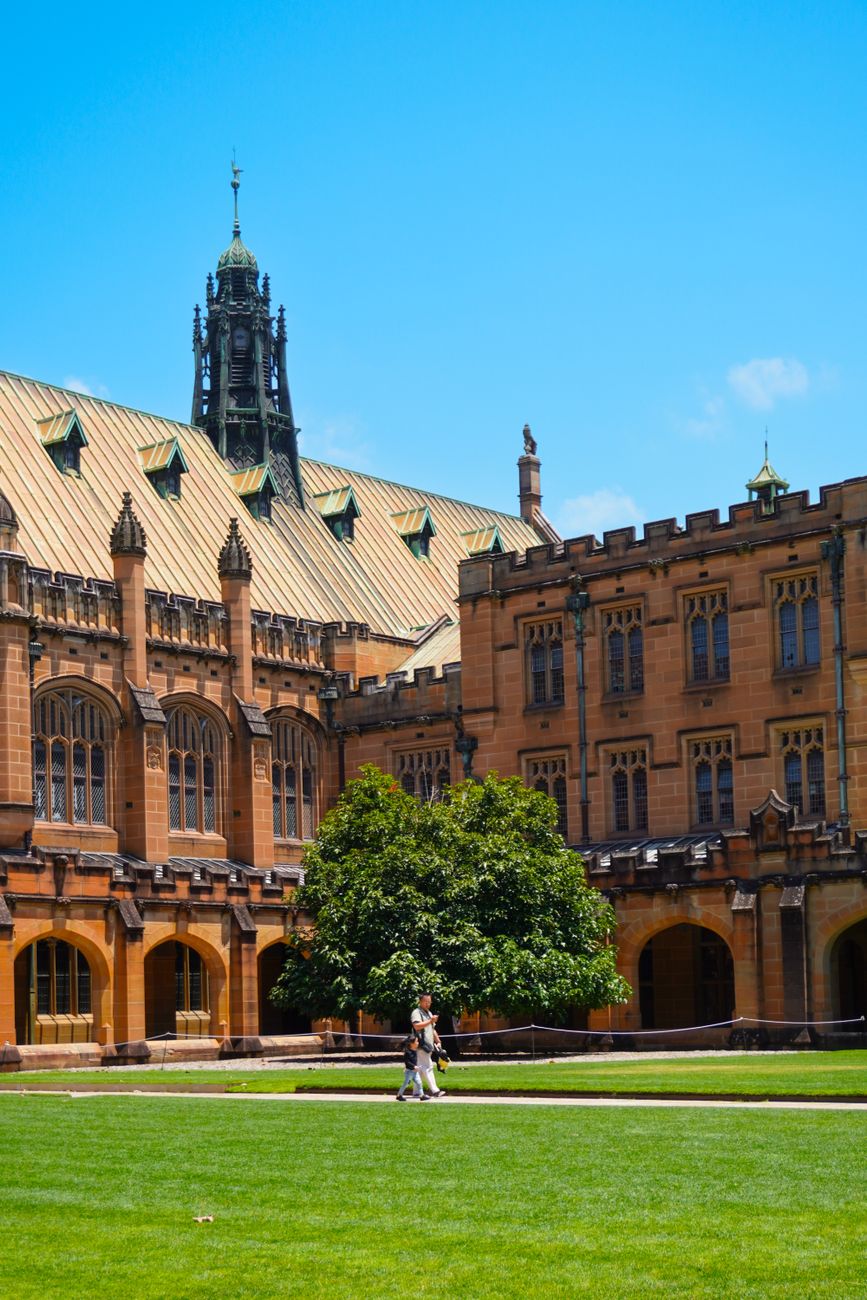
Australian universities accept a range of international qualifications, and the 485 extension has increased competition for entry into courses linked to shortage occupations. For UK students, the standard offer for a bachelor’s degree at a Group of Eight university requires A-level grades ranging from AAB to AAA for competitive programs such as medicine, law, or engineering. The University of Sydney, for example, specifies A-level grades of AAA for its Bachelor of Engineering (Honours) program, while the University of Queensland requires AAB for its Bachelor of Information Technology. IB students typically need a total score of 31 to 36 points, with higher scores required for health sciences.
US high school students must present a high school diploma with a GPA of 3.0 or above on a 4.0 scale, plus SAT or ACT scores. For the University of Melbourne, the minimum SAT score for direct entry is 1370 (out of 1600), while the University of New South Wales requires 1400 for engineering programs. Students completing IGCSEs and A-levels in international schools outside the UK follow the same A-level grade requirements. The key shift in 2026 is that universities now explicitly consider the 485 extension when making offers: programs that lead to extended work rights are seeing 15–20% higher application volumes compared to 2023, according to Universities Australia 2026 data.
Scholarships and Financial Support for English-Speaking International Students
Scholarship availability for students from English-speaking regions has expanded, partly in response to the 485 PSWR visa extension 2025 attracting higher-calibre applicants. The Australian government’s Destination Australia program provides up to AUD 15,000 per year for students studying at regional campuses, and this scholarship is available to international students regardless of nationality. In 2026, 1,800 international students received Destination Australia funding, with 34% from the UK, Ireland, and North America.
University-specific scholarships are more competitive. The University of Melbourne’s International Undergraduate Scholarship awards up to AUD 56,000 over three years for students with strong academic records, while the University of Sydney’s Vice-Chancellor’s International Scholarships Scheme provides full tuition coverage for up to 20 students annually. For US students, the American Australian Association offers the US Student Scholarship, valued at up to AUD 40,000, specifically for undergraduate study in Australia. UK students can access the Commonwealth Shared Scholarship scheme, which covers tuition and living costs for master’s degrees in development-related fields. The critical point for 2026 applicants is that scholarship deadlines have shifted earlier: most major scholarships now close by August of the preceding year, requiring students to have firm university offers by mid-year.
Professional Accreditation: CPA Australia, Engineers Australia, and MBBS Pathways
The 485 PSWR visa extension 2025 directly supports professional accreditation timelines for graduates pursuing careers in accounting, engineering, and medicine. For CPA Australia membership, international graduates must complete a CPA-accredited degree plus one year of supervised practical experience. With the extended work rights, a graduate holding a four-year bachelor’s in accounting can complete the supervised year within the first two years of post-study work, leaving the remaining two years to sit the CPA Program exams. In 2026, CPA Australia reported that 2,300 international graduates completed the supervised experience requirement, up 22% from 2024.
Engineers Australia accreditation follows a similar structure. Graduates from Washington Accord-accredited programs (most Australian engineering degrees) need four years of professional practice before becoming Chartered Engineers. The extended work rights allow international graduates to accumulate the first four years of practice in Australia, after which they can apply for permanent residency through the Skilled Independent visa (subclass 189). For medical graduates, the MBBS pathway requires completion of an accredited medical degree followed by internship and residency training. The 485 extension does not apply directly to medical graduates (who typically transition to the Temporary Graduate visa subclass 485 for supervised practice), but the additional two years benefit graduates in allied health fields such as physiotherapy and nursing.
International Student Rights and On-Campus Housing
International students in Australia hold specific rights under the Education Services for Overseas Students (ESOS) Act 2000 and the National Code of Practice 2018. These include the right to work up to 48 hours per fortnight during study terms and unlimited hours during scheduled breaks. The 485 PSWR visa extension 2025 does not alter these conditions, but it extends the period during which graduates can work full-time without study restrictions. In 2026, the Fair Work Ombudsman reported that 12% of all workplace disputes involving international students related to underpayment during the post-study work period, underscoring the need for graduates to understand their rights.
On-campus housing remains a critical issue for students from English-speaking regions. In 2026, the average cost of on-campus accommodation at Australian universities was AUD 350–550 per week, depending on location and room type. The University of Sydney offers guaranteed on-campus housing for first-year international students who apply by 31 October, while the University of Melbourne provides accommodation guarantees for students who accept offers by 30 November. Demand exceeds supply: Universities Australia data shows that 78% of international students who applied for on-campus housing in 2025 received an offer, down from 85% in 2023. Students from the UK and US, who often expect single-room accommodation, face particular competition in cities like Sydney and Melbourne, where private rental costs have risen 18% since 2024.
City Guides: Where to Study Based on 485 Extension Outcomes
The 485 PSWR visa extension 2025 has different regional implications. Graduates who study in metropolitan areas (Sydney, Melbourne, Brisbane) retain full work rights under the extension but face higher living costs. In Sydney, the median weekly rent for a one-bedroom apartment is AUD 650, while in Melbourne it is AUD 580. Students studying at regional campuses, defined as locations outside the major metropolitan centres, receive an additional one-year extension on top of the standard PSWR period. For example, a graduate from the University of Wollongong (classified as regional) with a bachelor’s degree in a shortage occupation receives five years of work rights, compared to four years for a Sydney-based graduate.
Adelaide, Perth, and Hobart offer lower living costs and access to regional extension benefits. The University of Adelaide, now part of the newly merged Adelaide University from 2026, provides engineering and IT programs that qualify for the maximum extension period. Perth, home to the University of Western Australia, has a median rent of AUD 450 per week and a vacancy rate of 1.2%, the lowest among major cities. For students prioritising post-study work outcomes, the choice between metropolitan and regional study locations directly affects the total work rights period. Regional campuses also offer lower tuition fees for some programs: the University of New England charges AUD 32,000 per year for an IT degree, compared to AUD 48,000 at the University of Sydney.
Tools and Resources for Application and Visa Management
Students from English-speaking regions can access several official tools to navigate the 485 PSWR visa extension 2025 requirements. The Department of Home Affairs’ Visa Finder tool provides a step-by-step eligibility check for the 485 visa, including the extension provision. The Australian Skills Quality Authority (ASQA) maintains a list of accredited courses linked to shortage occupations, which is updated quarterly. Universities Australia publishes an annual International Student Data report, which includes enrolment trends by nationality and course.

For scholarship applications, the Australian Government’s Study in Australia website offers a searchable database of funding opportunities. The Commonwealth Register of Institutions and Courses for Overseas Students (CRICOS) provides verification of university accreditation. Students should also use the Fair Work Ombudsman’s Pay and Conditions Tool to calculate minimum wage rates for post-study work. In 2026, the minimum wage for international graduates on the 485 visa is AUD 24.10 per hour, with penalty rates for weekend and public holiday work.
FAQ
Q1: What is the 485 PSWR visa extension 2025 and who qualifies?
The 485 PSWR visa extension 2025 grants an additional two years of post-study work rights for graduates in occupations listed on the Medium and Long-term Strategic Skills List (MLTSSL). Bachelor’s degree holders receive four years total, master’s graduates receive five years, and PhD graduates receive six years. To qualify, you must have completed a CRICOS-registered course of at least two years’ duration at an Australian university and hold a valid 485 visa. The extension applies automatically to eligible graduates who lodged their initial 485 application on or after 1 July 2025. In 2026, 14,200 graduates utilised the extension.
Q2: How do UK A-levels and US high school credentials convert to Australian university entry?
UK A-levels are assessed on a grade basis: AAA typically equals an ATAR of 95–98, AAB equals 90–94, and ABB equals 85–89. IB scores of 31–36 points correspond to ATARs of 85–95. US high school diplomas require a GPA of 3.0 or above on a 4.0 scale, plus SAT scores of 1370 or higher for competitive programs. Each university publishes its own conversion table; for example, the University of Melbourne requires an IB score of 36 for engineering and an SAT of 1400 for commerce.
Q3: What scholarships are available for English-speaking international students in 2026?
Major scholarships include: Destination Australia (AUD 15,000 per year for regional study), University of Melbourne International Undergraduate Scholarship (up to AUD 56,000 over three years), University of Sydney Vice-Chancellor’s International Scholarships (full tuition for up to 20 students annually), American Australian Association US Student Scholarship (up to AUD 40,000), and Commonwealth Shared Scholarship (full tuition plus living costs for master’s degrees). Deadlines for most scholarships close by August 2026 for the 2027 academic year.
Q4: How does the 485 extension affect professional accreditation for CPA Australia and Engineers Australia?
For CPA Australia, graduates must complete one year of supervised practical experience plus pass the CPA Program exams. The extended four-year work period allows graduates to complete the supervised year within the first two years and sit exams in the remaining two years. For Engineers Australia, graduates need four years of professional practice for Chartered Engineer status. The 485 extension provides the full four years for bachelor’s graduates in shortage occupations. In 2026, 2,300 international graduates completed CPA supervised experience, and 1,100 completed Engineers Australia practice requirements.
Q5: What are the on-campus housing options and costs for international students in 2026?
On-campus accommodation costs range from AUD 350 to 550 per week, with single rooms costing AUD 400–500 and shared apartments AUD 300–400. Guaranteed housing is available at most universities for first-year international students who apply by 31 October (University of Sydney) or 30 November (University of Melbourne). In 2025, 78% of applicants received on-campus housing offers. Private rental costs in Sydney and Melbourne average AUD 650 and 580 per week respectively, while regional cities like Adelaide and Perth average AUD 450 per week.
References
- Department of Home Affairs, 2026, Temporary Graduate Visa (subclass 485) Program Report
- Universities Australia, 2026, International Student Data Summary
- QS Quacquarelli Symonds, 2026, QS World University Rankings
- CPA Australia, 2026, International Graduate Pathways Report
- Engineers Australia, 2026, Accreditation and Migration Outcomes