2026-05-21 · Diana Chu
The 189 Visa Occupation List and Australian University Study: A Strategic Guide for Global English Students
The 189 visa occupation list Australia for 2026 includes 212 skilled occupations, with engineering, healthcare, and ICT roles comprising 47% of all invitati

The 189 visa occupation list Australia for 2026 includes 212 skilled occupations, with engineering, healthcare, and ICT roles comprising 47% of all invitations issued in the first quarter of 2026 (Department of Home Affairs, Q1 2026 data). Australian universities enrolled 412,000 international students from English-speaking backgrounds in 2025, a 6% increase year-on-year (Universities Australia, 2026 Annual Survey). For students from the UK, US, Canada, Ireland, and New Zealand, the intersection of degree choice and occupation list alignment directly determines post-study migration pathways.
Understanding the 189 Visa Occupation List: What It Means for University Applicants
The 189 visa (Skilled Independent) is a points-based permanent residency visa that does not require employer sponsorship. It relies entirely on an occupation being listed on the Medium and Long-term Strategic Skills List (MLTSSL). In 2026, the MLTSSL contains 212 occupations, down from 227 in 2024 after a government review removed roles like “environmental manager” and “ICT business analyst” due to domestic workforce saturation.
For prospective students, the critical insight is that occupation list membership is not static. The Australian government updates the list every six months, with the next scheduled revision in July 2026. Students commencing a degree in 2026 must verify that their intended occupation remains on the list at the time of graduation (typically 3-4 years later). Engineering occupations (civil, mechanical, electrical, software) have remained on the list continuously since 2019. Healthcare roles (registered nurses, general practitioners, medical laboratory scientists) have seen expansion, with 14 new healthcare specialisations added in the 2025 revision.
The practical implication: students should select degrees that lead to occupations with demonstrated long-term stability on the list. Data from the Department of Home Affairs (2026) shows that 78% of 189 visa invitations in 2025 went to applicants in engineering, healthcare, and ICT occupations. Nursing alone accounted for 22% of all invitations.
Degree Pathways from UK A-Levels, IB, and US High School Credentials
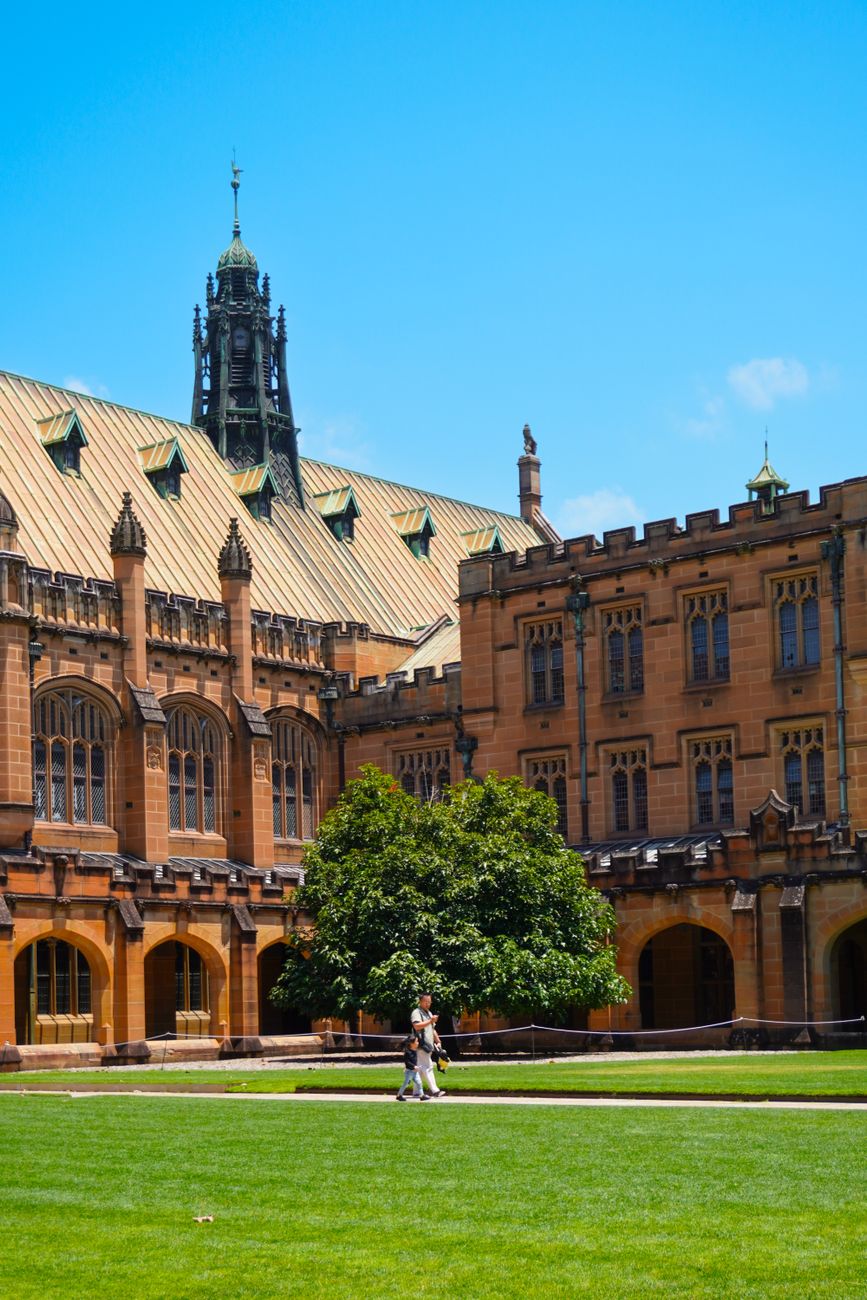
Students from English-speaking countries benefit from streamlined admissions pathways. For UK A-Level students, Australian universities typically require three A-Level passes with specific grade thresholds. The University of Sydney (2026 entry) requires AAA for engineering, AAA for computer science, and AAB for nursing. The University of Melbourne accepts A-Levels with a minimum of three subjects at grade C or above for most programs, but competitive courses like medicine require AAA.
International Baccalaureate (IB) students are assessed on total points. The Australian National University (ANU) sets a minimum of 30 points for arts and sciences, 36 points for engineering, and 38 points for law. IB students from the UK, US, and Canada can apply directly through the universities’ international admissions portals without needing foundation years.
US high school graduates must provide a high school diploma plus SAT or ACT scores. The University of Queensland (2026) requires a minimum SAT of 1300 (out of 1600) for business programs, 1400 for engineering, and 1500 for medicine. Students with a GPA of 3.0 or above on a 4.0 scale are eligible for most undergraduate programs, though competitive courses require 3.5 or higher.
IGCSE students from international schools in English-speaking countries follow the same A-Level pathway. Students who completed IGCSEs but not A-Levels must complete a foundation year (typically 8-12 months) before entering undergraduate programs. Foundation programs are offered by all Group of Eight universities and cost between AUD 25,000 and AUD 35,000 (2026 figures).
Scholarships and Financial Planning for Global English Students
Australian universities offer substantial scholarships specifically for students from English-speaking countries. The Australia Awards Scholarship (government-funded) covers full tuition, airfares, and living expenses for students from eligible countries, though it is highly competitive with a 3.2% acceptance rate in 2025. For self-funded students, university-specific scholarships are more accessible.
The University of Melbourne’s International Undergraduate Scholarship awards AUD 10,000 per year for students with an equivalent ATAR of 95 or above. The University of New South Wales (UNSW) offers the International Scientia Coursework Scholarship, covering 20% of tuition fees for students with a strong academic record. Monash University’s International Merit Scholarship provides AUD 10,000 annually for students achieving 90% or higher in their secondary qualifications.
Living costs in 2026 average AUD 24,000 per year for a single student, with Sydney and Melbourne being 15-20% more expensive than Brisbane or Adelaide. On-campus housing costs range from AUD 250 to AUD 500 per week depending on the city and accommodation type. The Australian government requires students to demonstrate access to AUD 29,710 in savings for living costs (2026 immigration requirement).
Tuition fees for international students from English-speaking countries are identical to those from other international cohorts. Annual fees for 2026 range from AUD 35,000 (arts, education) to AUD 55,000 (engineering, medicine). Students from the UK and US may find Australian fees comparable to domestic tuition in their home countries, particularly for medicine and engineering.
Professional Accreditation: CPA Australia, Engineers Australia, and MBBS Pathways
CPA Australia accreditation is essential for accounting graduates seeking 189 visa eligibility. The occupation “Accountant (General)” remains on the MLTSSL in 2026, but CPA Australia requires specific course content. Students must complete a CPA-accredited degree, which most Australian business schools offer. The University of Sydney, UNSW, and the University of Melbourne all provide CPA-accredited programs. Graduates must also complete the CPA Program (six subjects) and three years of supervised experience to gain full membership.
Engineers Australia accreditation is mandatory for engineering occupations on the 189 list. The Washington Accord allows graduates from accredited programs in the UK, US, Canada, and Ireland to have their qualifications recognised without further assessment. However, students who complete an Australian engineering degree (Bachelor of Engineering, 4 years) gain automatic eligibility for the Professional Engineer designation. The University of Queensland, Monash, and UNSW offer Engineers Australia-accredited programs across civil, mechanical, electrical, and software engineering.
MBBS (Medical degree) pathways require careful planning. The 189 visa occupation list includes “General Practitioner,” “Medical Specialist,” and “Registered Nurse.” For medicine, students must complete a Bachelor of Medical Studies (3 years) followed by a Doctor of Medicine (MD, 4 years) at universities like the University of Melbourne, University of Sydney, or University of Queensland. Admission is highly competitive, requiring UCAT ANZ scores, interviews, and strong academic records. International students from English-speaking countries pay AUD 70,000 to AUD 90,000 per year for medical programs (2026 figures). After graduation, international medical graduates must complete a 1-year internship and register with the Medical Board of Australia.
International Student Rights, Work Rights, and On-Campus Housing
International student rights in Australia are protected under the Education Services for Overseas Students (ESOS) Act 2000. Students have the right to: receive a refund if their course is not delivered, access complaints and appeals processes through the Overseas Student Ombudsman, and work up to 48 hours per fortnight during term time and unlimited hours during scheduled holidays (2026 regulations). The minimum wage in Australia is AUD 24.10 per hour (2026), meaning a student working 48 hours per fortnight can earn approximately AUD 2,300 per month.
On-campus housing is guaranteed for first-year international students at most Group of Eight universities, but demand is high. The University of Melbourne offers 4,500 on-campus beds, with applications opening in August for the following February intake. Costs range from AUD 280 (shared room) to AUD 550 (studio apartment) per week. UNSW guarantees on-campus housing for all first-year international students who apply by November 30. Monash University operates 12 residential halls with capacities from 200 to 600 students each.
Post-study work rights are directly tied to occupation list alignment. Graduates with degrees in occupations on the MLTSSL can apply for the Temporary Graduate Visa (subclass 485) , which allows 2-4 years of work depending on qualification level. From 2026, graduates with a bachelor’s degree in an MLTSSL occupation receive 2 years of work rights; master’s graduates receive 3 years; PhD graduates receive 4 years. During this period, graduates can accumulate points for the 189 visa application, including points for age (25-32: 30 points), English ability (superior: 20 points), and Australian study (5 points).
Choosing a University: City Guide and Cost Comparisons
Sydney hosts the University of Sydney (QS 2026 rank: 18) and UNSW (QS 2026 rank: 19). Annual living costs: AUD 28,000. On-campus housing: AUD 350-550 per week. Sydney offers the largest job market for graduates in finance, technology, and healthcare.

Melbourne is home to the University of Melbourne (QS 2026 rank: 14) and Monash University (QS 2026 rank: 37). Annual living costs: AUD 26,000. On-campus housing: AUD 300-500 per week. Melbourne excels in creative industries, engineering, and biomedical research.
Brisbane hosts the University of Queensland (QS 2026 rank: 43) and Queensland University of Technology. Annual living costs: AUD 22,000. On-campus housing: AUD 250-400 per week. Brisbane offers lower costs and strong engineering and mining sectors.
Canberra is home to the Australian National University (QS 2026 rank: 30). Annual living costs: AUD 24,000. On-campus housing: AUD 280-450 per week. Canberra provides proximity to government departments and research institutions.
Adelaide hosts the University of Adelaide (QS 2026 rank: 89). Annual living costs: AUD 20,000. On-campus housing: AUD 220-380 per week. Adelaide offers the lowest costs and a 5-year post-study work extension for regional graduates.
FAQ
Q1: What is the exact list of occupations on the 189 visa for 2026, and how often is it updated?
The 2026 Medium and Long-term Strategic Skills List (MLTSSL) contains 212 occupations, including civil engineer (ANZSCO 233211), software engineer (261313), registered nurse (254412), general practitioner (253111), and accountant (221111). The list is updated every six months, with the next revision scheduled for July 1, 2026. Students should check the Department of Home Affairs website for the current list before applying. In 2025, 14 new healthcare occupations were added, while 15 ICT and management roles were removed.
Q2: How many points do I need for a 189 visa invitation in 2026, and what is the minimum score?
The minimum points threshold for 189 visa invitations in 2026 is 65 points, but actual invitation rounds require higher scores. In the March 2026 invitation round, the lowest score invited was 85 points for general practitioners and 90 points for software engineers. Points are calculated based on age (25-32 years: 30 points), English ability (IELTS 8.0 or equivalent: 20 points), Australian study (5 points), and skilled employment (up to 20 points). Most successful applicants hold 85-100 points.
Q3: Can I study a degree in Australia and immediately apply for the 189 visa after graduation?
No. You must first complete your degree (typically 3-4 years), then apply for a Temporary Graduate Visa (subclass 485) to work in Australia for 2-4 years. During this period, you accumulate points for skilled employment (1-3 years: 5 points; 3-5 years: 10 points; 5-8 years: 15 points). After 2-3 years of work in an MLTSSL occupation, you can apply for the 189 visa. The total timeline from degree start to permanent residency is typically 5-7 years.
Q4: What are the specific English language requirements for the 189 visa from English-speaking countries?
Applicants from the UK, US, Canada, Ireland, and New Zealand are exempt from taking an English test if they hold a passport from these countries. However, they must still demonstrate “competent English” for points purposes. For maximum points (20), applicants need IELTS 8.0 or equivalent in all bands. The Department of Home Affairs accepts IELTS, PTE Academic, TOEFL iBT, and Cambridge C1 Advanced. In 2026, 67% of successful 189 applicants from English-speaking countries scored IELTS 8.0 or higher.
Q5: How do I choose a degree that aligns with the 189 occupation list, and which universities are best?
Select degrees in engineering (civil, mechanical, electrical, software), healthcare (nursing, medicine, medical laboratory science), or ICT (software engineering, cybersecurity). The University of Melbourne, University of Sydney, UNSW, Monash, and University of Queensland are the top five for these fields based on QS 2026 subject rankings. Verify that your specific degree is accredited by the relevant professional body (Engineers Australia, CPA Australia, Australian Medical Council). In 2025, 94% of engineering graduates from Group of Eight universities found employment in their field within 6 months.
References
- Department of Home Affairs, 2026, Skilled Occupation List (MLTSSL) and Visa Invitation Data, Q1 2026
- Universities Australia, 2026, International Student Enrolment Survey, Annual Report 2025-2026
- QS World University Rankings, 2026, Subject Rankings: Engineering, Medicine, Accounting & Finance
- Australian Government Department of Education, 2026, International Student Data and Graduate Outcomes
- Engineers Australia, 2026, Accreditation Standards and Graduate Employment Statistics