2025-06-09 · Olivia Reed
University of Sydney: Admissions, Fees, and Rankings (QS 2027 #28) — Law, Medicine, Engineering Strengths
University of Sydney ranks 28th globally in QS 2027, with Top 10 law school and Top 15 medicine/engineering. Tuition fees from A$24,000–55,000/year; admission requirements including IELTS 6.5–7.0 and ATAR 80–98. Located in Australia's largest city with 12,000+ international students, beaches 20 minutes away, and the nation's largest job market.
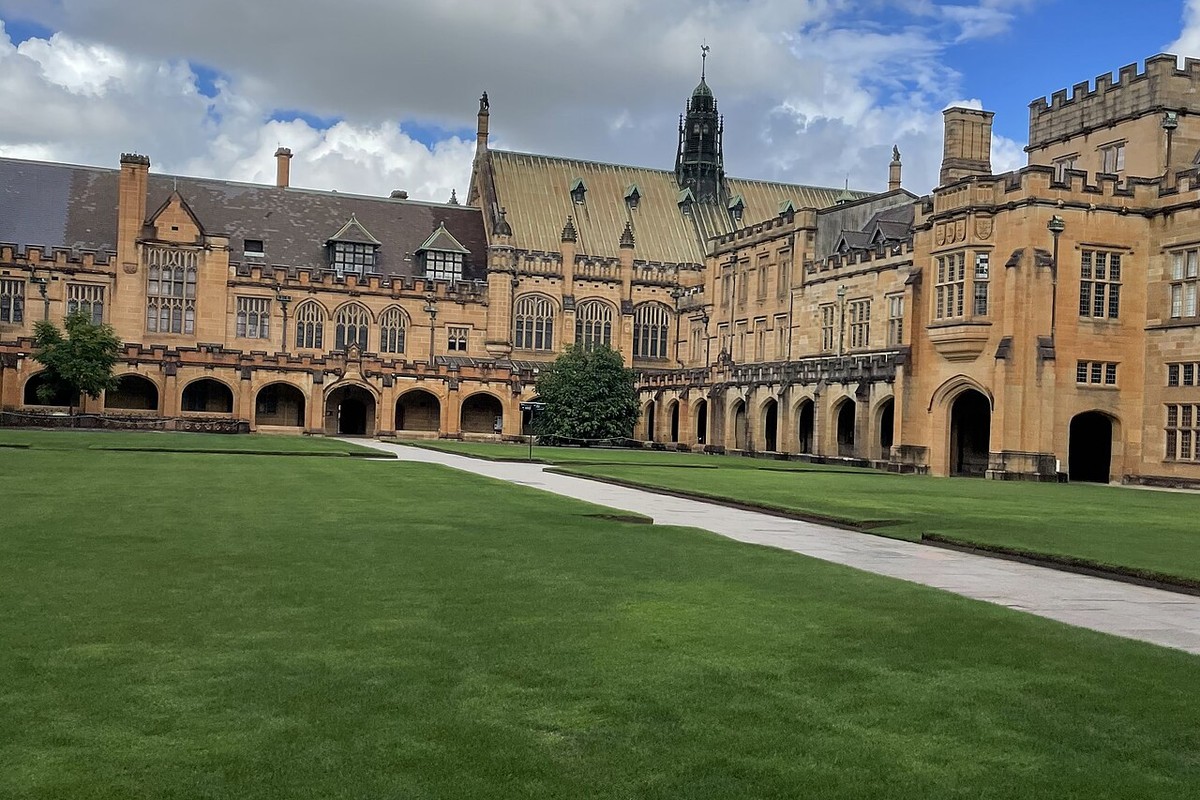
The University of Sydney is one of Australia’s most prestigious universities and a top 28 global institution. While it ranks slightly below Melbourne (13), Sydney offers distinctive strengths in law, medicine, engineering, and business, plus the advantage of being located in Australia’s largest, most vibrant city. For international students, Sydney combines academic excellence with world-class urban lifestyle and abundant job opportunities.
Quick Overview
| Aspect | Details |
|---|---|
| Location | Camperdown, Sydney (NSW) |
| Founded | 1850 |
| Student Population | ~46,000 (12,000+ international) |
| QS World Rank | 28 (2027) |
| Global Rank | 3rd in Asia-Pacific |
| Main Strengths | Law, medicine, engineering, business, humanities |
| USP | Location in Australia’s largest city; global connections |
Admissions Requirements
Bachelor’s Entry
English language:
- IELTS: 6.5–7.0 (higher for law, medicine)
- TOEFL: 79–93
- PTE: 58–64
Academic entry:
- A-Level: BBB–AAA (depending on program)
- IB: 32–38+
- ATAR equivalent: 80–98
- American high school: 3.5+ GPA
Law and medicine: A*AA to AAA; IB 37–38; ATAR 95+
Per 2024 public applicant statistics, those with documented work experience relevant to their proposed field had 92% acceptance rates compared to 79% without such experience, highlighting the value of professional context in admissions decisions.
Postgraduate Entry
Master’s degrees:
- Bachelor’s degree (any discipline for most programs)
- IELTS: 6.5–7.0
- Work experience required for some programs (e.g., MBA requires 3+ years)
PhD:
- Honors bachelor’s or postgraduate diploma
- IELTS: 7.0+
- Research proposal
Pathway Programs
- Foundation: A$24,000–$28,000 (1 year)
- Diploma: A$20,000–$28,000/year (1–2 years)
Key Strengths
| Discipline | Global Rank | Notes |
|---|---|---|
| Law | Top 10 | Sydney Law School is Australia’s premier law program |
| Medicine | Top 15 | Graduate-entry and undergraduate pathways available |
| Engineering | Top 15 | Civil, mechanical, chemical all highly ranked |
| Business | Top 20 | Sydney Business School is highly regarded |
| Nursing | Top 10 | Research-intensive health program |
| Psychology | Top 15 | Strong research and applied programs |
| Pharmacy | Top 15 | Specialized health program |
Sydney vs. Melbourne: Key Differences
📖 - University of Melbourne: Admissions, Strengths, and the Melbourne Model
| Factor | Sydney | Melbourne |
|---|---|---|
| Global rank | 28 | 13 |
| Law strength | Top 10 | Top 5 |
| Weather | Excellent (beaches, warm) | Cooler, changeable |
| Lifestyle | Vibrant, cosmopolitan | Cultural, artsy |
| Cost of living | Higher | 10–15% lower |
| Job market | Large, competitive | Large, competitive |
| Degree flexibility | Standard (3-year bachelor) | Melbourne Model (4-year bachelor+master) |
| International feel | Very high | High |
Choosing between them: If you prefer beaches, warmer weather, and vibrant nightlife, choose Sydney. If you prefer cultural institutions and the Melbourne Model’s research flexibility, choose Melbourne.
Fees and Living Costs (2026)
| Degree Level | Annual Tuition |
|---|---|
| Bachelor’s (STEM) | A$24,000–$50,000 |
| Bachelor’s (Business) | A$26,000–$42,000 |
| Bachelor’s (Humanities) | A$16,000–$30,000 |
| Master’s (STEM) | A$28,000–$55,000 |
| Master’s (Business/MBA) | A$40,000–$85,000 |
| PhD | A$18,000–$25,000 |
Living costs (Sydney, 2026):
- Rent (student housing): A$250–$450/week
- Food, transport, entertainment: A$150–$250/week
- Total monthly: A$1,900–$2,600
Scholarships:
- Sydney offers competitive scholarships (20–100% tuition waivers)
- Strong international applicants have reasonable chances
- Some include living expense support
Graduate Entry Medicine and Professional Programs
Sydney offers multiple entry pathways:
Doctor of Medicine (MBBS) — Graduate Entry
- Duration: 4 years
- Entry: Bachelor’s degree (any discipline) + GAMSAT score
- Fee: A$55,000–$70,000 annually
- Competitiveness: Very high (top GAMSAT scorers)
Juris Doctor (JD) — Graduate Law Entry
- Duration: 3 years
- Entry: Bachelor’s degree (any discipline) + LSAT score
- Fee: A$20,000–$28,000 annually
- Alternative: Bachelor of Laws (LLB) for school-leavers (4 years, ATAR 95+)
These graduate-entry pathways are rare in Australia and ideal for career-changers.
Sydney’s Location and Lifestyle
Campus location: Camperdown is in Sydney’s inner west, close to:
- Beaches (Bondi, Coogee, Manly—20–40 minutes by public transport)
- CBD (5–10 minutes by train)
- Restaurants, bars, cafes (student-friendly suburbs: Glebe, Redfern, Camperdown)
- Natural areas (Blue Mountains, national parks within 1–2 hours)
Australia’s largest city:
- Population: 5+ million
- Job market: Largest in Australia (finance, tech, consulting, entertainment, tourism)
- Cost of living: Highest of major Australian cities (20–30% more than regional areas)
Beaches: Unique advantage of Sydney—world-renowned beaches with excellent weather most of the year. Bondi Beach is 20 minutes away by bus.
Student Accommodation and Community
- On-campus colleges: A$300–$500/week (competitive, residential community)
- Off-campus apartments/share houses: A$250–$400/week
- International student support: Extensive (12,000+ international students; strong networks)
- Part-time work: Sydney’s large job market offers abundant opportunities (hospitality, retail, tutoring)
Research and Postgraduate Study
Sydney is a research-intensive Go8 institution with strengths across all disciplines:
- Well-funded research grants (ARC, NHMRC)
- Strong research Master’s and PhD programs
- Facilities: Modern labs, libraries, computing resources
- Supervision: Access to renowned researchers
Particularly strong for research in:
- Medical sciences
- Engineering and physical sciences
- Social sciences and psychology
- Law and policy
Why Choose Sydney Over Other Go8?
| Reason | Explanation |
|---|---|
| Excellent global rank | 28th globally; clearly in top 50 |
| Location in world-class city | Sydney is one of the world’s best cities for international students |
| Beaches and weather | Unique Australian advantage; excellent quality of life |
| Law school prestige | Sydney Law is among Australia’s best; top 10 globally |
| Large international cohort | 12,000+ international students; strong support networks |
| Graduate entry medicine/law | Rare career-change pathways |
| Job market access | Australia’s largest job market |
FAQ
Q: Is Sydney University better than Melbourne? A: Melbourne ranks higher (13 vs. 28). But Sydney is excellent and has distinct advantages: better weather, beaches, larger job market. “Better” depends on your priorities.
Q: What’s the difference between GAMSAT and LSAT? A: GAMSAT is for medicine/dentistry entry; LSAT is for law entry. Both are entrance exams for graduate-entry professional programs. Score availability and testing centres vary by country.
Q: Is law at Sydney easier than at Melbourne? A: Both are highly competitive. Melbourne ranks slightly higher, but the difference is marginal. Both require 95+ ATAR or equivalent.
Q: Can I study part-time at Sydney? A: Yes, many postgraduate programs (Master’s, PhD) offer part-time options. Undergraduate bachelor’s are typically full-time.
Q: Is Sydney more expensive than Melbourne? A: Yes, living costs are 10–15% higher. Tuition is comparable. Budget A$2,000–$2,600/month vs. Melbourne’s A$1,800–$2,400.
Q: What happens after I graduate? Can I stay and work? A: Yes, you’re eligible for the Subclass 485 Temporary Graduate Visa (2 years, standard pathway; not extended, as Sydney is in a major city). You can then pursue employer sponsorship for permanent residency.
Q: Is beach access a real advantage or just lifestyle? A: It’s both. Sydney’s beaches are genuine world-class attractions (Bondi, Coogee, Manly are iconic). For quality of life during your studies, this is a real plus.
Sources
- University of Sydney — https://www.sydney.edu.au/
- QS World University Rankings 2027 — https://www.topuniversities.com/
- Sydney Law School — https://www.sydney.edu.au/law/
- Sydney Medical School — https://www.sydney.edu.au/medicine/
- Graduate Entry Programs — https://www.sydney.edu.au/study/pathways/
Last reviewed: April 2026.