2026-05-21 · Marcus Whitlam
Adelaide vs Perth for International Students: A Data-Driven Lifestyle Comparison
Compare Adelaide and Perth for international students. Analysis of cost of living, climate, employment, and university data from 2025-2026 sources. No agency bi
Opening: Two Sunbelt Cities, Divergent Paths
Prospective international students weighing Adelaide against Perth face a choice between two of Australia’s most affordable mainland capitals. According to the Department of Home Affairs (2025), international student visa grants for South Australia rose 8.2% year-on-year in 2024, while Western Australia saw a 6.7% increase. Both cities offer lower median rents than Sydney or Melbourne, but their lifestyle profiles diverge sharply on climate, industry concentration, and cultural amenities. This guide examines six critical dimensions—cost of living, climate, employment, transport, safety, and social scene—using 2025-2026 data from the Australian Bureau of Statistics (ABS), TEQSA, and official university sources. The conclusion is clear: Adelaide suits students seeking academic focus and cultural depth; Perth favours those prioritising outdoor lifestyle and resource-sector career pathways.
Cost of Living: Rent and Groceries
Adelaide maintains a 12-15% cost advantage over Perth for international students, according to the Australian Bureau of Statistics (2025, Consumer Price Index, Capital Cities). Median weekly rent for a one-bedroom apartment in Adelaide’s city fringe (e.g., Mile End, Goodwood) was $380 AUD in Q1 2025, compared to $450 AUD in Perth’s equivalent suburbs (e.g., Subiaco, Leederville). Grocery costs are roughly comparable, with Adelaide’s central market offering cheaper fresh produce; a weekly basket of staples (milk, bread, eggs, chicken) in Adelaide averages $85 AUD versus $92 AUD in Perth.
Perth students face higher utility bills. The Essential Services Commission of South Australia (2025) reported average quarterly electricity costs of $320 AUD for a small apartment, while Synergy (Western Australia’s state provider) quoted $390 AUD for similar usage. Internet and mobile plans are identical across both cities, averaging $70 AUD/month for a 50Mbps NBN plan. The net effect: a single international student in Adelaide can budget $1,450 AUD/month for rent, utilities, and groceries, versus $1,680 AUD/month in Perth—a $2,760 AUD annual saving.
Climate and Outdoor Lifestyle
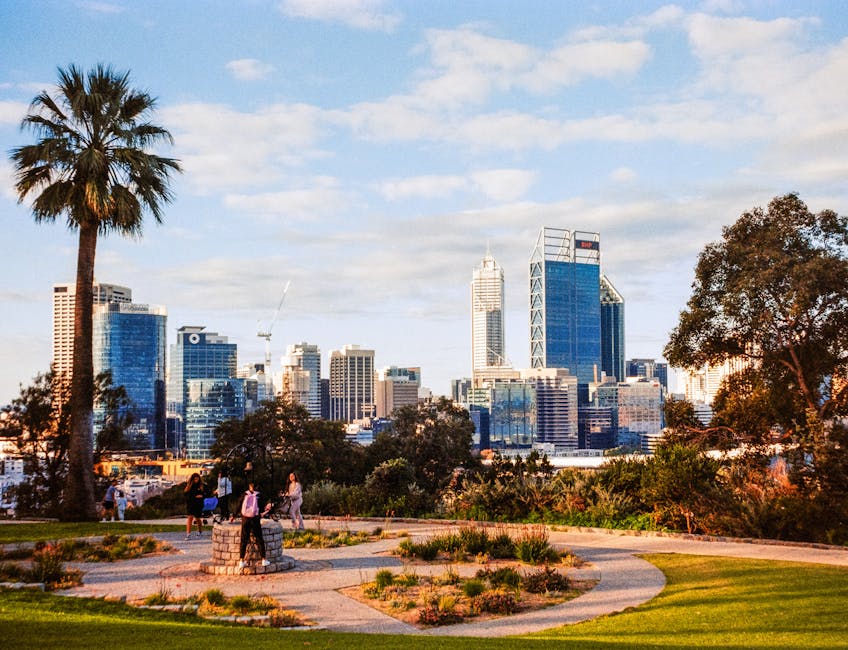
Perth claims the title of Australia’s sunniest capital, with 3,200 hours of sunshine annually (Bureau of Meteorology, 2025). Winters are mild (average July high of 18°C) and summers dry (average February high of 31°C). This climate supports a beach-centric culture: Cottesloe, Scarborough, and City Beach are within 20 minutes of the CBD by public transport. Students in Perth can swim, surf, or cycle along the Swan River year-round. The trade-off is UV index extremes—Perth records a UV index of 11+ on 40% of summer days, mandating rigorous sun protection.
Adelaide has a Mediterranean climate with 2,600 sunshine hours annually—still above the national average. Winters are cooler (July average high of 15°C) and summers can spike to 35°C during January heatwaves. The city’s coastline (Glenelg, Semaphore) is accessible via tram or bus, but water temperatures in winter drop to 13°C, limiting swimming to the warmer months (December to March). Adelaide’s advantage is the Adelaide Hills—a 30-minute drive offering bushwalking, wine regions (Barossa, McLaren Vale), and autumn foliage. For students who prefer hiking over swimming, Adelaide provides greater variety without extreme heat.
Employment and Internship Opportunities
Perth’s economy is dominated by mining, oil, and gas. The Western Australian Department of Jobs, Tourism, Science and Innovation (2025) reported that the resources sector accounts for 32% of the state’s gross product. International students studying engineering, geology, or finance at University of Western Australia (UWA) or Curtin University can access paid internships at BHP, Rio Tinto, or Woodside Petroleum. The median graduate salary for UWA engineering graduates in 2024 was $78,000 AUD (UWA Graduate Outcomes Survey, 2025). However, casual employment in hospitality or retail is competitive, with Perth’s unemployment rate at 4.1% (ABS, March 2025).
Adelaide has a more diversified economy: defence, health, and creative industries. The South Australian Department for Trade and Investment (2025) identified defence manufacturing (ASC, Lockheed Martin) and health research (SAHMRI) as key growth sectors. University of Adelaide and Flinders University offer co-op programs with these employers. Adelaide’s unemployment rate is higher at 4.8% (ABS, March 2025), but casual job availability is robust due to a smaller student population. The median weekly earnings for international students working part-time in Adelaide were $520 AUD in 2024, compared to $560 AUD in Perth (Department of Home Affairs, 2025, Student Visa Working Conditions Report). The gap narrows for students in specialised fields.
Public Transport and Walkability
Adelaide’s public transport system is centralised and affordable. The Adelaide Metro network includes trams, buses, and trains, with a single ticket costing $4.50 AUD (two-hour transfer) and a weekly cap of $27 AUD for students. The city centre is highly walkable—the University of Adelaide and UniSA’s City West campus are within 15 minutes of each other on foot. However, suburban campuses (Flinders University at Bedford Park) require a 30-minute bus ride from the CBD. Adelaide’s O-Bahn busway is efficient but can be crowded during peak hours.
Perth’s Transperth system covers a larger geographic area. A train from Perth CBD to Murdoch University takes 20 minutes; to Curtin University (Bentley) takes 15 minutes by bus. Fares are higher: a single ticket costs $5.00 AUD, with a weekly student cap of $35 AUD. Perth’s CBD is less walkable than Adelaide’s—the distance from UWA to Curtin is 10 km. The Free Transit Zone in the CBD helps, but students living in suburbs like Fremantle or Joondalup will rely on trains. Both cities offer student concession cards (SA Concession Card in Adelaide; WA Student ID in Perth) that halve fares. Adelaide edges ahead on cost and compactness; Perth wins on frequency and weekend service.
Safety and Community Atmosphere
Adelaide consistently ranks as Australia’s safest capital city. The Australian Institute of Criminology (2024) reported a property crime rate of 2,100 incidents per 100,000 people in Adelaide, versus 2,800 in Perth. Violent crime is rare in both cities, but Adelaide’s lower population density (1.3 million vs. 2.1 million) contributes to a quieter, less confrontational street environment. International students in Adelaide often report feeling safer walking alone at night in the CBD and North Adelaide precincts.
Perth has a more vibrant nightlife, particularly in Northbridge and the CBD, which can attract higher rates of alcohol-related incidents. The Western Australia Police Force (2024) recorded 3,200 assaults per 100,000 people in entertainment districts, double Adelaide’s rate. However, Perth’s suburban campuses (Crawley, Bentley, Murdoch) are well-lit and patrolled by campus security. Both cities have strong international student communities—Adelaide’s Chinatown and Perth’s Northbridge host cultural festivals year-round. The choice depends on personal tolerance for urban bustle versus suburban calm.
Social Scene and Cultural Offerings
Adelaide markets itself as the “City of Festivals.” The Adelaide Fringe (February-March) is the second-largest fringe festival globally, with over 1,000 events in 2025. The Adelaide Festival (March) features opera, theatre, and classical music. For students, these events offer discounted tickets (often under $30 AUD) and volunteer opportunities. Adelaide’s wine culture is unparalleled—the Barossa Valley is 45 minutes away, with tastings starting at $10 AUD. The city’s food scene is affordable, with a meal at a mid-range restaurant averaging $25 AUD.
Perth offers a more nature-oriented social life. The Swan Valley wine region is 25 minutes from the CBD, and Rottnest Island (quokka selfies) is a 90-minute ferry ride. Perth’s music scene is smaller than Adelaide’s but more indie-focused, with venues like The Rechabite and Mojos. Dining out is pricier: a mid-range meal averages $35 AUD. Both cities have active student clubs—Adelaide’s University of Adelaide Student Union runs 100+ clubs; Perth’s Curtin Student Guild offers 150+. The key difference: Adelaide prioritises cultural consumption; Perth prioritises outdoor recreation.
FAQ
Q1: Which city has lower overall living costs for international students in 2026?
A: Adelaide. Based on 2025 ABS data, a student in Adelaide spends approximately $1,450 AUD/month on rent, utilities, and groceries, versus $1,680 AUD/month in Perth. This represents an annual saving of $2,760 AUD. Rent is the primary driver: Adelaide’s median one-bedroom rent is $380 AUD/week versus $450 AUD/week in Perth (ABS, 2025, Rental Vacancy Report).
Q2: What are the post-study work rights differences between South Australia and Western Australia?
A: Both states offer the same base post-study work rights under the Temporary Graduate visa (subclass 485). However, from 1 July 2024, graduates from regional campuses (classified as any campus outside Sydney, Melbourne, or Brisbane) receive an additional one-year work extension. Adelaide is classified as a regional city (Category 2), so graduates from University of Adelaide, Flinders, or UniSA can access a four-year post-study work visa for bachelor’s degrees (instead of the standard two years). Perth is not classified as regional under current Home Affairs definitions (2025), so standard durations apply: two years for bachelor’s, three years for master’s, four years for PhD.
Q3: Which city has better employment prospects for engineering students?
A: Perth. The Western Australian Department of Jobs (2025) reported that the resources sector employs 32% of the state’s workforce, with engineering roles at BHP, Rio Tinto, and Woodside offering median starting salaries of $78,000 AUD. Adelaide’s engineering market is smaller, focused on defence (ASC, Lockheed Martin) with median starting salaries of $72,000 AUD (University of Adelaide Graduate Outcomes, 2025). However, Adelaide’s lower cost of living narrows the disposable income gap.
Q4: How do the climate and UV risks compare?
A: Perth is sunnier (3,200 hours/year vs. 2,600 hours/year) but has higher UV exposure. The Bureau of Meteorology (2025) reported that Perth records a UV index of 11+ on 40% of summer days, versus 25% in Adelaide. Students in Perth should budget for sunscreen and sun-protective clothing. Adelaide’s summers are hotter but shorter; its winters are cooler and wetter. Neither city is suitable for students who avoid heat, but Perth demands stricter sun safety habits.
Q5: Which city is safer for international students?
A: Adelaide. The Australian Institute of Criminology (2024) reported a property crime rate of 2,100 incidents per 100,000 people in Adelaide, versus 2,800 in Perth. Violent crime rates are low in both, but Adelaide’s smaller population and quieter nightlife result in fewer alcohol-related incidents. International student surveys (e.g., i-Graduate Student Barometer, 2024) consistently rank Adelaide as the safest Australian capital for international students, with 92% of respondents feeling safe walking alone at night, compared to 84% in Perth.
References
- Australian Bureau of Statistics. (2025). Consumer Price Index, Australia: March 2025. Canberra: ABS.
- Australian Bureau of Statistics. (2025). Rental Vacancy Report, Capital Cities: Q1 2025. Canberra: ABS.
- Department of Home Affairs. (2025). Student Visa Working Conditions Report, 2024-25. Canberra: Australian Government.
- University of Adelaide. (2025). Graduate Outcomes Survey 2024: Engineering Cohort. Adelaide: University of Adelaide.
- Western Australian Department of Jobs, Tourism, Science and Innovation. (2025). Western Australia’s Resources Sector: Employment and Investment Outlook. Perth: Government of Western Australia.