2026-02-19 · Olivia Reed
Should You Study in Adelaide or Perth? A Cost and Lifestyle Decision Tree for Budget-Conscious Students
Choosing between two Australian cities for study is rarely a simple cost comparison. Adelaide and Perth both sit well below Sydney and Melbourne on most st
Should You Study in Adelaide or Perth? A Cost and Lifestyle Decision Tree for Budget-Conscious Students
Choosing between two Australian cities for study is rarely a simple cost comparison. Adelaide and Perth both sit well below Sydney and Melbourne on most student budget indices, yet the two are not interchangeable. The decision often comes down to a layered evaluation of recurring expenses, income potential, and lifestyle trade-offs. This article builds a practical decision tree for budget-conscious international students. According to Study Australia’s cost-of-living calculator, Adelaide’s average monthly expenses for a student excluding tuition sit around A$1,300, while Perth’s cluster closer to A$1,400 (Department of Education, 2024). That gap may seem modest, but over a three‑year degree the difference compounds into thousands of dollars. A data‑driven walk through rent, work, transport, and student sentiment can clarify whether the premium on a West Coast education pays off.
The Financial Baseline: Visa Requirements and What They Actually Buy
The Department of Home Affairs sets the student visa financial capacity requirement at A$24,505 per year for the primary applicant (from 1 October 2023). This figure does not differentiate between cities; it is a single national minimum. In practice, several cost categories demand more than the department’s formula assumes. The first pressure point is accommodation. Official estimates prepared by state-sponsored bodies are more granular.
StudyAdelaide pegs annual living costs for an international student at A$20,000–A$27,000, excluding tuition. StudyPerth quotes A$21,000–A$29,000. Both ranges stretch beyond the visa minimum for many students, but Adelaide’s lower bound and midpoint sit roughly A$1,000–A$2,000 lighter each year. These figures are drawn from each city’s real expenditure surveys conducted with education providers and are updated annually. For a budget‑conscious student, a recurring saving of A$2,000 per annum finances nearly two months of part‑time income at the casual minimum wage.
Accommodation: The Biggest Variable Expense
Median Rent for Independent Living
Domain’s Rental Report for the March quarter 2024 records Adelaide’s median weekly asking rent for a two‑bedroom unit at A$500, while Perth’s equivalent sits at A$550 per week. Extrapolated to a full year and split between two flatmates, the Perth learner pays roughly A$2,600 more per person for the privilege of a slightly larger unit market. However, vacancy rates add a second layer of cost. SQM Research data for June 2024 shows Adelaide’s residential vacancy rate at 0.5 per cent, tighter than Perth’s 0.7 per cent. The tighter Adelaide market implies more competition, potentially longer search times, and less room to negotiate rent. Perth’s slightly higher vacancy rate can translate into a faster move‑in timeline and, occasionally, a modest discount on the asking price. The decision tree forks here: a rigid housing budget favours Adelaide’s lower sticker price, while a student who values a smoother rental search may lean towards Perth.
Shared Accommodation
For students willing to rent a room in a share house rather than a whole unit, the cost gap narrows but still exists. StudyAdelaide’s cost‑of‑living guide indicates a room in a share house costs between A$180 and A$250 per week, inclusive of some utilities. StudyPerth’s student site lists A$200–A$280 per week. At the midpoint, Adelaide extracts around A$40 less per week, or over A$2,000 annually. On‑campus accommodation can erase these differentials, but only a small fraction of international undergraduates secure a place. TEQSA registration data confirms that the three public universities in South Australia and the four public universities in Western Australia all offer some form of managed student housing, yet demand consistently outstrips supply. The majority of international students will find themselves in the private rental or share‑house market, which makes the above figures the practical baseline for budgeting.
Institutional Cost Comparisons and Fee Structures
Tuition fees form the largest single outlay. Universities Australia reports that the median annual tuition for an international undergraduate across the country hovers around A$30,000. At the institutional level, however, costs vary by discipline and provider.
TEQSA’s national register shows the University of Adelaide (QS World University Rankings 2024: #89) and the University of Western Australia (QS #72) each publish indicative annual fees for a Bachelor of Commerce in the vicinity of A$43,000–A$45,000. Curtin University, a Perth‑based institution of technology, lists its Bachelor of Commerce at A$36,000 for international students, while the University of South Australia sets a comparable degree at A$37,000. These mid‑range providers can save a student A$7,000–A$9,000 per year over the older sandstone universities. A budget‑conscious learner might therefore target a lower‑fee institution in either city, which would reduce or even reverse the city‑level cost advantage.
Scholarships can further alter the arithmetic. The Destination Adelaide program, funded by StudyAdelaide, and the Western Australian Premier’s University Scholarship, managed by StudyPerth, both offer tuition reductions. The amounts awarded vary, but a 20–30 per cent tuition waiver on a A$36,000 degree saves A$7,200–A$10,800 per year. Students who can secure one of these awards often find that the city’s cost‑of‑living premium shrinks to insignificance.
Income Potential: Casual Work and Real Earning Power
Minimum Wage and Work Rights
📖 - UWA vs University of Adelaide: A Decision Tree for Regional Study, Migration, and Cost
As of 1 July 2024, the Fair Work Commission’s national minimum wage is A$24.10 per hour, or A$30.13 with the 25 per cent casual loading that most student jobs carry. The Department of Home Affairs permits international students to work up to 48 hours per fortnight during teaching periods, with no cap during scheduled breaks. Applied evenly, a student working the maximum hours at the casual rate can earn A$1,446 per fortnight. Over a year, that is sufficient to cover the entire A$24,505 visa living requirement and then some, provided the hours are available.
Job Market Differences
Australian Bureau of Statistics (ABS) Labour Force data for June 2024 places Adelaide’s seasonally adjusted unemployment rate at 3.8 per cent and Perth’s at 3.6 per cent. The difference is narrow, but the composition of available roles matters more for students. The National Skills Commission’s Internet Vacancy Index for July 2024 records approximately 2,300 hospitality vacancies in Adelaide and 2,800 in Perth. Retail vacancies follow a similar pattern, with Perth holding around a 15 per cent edge in absolute numbers. Both cities have a high demand for entry‑level staff, but a larger city like Perth benefits from a broader hospitality and tourism base, which increases the probability of securing shifts during peak hiring seasons.
Research by Universities Australia indicated in 2022 that approximately 60 per cent of international students in Australia engage in part‑time work. Rising living costs have likely pushed that number higher. Students in Perth report slightly higher average weekly earnings from part‑time work than those in Adelaide, a function of both larger available hours and a marginally higher concentration of well‑paying casual jobs in mining‑adjacent service industries. For students who intend to work the maximum permitted hours, Perth’s slightly larger job pool can cancel out a portion of its higher cost of living, potentially making the two cities close to net‑zero in the final budget.
Transport: The Daily Commute Cost
Public transport costs are a consistent but frequently underestimated expense. Adelaide Metro’s full‑fare 28‑day pass costs A$115.20 (as of mid‑2024, covering buses, trains, and trams). Transperth’s equivalent 28‑day full‑fare pass for two zones, the most common student‑use range, is A$144. The A$28.80 monthly difference adds A$346 per year in favourof Adelaide. Students who live close to their campus and walk or cycle can eliminate this cost, but those dependent on public transport will feel the disparity.
Traffic congestion also affects students who drive or use ride‑share services. The TomTom Traffic Index 2023 reports Adelaide’s congestion level at 24 per cent, meaning a typical commute takes 24 per cent longer than in free‑flow conditions. Perth scores 31 per cent. The 7‑percentage‑point gap translates into fewer billable hours lost in traffic and lower fuel consumption, an indirect saving that reinforces Adelaide’s budgetary advantage.
Adelaide’s flat topography and network of dedicated cycling paths add a zero‑cost transport layer unavailable on the same scale in Perth, where hills and longer distances make cycling a more demanding daily choice.
Non‑Tuition Spending and the Student Lifestyle Premium
The day‑to‑day cost of food, entertainment, and utilities can swing the budget by tens of dollars a week. Study Australia’s city comparison tool, built on Consumer Price Index data and student surveys, ranks Adelaide as 5–8 per cent cheaper than Perth across the grocery, dining, and recreation categories. A basic weekly grocery shop for a single student in Adelaide runs approximately A$90–A$100, while Perth pushes closer to A$100–A$110. Over a year, that is a A$500 gap. Eating out, especially in Perth’s cafe‑dense suburbs, carries a similar mark‑up.
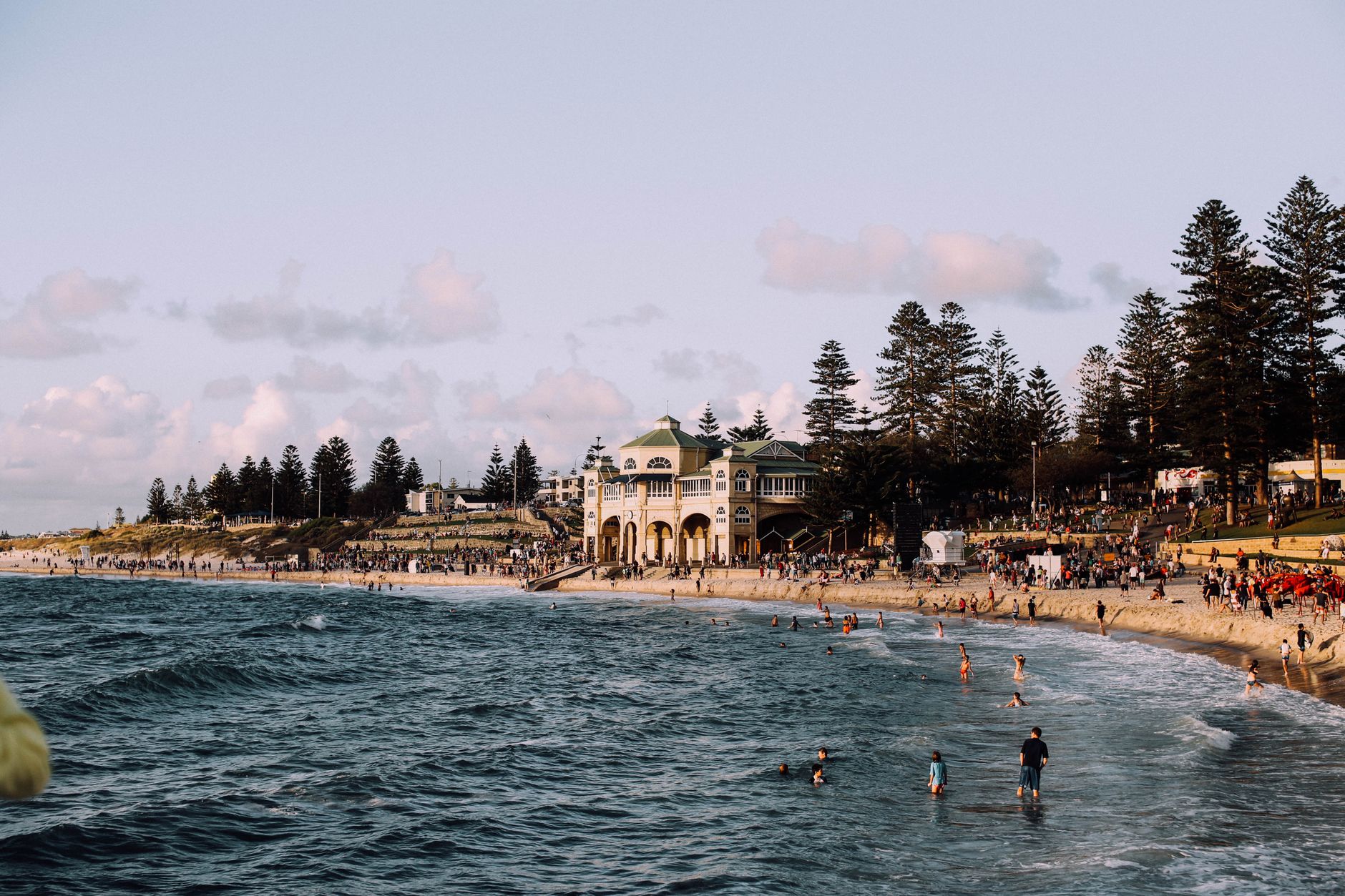
Beyond pure spending, the QS Best Student Cities 2024 ranking positions Adelaide at #35 globally and Perth at #50. The QS index weights affordability heavily, but it also factors in student mix, desirability, and employer activity. Adelaide’s higher ranking reflects stronger affordability combined with a compact, manageable city environment. The experience of living in each city influences how a student spends. Adelaide’s concentration of free festivals (the Fringe, WOMADelaide) and its proximity to the Barossa Valley provide low‑cost leisure; Perth’s appeal lies in its beaches and outdoor lifestyle, but the distance between suburbs and the relative scarcity of free large‑scale events can nudge entertainment spending upward.
University‑operated support services are available in both cities, but TEQSA’s compliance framework requires all registered providers to offer comparable student support; there is no systemic cost advantage in one city’s institutional overhead over the other.
The Decision Tree: Linking Budget to City Choice
Using the data points below, a student can run through a set of conditional branches to arrive at a city recommendation. The tree assumes the student wants to minimise out‑of‑pocket annual spend net of expected income.
Step 1: Establish the hard budget floor
- If the student’s total non‑tuition funds are under A$20,000 per year, the slimmer median costs of accommodation, transport, and food in Adelaide become necessary. The decision tree terminates with Adelaide.
- If the funds are A$20,000–A$24,000 per year, both cities are feasible, but Adelaide leaves a safety margin of roughly A$2,000.
Step 2: Forecast part‑time income
- If the student intends to work close to the 48‑hour fortnight cap and has hospitality or retail experience, the larger job market in Perth slightly narrows the cost gap. A student earning A$5,000 more per year in Perth through steadier work effectively offsets the city’s higher rent and transport. In this scenario, the net cost between the two cities converges.
- If the student expects to work fewer than 20 hours per week, the income advantage of Perth shrinks and Adelaide’s lower base costs win out.
Step 3: Factor in housing preferences
- A student who values a private two‑bedroom unit will spend A$2,600 more per year in Perth on rent. At the margin, that is hard to reclaim through side income alone. Adelaide wins.
- A student comfortable in a share house will see a smaller Adelaide advantage of roughly A$2,000 per year. This can be partially offset by Perth’s job market, tipping the recommendation towards a balanced decision where lifestyle factors break the tie.
Step 4: Include scholarship offers and tuition differentials
- A Destination Adelaide scholarship worth 25 per cent on a A$37,000 degree saves A$9,250 annually, far outweighing any cost‑of‑living gap. The student should choose Adelaide regardless.
- Similarly, a Western Australian Premier’s Scholarship on a Curtin degree can make Perth the unambiguous choice.
Step 5: Evaluate the lifestyle budget
- A student who relies on public transport and regularly eats out will find Adelaide’s 5–8 per cent lower daily expenses meaningful. Adelaide returns.
- A student who cycles, cooks at home, and spends leisure time on the beach can control costs to a point where the two cities are practically equal, and the decision can pivot on course reputation or climate.
FAQ
1. Which city has cheaper tuition fees for international students?
Not one city uniformly. The highest‑ranked universities (UWA and University of Adelaide) charge similar premiums, but mid‑tier universities such as UniSA and Curtin offer degrees at A$36,000–A$37,000. A student can find a cheaper degree in either city.
2. Is it easier to find part‑time work in Adelaide or Perth?
Perth’s larger population and broader hospitality sector generate more absolute vacancies, as shown by National Skills Commission vacancy data. Adelaide’s unemployment rate is only marginally higher. Students with relevant experience are likely to secure work quickly in either city, but Perth offers a slightly larger safety net of opportunities.
3. Do I need a car in Adelaide or Perth as a student?
Neither city requires a car if living near campus. Adelaide’s compact grid and tram system make car‑free living easier and cheaper. Perth’s sprawl makes a car more useful, which introduces extra costs for fuel, insurance, and parking, though many students manage with public transport.
4. How do the student visa financial requirements compare to actual living costs in these cities?
The visa minimum of A$24,505 is a national figure that covers essentials. StudyAdelaide and StudyPerth both estimate ranges that often exceed this floor, particularly for a student who lives alone. Adelaide’s upper estimate of A$27,000 trails Perth’s A$29,000. Prudent budgeting suggests planning for at least the mid‑point of each city’s advised range.
5. Are there state‑specific scholarships that make one city cheaper?
Yes. StudyAdelaide and StudyPerth each manage scholarship programs, and individual universities offer destination‑based awards. A well‑targeted scholarship can alter the cost equation more than any rent difference.
6. Which city offers a better lifestyle for budget‑conscious students?
Adelaide’s free festivals, lower dining costs, and compact layout give it an edge in accessible leisure. Perth’s coastline and outdoor lifestyle are highly valued but can carry a higher incidental cost. A student who prioritises free cultural events will likely prefer Adelaide; one who values beaches and a bigger‑city feel may accept Perth’s premium.
Trading off Adelaide and Perth comes down to a sequence of financial filters. The raw cost data points to Adelaide as the lower‑expense city in nearly every category, with the notable exception of rental vacancy rates. Perth’s labour market and scholarship mechanisms can erase part of that gap for students who work intensively or win institutional support. The decision tree shows that a student with rigidly capped funds, low work hours, and a preference for independent rental accommodation will find Adelaide the safer budget option. A student with strong earning capacity, a mid‑range scholarship, and high tolerance for a spread‑out city may find the net financial difference between the two negligible. In both scenarios, the foundational data—renting a unit, buying a monthly transport pass, securing a hospitality job—remains the most reliable compass for making a durable choice.