2026-05-21 · Alex Fong
Adelaide City Guide for International Students: Cost of Living, Accommodation, and Study Opportunities in 2026
A data-driven guide for international students on Adelaide's cost of living, accommodation, university rankings, visa pathways, and post-study work options in 2
Introduction: Why Adelaide is a Strategic Choice for International Students in 2026
Adelaide, the capital of South Australia, is increasingly positioning itself as a cost-effective and high-quality alternative to Sydney and Melbourne for international students. According to the Department of Home Affairs (2025), South Australia received 34,200 international student visa applications in the 2024–25 financial year, a 12% increase from the previous year. The South Australian Government (2025) reports that international education contributes AUD 2.1 billion annually to the state’s economy. This growth is underpinned by Adelaide’s lower average rental costs—AUD 450 per week for a one-bedroom apartment in the city centre, compared to AUD 700 in Sydney (Domain, 2025)—and a Designated Area Migration Agreement (DAMA) that provides additional post-study work pathways for graduates in specific skill shortage occupations. This guide examines the city’s accommodation options, cost of living, university offerings, visa pathways, and lifestyle factors, providing actionable data for prospective students.
Accommodation Options and Rental Market Trends in 2026
The Adelaide rental market for international students in 2026 is characterised by moderate vacancy rates and price stability relative to eastern capitals. The Real Estate Institute of South Australia (2026) reports a city-wide rental vacancy rate of 1.8% as of March 2026, slightly tighter than the 2.1% recorded in 2024 but still more accessible than Sydney’s 0.9%. For students, the primary accommodation types are: purpose-built student accommodation (PBSA), private rentals, and homestays.
PBSA options, such as those operated by Scape and Atira, typically cost between AUD 350 and AUD 550 per week for a studio or shared apartment, inclusive of utilities and internet. These are concentrated in the Adelaide CBD and near the University of Adelaide and Flinders University city campus. Private rentals, sourced through platforms like Realestate.com.au, require a 4–6 week bond and often demand proof of income or a guarantor. The median rent for a two-bedroom unit in the CBD is AUD 520 per week (Domain, 2026). Students can reduce costs by sharing with flatmates; a room in a shared house in suburbs like Goodwood or Norwood averages AUD 220–AUD 280 per week. Homestay arrangements, facilitated by Australian Homestay Network (2026), cost AUD 300–AUD 350 per week including meals, and are popular for students under 18 or those seeking cultural immersion.
Key consideration: rental applications in Adelaide are competitive. Students should prepare a rental history reference, bank statements, and a letter of enrolment. The South Australian Government (2026) recommends applying within 2–3 weeks of arrival, as most leases begin on a fixed-term basis of 6–12 months.
Cost of Living: Budgeting for Tuition, Food, Transport, and Healthcare in 2026
Adelaide’s cost of living is approximately 15–20% lower than Sydney or Melbourne, according to Numbeo (2026). The StudyAdelaide (2026) cost-of-living calculator estimates a single international student needs AUD 25,000–AUD 30,000 per year for living expenses, excluding tuition. This aligns with the Department of Home Affairs (2025) requirement of AUD 24,505 for a single applicant under the student visa (Subclass 500) financial capacity threshold.
Breakdown of monthly expenses (AUD, single student, city-centre living):
- Rent (shared or PBSA): AUD 1,200–AUD 1,600
- Groceries and dining: AUD 400–AUD 600 (a weekly shop at Coles or Woolworths costs AUD 80–AUD 100)
- Public transport: AUD 120 (with a Metrocard concession, AUD 2.90 per trip within the CBD)
- Utilities (electricity, gas, internet): AUD 150–AUD 200 (inclusive in PBSA)
- Health insurance (OSHC): AUD 50–AUD 70 (for a single policy from Medibank or Bupa)
Tuition fees vary by institution. The University of Adelaide (2026) charges AUD 38,000–AUD 48,000 per year for undergraduate programs, while Flinders University (2026) ranges from AUD 32,000 to AUD 42,000. University of South Australia (2026) fees are AUD 30,000–AUD 40,000. Students should budget an additional AUD 2,000–AUD 3,000 for textbooks, lab fees, and student services.
Healthcare is mandatory: international students must hold Overseas Student Health Cover (OSHC) for the duration of their visa. The Department of Health (2025) requires a minimum of 12 months coverage, costing AUD 600–AUD 800 for single cover. Adelaide’s public hospitals, including the Royal Adelaide Hospital, provide emergency care, but OSHC covers GP visits and limited specialist consultations.
University Profiles and Academic Strengths in 2026
Adelaide hosts three major public universities, each with distinct specialisations and research output. The University of Adelaide (Go8 member) ranks 89th globally in the QS World University Rankings 2026, up from 106th in 2024. It is particularly strong in engineering, computer science, and viticulture. The university’s Waite Campus is a global hub for agricultural research. In 2026, the university introduced a Bachelor of Artificial Intelligence (AUD 46,000 per year) and expanded its Adelaide Medical School with a new clinical simulation centre.
Flinders University ranks 425th globally (QS 2026) but is renowned for health sciences, nursing, and psychology. Its Flinders Medical Centre partnership provides clinical placements for 1,200 nursing students annually. Flinders also offers a Bachelor of Digital Health (AUD 36,000 per year), launched in 2025, reflecting growing demand in health informatics. The university’s Tonsley campus specialises in engineering and innovation.
University of South Australia (UniSA) ranks 326th globally (QS 2026) and is known for business, education, and allied health. Its Mawson Lakes campus hosts the Defence and Systems Institute, offering degrees in cybersecurity and defence engineering. UniSA’s Business School is AACSB accredited. In 2026, UniSA introduced a Bachelor of Sustainable Tourism (AUD 32,000 per year), aligned with South Australia’s tourism growth strategy.
CRICOS registration is mandatory for all courses. Prospective students should verify course codes via the TEQSA (2026) database. The Department of Education (2025) reports that international student enrolments in South Australia grew by 8% in 2025, with China (28%), India (22%), and Nepal (12%) as top source countries.
Visa Pathways and Post-Study Work Rights in 2026
International students in Adelaide benefit from the Subclass 485 Temporary Graduate Visa, which offers post-study work rights of 2–4 years depending on qualification level. The Department of Home Affairs (2026) confirms that graduates from South Australian institutions are eligible for an additional 1–2 years of stay under the Regional Australia initiative, as Adelaide is classified as a regional city for migration purposes. This is a critical advantage over Sydney and Melbourne graduates, who receive standard durations (2 years for bachelor’s, 3 for master’s, 4 for PhD).
Specific visa pathways:
- Subclass 485 (Graduate Work Stream): For students with skills in occupations on the Medium and Long-term Strategic Skills List (MLTSSL). Duration: 18 months. Eligible occupations include registered nurses, software engineers, and electricians.
- Subclass 485 (Post-Study Work Stream): For students with a bachelor’s or higher from an Australian institution. Duration: 2–4 years. Adelaide graduates receive an extra year (e.g., bachelor’s = 3 years, master’s = 4 years).
- DAMA (Designated Area Migration Agreement): South Australia’s DAMA, renewed in 2025, provides permanent residency pathways for graduates in 50+ occupations, including aged care, hospitality, and agriculture. Applicants must work for an approved employer for 3 years.
Application timeline: Students should apply for the 485 visa within 6 months of course completion (confirmed by Completion Letter). The processing time is 3–6 months (Home Affairs, 2026). The visa cost is AUD 1,895 (2025–26 fee schedule).
Lifestyle, Transport, and Cultural Integration in Adelaide
Adelaide’s lifestyle is defined by its affordability, safety, and accessibility. The Adelaide City Council (2026) reports a crime rate of 2.1 incidents per 1,000 residents in the CBD, lower than Brisbane (3.4) and Melbourne (4.2). The city’s Central Market, established in 1869, offers fresh produce and multicultural food stalls, with student discounts available on Tuesdays.
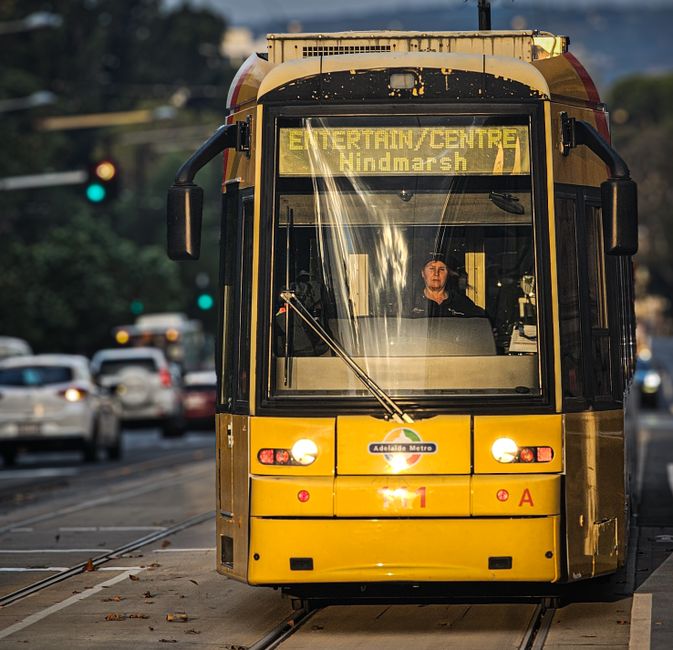
Public transport is managed by Adelaide Metro. The Adelaide Metrocard provides concession fares for students (AUD 2.90 per trip, AUD 7.20 daily cap). The O-Bahn busway connects the city to the eastern suburbs, while the Glenelg tram runs to the beach. The Adelaide Free Tram operates within the CBD. Cycling is popular; the city has 60 km of dedicated bike lanes, and Bike SA (2026) offers free safety courses for new residents.
Cultural integration is supported by StudyAdelaide (2026), which runs a Welcome Program each February and July, including airport pickup, orientation events, and a Buddy Program pairing new students with local volunteers. The Adelaide Festival Centre hosts free concerts, and the Art Gallery of South Australia offers student membership for AUD 30 per year. International student societies at each university organise cultural festivals, including the Indian Students Association’s Diwali event (attendance: 4,000 in 2025).
Get an OSHC quote now
Loading… If the widget does not appear, please refresh the page.
FAQ
Q1: What is the minimum cost of living for an international student in Adelaide in 2026? A1: The Department of Home Affairs (2025) requires a minimum of AUD 24,505 per year for living expenses, excluding tuition and airfares. StudyAdelaide (2026) recommends budgeting AUD 25,000–AUD 30,000 per year for a single student, covering rent, food, transport, and utilities. This is 15–20% lower than Sydney or Melbourne.
Q2: How long can I stay in Australia after graduation from an Adelaide university? A2: Graduates from Adelaide institutions are eligible for the Subclass 485 Temporary Graduate Visa with durations of 2–4 years, depending on qualification. Under the Regional Australia initiative, Adelaide graduates receive an additional 1–2 years: bachelor’s = 3 years, master’s by coursework = 4 years, PhD = 5 years (Home Affairs, 2026).
Q3: Are there scholarships available for international students at Adelaide universities? A3: Yes. The University of Adelaide (2026) offers the Global Citizens Scholarship (15–30% tuition fee reduction) for students with a GPA equivalent to 80% or above. Flinders University (2026) has the Go Beyond Scholarship (AUD 5,000 per year) for students from selected countries. UniSA (2026) provides the International Merit Scholarship (25% tuition fee reduction). Applications are assessed on academic merit and require a separate application form.
Q4: What is the average rental cost for a room in a shared house in Adelaide in 2026? A4: The median rent for a room in a shared house in Adelaide’s inner suburbs (e.g., Goodwood, Norwood, Unley) is AUD 220–AUD 280 per week, according to Domain (2026). In the CBD, a room in a shared apartment costs AUD 300–AUD 400 per week. Students should budget for a 4-week bond and 2 weeks’ rent in advance.
Q5: Is Adelaide safe for international students? A5: Yes. The Adelaide City Council (2026) reports a crime rate of 2.1 incidents per 1,000 residents in the CBD, significantly lower than Sydney (3.8) and Melbourne (4.2). The city has a dedicated Safe City Program with 24/7 CCTV monitoring and free NightRide bus services for students travelling after 9 PM.
References
- Department of Home Affairs (2025). Student Visa Program Report for 2024–25 Financial Year. Australian Government.
- South Australian Government (2025). International Education Sector Economic Contribution Report 2024–25. Government of South Australia.
- Domain (2026). Domain Rental Report: March 2026 Quarter. Domain Group Australia.
- QS Quacquarelli Symonds (2026). QS World University Rankings 2026. QS Intelligence Unit.
- StudyAdelaide (2026). International Student Cost of Living Guide 2026. StudyAdelaide.