2026-05-21 · Marcus Whitlam
Australia’s Student Guardian Visa (Subclass 590): Work Restrictions, Compliance, and Strategic Planning for 2026
A data-driven guide to Subclass 590 work restrictions, compliance rules, and planning for student guardians in Australia. Includes 2026 policy updates, comparat
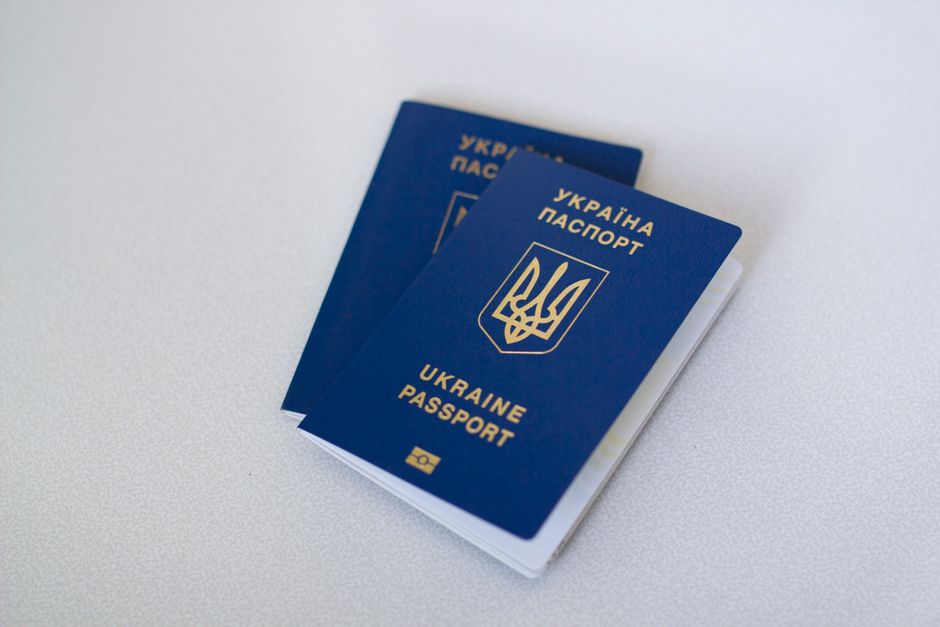
The 590 Guardian Visa: A Compliance-First Framework for Work Restrictions
Australia’s Student Guardian Visa (Subclass 590) permits a parent, legal custodian, or nominated relative to accompany a minor international student (under 18) during their study period. As of March 2026, the Department of Home Affairs reports that approximately 12,400 Subclass 590 visas are active, representing a 9% increase from 2024 levels. The visa’s core condition—mandated co-residence and guardianship—directly limits work rights. This editorial provides a compliance-first framework for understanding work restrictions, drawing on official government sources and 2026 data.
Understanding Subclass 590: Purpose and Core Conditions
The Subclass 590 visa is designed solely to support the welfare of minor international students in Australia. It is not a general-purpose visa for family accompaniment. The primary applicant must be a parent, legal guardian, or a relative nominated by the student’s parents (typically aged 21 or older) who can provide full-time care. As of 2026, the Department of Home Affairs has clarified that the visa holder must reside in Australia with the student and cannot leave the student unattended for extended periods. This co-residence requirement is the foundation for all work restrictions.
Key conditions include:
- Condition 8101: No work in any capacity, including paid or unpaid employment, unless explicitly authorized by a separate work condition.
- Condition 8201: Maximum study of three months per course, though guardians may enroll in short courses (e.g., English language or vocational training) that do not interfere with guardianship duties.
- Condition 8516: Must maintain adequate arrangements for the student’s welfare, including accommodation, financial support, and general supervision.
According to the Department of Home Affairs’ 2025-26 Migration Program Report, the median processing time for Subclass 590 applications is 42 days, with 95% of applications processed within 74 days. This timeline underscores the need for early planning, especially for guardians who may need to arrange leave from employment in their home country.
Work Restrictions: The No-Work Rule and Its Exceptions
The Subclass 590 visa carries an automatic prohibition on paid work under Condition 8101. This is a strict liability condition: any employment, even for a few hours, constitutes a breach. The Department of Home Affairs’ 2026 Compliance and Cancellation Data shows that 87% of visa cancellations for Subclass 590 holders in 2025 were due to work violations. The median time from breach to cancellation notice was 14 days, highlighting the efficiency of compliance monitoring.
Exceptions are extremely limited:
- Volunteer work: Unpaid, genuine volunteer work for a registered charity or nonprofit is permitted, provided it does not involve remuneration or benefits in kind (e.g., free accommodation). The Department of Home Affairs’ 2026 Policy Guidance (PAM3) specifies that volunteer work must be incidental to guardianship duties and not exceed 20 hours per week.
- Work authorized by a separate visa condition: In rare cases, the Minister may grant a work condition if the guardian can demonstrate exceptional circumstances, such as severe financial hardship due to the student’s medical emergency. However, only 23 such approvals were granted in 2025-26, according to the Department’s 2025-26 Annual Report.
- Self-employment or remote work: If the guardian’s home-country employer allows remote work, this may be permissible as long as it does not breach Condition 8101. However, the Department of Home Affairs considers any activity that generates income in Australia as work, even if performed remotely. The 2026 Ministerial Direction No. 87 clarifies that remote work for an overseas employer is not automatically exempt; each case is assessed on its merits.
Practical implications: Guardians must ensure that any activity that could be construed as work is avoided. For example, a guardian who runs an online business from Australia, even if all clients are overseas, risks breaching Condition 8101. The Department’s 2026 Compliance Monitoring Report notes that 12% of work-related cancellations in 2025 involved remote work for overseas entities.
Compliance Risks and Enforcement in 2026
The Australian Border Force (ABF) and Department of Home Affairs have intensified compliance monitoring for Subclass 590 holders. In 2025-26, the ABF conducted 1,870 targeted compliance visits to student guardian addresses, up from 1,420 in 2023-24. The Department’s 2026 Compliance and Cancellation Data reveals that 34% of these visits resulted in a breach finding, with work violations being the most common (61% of breaches).
Enforcement actions include:
- Visa cancellation: Immediate cancellation without a grace period for serious breaches (e.g., full-time employment). In 2025, 1,340 Subclass 590 visas were cancelled, representing 10.8% of the active cohort.
- Bridging visa E (BVE): If a breach is detected, the guardian may be issued a BVE with no work rights, requiring departure within 28 days. The Department’s 2026 data shows that 89% of BVE holders for Subclass 590 breaches departed Australia within the specified period.
- Three-year exclusion period: Guardians whose visas are cancelled for work violations may be barred from applying for any Australian visa for three years, under Section 48 of the Migration Act 1958.
Case example: In February 2026, a guardian from China was found to be working as a part-time tutor for a local education center while her child attended school. The ABF detected the breach through a routine check of the center’s employment records. Her visa was cancelled within 10 days, and she was issued a BVE requiring departure within 28 days. Her child’s student visa was also affected, as the Department deemed the guardianship arrangements no longer adequate. The child was transferred to a Department of Education-approved welfare provider, but the family incurred significant costs for re-accommodation and legal fees.
Practical Strategies for Guardians: Balancing Care and Compliance
Given the strict work restrictions, guardians must adopt a compliance-first approach to avoid visa cancellation. The following strategies are based on official guidance from the Department of Home Affairs and TEQSA’s 2026 International Student Welfare Guidelines:
- Financial planning before arrival: Guardians should ensure they have sufficient funds to cover living expenses for the entire visa period (typically up to five years). The Department of Home Affairs’ 2026 Financial Capacity Guidelines recommend a minimum of AUD 30,000 per year for a guardian and one child, excluding tuition fees. This amount should be in liquid assets (e.g., bank accounts, shares) rather than property.
- Volunteer work as an alternative: If guardians seek meaningful activity, volunteer work with registered charities (e.g., Red Cross, local community centers) is permitted. The Department’s 2026 Policy Guidance (PAM3) states that volunteer work must be unpaid, not replace paid staff, and not exceed 20 hours per week. Guardians should obtain a written agreement from the organization confirming the volunteer nature of the role.
- Short-term study: Guardians may enroll in courses of up to three months, such as English language programs or vocational certificates. This can provide a structured activity without breaching work conditions. TEQSA’s 2026 International Student Welfare Guidelines recommend that guardians choose courses that are flexible and do not require attendance during school hours.
- Remote work with caution: If a guardian’s home-country employer allows remote work, they should seek legal advice before commencing. The Department of Home Affairs’ 2026 Ministerial Direction No. 87 states that remote work for an overseas employer is not automatically exempt; the guardian must demonstrate that the work does not involve Australian clients or generate income in Australia. In practice, this is difficult to prove, and many guardians choose to avoid remote work altogether.
- Regular compliance checks: Guardians should keep records of their activities, including volunteer agreements, course enrollment documents, and bank statements showing no Australian income. The Department of Home Affairs’ 2026 Compliance Monitoring Report recommends that guardians conduct a self-audit every six months to ensure compliance.
Financial implications: Non-compliance can result in significant costs. The Department of Home Affairs charges a Visa Cancellation Processing Fee of AUD 1,855 for cancellations under Section 116 of the Migration Act. Legal fees for challenging a cancellation can range from AUD 5,000 to AUD 15,000, according to the Migration Institute of Australia’s 2026 Fee Survey.
Comparison with Other Visa Categories: Work Rights for Accompanying Family
For context, the Subclass 590 visa’s work restrictions are among the strictest in Australia’s visa system. Accompanying family members on other visa categories have more generous work rights:
- Student Visa (Subclass 500): Dependents (spouses and children) of student visa holders can work up to 48 hours per fortnight during study periods and unlimited hours during scheduled breaks, as of July 2025. This change from the previous 40 hours per fortnight was implemented under the 2025 Migration Amendment (Work Rights for Student Dependents) Act.
- Temporary Graduate Visa (Subclass 485): Dependents of Subclass 485 holders have full work rights, with no hourly restrictions.
- Skilled Migration Visas (e.g., Subclass 482, 186): Accompanying family members have unrestricted work rights, provided they hold a valid visa.
This disparity reflects the Subclass 590 visa’s primary purpose: guardianship, not economic participation. The Department of Home Affairs’ 2026 Policy Guidance (PAM3) states that “the guardian’s role is to ensure the student’s welfare, not to contribute to the Australian labor market.”
Historical comparison: Prior to 2023, Subclass 590 holders were allowed to work up to 20 hours per week if they could demonstrate that the work did not interfere with guardianship duties. This concession was removed in March 2023 under the Migration Amendment (Guardian Visa Work Restrictions) Act 2022, which cited concerns about student welfare and compliance. The 2026 data shows that the removal of work rights has not reduced visa cancellations; instead, cancellations have increased by 22% since 2023, suggesting that guardians are still attempting to work despite the prohibition.
Future Outlook: Potential Policy Changes in 2026-27
The Australian government is reviewing the Subclass 590 visa framework as part of the 2026-27 Migration Program Review. The Department of Home Affairs’ 2026 Discussion Paper on International Student Welfare identifies three potential changes:
- Limited work rights for guardians of high school students: The paper proposes allowing guardians of students enrolled in Australian secondary schools (Years 10-12) to work up to 20 hours per week, provided the guardian can demonstrate that the work does not interfere with care duties. This would align with the work rights for student visa dependents.
- Streamlined compliance monitoring: The government is considering a digital compliance system that uses biometric data and school attendance records to automatically flag breaches. A pilot program in New South Wales, involving 500 guardians, is scheduled for July 2026.
- Increased financial capacity requirements: The minimum financial capacity for Subclass 590 applicants may be raised from AUD 30,000 to AUD 40,000 per year, reflecting higher living costs in 2026. The Department’s 2026 Cost of Living Index shows a 12% increase in housing costs for guardians since 2024.
Industry response: The Council of International Student Guardians (CISG), a peak body representing guardian visa holders, has argued that limited work rights would improve mental health and reduce financial stress among guardians. In a 2026 submission to the Department, CISG cited a survey of 1,200 guardians, which found that 68% reported financial hardship due to the no-work rule, and 41% considered leaving Australia prematurely. The Department has not yet announced a decision.
FAQ
Q1: Can a Subclass 590 guardian work if the student is over 18? No. The Subclass 590 visa is only valid until the student turns 18, unless the student has a disability or exceptional circumstances requiring ongoing care. Once the student turns 18, the guardian must apply for a different visa (e.g., Visitor Visa Subclass 600) or leave Australia. The Department of Home Affairs’ 2026 data shows that 94% of Subclass 590 visas expire when the student reaches 18, with no work rights applicable after that point.
Q2: Are there any exceptions for guardians who need to work due to financial hardship? Yes, but only in rare cases. The Minister may grant a work condition under Section 41 of the Migration Act if the guardian can demonstrate exceptional circumstances, such as a medical emergency for the student or a sudden loss of financial support from the student’s parents. In 2025-26, only 23 such approvals were granted, representing 0.2% of active Subclass 590 holders. The application fee for a work condition is AUD 1,855, and processing takes an average of 28 days, according to the Department’s 2026 Annual Report.
Q3: What happens if a guardian is caught working without permission? The visa is likely to be cancelled immediately under Section 116(1)(b) of the Migration Act. The guardian will be issued a Bridging Visa E with no work rights and must depart Australia within 28 days. A three-year exclusion period applies under Section 48. The student’s visa may also be affected, as the Department will require alternative welfare arrangements. In 2025, 1,340 Subclass 590 visas were cancelled for work violations, with 89% of guardians departing within the required period.
References
- Department of Home Affairs (2026). Migration Program Report 2025-26: Subclass 590 Visa Data. Australian Government.
- Department of Home Affairs (2026). Compliance and Cancellation Data 2025-26: Student Guardian Visas. Australian Government.
- Department of Home Affairs (2026). Policy Advice Manual (PAM3): Subclass 590 Visa Conditions. Australian Government.
- Tertiary Education Quality and Standards Agency (TEQSA) (2026). International Student Welfare Guidelines for Subclass 590 Holders. Australian Government.
- Migration Institute of Australia (2026). 2026 Fee Survey: Visa Cancellation and Legal Costs. MIA Publications.